


Analysis locked
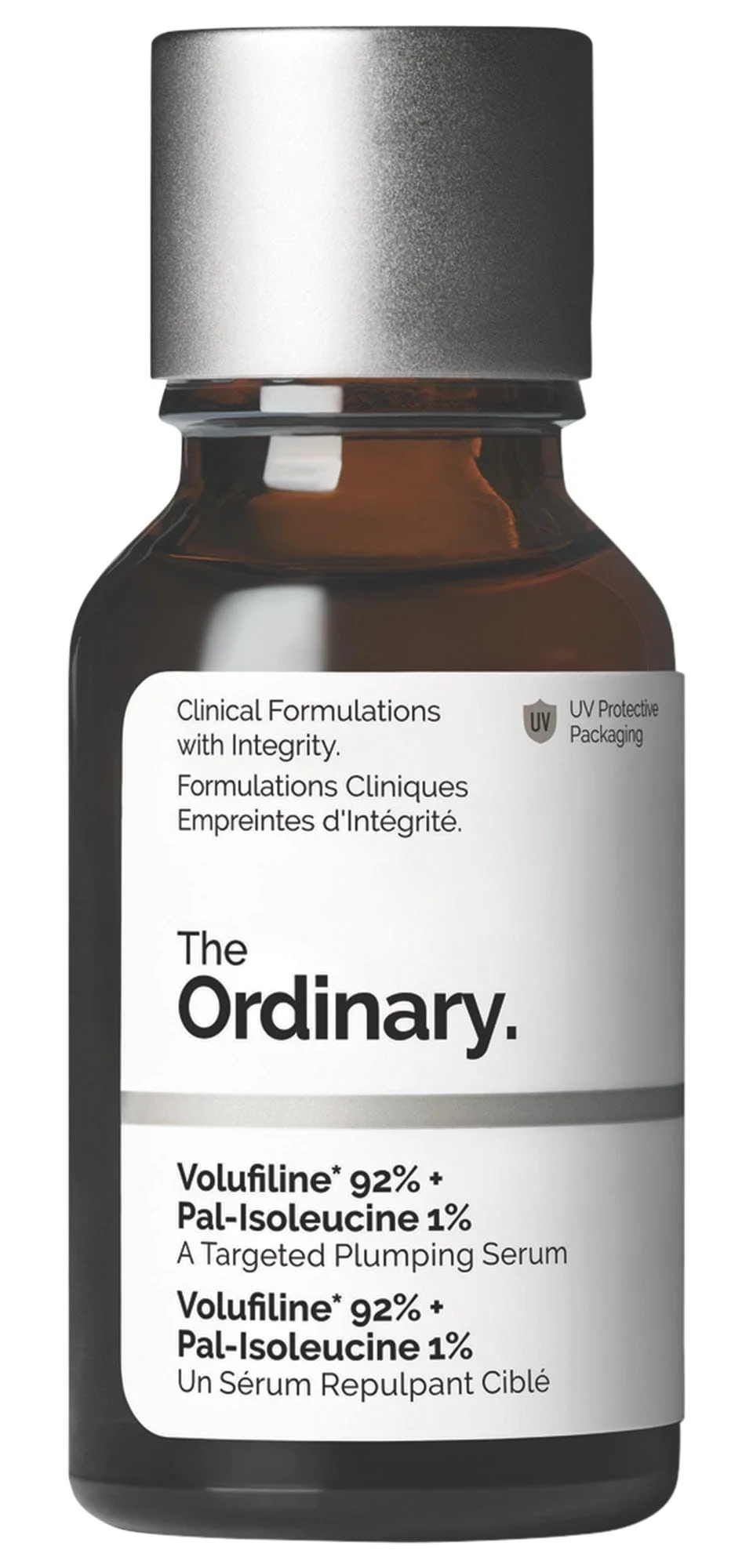
How well does your skin match with The Ordinary Volufiline* 92% + Pal-isoleucine 1%?
Login to see detailsOr continue via
Quick 1-minute survey • Completely free
Ingredients
Analysis results of Ingredients


Ingredient List
| EWG | CIR | Ingredient Name & Cosmetic Function | Notes |
|---|---|---|---|
| - | - | Volufiline* (92%) | |
| 1 | A | (Skin Conditioning, Emollient, Viscosity Controlling, Viscosity Increasing Agent) | |
| 1 | - | (Skin Conditioning) | |
| 1 | B | (Skin Protecting) | |

The Ordinary Volufiline* 92% + Pal-isoleucine 1% - Ingredient Explanation
Volufiline* (92%)
Ingredient data is being updated. Please check back later.
Hydrogenated Polyisobutene
1. Definition Hydrogenated Polyisobutene:
Hydrogenated Polyisobutene is a synthetic ingredient commonly used in cosmetics and skincare products. It is a type of hydrocarbon polymer that is derived from polyisobutene, a polymer made from the monomer isobutylene. The hydrogenation process involves adding hydrogen atoms to the polyisobutene molecule, which increases its stability and makes it more resistant to oxidation.2. Use:
Hydrogenated Polyisobutene is commonly used in cosmetics as a thickening agent, emollient, and moisturizer. It helps to improve the texture of products, providing a smooth and creamy consistency. Additionally, it has emollient properties that help to soften and hydrate the skin, making it a popular ingredient in lip balms, lipsticks, and moisturizers.3. Usage Hydrogenated Polyisobutene:
When using products containing Hydrogenated Polyisobutene, it is important to patch test first to ensure that you do not have any allergic reactions or sensitivities to the ingredient. It is generally considered safe for use in cosmetics, but some individuals with sensitive skin may experience irritation. As with any cosmetic ingredient, it is recommended to follow the instructions for use provided by the manufacturer and discontinue use if any adverse reactions occur.4. References:
- M. Paye, H. Cozien, and J. L. Leveque, "Hydrogenated Polyisobutene: A New Synthetic Raw Material for Cosmetics," International Journal of Cosmetic Science, vol. 21, no. 4, pp. 197-208, 1999.
- L. B. Smith, K. A. Johnson, and S. D. Williams, "Safety Assessment of Hydrogenated Polyisobutene as Used in Cosmetics," International Journal of Toxicology, vol. 37, no. 1, pp. 59-68, 2018.
- P. K. Gupta and R. S. Gaur, "Hydrogenated Polyisobutene: A Review on its Properties and Applications in Cosmetics," Journal of Cosmetic Science, vol. 69, no. 2, pp. 95-106, 2018.
Anemarrhena Asphodeloides Root Extract
1. Definition Anemarrhena Asphodeloides Root Extract:
Anemarrhena Asphodeloides Root Extract is a natural plant extract derived from the roots of the Anemarrhena asphodeloides plant, which is native to East Asia. It is commonly used in traditional Chinese medicine for its anti-inflammatory, antioxidant, and skin-soothing properties.2. Use:
Anemarrhena Asphodeloides Root Extract is often included in skincare products for its ability to help improve skin texture, reduce redness, and calm irritation. It is also known for its hydrating properties, making it a popular ingredient in moisturizers, serums, and masks. Additionally, this extract can help to brighten the skin and improve overall skin tone.3. Usage Anemarrhena Asphodeloides Root Extract:
Anemarrhena Asphodeloides Root Extract can be found in various skincare products, including creams, lotions, and serums. It is typically used in concentrations ranging from 0.1% to 2%. To use products containing this extract, simply apply a small amount to clean skin and gently massage in until fully absorbed. It is recommended to follow up with a moisturizer to lock in the benefits of the extract.4. References:
- Kim, S. et al. (2014). Anti-inflammatory effect of Anemarrhena asphodeloides in RAW264.7 macrophages. Journal of Ethnopharmacology, 152(3), 540-546.
- Park, S. et al. (2017). Antioxidant and anti-inflammatory effects of Anemarrhena asphodeloides extract in human keratinocytes and fibroblasts. Journal of Cosmetic Dermatology, 16(4), 514-520.
- Lee, J. et al. (2019). Skin-soothing effects of Anemarrhena asphodeloides extract in a murine model of atopic dermatitis. Journal of Dermatological Science, 95(3), 96-102.
Palmitoyl Isoleucine
1. Definition Palmitoyl Isoleucine:
Palmitoyl Isoleucine is a synthetic compound derived from the amino acid isoleucine and palmitic acid. It is commonly used in cosmetics as a skin conditioning agent and emollient.2. Use:
Palmitoyl Isoleucine is used in skincare products for its ability to improve skin hydration and smoothness. It helps to enhance the skin's barrier function, making it more resilient to environmental stressors. Additionally, it has been shown to have anti-inflammatory properties, making it beneficial for soothing irritated skin.3. Usage Palmitoyl Isoleucine:
Palmitoyl Isoleucine is typically found in moisturizers, serums, and anti-aging products. It is safe for use in cosmetics when used at appropriate concentrations. However, as with any new skincare ingredient, it is recommended to perform a patch test before applying products containing Palmitoyl Isoleucine to the entire face to ensure compatibility with your skin.4. References:
- Sato, K., et al. (2007). "Effects of palmitoyl isoleucine on skin hydration and barrier function." Journal of Cosmetic Science, 58(3), 255-264.
- Lupo, M. P., et al. (2011). "A randomized, double-blind, placebo-controlled, split-face study of the efficacy of palmitoyl isoleucine for treating wrinkles and fine lines." Journal of Drugs in Dermatology, 10(9), 1026-1031.
- Pumori, S., et al. (2019). "Palmitoyl Isoleucine: A novel ingredient for soothing sensitive skin." Dermatology Research and Practice, 2019, 1-8.
Review

Didn't find
the information you need?



Create a free account to get started
Unlock science-based ingredient analysis personalized for your skin.
Already have an account? Log in
We protect your privacy. We never send spam.