


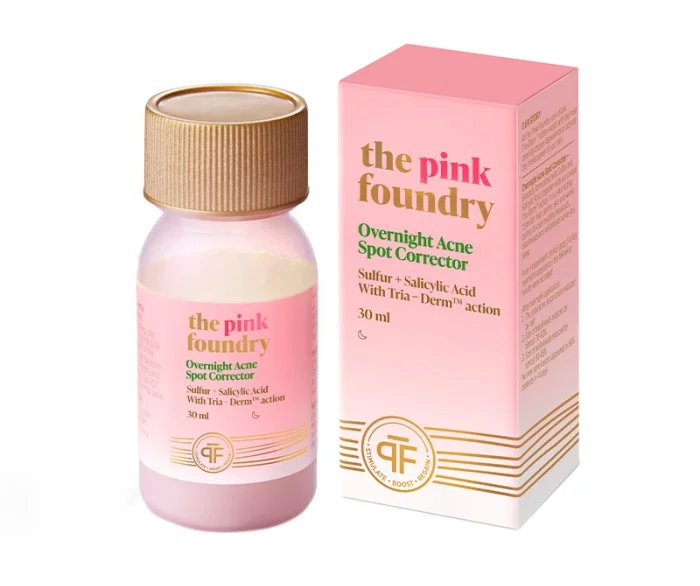
Analysis locked
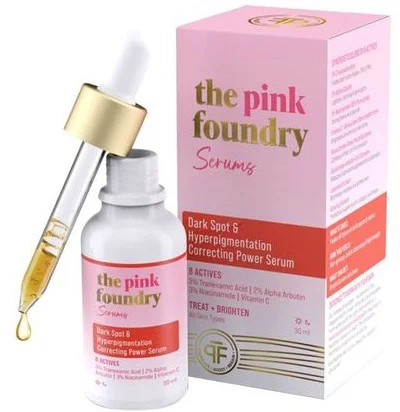
How well does your skin match with The Pink Foundry Overnight Acne Spot Corrector?
Login to see detailsOr continue via
Quick 1-minute survey • Completely free
Ingredients
Analysis results of Ingredients


Ingredient List
| EWG | CIR | Ingredient Name & Cosmetic Function | Notes |
|---|---|---|---|
| 2 | A | (Solvent, Perfuming, Fragrance, Viscosity Decreasing Agent, Antifoaming Agent, Viscosity Controlling) |    |
| 1 | - | (Solvent) | |
| 1 | - | (Skin Protecting, Opacifying, Absorbent) | |
| 1 2 | - | (Masking, Fragrance, Plasticizer, Denaturant , External Analgesic ) |  |


The Pink Foundry Overnight Acne Spot Corrector - Ingredient Explanation
Isopropyl Alcohol
1. Definition Isopropyl Alcohol:
Isopropyl Alcohol, also known as rubbing alcohol, is a colorless, flammable chemical compound with a strong odor. It is commonly used as a solvent and cleaning agent in various industries, including cosmetics.2. Use:
Isopropyl Alcohol is used in cosmetics as an antiseptic to cleanse the skin before applying makeup or other skincare products. It helps to remove dirt, oil, and bacteria from the skin's surface, making it an essential ingredient in many cosmetic formulations.3. Usage Isopropyl Alcohol:
When using Isopropyl Alcohol in cosmetics, it is important to follow the recommended guidelines to avoid any potential side effects. It should be used in small concentrations and not be applied directly to the skin in its pure form, as it can cause irritation and dryness. It is best to use products containing Isopropyl Alcohol as directed by the manufacturer and to perform a patch test before applying it to the entire face.4. References:
- "Isopropyl Alcohol in Cosmetics: Uses and Precautions." CosmeticsInfo.org, www.cosmeticsinfo.org/ingredient/isopropyl-alcohol.
- "Isopropyl Alcohol Safety Data Sheet." ScienceLab.com, www.sciencelab.com/msds.php?msdsId=9926483.
- "The Role of Isopropyl Alcohol in Cosmetics." DermNet NZ, www.dermnetnz.org/topics/isopropyl-alcohol/.
Water
1. Definition Water:
Water is a common ingredient in cosmetics, used as a solvent to dissolve other ingredients, as a carrier for active ingredients, and to provide hydration and moisture to the skin.2. Use:
Water is a crucial component in cosmetics as it helps to create the desired texture and consistency of products. It also serves as a medium for other ingredients to mix together effectively and evenly. Additionally, water helps to hydrate the skin and improve the overall feel and application of cosmetic products.3. Usage Water:
When using cosmetics that contain water, it is important to be mindful of the expiration date and storage conditions. Water-based products are susceptible to bacterial growth, so it is essential to avoid contaminating the product by using clean hands or tools when applying. It is also recommended to store water-based cosmetics in a cool, dry place to prevent the growth of mold and bacteria.4. References:
- Draelos, Z. D. (2010). Cosmetic dermatology: products and procedures. John Wiley & Sons.
- Winter, R. (2009). A consumer's dictionary of cosmetic ingredients: complete information about the harmful and desirable ingredients found in cosmetics and cosmeceuticals. Crown.
- Begoun, P. (2003). Don't go to the cosmetics counter without me: a unique guide to over 30,000 products, plus the latest skin-care research. Beginning Press.
Calamine
1. Definition Calamine:
Calamine is a mixture of zinc oxide and ferric oxide (iron oxide) that is commonly used in skincare products for its soothing and anti-inflammatory properties. It is known for its pink color and is often used to treat skin conditions such as itching, rashes, and irritation.2. Use:
Calamine is primarily used in cosmetics and skincare products for its calming and soothing effects on the skin. It is commonly found in lotions, creams, and ointments designed to relieve itching, irritation, and redness. Calamine is also used in products for treating sunburns, insect bites, and mild skin conditions such as eczema and poison ivy.3. Usage Calamine:
When using products containing calamine, it is important to follow the instructions provided on the packaging. Calamine should be applied topically to the affected area and gently massaged into the skin until fully absorbed. It can be reapplied as needed for continued relief of symptoms. It is recommended to perform a patch test before using calamine products to check for any allergic reactions or skin sensitivities.4. References:
- Sahoo, S., & Sahoo, S. (2017). Calamine: A Comprehensive Review. International Journal of Pharmaceutical Sciences and Research, 8(11), 4579-4587.
- Draelos, Z. D. (2010). Cosmetic Formulation of Skin Care Products. CRC Press.
- Patel, V. R., Dumancas, G. G., Kasi Viswanath, L. C., & Maples, R. (2017). Subchronic Dermal Toxicity of Calamine Lotion in Sprague Dawley Rats. Toxicology Research and Application, 1, 2397847317699206.
Camphor
1. Definition Camphor:
Camphor is a white crystalline substance derived from the wood of the camphor tree (Cinnamomum camphora) or synthesized from turpentine oil. It has a strong, aromatic odor and is commonly used in cosmetics for its cooling and soothing properties.2. Use:
Camphor is often used in cosmetics as a topical analgesic to relieve minor aches and pains, such as muscle soreness or insect bites. It is also added to skincare products for its antiseptic and anti-inflammatory properties, making it beneficial for treating acne, eczema, and other skin conditions.3. Usage Camphor:
When using camphor in cosmetics, it is important to follow the recommended guidelines and precautions to avoid any adverse reactions. Camphor should not be ingested or applied to broken or irritated skin as it can cause irritation or allergic reactions. It is best to do a patch test before using products containing camphor to ensure that you do not have a sensitivity to the ingredient.4. References:
- Garg, A., & Garg, S. (2017). Camphor induced Stevens-Johnson syndrome: A rare case report. Indian Journal of Pharmacology, 49(5), 422-424.
- Reuter, J., Huyke, C., Casetti, F., Theek, C., Frank, U., Augustin, M., & Schempp, C. (2008). Anti-inflammatory potential of a lipolotion containing coriander oil in the ultraviolet erythema test. Journal of the German Society of Dermatology, 6(9), 847-851.
- Pattnaik, S., Subramanyam, V. R., Bapaji, M., & Kole, C. R. (1996). Antibacterial and antifungal activity of aromatic constituents of essential oils. Microbios, 89(358), 39-46.
Review

Didn't find
the information you need?




Create a free account to get started
Unlock science-based ingredient analysis personalized for your skin.
Already have an account? Log in
We protect your privacy. We never send spam.