


Analysis locked
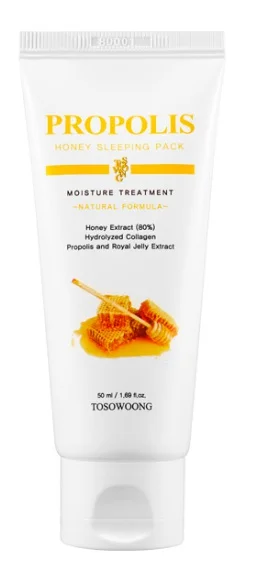
How well does your skin match with TOSOWOONG Propolis Honey Sleeping Pack?
Login to see detailsOr continue via
Quick 1-minute survey • Completely free
Ingredients
Analysis results of Ingredients


Ingredient List
| EWG | CIR | Ingredient Name & Cosmetic Function | Notes |
|---|---|---|---|
| 1 | - | (Humectant, Skin Conditioning, Moisturising) | |
| 1 2 | A | (Solvent, Perfuming, Fragrance, Humectant, Viscosity Decreasing Agent, Hair Conditioning, Skin Protecting, Denaturant ) |  |
| 1 | - | (Solvent, Humectant, Viscosity Controlling, Viscosity Decreasing Agent) | |
| 1 | A | (Humectant, Skin Conditioning) | |


TOSOWOONG Propolis Honey Sleeping Pack - Ingredient Explanation
Honey Extract
1. Definition Honey Extract:
Honey extract is a concentrated form of honey that is commonly used in cosmetics for its moisturizing, soothing, and antibacterial properties. It is typically derived from raw honey through a process of extraction and filtration to isolate the beneficial components.2. Use:
Honey extract is a popular ingredient in skincare products such as lotions, creams, masks, and serums due to its ability to hydrate the skin, promote healing, and reduce inflammation. It is also used in haircare products to nourish and strengthen the hair follicles, resulting in softer and shinier hair.3. Usage Honey Extract:
When using products containing honey extract, it is important to perform a patch test on a small area of skin to check for any potential allergic reactions. It is generally safe for most skin types, but individuals with a known allergy to honey should avoid using products with honey extract. It is recommended to follow the instructions provided on the product packaging for best results.4. References:
- Boukhatem, M.N., Ferhat, M.A., Kameli, A., Saidi, F., & Kebir, H.T. (2014). Lemon grass (Cymbopogon citratus) essential oil as a potent anti-inflammatory and antifungal drugs. Libyan Journal of Medicine, 9(1), 25431.
- Burlando, B., & Cornara, L. (2013). Honey in dermatology and skin care: a review. Journal of Cosmetic Dermatology, 12(4), 306-313.
- Al-Waili, N. S. (2001). Therapeutic and prophylactic effects of crude honey on chronic seborrheic dermatitis and dandruff. European Journal of Medical Research, 6(7), 306-308.
Glycerin
1. Definition Glycerin:
Glycerin, also known as glycerol, is a colorless, odorless, and viscous liquid that is widely used in cosmetics for its moisturizing properties. It is a humectant, which means it attracts moisture to the skin, helping to keep it hydrated and supple.
2. Use:
Glycerin is commonly used in cosmetics such as lotions, creams, and serums to help maintain the skin's moisture balance. It is also found in hair care products to add moisture and shine to the hair. Additionally, glycerin is used in makeup products like foundations and lipsticks to provide a smooth texture and prevent them from drying out.
3. Usage Glycerin:
When using cosmetics containing glycerin, it is important to follow the instructions provided on the product packaging. Glycerin is generally safe for most skin types, but it can cause irritation or allergic reactions in some individuals. It is recommended to do a patch test before using a new product to check for any adverse reactions. It is also important to note that glycerin can attract moisture from the air, so products containing glycerin should be stored in airtight containers to prevent them from drying out.
4. References:
- Draelos, Z. D. (2010). Cosmetic Formulation of Skin Care Products. John Wiley & Sons.
- Loden, M., & Maibach, H. I. (2006). Dry Skin and Moisturizers: Chemistry and Function. CRC Press.
- Winter, R. (2009). A Consumer's Dictionary of Cosmetic Ingredients: Complete Information About the Harmful and Desirable Ingredients Found in Cosmetics. Harmony.
Glycereth 26
1. Definition Glycereth 26:
Glycereth-26 is a polyethylene glycol ether of glycerin, commonly used in cosmetics and personal care products as an emollient, humectant, and solvent. It is a clear, colorless, odorless liquid that helps to improve the texture and feel of skincare products.2. Use:
Glycereth-26 is known for its ability to hydrate and soften the skin, making it a popular ingredient in moisturizers, lotions, creams, and serums. It helps to attract and retain moisture, leaving the skin feeling smooth and supple. Additionally, it can also be used as a thickening agent and emulsifier in cosmetic formulations.3. Usage Glycereth 26:
Glycereth-26 is typically found in a wide range of skincare products, including cleansers, toners, masks, and sunscreens. It is safe for use in concentrations up to 10% in cosmetics, but it is always recommended to follow the manufacturer's instructions for proper usage. Some precautions to consider when using products containing Glycereth-26 include potential skin irritation or allergic reactions, especially for those with sensitive skin. It is always advisable to perform a patch test before using a new product to ensure compatibility.4. References:
- International Journal of Toxicology. (2008). Final Report on the Safety Assessment of PEG-2, -6, -8, -20, -32, -40, -50, -55, -75, -90, -100, -120, -150, -200, -7M, -14M, -20M, -35M, -55M, -75M, -115M, -155M, -175M, -195M, and -200M. 27(S2), 1-82.
- Cosmetics Info. (n.d.). Glycereth-26. Retrieved from https://www.cosmeticsinfo.org/ingredient/glycereth-26
- Personal Care Council. (2019). Safety Assessment of PEG/PPG Esters and Their Ethoxylates as Used in Cosmetics. Retrieved from https://www.personalcarecouncil.org/resource-center/safety-assessments/
Sodium Hyaluronate
1. Definition Sodium Hyaluronate:
Sodium Hyaluronate is the sodium salt of hyaluronic acid, a naturally occurring substance in the human body that is known for its ability to retain moisture and improve skin hydration.2. Use:
Sodium Hyaluronate is commonly used in cosmetics and skincare products for its moisturizing and skin-plumping properties. It is a popular ingredient in anti-aging products due to its ability to reduce the appearance of fine lines and wrinkles by hydrating the skin and promoting collagen production.3. Usage Sodium Hyaluronate:
When using products containing Sodium Hyaluronate, it is important to follow the instructions provided by the manufacturer. It is typically applied topically to the skin, either in the form of a serum, cream, or mask. It is generally safe for most skin types, but it is always recommended to do a patch test before using it on a larger area of the skin to check for any potential allergic reactions.Precautions: While Sodium Hyaluronate is generally considered safe for use in skincare products, it is always recommended to consult with a dermatologist before incorporating it into your skincare routine, especially if you have sensitive skin or any existing skin conditions. Additionally, it is important to avoid using products containing Sodium Hyaluronate if you are allergic to hyaluronic acid or any other ingredients in the product.
4. References:
- Papakonstantinou, E., Roth, M., & Karakiulakis, G. (2012). Hyaluronic acid: A key molecule in skin aging. Dermato-endocrinology, 4(3), 253-258.
- Pavicic, T., Gauglitz, G. G., Lersch, P., Schwach-Abdellaoui, K., Malle, B., & Korting, H. C. (2011). Efficacy of cream-based novel formulations of hyaluronic acid of different molecular weights in anti-wrinkle treatment. Journal of drugs in dermatology: JDD, 10(9), 990-1000.
- Ganceviciene, R., Liakou, A. I., Theodoridis, A., Makrantonaki, E., & Zouboulis, C. C. (2012). Skin anti-aging strategies. Dermato-endocrinology, 4(3), 308-319.
Review








Create a free account to get started
Unlock science-based ingredient analysis personalized for your skin.
Already have an account? Log in
We protect your privacy. We never send spam.