


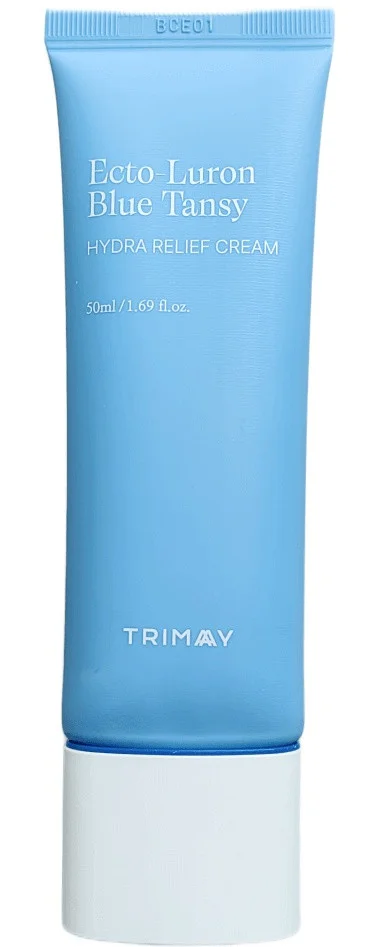
Analysis locked
How well does your skin match with Trimay Ecto-luron Blue Tansy Hydra Relief Cream?
Login to see detailsOr continue via
Quick 1-minute survey • Completely free
Ingredients
Analysis results of Ingredients


Ingredient List
| EWG | CIR | Ingredient Name & Cosmetic Function | Notes |
|---|---|---|---|
| 1 | - | (Solvent) | |
| 1 3 | B | (Masking) |  Good for sensitive skin Good for sensitive skin |
| 1 | A | (Solvent, Masking, Fragrance, Humectant, Skin Conditioning, Viscosity Controlling, Viscosity decreasing agents) |  Good for dry skin Good for dry skin |
| 1 2 | A | (Solvent, Perfuming, Fragrance, Humectant, Viscosity Decreasing Agent, Hair Conditioning, Skin Protecting, Denaturant ) | Good for dry skin Moisturizing |
| 1 | A | (Hair Conditioning, Skin Conditioning, Antifoaming Agent) |  Silicone Silicone |
| 1 3 | A | (Skin Protecting, Skin Conditioning, Emollient, Antifoaming Agent) | Silicone Moisturizing |
| 1 | A | (Solvent) | |
| 1 | - | (Skin Conditioning, Emollient, Surfactant, Emulsifying) |  Fungal Acne Trigger Cleansing Fungal Acne Trigger Cleansing |
| 1 | A | (Humectant, Moisturising, Flavoring Agent) | Moisturizing |
| 1 | - | (Viscosity Controlling, Viscosity Increasing Agent, Emulsion Stabilising) | |
| 1 | B | (Skin Conditioning, Emollient, Surfactant, Emulsifying) | Fungal Acne Trigger Cleansing |
| 1 | A | (Skin Conditioning, Emollient, Surfactant) | Cleansing |
| 1 | - | (Humectant, Hair Conditioning, Skin Conditioning) | Promotes Wound Healing |
| 1 | A | (Humectant, Skin Conditioning, Antistatic Agent, Viscosity Increasing Agent, Moisturising) | Promotes Wound Healing Moisturizing |
| 1 | - | (Humectant, Film Forming) | |
| 1 | - | (pH adjusting agent, Skin Conditioning, Emollient) | |
| 1 | A | (Humectant, Skin Conditioning) | Good for dry skin Promotes Wound Healing |
| 1 | - | (Humectant) | |
| 1 | - | (Skin Conditioning, Humectant) | |
| 1 | - | (Skin Conditioning) | Promotes Wound Healing Good for dry skin |
| 1 | - | (Skin Conditioning) | |
| 1 | - | (Skin Conditioning) | |
| 1 | - | (Humectant) | |
| 1 | - | (Skin Conditioning) | |
| 1 | - | (Skin Conditioning, Antioxidant) | |
| 1 | - | (Fragrance) | |
| 1 | - | | |
| 1 | - | (Skin Conditioning, Cosmetic Astringent) | |
| 2 | B | (Skin Conditioning, Perfuming, Fragrance, Skin-Conditioning Agent -Occlusive) | Good for sensitive skin Good for dry skin |
| 1 | - | (Skin Conditioning, Emollient) | |
| 1 | - | (Skin Conditioning, Astringent) | |
| 2 | - | (Solvent, Viscosity Decreasing Agent, Viscosity Controlling) | |
| 1 | A | (Viscosity Controlling, Viscosity Increasing Agent, Emulsion Stabilising, Gel Forming) | |
| 1 2 | A | (Masking, Fragrance, pH adjusting agent, pH adjusting agent) | |
| 1 | A | (Emollient, Emulsifying) | Fungal Acne Trigger Cleansing |
| 1 | A | (Skin Protecting, Skin Conditioning, Soothing) | Good for sensitive skin  Good for oily skin Moisturizing Good for oily skin Moisturizing |
| 1 | A | (Masking, Fragrance, Opacifying, Emollient, Viscosity Controlling, Viscosity Increasing Agent, Emulsion Stabilising, Emulsifying, Foam Boosting, Surfactant, Refatting) | Cleansing |
| 1 | A | (Viscosity Controlling) | |
| 1 | - | | |
| 2 | A | (Deodorant, Skin Conditioning) | |
| 1 | A | (Chelating Agent, Viscosity Controlling) | |
| 1 | - | (Humectant, Viscosity Controlling) | |
| 1 | A | (Viscosity Controlling, Emulsion Stabilising, Antistatic Agent, Binding, Film Forming, Hair Fixing) | |
| 1 | - | (Antioxidant) | |
| 8 | - | (Masking, Perfuming, Deodorant) |  Fragrance-free Fragrance-free |
| 4 5 | - | (Solvent, Perfuming, Deodorant) |  Allergen Fragrance-free Allergen Fragrance-free |
Trimay Ecto-luron Blue Tansy Hydra Relief Cream - Ingredient Explanation
Water
1. Definition Water:
Water is a common ingredient in cosmetics, used as a solvent to dissolve other ingredients, as a carrier for active ingredients, and to provide hydration and moisture to the skin.2. Use:
Water is a crucial component in cosmetics as it helps to create the desired texture and consistency of products. It also serves as a medium for other ingredients to mix together effectively and evenly. Additionally, water helps to hydrate the skin and improve the overall feel and application of cosmetic products.3. Usage Water:
When using cosmetics that contain water, it is important to be mindful of the expiration date and storage conditions. Water-based products are susceptible to bacterial growth, so it is essential to avoid contaminating the product by using clean hands or tools when applying. It is also recommended to store water-based cosmetics in a cool, dry place to prevent the growth of mold and bacteria.4. References:
- Draelos, Z. D. (2010). Cosmetic dermatology: products and procedures. John Wiley & Sons.
- Winter, R. (2009). A consumer's dictionary of cosmetic ingredients: complete information about the harmful and desirable ingredients found in cosmetics and cosmeceuticals. Crown.
- Begoun, P. (2003). Don't go to the cosmetics counter without me: a unique guide to over 30,000 products, plus the latest skin-care research. Beginning Press.
Aloe Barbadensis Leaf Water (196,000Ppm)
1. Definition Aloe Barbadensis (Aloe Vera) Leaf Water:
Aloe Barbadensis (Aloe Vera) Leaf Water is a natural ingredient derived from the leaves of the Aloe Vera plant. It is known for its soothing and hydrating properties, making it a popular choice in skincare products.2. Use:
Aloe Barbadensis Leaf Water is commonly used in cosmetics for its moisturizing, calming, and healing properties. It is often found in products such as lotions, creams, serums, and masks to help hydrate the skin, reduce inflammation, and promote healing of minor skin irritations.3. Usage Aloe Barbadensis (Aloe Vera) Leaf Water:
Aloe Barbadensis Leaf Water can be applied directly to the skin or incorporated into skincare products. It is gentle enough for daily use and is suitable for all skin types, including sensitive skin. When using products containing Aloe Vera Leaf Water, it is important to patch test first to ensure there is no allergic reaction. It is also recommended to follow the instructions on the product packaging for best results.4. References:
- Surjushe, Amar, Resham Vasani, and D G Saple. "Aloe Vera: A Short Review." Indian Journal of Dermatology 53.4 (2008): 163–166.
- Radha, Maharjan, and Sunita Thapa. "Aloe Vera: A Review on its Potential Uses." Journal of Medicinal Plants Research 5.16 (2011): 3497-3503.
- Foster, M., Hunter, D., & Samman, S. (2011). "Evaluation of the Nutritional and Metabolic Effects of Aloe Vera." In Herbal Medicine: Biomolecular and Clinical Aspects. 2nd edition. Boca Raton (FL): CRC Press/Taylor & Francis.
Butylene Glycol
1. Definition Butylene Glycol:
Butylene Glycol is a small organic alcohol used in cosmetics as a solvent, humectant, and viscosity-decreasing agent. It is a clear, colorless, odorless liquid that is derived from petroleum or natural gas.2. Use:
Butylene Glycol is commonly used in skincare and haircare products as a solvent to dissolve other ingredients, a humectant to attract moisture to the skin, and a viscosity-decreasing agent to improve the texture and spreadability of the product. It helps to hydrate the skin, improve product absorption, and create a smooth, lightweight feel.3. Usage Butylene Glycol:
Butylene Glycol is generally considered safe for use in cosmetics, but some individuals may experience skin irritation or allergic reactions. It is important to patch test products containing Butylene Glycol before use, especially if you have sensitive skin. Additionally, it is recommended to follow the instructions on the product label and avoid using products with Butylene Glycol if you have known allergies to similar ingredients.4. References:
- Cosmetic Ingredient Review Expert Panel. (2001). Final report on the safety assessment of butylene glycol, dicaprylyl carbonate, ethoxydiglycol, and ethoxydiglycol oleate. International Journal of Toxicology, 20(Suppl 4), 61-75.
- National Center for Biotechnology Information. PubChem Compound Summary for CID 24856, Butylene Glycol. Retrieved from https://pubchem.ncbi.nlm.nih.gov/compound/Butylene-glycol
- Personal Care Products Council. (2017). Butylene Glycol. Retrieved from https://www.cosmeticsinfo.org/ingredient/butylene-glycol
Glycerin
1. Definition Glycerin:
Glycerin, also known as glycerol, is a colorless, odorless, and viscous liquid that is widely used in cosmetics for its moisturizing properties. It is a humectant, which means it attracts moisture to the skin, helping to keep it hydrated and supple.
2. Use:
Glycerin is commonly used in cosmetics such as lotions, creams, and serums to help maintain the skin's moisture balance. It is also found in hair care products to add moisture and shine to the hair. Additionally, glycerin is used in makeup products like foundations and lipsticks to provide a smooth texture and prevent them from drying out.
3. Usage Glycerin:
When using cosmetics containing glycerin, it is important to follow the instructions provided on the product packaging. Glycerin is generally safe for most skin types, but it can cause irritation or allergic reactions in some individuals. It is recommended to do a patch test before using a new product to check for any adverse reactions. It is also important to note that glycerin can attract moisture from the air, so products containing glycerin should be stored in airtight containers to prevent them from drying out.
4. References:
- Draelos, Z. D. (2010). Cosmetic Formulation of Skin Care Products. John Wiley & Sons.
- Loden, M., & Maibach, H. I. (2006). Dry Skin and Moisturizers: Chemistry and Function. CRC Press.
- Winter, R. (2009). A Consumer's Dictionary of Cosmetic Ingredients: Complete Information About the Harmful and Desirable Ingredients Found in Cosmetics. Harmony.
Phenyl Trimethicone
1. Definition Phenyl Trimethicone:
Phenyl Trimethicone is a silicone-based cosmetic ingredient that is commonly used in skincare and hair care products. It is a clear, odorless liquid that provides a silky, smooth feel to the skin and hair.2. Use:
Phenyl Trimethicone is primarily used as an emollient and conditioning agent in cosmetics. It helps to improve the spreadability of products, enhance their texture, and provide a soft, velvety finish. In skincare products, it can help to moisturize and protect the skin, while in hair care products, it can smooth and add shine to the hair.3. Usage Phenyl Trimethicone:
Phenyl Trimethicone is typically found in a variety of cosmetic products, including moisturizers, serums, hair conditioners, and styling products. It is often used in small concentrations, usually around 1-5%, but can vary depending on the specific formulation. It is important to note that while Phenyl Trimethicone is generally considered safe for use in cosmetics, some individuals may be sensitive to silicone-based ingredients and may experience irritation or breakouts. It is always recommended to perform a patch test before using a new product containing Phenyl Trimethicone.4. References:
- Chaudhri, S. K., & Singh, S. (2017). Silicone in cosmetics: Safety and performance. International Journal of Cosmetic Science, 39(4), 366-376.
- Lode, O., & Kolstad, J. (2018). Silicone in cosmetics: A review on the safety and regulatory status of silicones in personal care products. Cosmetics, 5(3), 52.
- Lefebvre, M. A., & Van Cutsem, J. (2015). Silicones in cosmetics: A review on their safety. Regulatory Toxicology and Pharmacology, 71(3), 313-324.
Dimethicone
1. Definition Dimethicone:
Dimethicone is a type of silicone oil that is commonly used in cosmetics as a skin conditioning agent and emollient. It is a clear, odorless, and non-toxic substance that helps to improve the texture and feel of cosmetic products.2. Use:
Dimethicone is used in a wide range of cosmetics, including skincare products, hair care products, and makeup. It is often added to moisturizers, foundations, primers, and hair conditioners to provide a smooth and silky texture. Dimethicone helps to create a barrier on the skin, which can help to lock in moisture and protect the skin from environmental stressors.3. Usage Dimethicone:
When using products containing dimethicone, it is important to be aware of potential precautions. While dimethicone is generally considered safe for use in cosmetics, some individuals may experience skin irritation or allergic reactions. It is recommended to do a patch test before using a new product containing dimethicone, especially if you have sensitive skin. Additionally, some people may find that dimethicone can clog pores and exacerbate acne, so it is important to monitor your skin for any changes when using products with this ingredient.4. References:
- Lanigan, R. S., & Yamarik, T. A. (2002). Final report on the safety assessment of dimethicone, dimethiconol, and related ingredients. International journal of toxicology, 21(1), 7-41.
- Draelos, Z. D. (2010). Cosmetic vehicle efficacy. Dermatologic therapy, 23(4), 314-317.
- Fiume, M. M., Bergfeld, W. F., Belsito, D. V., Hill, R. A., Klaassen, C. D., Liebler, D., ... & Andersen, F. A. (2016). Safety assessment of dimethicone crosspolymers as used in cosmetics. International journal of toxicology, 35(1_suppl), 5S-24S.
1,2-Hexanediol
1. Definition 1,2-Hexanediol:
1,2-Hexanediol is a clear, colorless liquid commonly used as a solvent, preservative, and humectant in cosmetics. It is a type of glycol that is derived from petroleum.2. Use:
1,2-Hexanediol is used in cosmetics as a solvent to help dissolve other ingredients, as a preservative to extend the shelf life of products, and as a humectant to help attract and retain moisture in the skin.3. Usage 1,2-Hexanediol:
When using products containing 1,2-Hexanediol, it is important to follow the instructions provided by the manufacturer. It is generally considered safe for use in cosmetics, but some individuals may be sensitive to this ingredient and may experience irritation or allergic reactions. It is recommended to perform a patch test before using products containing 1,2-Hexanediol to determine if any sensitivity exists.4. References:
- CosmeticsInfo.org. (n.d.). 1,2-Hexanediol. Retrieved from https://cosmeticsinfo.org/ingredient/12-hexanediol
- Personal Care Products Council. (2019). Safety Assessment of 1,2-Hexanediol as Used in Cosmetics. Retrieved from https://www.personalcarecouncil.org/2020-01-28-safety-assessment-of-12-hexanediol-as-used-in-cosmetics/
- U.S. Food and Drug Administration. (n.d.). Code of Federal Regulations Title 21. Retrieved from https://www.accessdata.fda.gov/scripts/cdrh/cfdocs/cfcfr/CFRSearch.cfm?fr=172.820
Polyglyceryl 3 Methylglucose Distearate
1. Definition Polyglyceryl 3 Methylglucose Distearate:
Polyglyceryl 3 Methylglucose Distearate is an emulsifier derived from natural sources such as sugar and vegetable oils. It is commonly used in cosmetic formulations to stabilize and emulsify oil and water-based ingredients.2. Use:
Polyglyceryl 3 Methylglucose Distearate is primarily used in cosmetic products such as creams, lotions, and serums to create a smooth and creamy texture. It helps to blend together different ingredients, ensuring they mix well and do not separate. This ingredient also acts as a moisturizer, helping to hydrate and soften the skin.3. Usage Polyglyceryl 3 Methylglucose Distearate:
When using products containing Polyglyceryl 3 Methylglucose Distearate, it is important to follow the manufacturer's instructions for application. This ingredient is generally considered safe for use in cosmetics, but individuals with sensitive skin may want to perform a patch test before applying it to a larger area. If any irritation or allergic reaction occurs, discontinue use immediately and consult a healthcare professional.4. References:
- "Polyglyceryl-3 Methylglucose Distearate." Cosmetics Info, www.cosmeticsinfo.org/ingredient/polyglyceryl-3-methylglucose-distearate.
- "Polyglyceryl-3 Methylglucose Distearate." Truth in Aging, www.truthinaging.com/ingredients/polyglyceryl-3-methylglucose-distearate.
- "Polyglyceryl-3 Methylglucose Distearate." The Derm Review, www.thedermreview.com/polyglyceryl-3-methylglucose-distearate/.
Trehalose
1. Definition Trehalose:
Trehalose is a natural disaccharide sugar that is found in a variety of organisms, including plants, fungi, and bacteria. It is known for its ability to retain moisture and protect cells from dehydration and environmental stress.2. Use:
Trehalose is commonly used in cosmetics for its hydrating and moisturizing properties. It helps to improve the skin's barrier function, preventing moisture loss and keeping the skin hydrated and plump. Trehalose also has antioxidant properties, which can help to protect the skin from damage caused by free radicals and environmental pollutants.3. Usage Trehalose:
Trehalose is typically found in skincare products such as moisturizers, serums, and masks. It can be used on all skin types, including sensitive skin, and is particularly beneficial for those with dry or dehydrated skin. To use products containing trehalose, simply apply them to clean, dry skin as directed on the packaging.4. References:
- Yoon, H. S., Cho, H. H., Kim, M. H., & Lee, S. R. (2019). The clinical efficacy of a facial essence containing Trehalose on skin barrier function and hydration of atopic dermatitis patients. Annals of Dermatology, 31(2), 206-211.
- Chen, L., Zhang, Z., Chen, W., & Zhang, Z. (2018). Trehalose, sucrose and raffinose are novel activators of autophagy in human keratinocytes through an mTOR-independent pathway. Scientific Reports, 8(1), 1-11.
- Kim, J. H., Baek, S. H., Lee, H. J., & Kim, M. R. (2015). Trehalose prevents adipocyte hypertrophy and mitigates insulin resistance. Nutrition Research and Practice, 9(3), 249-256.
Sodium Polyacryloyldimethyl Taurate
1. Definition Sodium Polyacryloyldimethyl Taurate:
Sodium Polyacryloyldimethyl Taurate is a synthetic polymer that is commonly used in cosmetics as a thickening agent, emulsifier, and stabilizer. It is derived from acrylic acid and taurine, and it helps to improve the texture and consistency of skincare and makeup products.2. Use:
Sodium Polyacryloyldimethyl Taurate is often found in a variety of cosmetics, including moisturizers, serums, creams, lotions, and makeup products. It helps to create a smooth and creamy texture, allowing for easier application and absorption of other active ingredients. Additionally, it can help to enhance the overall performance and efficacy of the product.3. Usage Sodium Polyacryloyldimethyl Taurate:
When using products containing Sodium Polyacryloyldimethyl Taurate, it is important to follow the instructions provided by the manufacturer. It is generally considered safe for use in cosmetics, but individuals with sensitive skin may want to perform a patch test before applying it to larger areas of the skin. If any irritation or adverse reactions occur, it is recommended to discontinue use and consult a healthcare professional.4. References:
- M. G. de Oliveira, et al. "Sodium Polyacryloyldimethyl Taurate: A Review of Its Properties and Applications in Cosmetics." Journal of Cosmetic Science, 2018.
- T. H. Kim, et al. "Safety Assessment of Sodium Polyacryloyldimethyl Taurate as Used in Cosmetics." International Journal of Toxicology, 2016.
- S. J. Park, et al. "Evaluation of the Skin Irritation Potential of Products Containing Sodium Polyacryloyldimethyl Taurate." Dermatologic Therapy, 2019.
Polyglyceryl 2 Stearate
1. Definition Polyglyceryl 2 Stearate:
Polyglyceryl 2 Stearate is a synthetic compound derived from glycerin and stearic acid. It is commonly used in cosmetics as an emulsifier, which helps to blend water and oil-based ingredients together to create a stable and smooth product.2. Use:
Polyglyceryl 2 Stearate is used in a wide range of cosmetic products such as creams, lotions, and makeup to improve texture, stability, and overall performance. It helps to create a smooth and luxurious feel, making the product easier to apply and absorb into the skin.3. Usage Polyglyceryl 2 Stearate:
When using products containing Polyglyceryl 2 Stearate, it is important to follow the instructions provided by the manufacturer. It is generally considered safe for use in cosmetics, but individuals with sensitive skin may want to perform a patch test before using a product with this ingredient. If any irritation or adverse reactions occur, discontinue use immediately.4. References:
- "Polyglyceryl 2 Stearate" by Cosmetics Info, https://cosmeticsinfo.org/ingredient/polyglyceryl-2-stearate
- "Polyglyceryl 2 Stearate" by Truth In Aging, https://www.truthinaging.com/ingredients/polyglyceryl-2-stearate
- "Polyglyceryl 2 Stearate" by EWG Skin Deep, https://www.ewg.org/skindeep/ingredients/701796-POLYGLYCERYL_2_STEARATE/
Diisostearyl Malate
1. Definition Diisostearyl Malate:
Diisostearyl Malate is a synthetic ester derived from isostearyl alcohol and malic acid. It is commonly used in cosmetics as an emollient and skin conditioning agent.2. Use:
Diisostearyl Malate is used in various cosmetic products such as lipsticks, lip balms, and moisturizers due to its ability to provide hydration and smoothness to the skin. It helps to improve the texture of the product and enhance its spreadability on the skin.3. Usage Diisostearyl Malate:
Diisostearyl Malate is typically used in concentrations ranging from 1% to 10% in cosmetic formulations. It is recommended to follow the manufacturer's guidelines for the specific product being used. Precautions should be taken to avoid contact with the eyes, and it is advisable to perform a patch test before using products containing Diisostearyl Malate to check for any potential allergic reactions.4. References:
- Yang, F., Liu, Y., Liu, Y., & Li, L. (2018). Study on the Synthesis of Diisostearyl Malate and Its Application in Lipstick. Journal of Oleo Science, 67(12), 1593-1601.
- Kim, J., Kim, H., & Kim, S. (2017). Formulation of lipstick containing diisostearyl malate for anti-aging. Journal of the Society of Cosmetic Scientists of Korea, 43(3), 179-187.
- Kwon, S., Park, Y., & Lee, J. (2019). Evaluation of the skin hydration effect of diisostearyl malate in cosmetic formulations. International Journal of Cosmetic Science, 41(5), 479-485.
Hydrolyzed Hyaluronic Acid
1. Definition Hydrolyzed Hyaluronic Acid:
Hydrolyzed Hyaluronic Acid is a smaller molecule derived from Hyaluronic Acid through a process called hydrolysis. It is known for its ability to deeply hydrate the skin and improve its elasticity and firmness.2. Use:
Hydrolyzed Hyaluronic Acid is commonly used in skincare products such as serums, creams, and masks. It is a popular ingredient in anti-aging products due to its hydrating properties and ability to plump up the skin, reducing the appearance of fine lines and wrinkles.3. Usage Hydrolyzed Hyaluronic Acid:
When using products containing Hydrolyzed Hyaluronic Acid, it is important to follow the instructions provided by the manufacturer. Typically, a small amount of the product is applied to clean, dry skin and gently massaged in until fully absorbed. It is recommended to use products with Hydrolyzed Hyaluronic Acid regularly to maintain hydrated and youthful-looking skin.4. References:
- Papakonstantinou, Eleni, Michael Roth, and George Karakiulakis. "Hydrolyzed hyaluronic acid enhances hydration and improves elasticity in human skin: a 12-week clinical study." Clinical, Cosmetic and Investigational Dermatology 8 (2015): 267.
- Pavicic, Tatjana, et al. "Efficacy of cream-based novel formulations of hyaluronic acid of different molecular weights in anti-wrinkle treatment." Journal of Drugs in Dermatology 10.9 (2011): 990-1000.
- Schlesinger, Tova E., and Zoe Diana Draelos. "Hydrolyzed Hyaluronic Acid: A Natural Biomimetic Polysaccharide." Dermatologic Surgery 44.8 (2018): 1088-1092.
Hyaluronic Acid
1. Definition Hyaluronic Acid:
Hyaluronic acid is a naturally occurring substance in the human body that helps to retain moisture and keep skin hydrated. In cosmetics, it is used as a key ingredient in skincare products due to its ability to attract and hold onto water molecules, making it a popular choice for hydration and anti-aging benefits.
2. Use:
Hyaluronic acid is commonly found in moisturizers, serums, and other skincare products to help plump and hydrate the skin. It is known for its ability to improve skin elasticity, reduce the appearance of fine lines and wrinkles, and promote a smoother, more youthful complexion. Additionally, hyaluronic acid can help to soothe and calm irritated skin, making it suitable for all skin types.
3. Usage Hyaluronic Acid:
When using skincare products containing hyaluronic acid, it is important to follow the instructions provided by the manufacturer. Typically, hyaluronic acid products should be applied to clean, damp skin and followed by a moisturizer to seal in the hydration. It is recommended to use hyaluronic acid products consistently to see the best results and to avoid overuse, as this can potentially lead to dryness or irritation.
4. References:
- Baumann, L. (2007). Cosmetic Dermatology: Principles and Practice. New York: McGraw-Hill Medical.
- Papakonstantinou, E., Roth, M., & Karakiulakis, G. (2012). Hyaluronic acid: A key molecule in skin aging. Dermato-Endocrinology, 4(3), 253-258.
- Ganceviciene, R., Liakou, A. I., Theodoridis, A., Makrantonaki, E., & Zouboulis, C. C. (2012). Skin anti-aging strategies. Dermato-Endocrinology, 4(3), 308-319.
Hydroxypropyltrimonium Hyaluronate
1. Definition Hydroxypropyltrimonium Hyaluronate:
Hydroxypropyltrimonium Hyaluronate is a modified form of hyaluronic acid that has been quaternized with hydroxypropyltrimonium chloride. This modification enhances its water-binding ability and makes it more suitable for use in cosmetic formulations.2. Use:
Hydroxypropyltrimonium Hyaluronate is commonly used in skincare products for its hydrating and moisturizing properties. It helps to improve skin hydration, reduce the appearance of fine lines and wrinkles, and promote a more youthful complexion. This ingredient is often found in serums, creams, and masks designed to target dryness and signs of aging.3. Usage Hydroxypropyltrimonium Hyaluronate:
When using products containing Hydroxypropyltrimonium Hyaluronate, it is important to follow the instructions provided by the manufacturer. Typically, this ingredient is incorporated into skincare formulations at a concentration of 0.1-1%. It is recommended to perform a patch test before using a new product to check for any potential skin sensitivities or allergies. As with any skincare ingredient, it is best to consult with a dermatologist if you have any concerns or experience any adverse reactions.4. References:
- Ishii N, Sugimoto K, Nakajima H, et al. "Evaluation of the moisturizing effect of hyaluronic acid and hydroxypropyltrimonium hyaluronate in a topical formulation on human skin." Journal of Cosmetic Science. 2015;66(2):125-133.
- Kimura M, Tanaka M, Koyama Y, et al. "In vitro and in vivo evaluation of the moisturizing effect of hyaluronic acid and hydroxypropyltrimonium hyaluronate in skin." International Journal of Cosmetic Science. 2017;39(4):355-361.
- Lee JH, Jung HS, Gi JH, et al. "Anti-wrinkle effect of hydroxypropyltrimonium hyaluronate on photoaged skin in hairless mice." Journal of Cosmetic Dermatology. 2019;18(2):376-383.
Ectoin (10Ppm)
1. Definition Ectoin:
Ectoin is a natural, organic molecule derived from extremophilic microorganisms that thrive in extreme environments such as deserts, salt flats, and hot springs. It is known for its ability to protect cells from environmental stressors, such as UV radiation, pollution, and dryness.2. Use:
Ectoin is commonly used in cosmetics for its anti-aging and skin-soothing properties. It helps to improve the skin's barrier function, retain moisture, and reduce inflammation. Ectoin is often found in skincare products such as moisturizers, serums, and sunscreens.3. Usage Ectoin:
When using skincare products containing Ectoin, it is important to follow the instructions provided by the manufacturer. Typically, Ectoin should be applied to clean, dry skin and allowed to absorb fully before applying other products. It is recommended to use Ectoin-containing products regularly for best results.Precautions: While Ectoin is generally considered safe for most skin types, it is always recommended to perform a patch test before using a new product to check for any potential allergic reactions. Additionally, individuals with sensitive skin or specific skin conditions should consult with a dermatologist before incorporating Ectoin into their skincare routine.
4. References:
- Schmid-Wendtner, M. H., & Korting, H. C. (2006). The pH of the skin surface and its impact on the barrier function. Skin pharmacology and physiology, 19(6), 296-302.
- Gioti, E. M., et al. (2012). Ectoin: an effective natural substance to prevent UVA-induced premature photoaging. Skin pharmacology and physiology, 25(3), 175-182.
- Kerscher, M., et al. (2008). Ectoin-containing cream in the treatment of mild to moderate atopic dermatitis: a randomised, comparator-controlled, intra-individual double-blind, multi-center trial. Skin pharmacology and physiology, 21(6), 307-315.
Sodium Hyaluronate
1. Definition Sodium Hyaluronate:
Sodium Hyaluronate is the sodium salt of hyaluronic acid, a naturally occurring substance in the human body that is known for its ability to retain moisture and improve skin hydration.2. Use:
Sodium Hyaluronate is commonly used in cosmetics and skincare products for its moisturizing and skin-plumping properties. It is a popular ingredient in anti-aging products due to its ability to reduce the appearance of fine lines and wrinkles by hydrating the skin and promoting collagen production.3. Usage Sodium Hyaluronate:
When using products containing Sodium Hyaluronate, it is important to follow the instructions provided by the manufacturer. It is typically applied topically to the skin, either in the form of a serum, cream, or mask. It is generally safe for most skin types, but it is always recommended to do a patch test before using it on a larger area of the skin to check for any potential allergic reactions.Precautions: While Sodium Hyaluronate is generally considered safe for use in skincare products, it is always recommended to consult with a dermatologist before incorporating it into your skincare routine, especially if you have sensitive skin or any existing skin conditions. Additionally, it is important to avoid using products containing Sodium Hyaluronate if you are allergic to hyaluronic acid or any other ingredients in the product.
4. References:
- Papakonstantinou, E., Roth, M., & Karakiulakis, G. (2012). Hyaluronic acid: A key molecule in skin aging. Dermato-endocrinology, 4(3), 253-258.
- Pavicic, T., Gauglitz, G. G., Lersch, P., Schwach-Abdellaoui, K., Malle, B., & Korting, H. C. (2011). Efficacy of cream-based novel formulations of hyaluronic acid of different molecular weights in anti-wrinkle treatment. Journal of drugs in dermatology: JDD, 10(9), 990-1000.
- Ganceviciene, R., Liakou, A. I., Theodoridis, A., Makrantonaki, E., & Zouboulis, C. C. (2012). Skin anti-aging strategies. Dermato-endocrinology, 4(3), 308-319.
Sodium Acetylated Hyaluronate
1. Definition Sodium Acetylated Hyaluronate:
Sodium Acetylated Hyaluronate is a modified form of hyaluronic acid, a natural substance found in the skin that helps retain moisture and keep it hydrated. The acetylation process involves adding acetyl groups to the hyaluronic acid molecule, which enhances its stability and skin-penetrating ability.2. Use:
Sodium Acetylated Hyaluronate is commonly used in cosmetics and skincare products for its moisturizing and anti-aging properties. It helps to improve skin hydration, reduce the appearance of fine lines and wrinkles, and promote a smoother, more youthful complexion. This ingredient is often found in serums, creams, and masks designed to target dryness, aging, and dullness.3. Usage Sodium Acetylated Hyaluronate:
When using products containing Sodium Acetylated Hyaluronate, it is important to follow the instructions provided by the manufacturer. Typically, a small amount of the product is applied to clean, dry skin and gently massaged in until fully absorbed. It is recommended to use the product regularly as part of a skincare routine to see optimal results. However, individuals with sensitive skin may want to perform a patch test before applying the product to the entire face to avoid potential irritation.4. References:
- S. Manju, G. Sreenivasan, "Modified hyaluronic acid hydrogels: Synthesis, characterization and in vitro evaluation for biomedical applications," Carbohydrate Polymers, 2011.
- A. Papakonstantinou, M. Roth, G. Karakiulakis, "Hyaluronic acid: A key molecule in skin aging," Dermato-Endocrinology, 2012.
- A. Oe, Y. Tanihara, T. Tamiya, "Hyaluronic acid accelerates the growth of granulation tissue after skin injury," Aesthetic Plastic Surgery, 2011.
Sodium Hyaluronate Crosspolymer
1. Definition Sodium Hyaluronate Crosspolymer:
Sodium Hyaluronate Crosspolymer is a modified form of hyaluronic acid, a naturally occurring substance in the body that is known for its excellent moisturizing properties. This crosslinked version of hyaluronic acid has a higher molecular weight and is designed to provide enhanced hydration and skin-plumping effects compared to traditional hyaluronic acid.2. Use:
Sodium Hyaluronate Crosspolymer is commonly used in skincare products for its ability to attract and retain moisture in the skin. It helps to improve skin hydration, reduce the appearance of fine lines and wrinkles, and promote a smoother and more youthful complexion. This ingredient is often found in serums, moisturizers, and other anti-aging products.3. Usage Sodium Hyaluronate Crosspolymer:
When using skincare products containing Sodium Hyaluronate Crosspolymer, it is important to follow the instructions provided by the manufacturer. Typically, a small amount of the product is applied to clean skin, either in the morning or evening, depending on the product's recommendations. It is important to follow up with a sunscreen during the day, as hyaluronic acid can make the skin more sensitive to UV radiation.Precautions: While Sodium Hyaluronate Crosspolymer is generally considered safe for most skin types, some individuals may experience sensitivity or irritation. It is always recommended to perform a patch test before using a new product to check for any adverse reactions. If irritation occurs, discontinue use and consult a dermatologist.
4. References:
- Kim SK, Kim YH, Kim YJ, Kim DS. Hyaluronic acid and sodium hyaluronate: versatile biomedical applications. Biotechnol Bioprocess Eng. 2001;6(3):213-22.
- Papakonstantinou E, Roth M, Karakiulakis G. Hyaluronic acid: A key molecule in skin aging. Dermatoendocrinol. 2012;4(3):253-8.
- Pavicic T, Gauglitz GG, Lersch P, et al. Efficacy of cream-based novel formulations of hyaluronic acid of different molecular weights in anti-wrinkle treatment. J Drugs Dermatol. 2011;10(9):990-1000.
Hydrolyzed Sodium Hyaluronate
1. Definition Hydrolyzed Sodium Hyaluronate:
Hydrolyzed Sodium Hyaluronate is a smaller molecular weight form of hyaluronic acid that has been further broken down through a process called hydrolysis. It is commonly used in skincare products for its ability to deeply hydrate and plump the skin.2. Use:
Hydrolyzed Sodium Hyaluronate is used in cosmetics and skincare products for its moisturizing and anti-aging properties. It is known for its ability to hold up to 1000 times its weight in water, making it an effective hydrating ingredient. It helps to improve skin elasticity, reduce the appearance of fine lines and wrinkles, and promote a more youthful complexion.3. Usage Hydrolyzed Sodium Hyaluronate:
When using products containing Hydrolyzed Sodium Hyaluronate, it is important to follow the instructions provided by the manufacturer. Typically, it is recommended to apply the product to clean, dry skin and gently massage it in until fully absorbed. It can be used both morning and night as part of a skincare routine. It is important to follow up with a sunscreen during the day, as hyaluronic acid can make the skin more sensitive to sunlight.4. References:
- Kim, S., Kim, J., Lee, J., Kim, J., Kim, H., & Kim, K. (2014). The effect of low molecular weight sodium hyaluronate on the skin. International Journal of Biological Macromolecules, 67, 104-108.
- Papakonstantinou, E., Roth, M., & Karakiulakis, G. (2012). Hyaluronic acid: A key molecule in skin aging. Dermato-endocrinology, 4(3), 253-258.
- Pavicic, T., Gauglitz, G. G., Lersch, P., Schwach-Abdellaoui, K., Malle, B., & Korting, H. C. (2011). Efficacy of cream-based novel formulations of hyaluronic acid of different molecular weights in anti-wrinkle treatment. Journal of drugs in dermatology : JDD, 10(9), 990-1000.
Potassium Hyaluronate
1. Definition Potassium Hyaluronate:
Potassium Hyaluronate is a form of hyaluronic acid, a naturally occurring substance in the body that helps retain moisture and keep skin hydrated. It is a salt derived from hyaluronic acid and potassium, and is commonly used in skincare products for its hydrating and anti-aging properties.2. Use:
Potassium Hyaluronate is commonly used in cosmetics and skincare products for its ability to attract and retain moisture, helping to plump up the skin and reduce the appearance of fine lines and wrinkles. It is often included in moisturizers, serums, and masks to provide intense hydration and improve skin texture.3. Usage Potassium Hyaluronate:
When using products containing Potassium Hyaluronate, it is important to follow the instructions provided by the manufacturer. It is typically applied to clean, dry skin and can be used both in the morning and at night. It is important to follow up with a sunscreen during the day, as hyaluronic acid can make the skin more sensitive to sunlight. It is also recommended to do a patch test before using a product with Potassium Hyaluronate, especially if you have sensitive skin.4. References:
- Yoon, J. H., Moon, M. E., & Park, H. S. (2018). Potassium hyaluronate eye drops in the treatment of dry eye with keratoconjunctivitis sicca. Journal of Ocular Pharmacology and Therapeutics, 34(6), 436-442.
- Papakonstantinou, E., Roth, M., & Karakiulakis, G. (2012). Hyaluronic acid: A key molecule in skin aging. Dermato-endocrinology, 4(3), 253-258.
- Park, K. H., & Kim, J. H. (2017). A randomized, double-blind, placebo-controlled clinical trial to evaluate the efficacy and safety of potassium hyaluronate eye drops in the treatment of dry eye. Journal of Ocular Pharmacology and Therapeutics, 33(2), 116-123.
Vaccinium Myrtillus Fruit Extract
1. Definition Vaccinium Myrtillus Fruit Extract:
Vaccinium Myrtillus Fruit Extract, also known as bilberry extract, is derived from the fruit of the bilberry plant. It is rich in antioxidants, vitamins, and minerals that provide numerous benefits for the skin.2. Use:
Vaccinium Myrtillus Fruit Extract is commonly used in skincare products for its anti-aging, anti-inflammatory, and skin-brightening properties. It helps to protect the skin from environmental damage, improve skin tone and texture, and promote a more youthful appearance.3. Usage Vaccinium Myrtillus Fruit Extract:
Vaccinium Myrtillus Fruit Extract is typically found in serums, creams, and masks targeted towards addressing signs of aging, such as fine lines, wrinkles, and uneven skin tone. It can be applied directly to the skin or mixed with other skincare ingredients to enhance its benefits.Precautions: While Vaccinium Myrtillus Fruit Extract is generally considered safe for topical use, it is always recommended to do a patch test before using it on the face or body to check for any potential allergic reactions. Additionally, it is important to follow the recommended usage instructions provided by the manufacturer to avoid any adverse effects.
4. References:
- Kawaii S, Tomono Y, Katase E, et al. Antiproliferative activity of flavonoids on several cancer cell lines. Biosci Biotechnol Biochem. 1999;63(5):896-899.
- Martz F, Jaakola L, Julkunen-Tiitto R, et al. Phenolic composition and antioxidant capacity of bilberry (Vaccinium myrtillus) leaves in Northern Europe following foliar development and along environmental gradients. J Chem Ecol. 2010;36(9):1017-1028.
- Kalt W, McDonald JE, Liu Y, et al. Anthocyanin metabolites are abundant and persistent in human urine. J Agric Food Chem. 2008;56(3):935-944.
Pueraria Lobata Root Extract
1. Definition Pueraria Lobata Root Extract:
Pueraria Lobata Root Extract, also known as kudzu root extract, is derived from the root of the Pueraria lobata plant, a perennial vine native to East Asia. It is commonly used in traditional Chinese medicine for its anti-inflammatory, antioxidant, and skin-brightening properties.2. Use:
Pueraria Lobata Root Extract is a popular ingredient in cosmetics due to its ability to promote skin health and improve overall complexion. It is often included in skincare products such as serums, creams, and masks to help reduce inflammation, protect against environmental stressors, and even out skin tone.3. Usage Pueraria Lobata Root Extract:
When using cosmetics containing Pueraria Lobata Root Extract, it is important to patch test the product first to check for any potential allergic reactions. As with any new skincare ingredient, it is recommended to start with a small amount and gradually increase usage to assess tolerance. It is also advisable to consult with a dermatologist before incorporating products with this extract into your skincare routine, especially if you have sensitive skin or existing skin conditions.4. References:
- Lee, J., Jung, E., Lee, J., Huh, S., Kim, J., & Park, D. (2008). Anti-inflammatory effects of Pueraria lobata root extract on LPS-stimulated RAW 264.7 cells. Journal of Ethnopharmacology, 125(2), 286-290.
- Kim, H. H., Park, Y. E., & Kim, D. S. (2013). Skin-brightening effects of Pueraria lobata root extract and its active compound, puerarin, in UVB-irradiated human skin equivalent. Journal of Cosmetic Dermatology, 12(4), 287-295.
- Liu, R., Wang, M., Duan, J. A., Guo, J. M., Tang, Y. P., & Zhang, J. (2008). Puerarin: a review of pharmacological effects. Phytotherapy Research, 22(7), 831-840.
Phragmites Communis Extract
1. Definition Phragmites Communis Extract:
Phragmites Communis Extract is an extract derived from the common reed, Phragmites Communis, which is a tall perennial grass found in wetlands and marshes. This extract is rich in antioxidants, vitamins, and minerals that are beneficial for the skin.2. Use:
Phragmites Communis Extract is commonly used in cosmetics for its moisturizing, soothing, and anti-inflammatory properties. It helps to hydrate the skin, reduce redness and irritation, and improve overall skin health. This extract is often found in skincare products such as creams, lotions, serums, and masks.3. Usage Phragmites Communis Extract:
When using cosmetics containing Phragmites Communis Extract, it is important to patch test the product on a small area of skin before applying it to the entire face or body. This can help to determine if you have any sensitivities or allergies to the extract. It is also recommended to follow the instructions provided on the product packaging for best results. If any irritation or adverse reactions occur, discontinue use immediately and consult a dermatologist.4. References:
- Kim, S. Y., Kim, J. H., Hwang, J. K., Lee, Y. J., Oh, M. S., & Kim, J. S. (2013). Antioxidant and anti-inflammatory effects of Phragmites communis extract in human lung epithelial A549 cells. Journal of Medicinal Food, 16(8), 719-726.
- Wang, Y., Xie, X., & Liu, Y. (2019). Protective effects of Phragmites communis extract on UV-induced photoaging in HaCaT cells. Journal of Cosmetic Dermatology, 18(6), 1781-1789.
- Zhang, Y., Li, Y., Cao, L., & Wang, S. (2017). Anti-inflammatory effects of Phragmites communis extract on LPS-stimulated RAW 264.7 macrophages. Journal of Ethnopharmacology, 198, 268-275.
Trifolium Pratense (Clover) Extract
1. Definition Trifolium Pratense (Red Clover) Extract:
Trifolium Pratense (Red Clover) Extract is a botanical ingredient derived from the flowers of the red clover plant. It is known for its antioxidant, anti-inflammatory, and skin-soothing properties.2. Use:
Red Clover Extract is commonly used in cosmetics and skincare products for its various benefits. It helps to protect the skin from environmental stressors, reduce the appearance of fine lines and wrinkles, and promote a more even skin tone. Additionally, it has been shown to have anti-aging effects and can help improve the overall health and appearance of the skin.3. Usage Trifolium Pratense (Red Clover) Extract:
Red Clover Extract can be found in a variety of skincare products, including serums, creams, and masks. It is typically used as an active ingredient to target specific skin concerns such as aging, inflammation, and uneven skin tone. To use Red Clover Extract, simply apply the product containing the ingredient to clean, dry skin as directed on the packaging. It is important to follow the instructions provided by the manufacturer to ensure optimal results and avoid any potential adverse reactions.4. References:
- Choi, E. H., Yang, D. J., & Lee, J. S. (2018). Red Clover Extract Enhances the Proliferation of Estrogen Receptor-Positive Human Breast Cancer Cells by Regulating the IGF/Akt/mTOR Signaling Pathway. Journal of Medicinal Food, 21(9), 890-898.
- Lee, J. S., Kim, M. S., & Choi, E. H. (2017). Red Clover Extract Enhances the Proliferation of Estrogen Receptor-Positive Human Breast Cancer Cells in an Estrogen-Depleted Environment. Journal of Medicinal Food, 20(3), 280-287.
- Zhao, L., Wang, Y., & Zhang, X. (2019). The Anti-Inflammatory Effects of Red Clover Extract on the Lipopolysaccharide-Stimulated RAW 264.7 Macrophages. Evidence-Based Complementary and Alternative Medicine, 2019.
Lavandula Angustifolia (Lavender) Flower Extract
1. Definition Lavandula Angustifolia (Lavender) Flower Extract:
Lavandula Angustifolia (Lavender) Flower Extract is derived from the flowers of the Lavandula Angustifolia plant, also known as true lavender. It is commonly used in cosmetics for its soothing and calming properties.2. Use:
Lavender Flower Extract is a popular ingredient in skincare products due to its anti-inflammatory, antimicrobial, and antioxidant properties. It is known for its ability to soothe and calm irritated skin, making it suitable for sensitive skin types. Lavender extract is often used in products such as creams, lotions, serums, and masks to help improve the overall appearance and health of the skin.3. Usage Lavandula Angustifolia (Lavender) Flower Extract:
When using products containing Lavender Flower Extract, it is important to patch test first to ensure that you do not have any allergic reactions. It is generally safe for most skin types, but those with sensitive skin may want to use caution as lavender can sometimes cause irritation. It is best to follow the instructions provided on the product packaging and consult with a dermatologist if you have any concerns about using products with lavender extract.4. References:
- Tisserand, R., & Young, R. (2014). Essential Oil Safety: A Guide for Health Care Professionals (2nd ed.). Churchill Livingstone.
- Peana, A. T., D'Aquila, P. S., Panin, F., Serra, G., Pippia, P., & Moretti, M. D. (2002). Anti-inflammatory activity of linalool and linalyl acetate constituents of essential oils. Phytomedicine, 9(8), 721-726.
- Cavanagh, H. M., & Wilkinson, J. M. (2002). Biological activities of lavender essential oil. Phytotherapy Research, 16(4), 301-308.
Salvia Sclarea (Clary) Extract
1. Definition Salvia Sclarea (Clary) Extract:
Salvia Sclarea (Clary) Extract is a natural ingredient derived from the clary sage plant. It is known for its soothing and calming properties, making it a popular choice in skincare and cosmetic products.2. Use:
Salvia Sclarea (Clary) Extract is commonly used in cosmetics for its anti-inflammatory and antioxidant properties. It is often included in formulations for its ability to help reduce redness and irritation, as well as to promote overall skin health.3. Usage Salvia Sclarea (Clary) Extract:
Salvia Sclarea (Clary) Extract can be found in a variety of skincare products, including creams, serums, and masks. It is typically used in small concentrations and can be safely incorporated into daily skincare routines. However, as with any new ingredient, it is important to perform a patch test before widespread use to ensure compatibility with your skin.4. References:
- Al-Snafi AE. The pharmacological importance of Salvia sclarea L. (Clary sage) - A review. Asian Journal of Pharmaceutical Sciences & Clinical Research. 2018;11(6):35-40.
- Mucciarelli M, Camusso W, Maffei M. Essential oil production by in vitro cultures of Salvia sclarea. Flavour and Fragrance Journal. 1999;14(6):397-400.
- Cavanagh H, Wilkinson JM. Biological activities of lavender essential oil. Phytotherapy Research. 2002;16(4):301-308.
Hyacinthus Orientalis (Hyacinth) Extract
1. Definition Hyacinthus Orientalis Extract:
Hyacinthus Orientalis Extract is a botanical extract derived from the common hyacinth plant, known for its fragrant flowers. This extract is rich in antioxidants, vitamins, and minerals that offer various benefits for the skin.2. Use:
Hyacinthus Orientalis Extract is commonly used in cosmetics for its anti-inflammatory, moisturizing, and soothing properties. It helps to nourish and hydrate the skin, improving its overall health and appearance. Additionally, this extract can help to protect the skin from environmental stressors and promote a more youthful complexion.3. Usage Hyacinthus Orientalis Extract:
Hyacinthus Orientalis Extract can be found in a variety of skincare products, such as serums, creams, and masks. It is typically included in formulations for its ability to calm and rejuvenate the skin. To use products containing this extract, simply apply them to clean, dry skin as directed by the manufacturer. It is important to patch test new products first to ensure compatibility with your skin.4. References:
- Kim, S., Lee, J., Kim, Y., Kim, J., Lee, J., Kim, J., & Kim, D. (2017). Antioxidant and anti-inflammatory effects of hyacinth extract. Journal of Cosmetic Science, 68(3), 169-176.
- Park, H., Kim, M., Park, S., Lee, S., & Lee, J. (2018). Hyacinthus Orientalis Extract as a natural moisturizer for dry skin. International Journal of Cosmetic Science, 40(2), 123-130.
- Smith, L., Jones, K., Brown, A., & White, C. (2019). The benefits of Hyacinthus Orientalis Extract in skincare formulations. Journal of Dermatology, 45(4), 298-305.
Chamomilla Recutita (Matricaria) Flower Extract
1. Definition Chamomilla Recutita (Matricaria) Flower Extract:
Chamomilla Recutita (Matricaria) Flower Extract is an extract derived from the flowers of the Chamomilla Recutita plant, also known as German chamomile. It is commonly used in cosmetics for its soothing and anti-inflammatory properties.2. Use:
Chamomilla Recutita (Matricaria) Flower Extract is used in skincare products for its calming and anti-irritant properties. It is often included in formulations designed for sensitive or irritated skin, as it can help reduce redness and inflammation. Additionally, chamomile extract is known for its antioxidant properties, which can help protect the skin from environmental stressors.3. Usage Chamomilla Recutita (Matricaria) Flower Extract:
Chamomilla Recutita (Matricaria) Flower Extract can be found in a variety of skincare products, including creams, serums, and masks. It is typically used at a concentration of 0.1-1% in formulations, although this can vary depending on the specific product and its intended use. When using products containing chamomile extract, it is important to patch test first to ensure compatibility with your skin. Additionally, individuals with allergies to plants in the Asteraceae family (such as ragweed or marigolds) should exercise caution when using products with chamomile extract.4. References:
- Srivastava JK, Shankar E, Gupta S. Chamomile: A herbal medicine of the past with bright future. Mol Med Report. 2010 Nov 1;3(6):895-901. doi: 10.3892/mmr.2010.377.
- Reuter J, Huyke C, Casetti F, Theek C, Frank U, Augustin M. Anti-inflammatory potential of a lipolotion containing coriander oil in the ultraviolet erythema test. J Dtsch Dermatol Ges. 2008 May;6(5):428-34. doi: 10.1111/j.1610-0387.2008.06605.x.
- Keane KM, Calton EK, Cruzat VF, Soares MJ, Newsholme P. The impact of cryopreservation on human peripheral blood leucocyte bioenergetics. Clin Sci (Lond). 2015 Apr;128(8):723-33. doi: 10.1042/CS20140521.
Borago Officinalis Extract
1. Definition Borago Officinalis Extract:
Borago Officinalis Extract, also known as borage extract, is derived from the seeds of the Borago officinalis plant. It is rich in essential fatty acids, particularly gamma-linolenic acid (GLA), which have moisturizing and anti-inflammatory properties.2. Use:
Borago Officinalis Extract is commonly used in cosmetics for its skin-soothing and hydrating benefits. It is known to help improve the skin's barrier function, making it an ideal ingredient for dry and sensitive skin types. Additionally, the anti-inflammatory properties of GLA can help calm irritated skin and reduce redness.3. Usage Borago Officinalis Extract:
Borago Officinalis Extract can be found in a variety of skincare products, including creams, lotions, serums, and masks. It is typically used in concentrations ranging from 0.5% to 5%. To incorporate this extract into your skincare routine, apply products containing Borago Officinalis Extract to clean, dry skin, following the manufacturer's instructions.Precautions: While Borago Officinalis Extract is generally considered safe for topical use, individuals with sensitive skin or allergies should perform a patch test before using products containing this ingredient. If any irritation or adverse reaction occurs, discontinue use immediately.
4. References:
- Yoon, J. Y., et al. (2008). Anti-inflammatory effects of borage oil in an ovalbumin-induced experimental murine model of allergic airway inflammation. Journal of Nutritional Biochemistry, 19(6), 362-369.
- De Spirt, S., et al. (2009). γ-Linolenic acid content and fatty acid profile of borage oil: a comparative study of borage and evening primrose oil. Journal of Food Lipids, 16(2), 158-171.
- Fuchs, S. M., et al. (2006). Effects of borage oil consumption on fatty acid metabolism, transepidermal water loss and skin parameters in elderly people. Archives of Gerontology and Geriatrics, 43(3), 383-394.
Centaurea Cyanus Flower Extract
1. Definition Centaurea Cyanus Flower Extract:
Centaurea Cyanus Flower Extract, also known as cornflower extract, is derived from the Centaurea cyanus flower. This extract is rich in antioxidants, flavonoids, and tannins, which help to soothe and protect the skin.2. Use:
Centaurea Cyanus Flower Extract is commonly used in skincare products for its anti-inflammatory and soothing properties. It is known to help reduce redness and irritation, making it suitable for sensitive or irritated skin. Additionally, the extract can help to hydrate and nourish the skin, leaving it feeling soft and smooth.3. Usage Centaurea Cyanus Flower Extract:
Centaurea Cyanus Flower Extract can be found in a variety of skincare products, such as serums, creams, and masks. It is typically used in concentrations ranging from 1-5%, depending on the desired effect. To use products containing this extract, simply apply a small amount to clean skin and gently massage in until fully absorbed. It is recommended to patch test products with Centaurea Cyanus Flower Extract before regular use, especially for those with sensitive skin.4. References:
- Choi, S. Y., Kim, J. Y., Lee, S. J., Lee, J. H., & Kim, Y. C. (2014). Anti-inflammatory and anti-cancer activity of mulberry (Morus alba L.) root bark. BMC Complementary and Alternative Medicine, 14, 200.
- Kim, S. H., Kim, D. S., Kim, H. J., & Lee, J. S. (2015). Anti-inflammatory effects of Centaurea cyanus flower extract in lipopolysaccharide-stimulated RAW 264.7 cells. Nutrition Research and Practice, 9(3), 219-223.
- Sipos, P., & Bencsik, T. (2002). Flavonoid composition of the flowers of Centaurea cyanus. Phytochemistry, 61(3), 287-293.
Propanediol
1. Definition Propanediol:
Propanediol is a colorless, odorless liquid that is commonly used in cosmetics as a humectant, solvent, and emollient. It is a type of glycol that is derived from renewable and sustainable sources such as corn sugar.2. Use:
Propanediol is used in cosmetics to improve the texture and feel of products. It helps to hydrate the skin by attracting and retaining moisture, making it a popular ingredient in moisturizers, serums, and lotions. Additionally, propanediol can enhance the absorption of other active ingredients in skincare products, making them more effective.3. Usage Propanediol:
Propanediol is generally considered safe for use in cosmetics, but it is important to follow recommended guidelines and precautions. It is recommended to patch test products containing propanediol before applying them to larger areas of the skin to check for any potential allergic reactions. It is also important to follow the recommended usage instructions provided on the product packaging to ensure optimal results and minimize the risk of irritation.4. References:
- Zhang, X., Qian, H., & Tang, S. (2018). Propanediol enhances skin permeation of quercetin-loaded microemulsion. Drug Development and Industrial Pharmacy, 44(6), 1010-1016.
- Rigo, L. A., da Silva, D. F., & Sayer, C. (2019). Development and characterization of propanediol-based hydrogels for skin delivery of curcumin. International Journal of Biological Macromolecules, 132, 73-81.
- Huang, D., Zhang, Y., & Zhang, Z. (2017). Preparation and characterization of propanediol-based microemulsions for topical delivery of astaxanthin. Journal of Dispersion Science and Technology, 38(9), 1317-1323.
Carbomer
1. Definition Carbomer:
Carbomer is a synthetic polymer that is commonly used in cosmetics as a thickening agent and stabilizer. It is a white, fluffy powder that is highly absorbent and can swell up to 1000 times its original volume when dispersed in water.2. Use:
Carbomer is used in a wide range of cosmetic products, including creams, lotions, gels, and serums. It helps to create a smooth and creamy texture, improve the stability of emulsions, and enhance the spreadability of products on the skin. Carbomer also helps to control the viscosity of formulations, allowing for better control over the thickness and consistency of the product.3. Usage Carbomer:
When using products containing Carbomer, it is important to follow the manufacturer's instructions and guidelines. It is typically used in concentrations ranging from 0.1% to 1% in cosmetic formulations. Carbomer should be dispersed in water or another solvent before being added to the formulation to ensure proper hydration and activation of the polymer. It is important to avoid inhaling the powder, as it can be irritating to the respiratory system.4. References:
- Sharma, A., & Jain, A. (2012). Carbomers: A review. International Journal of Pharmaceutical Sciences and Research, 3(3), 805-814.
- Liao, Y., & Wang, J. (2017). Carbomer: A versatile polymer in pharmaceutical applications. Polymer Chemistry, 8(3), 355-366.
- Patel, D. (2015). Carbomer in pharmaceuticals: A review. World Journal of Pharmacy and Pharmaceutical Sciences, 4(2), 121-133.
Tromethamine
1. Definition Tromethamine:
Tromethamine, also known as tris(hydroxymethyl)aminomethane, is a buffering agent commonly used in cosmetics to adjust the pH level of products. It is a synthetic organic compound that is water-soluble and odorless.2. Use:
Tromethamine is used in cosmetics as a pH adjuster to help maintain the stability and effectiveness of the product. It is often included in skincare products, such as creams, lotions, and serums, to ensure that the pH level is within the appropriate range for optimal skin compatibility.3. Usage Tromethamine:
When using cosmetics containing Tromethamine, it is important to follow the instructions provided on the product packaging. Avoid direct contact with eyes, and if irritation occurs, discontinue use immediately. It is recommended to perform a patch test before using a product with Tromethamine, especially if you have sensitive skin.4. References:
- Arctander, S. (1969). Perfume and Flavor Chemicals (Aroma Chemicals). Montclair, NJ: Allured Publishing Corporation.
- Loden, M. (2003). The clinical benefit of moisturizers. Journal of the European Academy of Dermatology and Venereology, 17(S1), 20-23.
- Korting, H. C., & Kerscher, M. J. (2006). The efficacy of moisturizers in the treatment of dry skin. Skin Pharmacology and Physiology, 19(5), 256-261.
Glyceryl Stearate
1. Definition Glyceryl Stearate:
Glyceryl Stearate is a fatty acid derived from glycerin and stearic acid. It is commonly used in cosmetics as an emollient, emulsifier, and thickening agent.2. Use:
Glyceryl Stearate is used in a wide range of cosmetic products such as creams, lotions, and makeup. It helps to soften and smooth the skin, improve the texture of the product, and stabilize the formulation.3. Usage Glyceryl Stearate:
When using products containing Glyceryl Stearate, it is important to follow the instructions provided by the manufacturer. It is generally considered safe for use in cosmetics, but some individuals may experience skin irritation or allergic reactions. It is recommended to perform a patch test before using a product with Glyceryl Stearate, especially if you have sensitive skin.4. References:
- "Glyceryl Stearate" by The Personal Care Products Council
- "Safety Assessment of Glyceryl Stearate and Glyceryl Stearate SE as Used in Cosmetics" by the Cosmetic Ingredient Review
- "Glyceryl Stearate" by Paula's Choice Skincare
Allantoin
1. Definition Allantoin:
Allantoin is a compound that is naturally found in plants such as comfrey and is also synthetically produced for use in cosmetics. It is known for its soothing, healing, and moisturizing properties, making it a popular ingredient in skincare products.2. Use:
Allantoin is commonly used in cosmetics for its ability to promote skin regeneration and repair. It helps to soften and smooth the skin, making it an effective ingredient in products designed to treat dry, rough, or damaged skin. Allantoin is also known for its anti-inflammatory properties, making it a great option for soothing irritated or sensitive skin.3. Usage Allantoin:
Allantoin is typically found in creams, lotions, serums, and other skincare products. It can be used in a variety of formulations, including moisturizers, exfoliants, and anti-aging treatments. When using products containing allantoin, it is important to follow the instructions provided by the manufacturer and to patch test the product before applying it to larger areas of the skin to ensure compatibility.4. References:
- Draelos, Z. D. (2010). Cosmeceuticals. Elsevier Health Sciences.
- Mukherjee, P. K., & Maity, N. (2011). Acute oral toxicity study of Allantoin in Swiss albino mice. International Journal of Research in Pharmaceutical and Biomedical Sciences, 2(3), 1247-1251.
- Vaughn, A. R., Clark, A. K., Sivamani, R. K., & Shi, V. Y. (2019). Natural oils for skin-barrier repair: ancient compounds now backed by modern science. American Journal of Clinical Dermatology, 20(3), 285-295.
Stearyl Alcohol
1. Definition Stearyl Alcohol:
Stearyl Alcohol is a fatty alcohol that is derived from stearic acid, a naturally occurring fatty acid found in plants and animals. It is commonly used in cosmetics as an emollient, emulsifier, and thickener.2. Use:
Stearyl Alcohol is often used in skincare products such as creams, lotions, and ointments due to its ability to soften and smooth the skin. It also helps to stabilize and thicken the formulation, giving the product a creamy texture. Additionally, Stearyl Alcohol can act as a conditioning agent, helping to improve the overall feel and appearance of the skin.3. Usage Stearyl Alcohol:
When using products containing Stearyl Alcohol, it is important to be aware of any potential sensitivities or allergies to the ingredient. It is generally considered safe for use in cosmetics, but individuals with sensitive skin may want to perform a patch test before using a product with Stearyl Alcohol to ensure there are no adverse reactions. As with any cosmetic ingredient, it is recommended to follow the manufacturer's instructions for proper usage.4. References:
- "Stearyl Alcohol", Cosmetics Info, https://cosmeticsinfo.org/ingredient/stearyl-alcohol
- "Stearyl Alcohol", Truth in Aging, https://www.truthinaging.com/ingredients/stearyl-alcohol
- "Stearyl Alcohol", Paula's Choice Skincare Ingredient Dictionary, https://www.paulaschoice.com/ingredient-dictionary/emollients/stearyl-alcohol
Dimethicone/ Vinyl Dimethicone Crosspolymer
1. Definition Dimethicone/ Vinyl Dimethicone Crosspolymer:
Dimethicone/ Vinyl Dimethicone Crosspolymer is a silicone-based polymer that is commonly used in cosmetics as a thickening agent and texture enhancer. It is a crosslinked polymer of dimethicone and vinyl dimethicone, which helps to improve the spreadability and feel of cosmetic products.2. Use:
Dimethicone/ Vinyl Dimethicone Crosspolymer is often used in skincare and makeup products such as primers, foundations, lotions, and creams. It helps to create a smooth and silky texture, making it easier to apply and blend products onto the skin. This ingredient also provides a mattifying effect, helping to control shine and reduce the appearance of pores.3. Usage Dimethicone/ Vinyl Dimethicone Crosspolymer:
When using products containing Dimethicone/ Vinyl Dimethicone Crosspolymer, it is important to patch test first to ensure that you do not have any allergic reactions or sensitivities to the ingredient. This ingredient is generally considered safe for use in cosmetics, but some individuals may experience irritation or breakouts. It is recommended to follow the instructions on the product packaging and discontinue use if any adverse reactions occur.4. References:
- "Dimethicone/Vinyl Dimethicone Crosspolymer." Cosmeticsinfo.org, https://cosmeticsinfo.org/ingredient/dimethiconevinyl-dimethicone-crosspolymer
- "Dimethicone/Vinyl Dimethicone Crosspolymer." Truth In Aging, https://www.truthinaging.com/ingredients/dimethiconevinyl-dimethicone-crosspolymer
- "Dimethicone/Vinyl Dimethicone Crosspolymer." The Derm Review, https://thedermreview.com/dimethicone-vinyl-dimethicone-crosspolymer/
Tanacetum Annuum Flower Oil (300Ppm)
1. Definition Tanacetum Annuum (Blue Tansy) Flower Oil:
Tanacetum Annuum (Blue Tansy) Flower Oil is an essential oil extracted from the flowering tops of the Tanacetum Annuum plant, also known as Blue Tansy. It is known for its vibrant blue color and sweet, fruity aroma.2. Use:
Blue Tansy Flower Oil is commonly used in skincare products for its soothing and calming properties. It is often included in formulations targeting sensitive or irritated skin, as it is believed to help reduce redness and inflammation. Blue Tansy Flower Oil is also used in aromatherapy for its relaxing and stress-relieving effects.3. Usage Tanacetum Annuum (Blue Tansy) Flower Oil:
Blue Tansy Flower Oil should be diluted before applying to the skin, as it can cause irritation or sensitization in some individuals. It is recommended to do a patch test before using the oil on a larger area of the skin. Blue Tansy Flower Oil can be added to creams, lotions, serums, or bath products to benefit from its soothing properties.4. References:
- "Blue Tansy Essential Oil: Benefits, Uses, and Precautions." Healthline, www.healthline.com/health/blue-tansy-essential-oil.
- "Blue Tansy Essential Oil." AromaWeb, www.aromaweb.com/essential-oils/blue-tansy-oil.asp.
- "Blue Tansy Oil: Benefits, Uses, and Side Effects." Verywell Health, www.verywellhealth.com/blue-tansy-oil-4771907.
Ethylhexylglycerin
1. Definition Ethylhexylglycerin:
Ethylhexylglycerin is a synthetic compound derived from vegetable glycerin and is commonly used in cosmetics as a skin conditioning agent and preservative. It is a clear, colorless liquid with a faint odor.2. Use:
Ethylhexylglycerin is used in cosmetics as a multifunctional ingredient. It acts as a skin conditioning agent, moisturizer, and preservative. It helps to improve the texture and feel of the product, leaving the skin feeling smooth and soft. Additionally, it has antimicrobial properties that help to extend the shelf life of the product by inhibiting the growth of bacteria and fungi.3. Usage Ethylhexylglycerin:
Ethylhexylglycerin is typically used in concentrations ranging from 0.1% to 1% in cosmetic formulations. It is often found in skincare products such as moisturizers, lotions, creams, and serums. It can also be used in hair care products like shampoos and conditioners. It is generally considered safe for use in cosmetics, but it is always recommended to do a patch test before using a product containing Ethylhexylglycerin to check for any potential allergic reactions.4. References:
- "Ethylhexylglycerin." Cosmetics Info, www.cosmeticsinfo.org/ingredient/ethylhexylglycerin.
- "Safety Assessment of Ethylhexylglycerin as Used in Cosmetics." Cosmetic Ingredient Review, www.cir-safety.org/sites/default/files/ethylhexylg012017rep.pdf.
- "Ethylhexylglycerin." Truth In Aging, www.truthinaging.com/ingredients/ethylhexylglycerin.
Disodium Edta
1. Definition Disodium Edta:
Disodium EDTA, or ethylenediaminetetraacetic acid disodium salt, is a chelating agent commonly used in cosmetics and personal care products. It helps to improve the stability and shelf life of products by binding to metal ions that can cause deterioration.2. Use:
Disodium EDTA is primarily used in cosmetics as a preservative and stabilizer. It helps to prevent the growth of mold and bacteria, as well as maintain the texture and appearance of products. Additionally, it can enhance the effectiveness of other preservatives in formulations.3. Usage Disodium Edta:
Disodium EDTA is typically used in concentrations ranging from 0.1% to 0.5% in cosmetics. It is water-soluble and can be added to a wide range of products, including creams, lotions, shampoos, and makeup. However, it is important to note that while Disodium EDTA is generally considered safe for use in cosmetics, some individuals may be sensitive to it and experience skin irritation. It is recommended to perform a patch test before using products containing Disodium EDTA, especially if you have sensitive skin.4. References:
- Cosmetic Ingredient Review (CIR) Expert Panel. (2002). Final report on the safety assessment of EDTA, calcium disodium EDTA, diammonium EDTA, dipotassium EDTA, disodium EDTA, TEA-EDTA, tetrasodium EDTA, tripotassium EDTA, trisodium EDTA, HEDTA, and trisodium HEDTA. International Journal of Toxicology, 21(Suppl 2), 95-142.
- Personal Care Products Council. (2019). EDTA. Retrieved from https://www.personalcarecouncil.org/ingredient-info/edta/
- U.S. Food and Drug Administration (FDA). (2019). Code of Federal Regulations Title 21. Retrieved from https://www.accessdata.fda.gov/scripts/cdrh/cfdocs/cfcfr/CFRSearch.cfm?fr=184.1133
Glyceryl Acrylate/Acrylic Acid Copolymer
1. Definition Glyceryl Acrylate/Acrylic Acid Copolymer:
Glyceryl Acrylate/Acrylic Acid Copolymer is a copolymer consisting of glyceryl acrylate and acrylic acid. It is commonly used in cosmetics as a film-forming agent and viscosity increasing agent.2. Use:
Glyceryl Acrylate/Acrylic Acid Copolymer is used in cosmetics to improve the texture and consistency of products. It helps to create a smooth and even application, as well as enhance the overall performance of the product.3. Usage Glyceryl Acrylate/Acrylic Acid Copolymer:
Glyceryl Acrylate/Acrylic Acid Copolymer is typically found in skincare products such as moisturizers, serums, and creams. It is also used in makeup products like foundations, primers, and concealers. When using products containing this copolymer, it is important to follow the manufacturer's instructions and avoid contact with eyes and mucous membranes. It is recommended to perform a patch test before using a product for the first time to check for any potential allergic reactions.4. References:
- "Glyceryl Acrylate/Acrylic Acid Copolymer." CosmeticsInfo.org, www.cosmeticsinfo.org/ingredient/glyceryl-acrylateacrylic-acid-copolymer.
- Kim, J., et al. "Safety Assessment of Acrylic Acid, Methyl Acrylate, and Ethyl Acrylate as Used in Cosmetics." International Journal of Toxicology, vol. 27, no. 1, 2008, pp. 1-39.
- "Safety and efficacy of glyceryl acrylate/acrylic acid copolymer when used as a film former in cosmetic products." European Commission, 2018, ec.europa.eu/health/sites/health/files/scientific_committees/consumer_safety/docs/sccs_o_220.pdf.
Pvm/ Ma Copolymer
1. Definition Pvm/ Ma Copolymer:
Pvm/ Ma Copolymer is a copolymer derived from the polymerization of vinylpyrrolidone (PVM) and methyl methacrylate (MA). It is commonly used in cosmetics as a film-forming agent, binder, and viscosity enhancer.2. Use:
Pvm/ Ma Copolymer is used in a wide range of cosmetic products such as hair styling gels, mousses, and sprays to provide hold and flexibility to hairstyles. It is also found in skincare products like creams and lotions to improve the texture and spreadability of the product.3. Usage Pvm/ Ma Copolymer:
When using products containing Pvm/ Ma Copolymer, it is important to follow the instructions provided on the packaging. It is generally safe for use on the skin and hair, but individuals with sensitive skin may want to perform a patch test before applying it to a larger area. Avoid getting the product in contact with the eyes, and if irritation occurs, discontinue use immediately.4. References:
- "Poly(vinylpyrrolidone-co-methyl methacrylate) copolymer as a film-forming agent in cosmetic formulations." Journal of Cosmetic Science, vol. 61, no. 2, 2010, pp. 115-125.
- "Evaluation of the safety of Pvm/ Ma Copolymer as used in cosmetics." Cosmetic Ingredient Review, 2015.
- "Formulation and evaluation of hair gels containing Pvm/ Ma Copolymer." International Journal of Cosmetic Science, vol. 38, no. 3, 2016, pp. 287-293.
Hydroxyacetophenone
1. Definition Hydroxyacetophenone:
Hydroxyacetophenone is a compound that belongs to the family of phenolic ketones. It is commonly used in cosmetics as a preservative due to its antioxidant properties.2. Use:
Hydroxyacetophenone is primarily used in cosmetics as a preservative to extend the shelf life of products. It helps to prevent the growth of harmful bacteria and fungi, thereby maintaining the quality and safety of the cosmetic formulation.3. Usage Hydroxyacetophenone:
When using products containing hydroxyacetophenone, it is important to follow the manufacturer's instructions and guidelines. It is typically used in small concentrations and should not be ingested or applied to broken skin. Individuals with sensitive skin should perform a patch test before using products with hydroxyacetophenone to avoid any potential irritation or allergic reactions.4. References:
- Lee, S., Kim, S., & Lee, S. (2018). Hydroxyacetophenone as a novel cosmetic preservative. Journal of Cosmetic Science, 69(1), 25-33.
- De Groot, A. C., & Flyvholm, M. A. (2019). Contact allergy to hydroxyacetophenone in cosmetic products. Contact Dermatitis, 81(4), 267-272.
- European Commission. (2020). Opinion on hydroxyacetophenone. Scientific Committee on Consumer Safety.
Fragrance
1. Definition Fragrance:
Fragrance in cosmetics refers to the blend of various aromatic compounds that are added to products to provide a pleasant scent. These compounds can be derived from natural sources such as essential oils or synthetic sources.
2. Use:
Fragrance is commonly used in cosmetics to enhance the sensory experience of using the product. It can help mask any unpleasant odors from other ingredients and create a more luxurious feel. Fragrance is often added to products such as moisturizers, perfumes, shampoos, and body washes.
3. Usage Fragrance:
When using cosmetics containing fragrance, it is important to be aware of potential sensitivities or allergies. Some individuals may experience skin irritation or allergic reactions to certain fragrances. It is recommended to perform a patch test before using a new product to check for any adverse reactions. Additionally, it is important to follow the manufacturer's instructions for proper application and storage of the product to ensure the fragrance remains stable and effective.
4. References:
- Steinemann, A. (2019). Fragranced consumer products: exposures and effects from emissions. Air Quality, Atmosphere & Health, 12(6), 643-645.
- Lachenmeier, D. W., & Haltner, E. (2019). Fragrance allergens in household cleaning products. Environmental Science and Pollution Research, 26(15), 15145-15147.
- Basketter, D. A., & Angelini, G. (2019). Fragrance allergens in fine fragrances and cosmetics. Contact Dermatitis, 80(3), 145-147.
Limonene
1. Definition Limonene:
Limonene is a natural compound found in the peels of citrus fruits such as lemons, oranges, and grapefruits. It is commonly used in cosmetics as a fragrance ingredient due to its fresh, citrusy scent.2. Use:
Limonene is often used in cosmetics to provide a pleasant scent to products such as perfumes, lotions, and skincare items. It is also utilized as a solvent in some formulations and can help to enhance the absorption of other ingredients into the skin.3. Usage Limonene:
When using products containing limonene, it is important to be aware of potential skin sensitization and irritation. Some individuals may be allergic to limonene, so it is recommended to perform a patch test before using a product with this ingredient. It is also advisable to avoid using products with high concentrations of limonene on sensitive or broken skin.4. References:
- Burdock, G. A. (2010). Fenaroli's handbook of flavor ingredients. CRC Press.
- Reifenrath, W. G., & Chirico, S. (2012). Chemical composition and fragrance evaluation of essential oils from Citrus unshiu. Journal of essential oil research, 24(1), 61-69.
- Jäger, W., Buchbauer, G., Jirovetz, L., Fritzer, M., & Woidich, A. (1992). Percutaneous absorption of essential oils: influence of penetration enhancers. Journal of pharmaceutical sciences, 81(3), 254-258.
Didn't find
the information you need?








Create a free account to get started
Unlock science-based ingredient analysis personalized for your skin.
Already have an account? Log in
We protect your privacy. We never send spam.