


Analysis locked
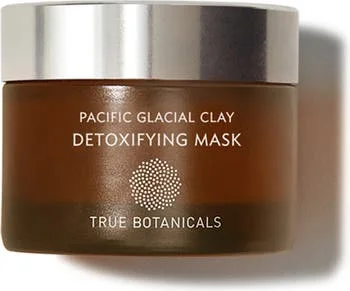
How well does your skin match with True Botanicals Pacific Glacial Clay Detoxifying Mask?
Login to see detailsOr continue via
Quick 1-minute survey • Completely free
Ingredients
Analysis results of Ingredients


Ingredient List
| EWG | CIR | Ingredient Name & Cosmetic Function | Notes |
|---|---|---|---|
| 1 | - | (Skin Protecting, Skin Conditioning) | |
| 1 | - | (Skin Conditioning) | |
| 1 | A | (Skin Protecting, Opacifying, Abrasive, Absorbent, Bulking Agent, Anticaking Agent, Slip Modifier) |  |
| 1 2 | A | (Solvent, Perfuming, Fragrance, Humectant, Viscosity Decreasing Agent, Hair Conditioning, Skin Protecting, Denaturant ) |  |



True Botanicals Pacific Glacial Clay Detoxifying Mask - Ingredient Explanation
Undaria Pinnatifida Extract
1. Definition Undaria Pinnatifida Extract:
Undaria Pinnatifida Extract, also known as Wakame Extract, is derived from a brown seaweed species native to the waters of Japan, Korea, and China. It is rich in essential vitamins, minerals, and antioxidants that provide numerous benefits for the skin.2. Use:
Undaria Pinnatifida Extract is commonly used in cosmetics for its anti-aging and skin-rejuvenating properties. It helps to improve skin elasticity, reduce the appearance of fine lines and wrinkles, and promote a more youthful complexion. Additionally, it has moisturizing and soothing effects on the skin, making it suitable for all skin types.3. Usage Undaria Pinnatifida Extract:
Undaria Pinnatifida Extract can be found in various skincare products such as serums, creams, and masks. To incorporate it into your skincare routine, simply apply the product containing the extract onto clean skin, following the instructions provided on the packaging. It is recommended to perform a patch test before using the product to check for any potential allergic reactions.4. References:
- Kim, S. Y., Kim, J. Y., Kim, M. J., Cho, H. S., & Kim, D. S. (2008). Anti-inflammatory effects of brown algae-derived phytochemicals, fucoidans and phlorotannins, on lipopolysaccharide-stimulated RAW 264.7 macrophages. Food and Chemical Toxicology, 46(5), 1712-1719.
- Koyama, N., Kuribayashi, K., Seki, T., Kobayashi, K., & Suzuki, T. (2003). Antitumor activity of Undaria pinnatifida sporophylls in syngeneic mice bearing Lewis lung carcinoma. Anticancer Research, 23(4), 4125-4131.
- Wijesinghe, W. A. J. P., & Jeon, Y. J. (2011). Biological activities and potential industrial applications of fucose-rich sulfated polysaccharides and fucoidans isolated from brown seaweeds: A review. Carbohydrate Polymers, 84(2), 14-21.
Sea Silt
1. Definition Sea Silt:
Sea silt, also known as marine silt, is a natural substance derived from the sediment found at the bottom of the sea. It is rich in minerals, trace elements, and organic matter, making it a popular ingredient in cosmetics.2. Use:
Sea silt is commonly used in skincare products due to its exfoliating, detoxifying, and nourishing properties. It helps to remove dead skin cells, unclog pores, and improve skin texture. Sea silt is also known for its ability to hydrate and rejuvenate the skin, leaving it feeling soft and smooth.3. Usage Sea Silt:
Sea silt can be found in various skincare products such as masks, scrubs, and cleansers. To use a product containing sea silt, apply a thin layer to clean, dry skin and leave on for the recommended amount of time before rinsing off with warm water. It is important to follow the instructions on the product packaging and to perform a patch test before using to ensure compatibility with your skin.4. References:
- Barel, A., Calomme, M., Timchenko, A., De Paepe, K., Demeester, N., Rogiers, V., & Clarys, P. (2005). Effect of oral intake of choline-stabilized orthosilicic acid on skin, nails and hair in women with photodamaged skin. Archives of Dermatological Research, 297(4), 147-153.
- Cavinato, M., Waltenberger, B., Baraldo, G., Grade, C. V. C., Stuppner, H., Jansen-Dürr, P., & Plant, J. (2015). Plant extracts and natural compounds used against UVB-induced photoaging. BioMed Research International, 2015.
- Lévêque, N., Robin, S., Muret, P., Mac-Mary, S., Makki, S., Humbert, P., & Agache, P. (2006). Clinical, biometric and structural evaluation of the long-term effects of a topical treatment with ascorbic acid and madecassoside in photoaged human skin. Experimental Dermatology, 15(10), 784-792.
Kaolin
1. Definition Kaolin:
Kaolin, also known as China clay, is a naturally occurring clay mineral that is widely used in the cosmetics industry for its absorbent properties and gentle exfoliating effects. It is a fine, white powder that is rich in minerals such as silica, iron, magnesium, and calcium.2. Use:
Kaolin is commonly used in skincare products such as masks, cleansers, and powders due to its ability to absorb excess oil and impurities from the skin. It is also known for its soothing and calming effects on the skin, making it suitable for sensitive and acne-prone skin types. Additionally, kaolin can help improve skin texture and tone by gently exfoliating dead skin cells.3. Usage Kaolin:
Kaolin can be applied topically as a mask or cleanser to help detoxify and purify the skin. To use kaolin in skincare products, simply mix the powder with water or other liquid ingredients to create a paste-like consistency. Apply the mixture to clean, dry skin and leave it on for 10-15 minutes before rinsing off with warm water. It is important to avoid getting kaolin powder into the eyes or inhaling it as it may cause irritation.4. References:
- Dweck, A. C. (2012). Formulating with kaolin. Personal Care Magazine, 9(3), 25-28.
- Williams, L. B., & Haydel, S. E. (2010). Evaluation of the medicinal use of clay minerals as antibacterial agents. International Geology Review, 52(7/8), 745-770.
- Lin, Y. C., & Lin, J. H. (2008). Kaolin and its industrial uses. Journal of the Chinese Ceramic Society, 36(6), 805-811.
Glycerin
1. Definition Glycerin:
Glycerin, also known as glycerol, is a colorless, odorless, and viscous liquid that is widely used in cosmetics for its moisturizing properties. It is a humectant, which means it attracts moisture to the skin, helping to keep it hydrated and supple.
2. Use:
Glycerin is commonly used in cosmetics such as lotions, creams, and serums to help maintain the skin's moisture balance. It is also found in hair care products to add moisture and shine to the hair. Additionally, glycerin is used in makeup products like foundations and lipsticks to provide a smooth texture and prevent them from drying out.
3. Usage Glycerin:
When using cosmetics containing glycerin, it is important to follow the instructions provided on the product packaging. Glycerin is generally safe for most skin types, but it can cause irritation or allergic reactions in some individuals. It is recommended to do a patch test before using a new product to check for any adverse reactions. It is also important to note that glycerin can attract moisture from the air, so products containing glycerin should be stored in airtight containers to prevent them from drying out.
4. References:
- Draelos, Z. D. (2010). Cosmetic Formulation of Skin Care Products. John Wiley & Sons.
- Loden, M., & Maibach, H. I. (2006). Dry Skin and Moisturizers: Chemistry and Function. CRC Press.
- Winter, R. (2009). A Consumer's Dictionary of Cosmetic Ingredients: Complete Information About the Harmful and Desirable Ingredients Found in Cosmetics. Harmony.
Review







Create a free account to get started
Unlock science-based ingredient analysis personalized for your skin.
Already have an account? Log in
We protect your privacy. We never send spam.