


Analysis locked
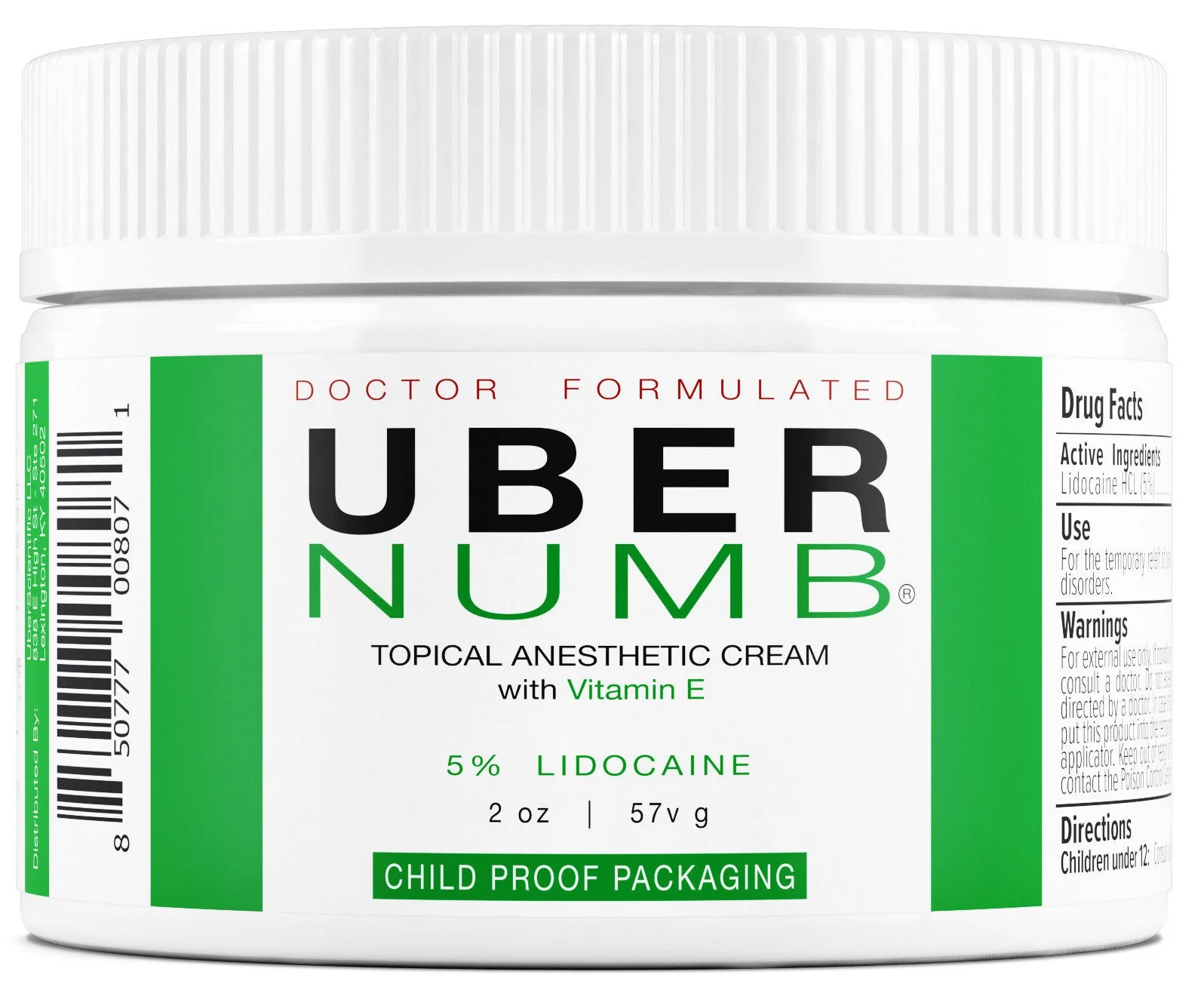
How well does your skin match with UberScientific Uber Numb?
Login to see detailsOr continue via
Quick 1-minute survey • Completely free
Ingredients
Analysis results of Ingredients


Ingredient List
| EWG | CIR | Ingredient Name & Cosmetic Function | Notes |
|---|---|---|---|
| 3 | - | | |
| - | - | Allantoin Gel | |
| 1 | A | (Viscosity Controlling, Viscosity Increasing Agent, Emulsion Stabilising, Gel Forming) | |
| 1 2 | A | (Masking, Fragrance, Chelating Agent, pH adjusting agent, pH adjusting agent) |  |

UberScientific Uber Numb - Ingredient Explanation
Lidocaine
1. Definition Lidocaine:
Lidocaine is a local anesthetic medication that is commonly used to numb the skin or mucous membranes. It works by blocking nerve signals in the body, which helps to reduce pain or discomfort.2. Use:
Lidocaine is often used in cosmetics to help minimize pain or discomfort during procedures such as laser hair removal, tattooing, or injections. It can also be found in topical creams and gels to provide temporary relief from itching, burning, or other skin irritations.3. Usage Lidocaine:
When using lidocaine in cosmetics, it is important to follow the instructions provided on the product packaging or as directed by a healthcare professional. It is recommended to perform a patch test before applying lidocaine to a larger area of skin to check for any allergic reactions. Additionally, it is essential to avoid using lidocaine on broken or irritated skin, as this can increase the risk of absorption into the bloodstream and potential side effects.4. References:
- U.S. National Library of Medicine. (2019). Lidocaine topical. Retrieved from https://medlineplus.gov/druginfo/meds/a618004.html
- Skin Therapy Letter. (2015). Topical lidocaine for the treatment of postherpetic neuralgia. Retrieved from https://www.ncbi.nlm.nih.gov/pmc/articles/PMC4520869/
- American Academy of Dermatology. (n.d.). Cosmetic procedures: Before, during, and after. Retrieved from https://www.aad.org/public/everyday-care/skin-care-basics/cosmetic-procedures/before-during-and-after.
Allantoin Gel
Ingredient data is being updated. Please check back later.
Carbomer
1. Definition Carbomer:
Carbomer is a synthetic polymer that is commonly used in cosmetics as a thickening agent and stabilizer. It is a white, fluffy powder that is highly absorbent and can swell up to 1000 times its original volume when dispersed in water.2. Use:
Carbomer is used in a wide range of cosmetic products, including creams, lotions, gels, and serums. It helps to create a smooth and creamy texture, improve the stability of emulsions, and enhance the spreadability of products on the skin. Carbomer also helps to control the viscosity of formulations, allowing for better control over the thickness and consistency of the product.3. Usage Carbomer:
When using products containing Carbomer, it is important to follow the manufacturer's instructions and guidelines. It is typically used in concentrations ranging from 0.1% to 1% in cosmetic formulations. Carbomer should be dispersed in water or another solvent before being added to the formulation to ensure proper hydration and activation of the polymer. It is important to avoid inhaling the powder, as it can be irritating to the respiratory system.4. References:
- Sharma, A., & Jain, A. (2012). Carbomers: A review. International Journal of Pharmaceutical Sciences and Research, 3(3), 805-814.
- Liao, Y., & Wang, J. (2017). Carbomer: A versatile polymer in pharmaceutical applications. Polymer Chemistry, 8(3), 355-366.
- Patel, D. (2015). Carbomer in pharmaceuticals: A review. World Journal of Pharmacy and Pharmaceutical Sciences, 4(2), 121-133.
Citric Acid
1. Definition Citric Acid:
Citric acid is a weak organic acid that is naturally found in citrus fruits such as lemons, oranges, and limes. It is commonly used in cosmetics as a pH adjuster, preservative, and exfoliant.
2. Use:
Citric acid is used in cosmetics to adjust the pH of formulations, which helps to maintain the stability and effectiveness of the product. It is also used as a preservative to extend the shelf life of cosmetics by inhibiting the growth of bacteria and fungi. Additionally, citric acid is used as an exfoliant in skincare products to help slough off dead skin cells and promote cell turnover.
3. Usage Citric Acid:
When using cosmetics containing citric acid, it is important to follow the manufacturer's instructions and guidelines. Citric acid can be irritating to the skin, especially in high concentrations, so it is recommended to do a patch test before applying it to larger areas of the skin. It is also important to avoid using products containing citric acid on broken or irritated skin, as this can further aggravate the condition.
4. References:
- "Citric Acid in Cosmetics: Is It Safe?" by Healthline
- "The Role of Citric Acid in Cosmetics" by The Derm Review
- "Citric Acid: Benefits, Uses, and Side Effects" by Verywell Health
Review








Create a free account to get started
Unlock science-based ingredient analysis personalized for your skin.
Already have an account? Log in
We protect your privacy. We never send spam.