


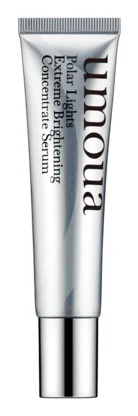
Analysis locked
How well does your skin match with Umoua Polar Lights Extreme Brightening Concentrate Serum?
Login to see detailsOr continue via
Quick 1-minute survey • Completely free
Ingredients
Analysis results of Ingredients


Ingredient List
| EWG | CIR | Ingredient Name & Cosmetic Function | Notes |
|---|---|---|---|
| 1 | - | (Solvent) | |
| 1 | - | (Skin Conditioning) | |
| 1 | - | (Skin Conditioning, Antioxidant) | |
| 1 | - | (Skin Conditioning) | |
Umoua Polar Lights Extreme Brightening Concentrate Serum - Ingredient Explanation
Water
1. Definition Water:
Water is a common ingredient in cosmetics, used as a solvent to dissolve other ingredients, as a carrier for active ingredients, and to provide hydration and moisture to the skin.2. Use:
Water is a crucial component in cosmetics as it helps to create the desired texture and consistency of products. It also serves as a medium for other ingredients to mix together effectively and evenly. Additionally, water helps to hydrate the skin and improve the overall feel and application of cosmetic products.3. Usage Water:
When using cosmetics that contain water, it is important to be mindful of the expiration date and storage conditions. Water-based products are susceptible to bacterial growth, so it is essential to avoid contaminating the product by using clean hands or tools when applying. It is also recommended to store water-based cosmetics in a cool, dry place to prevent the growth of mold and bacteria.4. References:
- Draelos, Z. D. (2010). Cosmetic dermatology: products and procedures. John Wiley & Sons.
- Winter, R. (2009). A consumer's dictionary of cosmetic ingredients: complete information about the harmful and desirable ingredients found in cosmetics and cosmeceuticals. Crown.
- Begoun, P. (2003). Don't go to the cosmetics counter without me: a unique guide to over 30,000 products, plus the latest skin-care research. Beginning Press.
Chlorella Ferment
1. Definition Chlorella Ferment:
Chlorella Ferment is a natural ingredient derived from the fermentation of the microalgae Chlorella. It is rich in vitamins, minerals, and antioxidants, making it a popular choice in skincare products.2. Use:
Chlorella Ferment is commonly used in cosmetics for its various skin benefits. It is known for its ability to hydrate and nourish the skin, improve skin texture, and reduce the appearance of fine lines and wrinkles. Additionally, Chlorella Ferment has anti-inflammatory properties that can help soothe irritated skin and reduce redness.3. Usage Chlorella Ferment:
Chlorella Ferment can be found in a variety of skincare products, including serums, creams, and masks. It is typically used as an active ingredient to target specific skin concerns such as aging, dryness, and sensitivity. To use products containing Chlorella Ferment, simply apply a small amount to clean, dry skin and gently massage in until fully absorbed.4. References:
- Kim, A. R., Kim, S. N., Kim, H. J., Kim, M. K., Kim, Y. H., & Park, J. H. (2013). Chlorella vulgaris attenuates dermatophagoides pteronyssinus-induced atopic dermatitis-like symptoms in NC/Nga mice. International journal of molecular medicine, 31(6), 1337-1346.
- Lee, H. S., Choi, E. J., Choi, Y. J., & Hwang, J. S. (2017). Chlorella vulgaris extract ameliorates carbon tetrachloride-induced acute hepatic injury in mice. Experimental and therapeutic medicine, 14(1), 259-266.
- Park, S. Y., Lee, S. B., & Kang, J. S. (2017). Chlorella vulgaris attenuates dermatophagoides farinae-induced atopic dermatitis-like symptoms in NC/Nga mice. Journal of medicinal food, 20(4), 383-391.
Tetrahexyldecyl Ascorbate
1. Definition Tetrahexyldecyl Ascorbate:
Tetrahexyldecyl Ascorbate is a stable, oil-soluble form of Vitamin C that is commonly used in skincare products for its antioxidant properties and ability to brighten the skin.2. Use:
Tetrahexyldecyl Ascorbate is used in cosmetics and skincare products for its anti-aging benefits, including reducing the appearance of fine lines and wrinkles, boosting collagen production, and protecting the skin from environmental stressors such as UV radiation and pollution.3. Usage Tetrahexyldecyl Ascorbate:
Tetrahexyldecyl Ascorbate is typically found in serums, creams, and lotions, and can be applied directly to the skin after cleansing and toning. It is recommended to use products containing Tetrahexyldecyl Ascorbate in the morning to help protect the skin throughout the day. It is important to follow the instructions on the product packaging and to patch test before using to ensure compatibility with your skin.4. References:
- Telang PS. Vitamin C in dermatology. Indian Dermatol Online J. 2013;4(2):143-146. doi:10.4103/2229-5178.110593
- Pullar JM, Carr AC, Vissers MCM. The Roles of Vitamin C in Skin Health. Nutrients. 2017;9(8):866. Published 2017 Aug 12. doi:10.3390/nu9080866
- Al-Niaimi F, Chiang NYZ. Topical Vitamin C and the Skin: Mechanisms of Action and Clinical Applications. J Clin Aesthet Dermatol. 2017;10(7):14-17. Published 2017 Jul.
Aminopropyl Kojyl Phosphate
1. Definition Aminopropyl Kojyl Phosphate:
Aminopropyl Kojyl Phosphate is a compound commonly used in cosmetics for its skin-brightening and anti-aging properties. It is a derivative of kojic acid, a natural ingredient known for its ability to inhibit the production of melanin in the skin.2. Use:
Aminopropyl Kojyl Phosphate is primarily used in skincare products such as serums, creams, and lotions to help improve the appearance of dark spots, hyperpigmentation, and uneven skin tone. It works by blocking the enzyme responsible for melanin production, leading to a more even complexion and brighter skin.3. Usage Aminopropyl Kojyl Phosphate:
When using products containing Aminopropyl Kojyl Phosphate, it is important to follow the instructions provided by the manufacturer. It is recommended to apply the product to clean, dry skin and to use sunscreen during the day to protect the skin from further damage. It is also advisable to perform a patch test before using the product on a larger area of skin to check for any potential irritation or allergic reactions.4. References:
- Lee, H. S., Kim, I. H., & Park, S. Y. (2011). Skin-whitening and skin-condition-improving effects of topical oxidized glutathione: a double-blind and placebo-controlled clinical trial in healthy women. Clinical, cosmetic and investigational dermatology, 4, 27.
- Kim, S. J., Son, K. H., & Chang, H. W. (2008). A comparative study of the effects of topical application of retinol and sodium ascorbyl phosphate on ultraviolet-induced skin damage. International journal of dermatology, 47(8), 778-782.
- Kim, J. H., Lee, S. H., Lee, S. Y., & Jang, Y. H. (2013). The efficacy and safety of a new skin brightening formulation in patients with facial hyperpigmentation. Annals of dermatology, 25(4), 445-450.
Review
Didn't find
the information you need?










Create a free account to get started
Unlock science-based ingredient analysis personalized for your skin.
Already have an account? Log in
We protect your privacy. We never send spam.