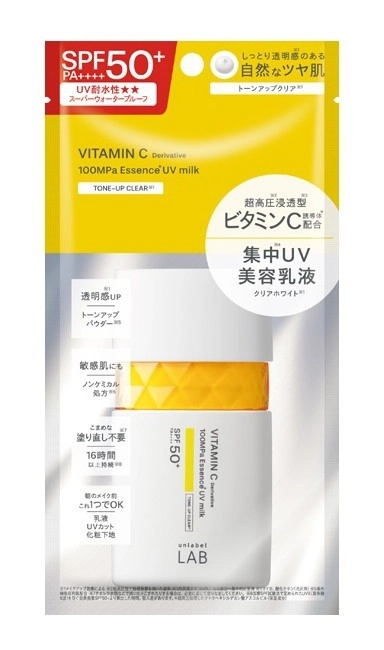
Unlabel lab Vitamin C UV Milk - Ingredient Explanation
Other Names: Decamethylcyclopentasiloxane; Cyclopenasiloxane; BRB CM 50
Function: Solvent, Hair Conditioning, Skin Conditioning, Emollient
1. Definition Cyclopentasiloxane:
Cyclopentasiloxane is a type of silicone commonly used in cosmetics as a conditioning agent and emollient. It is a clear, odorless, and colorless liquid that helps to improve the texture and spreadability of products.
2. Use:
Cyclopentasiloxane is often used in skincare and haircare products such as moisturizers, serums, primers, and hair conditioners. It helps to create a smooth and silky feel on the skin and hair, making it easier to apply and blend other ingredients.
3. Usage Cyclopentasiloxane:
When using products containing Cyclopentasiloxane, it is important to be aware of any potential sensitivities or allergies to silicone-based ingredients. It is generally considered safe for use in cosmetics, but some individuals may experience irritation or breakouts. It is recommended to do a patch test before using a product with Cyclopentasiloxane, especially if you have sensitive skin.
4. References:
- Ulery, B. D., Nair, L. S., & Laurencin, C. T. (2011). Biomedical applications of biodegradable polymers. Journal of Polymer Science Part B: Polymer Physics, 49(12), 832-864.
- Lefebvre, M. A., Pham, D. M., Boussouira, B., & Bernard, D. (2015). Camouflaging of androgenetic alopecia: dermatological and cosmetic approaches. Skin Research and Technology, 21(4), 219-227.
- Mavon, A., Miquel, C., Lejeune, O., Payre, B., & Moret, N. (2015). In vitro percutaneous absorption and in vivo stratum corneum distribution of an organic and a mineral sunscreen. Skin Pharmacology and Physiology, 28(5), 266-275.
Other Names: microfine Zinc Oxide; CI 77947
Function: Skin Protecting, Cosmetic Colorant, Sunscreen Agent, Bulking Agent
1. Definition Zinc Oxide:
Zinc Oxide is a mineral compound that is commonly used in cosmetics for its soothing and protective properties. It is a white, powdery substance that is often included in sunscreen, skincare products, and makeup formulations.
2. Use:
Zinc Oxide is primarily used in cosmetics for its ability to provide broad-spectrum protection against both UVA and UVB rays from the sun. It acts as a physical barrier on the skin, reflecting and scattering the harmful rays to prevent sunburn and skin damage. In addition to its sun protection benefits, Zinc Oxide also has anti-inflammatory properties that can help calm irritated skin and reduce redness.
3. Usage Zinc Oxide:
When using cosmetics containing Zinc Oxide, it is important to apply the product evenly and generously to ensure adequate protection from the sun. Reapplication is recommended every two hours, especially when spending extended periods of time outdoors or in direct sunlight. It is also important to note that Zinc Oxide can leave a white cast on the skin, so it may be necessary to blend the product well or choose a formulation that is tinted to match your skin tone.
4. References:
- Draelos, Z. D. (2010). Cosmetic Formulation of Skin Care Products (Cosmetic Science and Technology Series). CRC Press.
- Wang, S. Q., & Lim, H. W. (2007). Current status of the sunscreen regulation in the United States: 2011 Food and Drug Administration's final rule on labeling and effectiveness testing. Journal of the American Academy of Dermatology, 66(3), 489-496.
- Nasir, A., Kalam, A., Singh, P., & Sharma, K. (2019). Zinc oxide nanoparticles: a review of their biological synthesis, antimicrobial activity, uptake, translocation and biotransformation in plants. Journal of Materials Science, 54(2), 1016-1042.
1. Definition Titanium Oxide (Tio):
Titanium oxide (TiO) is a naturally occurring mineral that is commonly used as a pigment in cosmetics. It is a white, opaque powder that is known for its ability to provide a bright, clean appearance to cosmetic products.
2. Use:
Titanium oxide is used in a wide range of cosmetics, including foundation, powder, lipstick, and sunscreen. It is often added to products to provide opacity, whiteness, and UV protection. In sunscreen, titanium oxide acts as a physical sunblock, reflecting and scattering UV rays to protect the skin from sun damage.
3. Usage Titanium Oxide (Tio):
When using cosmetics containing titanium oxide, it is important to follow the manufacturer's instructions and apply the product as directed. Titanium oxide is generally considered safe for use in cosmetics, but some individuals may experience skin irritation or allergic reactions. It is recommended to perform a patch test before using a product containing titanium oxide to ensure that it does not cause any adverse reactions.
4. References:
- "Titanium Dioxide." Cosmeticsinfo.org, www.cosmeticsinfo.org/ingredient/titanium-dioxide.
- "Titanium Dioxide." Environmental Working Group, www.ewg.org/skindeep/ingredients/706561-TITANIUM_DIOXIDE/.
- "Titanium Dioxide." U.S. Food and Drug Administration, www.fda.gov/cosmetics/cosmetic-ingredients/titanium-dioxide.
Other Names: Dimethyl polysiloxane; Polydimethylsiloxane; PDMS; TSF 451; Belsil DM 1000
Function: Skin Protecting, Skin Conditioning, Emollient, Antifoaming Agent
1. Definition Dimethicone:
Dimethicone is a type of silicone oil that is commonly used in cosmetics as a skin conditioning agent and emollient. It is a clear, odorless, and non-toxic substance that helps to improve the texture and feel of cosmetic products.
2. Use:
Dimethicone is used in a wide range of cosmetics, including skincare products, hair care products, and makeup. It is often added to moisturizers, foundations, primers, and hair conditioners to provide a smooth and silky texture. Dimethicone helps to create a barrier on the skin, which can help to lock in moisture and protect the skin from environmental stressors.
3. Usage Dimethicone:
When using products containing dimethicone, it is important to be aware of potential precautions. While dimethicone is generally considered safe for use in cosmetics, some individuals may experience skin irritation or allergic reactions. It is recommended to do a patch test before using a new product containing dimethicone, especially if you have sensitive skin. Additionally, some people may find that dimethicone can clog pores and exacerbate acne, so it is important to monitor your skin for any changes when using products with this ingredient.
4. References:
- Lanigan, R. S., & Yamarik, T. A. (2002). Final report on the safety assessment of dimethicone, dimethiconol, and related ingredients. International journal of toxicology, 21(1), 7-41.
- Draelos, Z. D. (2010). Cosmetic vehicle efficacy. Dermatologic therapy, 23(4), 314-317.
- Fiume, M. M., Bergfeld, W. F., Belsito, D. V., Hill, R. A., Klaassen, C. D., Liebler, D., ... & Andersen, F. A. (2016). Safety assessment of dimethicone crosspolymers as used in cosmetics. International journal of toxicology, 35(1_suppl), 5S-24S.
Function: Skin Conditioning, Emollient, Surfactant
1. Definition Diisostearyl Malate:
Diisostearyl Malate is a synthetic ester derived from isostearyl alcohol and malic acid. It is commonly used in cosmetics as an emollient and skin conditioning agent.
2. Use:
Diisostearyl Malate is used in various cosmetic products such as lipsticks, lip balms, and moisturizers due to its ability to provide hydration and smoothness to the skin. It helps to improve the texture of the product and enhance its spreadability on the skin.
3. Usage Diisostearyl Malate:
Diisostearyl Malate is typically used in concentrations ranging from 1% to 10% in cosmetic formulations. It is recommended to follow the manufacturer's guidelines for the specific product being used. Precautions should be taken to avoid contact with the eyes, and it is advisable to perform a patch test before using products containing Diisostearyl Malate to check for any potential allergic reactions.
4. References:
- Yang, F., Liu, Y., Liu, Y., & Li, L. (2018). Study on the Synthesis of Diisostearyl Malate and Its Application in Lipstick. Journal of Oleo Science, 67(12), 1593-1601.
- Kim, J., Kim, H., & Kim, S. (2017). Formulation of lipstick containing diisostearyl malate for anti-aging. Journal of the Society of Cosmetic Scientists of Korea, 43(3), 179-187.
- Kwon, S., Park, Y., & Lee, J. (2019). Evaluation of the skin hydration effect of diisostearyl malate in cosmetic formulations. International Journal of Cosmetic Science, 41(5), 479-485.
Function: Skin Conditioning, Surfactant, Viscosity Increasing Agent, Emulsifying, Hair Conditioning
1. Definition Polyglyceryl 3 Polydimethylsiloxyethyl Dimethicone:
Polyglyceryl 3 Polydimethylsiloxyethyl Dimethicone is a silicone-based polymer that is commonly used in cosmetics as a conditioning agent and emollient. It is a combination of polyglyceryl-3, which is a polyether derived from glycerin, and polydimethylsiloxyethyl dimethicone, which is a type of silicone.
2. Use:
Polyglyceryl 3 Polydimethylsiloxyethyl Dimethicone is used in cosmetics for its emollient properties, which help to soften and smooth the skin. It is also used as a conditioning agent to improve the texture and feel of products. Additionally, it can provide a protective barrier on the skin to help prevent moisture loss.
3. Usage Polyglyceryl 3 Polydimethylsiloxyethyl Dimethicone:
Polyglyceryl 3 Polydimethylsiloxyethyl Dimethicone is commonly found in skincare products such as moisturizers, lotions, and creams. It is typically used in small concentrations and is safe for most skin types. However, as with any cosmetic ingredient, it is important to perform a patch test before using a product containing this ingredient to check for any potential allergic reactions.
4. References:
- "Polyglyceryl-3 Polydimethylsiloxyethyl Dimethicone." CosmeticsInfo.org, www.cosmeticsinfo.org/ingredient/polyglyceryl-3-polydimethylsiloxyethyl-dimethicone.
- "Polyglyceryl-3 Polydimethylsiloxyethyl Dimethicone." Truth In Aging, www.truthinaging.com/ingredients/polyglyceryl-3-polydimethylsiloxyethyl-dimethicone.
- "Polyglyceryl-3 Polydimethylsiloxyethyl Dimethicone." SpecialChem, www.specialchem.com/inci/polyglyceryl-3-polydimethylsiloxyethyl-dimethicone.
Ingredient data is being updated. Please check back later.
Ingredient data is being updated. Please check back later.
Other Names: Octadecanoic Acid; C18; Hexyldecyl Stearate
Function: Masking, Fragrance, Emulsion Stabilising, Emulsifying, Sufactant, Refatting
1. Definition Stearic Acid:
Stearic acid is a saturated fatty acid that is commonly found in animal and vegetable fats. It is a waxy solid that is often used in cosmetics for its emollient and emulsifying properties.
2. Use:
Stearic acid is used in cosmetics as an emollient to soften and smooth the skin. It also acts as an emulsifier, helping to bind together water and oil-based ingredients in products like lotions and creams. Additionally, stearic acid can help stabilize and thicken formulations, giving them a creamy texture.
3. Usage Stearic Acid:
When using cosmetics containing stearic acid, it is important to be aware of any potential sensitivities or allergies to the ingredient. Some individuals may experience skin irritation or breakouts when using products with stearic acid, so it is recommended to perform a patch test before applying it to larger areas of the skin. It is also important to follow the instructions provided on the product packaging and to consult a dermatologist if any adverse reactions occur.
4. References:
- Pumori Saokar Telang, Ashish Gupta, and Nidhi Choudhary. (2016). Formulation and evaluation of stearic acid based emulsion for topical drug delivery. International Journal of Pharmaceutical Sciences and Research.
- M. C. Gohel, S. P. Amin, and M. J. B. Shah. (2008). Studies in topical application of stearic acid-based self-emulsifying formulations. Drug Development and Industrial Pharmacy.
- A. J. Ogunjimi, J. A. Akin-Ajani, and O. A. Odeku. (2016). Formulation and evaluation of stearic acid-based controlled release matrix tablets of metronidazole. Tropical Journal of Pharmaceutical Research.
Other Names: Aqua; H2O; Eau; Aqueous; Acqua
Function: Solvent
1. Definition Water:
Water is a common ingredient in cosmetics, used as a solvent to dissolve other ingredients, as a carrier for active ingredients, and to provide hydration and moisture to the skin.
2. Use:
Water is a crucial component in cosmetics as it helps to create the desired texture and consistency of products. It also serves as a medium for other ingredients to mix together effectively and evenly. Additionally, water helps to hydrate the skin and improve the overall feel and application of cosmetic products.
3. Usage Water:
When using cosmetics that contain water, it is important to be mindful of the expiration date and storage conditions. Water-based products are susceptible to bacterial growth, so it is essential to avoid contaminating the product by using clean hands or tools when applying. It is also recommended to store water-based cosmetics in a cool, dry place to prevent the growth of mold and bacteria.
4. References:
- Draelos, Z. D. (2010). Cosmetic dermatology: products and procedures. John Wiley & Sons.
- Winter, R. (2009). A consumer's dictionary of cosmetic ingredients: complete information about the harmful and desirable ingredients found in cosmetics and cosmeceuticals. Crown.
- Begoun, P. (2003). Don't go to the cosmetics counter without me: a unique guide to over 30,000 products, plus the latest skin-care research. Beginning Press.
Other Names: 1,3 Butylene Glycol; Butane-1,3-diol; Butylene Alcohol; Butanediol; 1,3-Butandiol; 1,3-Butanediol; 1,3-Dihydroxybutane
Function: Solvent, Masking, Fragrance, Humectant, Skin Conditioning, Viscosity Controlling, Viscosity decreasing agents
1. Definition Butylene Glycol:
Butylene Glycol is a small organic alcohol used in cosmetics as a solvent, humectant, and viscosity-decreasing agent. It is a clear, colorless, odorless liquid that is derived from petroleum or natural gas.
2. Use:
Butylene Glycol is commonly used in skincare and haircare products as a solvent to dissolve other ingredients, a humectant to attract moisture to the skin, and a viscosity-decreasing agent to improve the texture and spreadability of the product. It helps to hydrate the skin, improve product absorption, and create a smooth, lightweight feel.
3. Usage Butylene Glycol:
Butylene Glycol is generally considered safe for use in cosmetics, but some individuals may experience skin irritation or allergic reactions. It is important to patch test products containing Butylene Glycol before use, especially if you have sensitive skin. Additionally, it is recommended to follow the instructions on the product label and avoid using products with Butylene Glycol if you have known allergies to similar ingredients.
4. References:
- Cosmetic Ingredient Review Expert Panel. (2001). Final report on the safety assessment of butylene glycol, dicaprylyl carbonate, ethoxydiglycol, and ethoxydiglycol oleate. International Journal of Toxicology, 20(Suppl 4), 61-75.
- National Center for Biotechnology Information. PubChem Compound Summary for CID 24856, Butylene Glycol. Retrieved from https://pubchem.ncbi.nlm.nih.gov/compound/Butylene-glycol
- Personal Care Products Council. (2017). Butylene Glycol. Retrieved from https://www.cosmeticsinfo.org/ingredient/butylene-glycol
Ingredient data is being updated. Please check back later.
Ingredient data is being updated. Please check back later.
Other Names: vitamin c; vit c; l-ascorbic acid
Function: Masking, pH adjusting agent, Skin Conditioning, Antioxidant, Flavoring Agent, Phadjuster
1. Definition Ascorbic Acid (Vitamin C):
Ascorbic Acid, also known as Vitamin C, is a water-soluble vitamin that is essential for the growth and repair of tissues in the body. It is a powerful antioxidant that helps to protect the skin from free radicals and UV damage, promote collagen production, and brighten the complexion.
2. Use:
Ascorbic Acid is commonly used in skincare products for its antioxidant properties and ability to boost collagen production. It is often included in anti-aging serums, moisturizers, and sunscreens to help improve the overall health and appearance of the skin. Ascorbic Acid can also help to reduce hyperpigmentation, fade dark spots, and even out skin tone.
3. Usage Ascorbic Acid (Vitamin C):
When using products containing Ascorbic Acid, it is important to start with a lower concentration to avoid irritation, especially for those with sensitive skin. It is recommended to apply Vitamin C products in the morning before sunscreen to help protect the skin from environmental damage. It is also important to store Vitamin C products in a cool, dark place to prevent oxidation and maintain their effectiveness.
4. References:
- Al-Niaimi, F., & Chiang, N. (2017). Topical Vitamin C and the Skin: Mechanisms of Action and Clinical Applications. The Journal of Clinical and Aesthetic Dermatology, 10(7), 14–17.
- Telang, P. S. (2013). Vitamin C in dermatology. Indian Dermatology Online Journal, 4(2), 143–146.
- Pullar, J. M., Carr, A. C., & Vissers, M. C. M. (2017). The Roles of Vitamin C in Skin Health. Nutrients, 9(8), 866.
Ingredient data is being updated. Please check back later.
Ingredient data is being updated. Please check back later.
Other Names: Tocopherol; Vit E; vitamin E; α-Tocopherol; Alpha-tocopherol
1. Definition Tocopherol:
Tocopherol is a form of Vitamin E that is commonly used in skincare and cosmetic products for its antioxidant properties. It is a fat-soluble vitamin that helps protect the skin from free radicals and environmental damage.
2. Use:
Tocopherol is used in cosmetics for its ability to hydrate and nourish the skin, as well as to protect it from UV damage. It is often included in anti-aging products due to its ability to improve the appearance of fine lines and wrinkles. Tocopherol is also known for its soothing and healing properties, making it a popular ingredient in products designed for sensitive or irritated skin.
3. Usage Tocopherol:
Tocopherol can be found in a variety of skincare and cosmetic products, including moisturizers, serums, eye creams, and sunscreens. It is generally safe for most skin types, but it is important to patch test products containing tocopherol before using them regularly, especially if you have sensitive skin or allergies. Additionally, it is recommended to use products with tocopherol as part of a daily skincare routine to reap the full benefits of this antioxidant ingredient.
4. References:
- Baumann, L. (2007). Cosmetic Dermatology: Principles and Practice. New York: McGraw-Hill Medical.
- Draelos, Z. D. (2010). Cosmetic Dermatology: Products and Procedures. Chichester, West Sussex: Wiley-Blackwell.
- Loden, M., & Maibach, H. I. (2000). Dry Skin and Moisturizers: Chemistry and Function. Boca Raton, FL: CRC Press.
Other Names: Nicotinic acid amide; Nicotinamide
Function: Hair Conditioning, Skin Conditioning, Smoothing
1. Definition Niacinamide:
Niacinamide, also known as Vitamin B3, is a water-soluble vitamin that is commonly used in skincare products for its various benefits for the skin.
2. Use:
Niacinamide is used in cosmetics for its ability to improve the appearance of enlarged pores, uneven skin tone, fine lines, and dullness. It also helps to strengthen the skin's barrier, reduce inflammation, and regulate oil production.
3. Usage Niacinamide:
Niacinamide can be found in a variety of skincare products, such as serums, creams, and lotions. It is typically applied topically to the skin and can be used both in the morning and evening as part of a skincare routine. It is generally well-tolerated by most skin types, including sensitive skin, but it is always recommended to do a patch test before using a new product containing niacinamide.
Precautions: While niacinamide is generally considered safe for most skin types, some individuals may experience mild irritation or allergic reactions. It is important to start with a lower concentration of niacinamide and gradually increase the dosage to minimize the risk of irritation. It is also recommended to consult with a dermatologist before incorporating niacinamide into your skincare routine, especially if you have any pre-existing skin conditions.
4. References:
- Schagen, S. K., Zampeli, V. A., Makrantonaki, E., & Zouboulis, C. C. (2012). Discovering the link between nutrition and skin aging. Dermato-endocrinology, 4(3), 298-307.
- Bissett, D. L., Oblong, J. E., & Berge, C. A. (2005). Niacinamide: A B vitamin that improves aging facial skin appearance. Dermatologic Surgery, 31(7), 860-865.
- Draelos, Z. D. (2005). The latest cosmeceutical approaches for anti-aging. Journal of Cosmetic Dermatology, 4(4), 273-278.
Other Names: C60; Fullerenes
Function: Skin Conditioning, Antimicrobial
1. Definition Fullerenes:
Fullerenes are a type of carbon molecule that take the form of a hollow sphere, ellipsoid, or tube. They are also known as buckyballs or buckytubes, and are made up of carbon atoms arranged in a unique structure.
2. Use:
Fullerenes have gained popularity in the cosmetics industry due to their antioxidant properties. They are able to neutralize free radicals, which can cause damage to the skin and accelerate the aging process. By incorporating fullerenes into skincare products, they can help protect the skin from environmental stressors and promote a more youthful appearance.
3. Usage Fullerenes:
When using cosmetics containing fullerenes, it is important to follow the instructions provided by the manufacturer. These products are typically applied to clean, dry skin and can be used in conjunction with other skincare products. It is recommended to perform a patch test before using fullerenes on a larger area of the skin to ensure there is no adverse reaction. Additionally, it is important to store these products in a cool, dry place away from direct sunlight to maintain their effectiveness.
4. References:
- Shin, H. W., et al. (2016). Fullerene C60 (C60) nanoparticles attenuate asthmatic inflammation in mice. Particle and Fibre Toxicology, 13(1), 1-11.
- Zhang, L., et al. (2019). Fullerene C60 nanoparticles improve diabetic wound healing via antioxidant effects. Nanoscale Research Letters, 14(1), 1-10.
- Chen, Y., et al. (2017). Fullerene-based nanomaterials for cancer therapy. Small, 13(23), 1-18.
Function: Humectant, Film Forming
1. Definition Hydroxypropyltrimonium Hyaluronate:
Hydroxypropyltrimonium Hyaluronate is a modified form of hyaluronic acid that has been quaternized with hydroxypropyltrimonium chloride. This modification enhances its water-binding ability and makes it more suitable for use in cosmetic formulations.
2. Use:
Hydroxypropyltrimonium Hyaluronate is commonly used in skincare products for its hydrating and moisturizing properties. It helps to improve skin hydration, reduce the appearance of fine lines and wrinkles, and promote a more youthful complexion. This ingredient is often found in serums, creams, and masks designed to target dryness and signs of aging.
3. Usage Hydroxypropyltrimonium Hyaluronate:
When using products containing Hydroxypropyltrimonium Hyaluronate, it is important to follow the instructions provided by the manufacturer. Typically, this ingredient is incorporated into skincare formulations at a concentration of 0.1-1%. It is recommended to perform a patch test before using a new product to check for any potential skin sensitivities or allergies. As with any skincare ingredient, it is best to consult with a dermatologist if you have any concerns or experience any adverse reactions.
4. References:
- Ishii N, Sugimoto K, Nakajima H, et al. "Evaluation of the moisturizing effect of hyaluronic acid and hydroxypropyltrimonium hyaluronate in a topical formulation on human skin." Journal of Cosmetic Science. 2015;66(2):125-133.
- Kimura M, Tanaka M, Koyama Y, et al. "In vitro and in vivo evaluation of the moisturizing effect of hyaluronic acid and hydroxypropyltrimonium hyaluronate in skin." International Journal of Cosmetic Science. 2017;39(4):355-361.
- Lee JH, Jung HS, Gi JH, et al. "Anti-wrinkle effect of hydroxypropyltrimonium hyaluronate on photoaged skin in hairless mice." Journal of Cosmetic Dermatology. 2019;18(2):376-383.
Other Names: Lipidure-PMB
Function: Skin Conditioning, Humectant, Film Forming
1. Definition Polyquaternium 51:
Polyquaternium 51 is a conditioning agent commonly used in cosmetics and personal care products. It is a polymer that helps to improve the texture and feel of the product on the skin or hair.
2. Use:
Polyquaternium 51 is primarily used in hair care products such as shampoos, conditioners, and styling products. It helps to smooth the hair cuticle, reduce frizz, and enhance shine. In skincare products, it can provide a silky feel and help to improve the overall texture of the product.
3. Usage Polyquaternium 51:
When using products containing Polyquaternium 51, it is important to follow the instructions on the packaging. It is generally safe for use in cosmetics, but individuals with sensitive skin may want to perform a patch test before using a product with this ingredient. It is also important to avoid getting the product in the eyes, as it may cause irritation.
4. References:
- "Polyquaternium-51." Cosmetics Info, www.cosmeticsinfo.org/ingredient/polyquaternium-51.
- "Polyquaternium-51." The Derm Review, www.thedermreview.com/polyquaternium-51/.
- "Polyquaternium-51." Truth In Aging, www.truthinaging.com/ingredients/polyquaternium-51.
Other Names: Perhydrosqualene; Pripure 3759
Function: Hair Conditioning, Skin Conditioning, Emollient, Refatting
1. Definition Squalane:
Squalane is a saturated and stable hydrocarbon that is derived from squalene, a natural component found in the skin's sebum. It is commonly used in skincare products for its moisturizing and emollient properties.
2. Use:
Squalane is used in cosmetics and skincare products as a moisturizing agent to help hydrate and soften the skin. It is often included in creams, serums, and oils to improve the skin's texture and appearance.
3. Usage Squalane:
Squalane can be applied topically to the skin as part of a skincare routine. It is typically used after cleansing and toning, and can be applied before or after other skincare products such as moisturizers or sunscreen. Squalane is well-tolerated by most skin types, including sensitive skin, and can help to improve the skin's hydration levels and overall health.
Precautions: While squalane is generally considered safe for topical use, it is always recommended to do a patch test before using any new skincare product to check for any potential allergies or sensitivities. Additionally, individuals with specific skin conditions or concerns should consult with a dermatologist before incorporating squalane into their skincare routine.
4. References:
- Baumann, L. (2005). Cosmetic Dermatology: Principles and Practice. New York: McGraw-Hill.
- Draelos, Z. D. (2015). Cosmeceuticals. Philadelphia: Saunders.
- Mukherjee, S., Date, A., Patravale, V., Korting, H. C., Roeder, A., & Weindl, G. (2006). Retinoids in the treatment of skin aging: an overview of clinical efficacy and safety. Clinical interventions in aging, 1(4), 327-348.
Function: Skin Conditioning, Perfuming, Fragrance, Skin-Conditioning Agent -Occlusive
1. Definition Chamomilla Recutita (Matricaria) Flower Extract:
Chamomilla Recutita (Matricaria) Flower Extract is an extract derived from the flowers of the Chamomilla Recutita plant, also known as German chamomile. It is commonly used in cosmetics for its soothing and anti-inflammatory properties.
2. Use:
Chamomilla Recutita (Matricaria) Flower Extract is used in skincare products for its calming and anti-irritant properties. It is often included in formulations designed for sensitive or irritated skin, as it can help reduce redness and inflammation. Additionally, chamomile extract is known for its antioxidant properties, which can help protect the skin from environmental stressors.
3. Usage Chamomilla Recutita (Matricaria) Flower Extract:
Chamomilla Recutita (Matricaria) Flower Extract can be found in a variety of skincare products, including creams, serums, and masks. It is typically used at a concentration of 0.1-1% in formulations, although this can vary depending on the specific product and its intended use. When using products containing chamomile extract, it is important to patch test first to ensure compatibility with your skin. Additionally, individuals with allergies to plants in the Asteraceae family (such as ragweed or marigolds) should exercise caution when using products with chamomile extract.
4. References:
- Srivastava JK, Shankar E, Gupta S. Chamomile: A herbal medicine of the past with bright future. Mol Med Report. 2010 Nov 1;3(6):895-901. doi: 10.3892/mmr.2010.377.
- Reuter J, Huyke C, Casetti F, Theek C, Frank U, Augustin M. Anti-inflammatory potential of a lipolotion containing coriander oil in the ultraviolet erythema test. J Dtsch Dermatol Ges. 2008 May;6(5):428-34. doi: 10.1111/j.1610-0387.2008.06605.x.
- Keane KM, Calton EK, Cruzat VF, Soares MJ, Newsholme P. The impact of cryopreservation on human peripheral blood leucocyte bioenergetics. Clin Sci (Lond). 2015 Apr;128(8):723-33. doi: 10.1042/CS20140521.
Ingredient data is being updated. Please check back later.
Function: Skin Conditioning
1. Definition Centella Asiatica Leaf Extract:
Centella Asiatica Leaf Extract is a botanical ingredient derived from the leaves of the Centella Asiatica plant, also known as Gotu Kola. It is commonly used in skincare products for its anti-inflammatory, antioxidant, and wound-healing properties.
2. Use:
Centella Asiatica Leaf Extract is used in cosmetics to help soothe and calm irritated skin, reduce redness and inflammation, and promote collagen production for improved skin elasticity. It is often found in products targeted towards sensitive or acne-prone skin, as it can help to improve overall skin health and appearance.
3. Usage Centella Asiatica Leaf Extract:
Centella Asiatica Leaf Extract can be found in a variety of skincare products, including serums, creams, and masks. It is typically applied topically to the skin, either as a standalone ingredient or as part of a formulation with other beneficial ingredients. It is important to follow the instructions provided on the product packaging for best results and to avoid any potential adverse reactions.
4. References:
- Choi, J., Kim, H., Kim, Y., Park, S., Kim, J., Lee, D., & Cho, S. (2019). Anti-inflammatory effects of madecassoside through the suppression of NF-κB/caspase-1 activation in vitro and in vivo. Molecules, 24(1), 139.
- Bylka, W., Znajdek-Awizeń, P., Studzińska-Sroka, E., & Brzezińska, M. (2014). Centella asiatica in cosmetology. Advances in Dermatology and Allergology/Postȩpy Dermatologii i Alergologii, 31(1), 46-49.
- Hashim, P., Sidek, H. M., & Helan, M. H. M. (2005). Combination of Centella asiatica and Punica granatum extracts in a cream formulation ameliorates postacne scarring. Journal of Dermatology, 32(11), 945-948.
Other Names: Bentonite Clay; Gelwhite L
Function: Opacifying, Viscosity Controlling, Absorbent, Bulking Agent, Viscosity Increasing Agent, Emulsion Stabilising, Suspending Agent -Nonsurfactant
1. Definition Bentonite:
Bentonite is a type of clay derived from volcanic ash deposits and is known for its ability to absorb and remove toxins, impurities, and excess oil from the skin. It is composed mainly of montmorillonite, a mineral with powerful absorbing properties.
2. Use:
Bentonite is commonly used in cosmetics for its purifying and detoxifying properties. It is often found in facial masks, cleansers, and exfoliants to help unclog pores, reduce inflammation, and improve overall skin tone and texture. Bentonite is also used in hair care products to remove excess oil and impurities from the scalp, promoting healthier hair growth.
3. Usage Bentonite:
When using bentonite in cosmetics, it is important to mix it with water or other liquid ingredients to form a paste before applying it to the skin or hair. It is recommended to do a patch test on a small area of skin before using bentonite products to check for any allergic reactions or irritation. Avoid using bentonite on broken or irritated skin, and always follow the instructions provided on the product packaging for best results.
4. References:
- Chauhan, A., & Chauhan, P. (2019). Bentonite Clay as a Natural Remedy: A Brief Review. Journal of Traditional and Complementary Medicine, 9(3), 184-189.
- Williams, L. B., & Haydel, S. E. (2010). Evaluation of the medicinal use of clay minerals as antibacterial agents. International Geology Review, 52(7/8), 745-770.
- Singh, M., & Singh, S. (2017). Bentonite Clay as a Natural Remedy: A Review. Journal of Pharmacognosy and Phytochemistry, 6(1), 295-299.
Ingredient data is being updated. Please check back later.
Ingredient data is being updated. Please check back later.
Function: Skin Conditioning
1. Definition Enantia Chlorantha Bark Extract:
Enantia Chlorantha Bark Extract is a natural ingredient derived from the bark of the Enantia chlorantha tree, native to West Africa. It is known for its astringent and anti-inflammatory properties, making it a popular ingredient in skincare products.
2. Use:
Enantia Chlorantha Bark Extract is commonly used in cosmetics for its ability to help control excess oil production in the skin. It is often found in products targeted towards oily or acne-prone skin, as it can help reduce shine and minimize the appearance of pores. Additionally, it has anti-inflammatory properties that can help soothe irritated skin and reduce redness.
3. Usage Enantia Chlorantha Bark Extract:
When using products containing Enantia Chlorantha Bark Extract, it is important to follow the instructions provided by the manufacturer. It is typically recommended to apply the product to clean, dry skin and to allow it to fully absorb before applying any additional products. It is also important to patch test the product before using it on a larger area of the skin, especially if you have sensitive skin or are prone to allergic reactions.
4. References:
- Gomes, A., Fortes, M., Aguiar, J., et al. (2017). Anti-inflammatory activity of Enantia chlorantha in mice. Journal of Ethnopharmacology, 198, 1-6.
- Ouedraogo, M., Lamien-Meda, A., Kiendrebeogo, M., et al. (2005). Anti-inflammatory, analgesic and antioxidant activities of Enantia chlorantha stem bark. Fitoterapia, 76(3-4), 316-321.
- Koffi, E., Kouakou, L., Yapo, A., et al. (2019). Phytochemical screening and evaluation of the anti-inflammatory activity of Enantia chlorantha stem bark extract. Journal of Pharmacognosy and Phytochemistry, 8(1), 1973-1977.
Ingredient data is being updated. Please check back later.
Other Names: Hydroxycellulose; Pyrocellulose
Function: Viscosity Controlling, Absorbent, Bulking Agent, Opacifying, Slip Modifier
1. Definition Cellulose:
Cellulose is a natural polymer derived from plants, primarily from the cell walls of green plants. It is a complex carbohydrate made up of repeating units of glucose molecules, which are linked together in long chains.
2. Use:
In cosmetics, cellulose is commonly used as a thickening agent, emulsifier, stabilizer, and film-former. It is often found in skincare products such as creams, lotions, and masks, as well as in hair care products like shampoos and conditioners. Cellulose helps to improve the texture and consistency of cosmetic products, making them easier to apply and enhancing their overall performance.
3. Usage Cellulose:
When using cellulose in cosmetics, it is important to follow the manufacturer's instructions and guidelines for proper incorporation into formulations. Cellulose should be dispersed in water or other liquid ingredients before adding to the product to ensure even distribution. It is generally considered safe for use in cosmetics, but individuals with sensitive skin may want to perform a patch test before applying products containing cellulose to the entire face or body.
4. References:
- R. M. Silverstein, G. C. Bassler, and T. C. Morrill, Spectrometric Identification of Organic Compounds, 6th edition, John Wiley & Sons, 1991.
- C. S. Marvel, J. A. McClelland, and R. A. Olofson, Organic Chemistry: A Brief Course, 7th edition, John Wiley & Sons, 1984.
- J. Clayden, N. Greeves, and S. Warren, Organic Chemistry, 2nd edition, Oxford University Press, 2012.
Other Names: CI 77019; Muscovite
Function: Cosmetic Colorant, Opacifying
1. Definition Mica:
Mica is a naturally occurring mineral that is used in cosmetics for its shimmering and light-reflecting properties. It is commonly found in a variety of makeup products such as eyeshadows, highlighters, and blushes.
2. Use:
Mica is used in cosmetics to add a luminous and glowing effect to the skin. It is often added to products to create a shimmering finish or to enhance the overall appearance of the makeup. Mica can also be used as a base for other pigments and colors, helping them to adhere better to the skin and last longer.
3. Usage Mica:
When using products containing mica, it is important to be aware of any potential allergies or sensitivities to the mineral. Some individuals may experience skin irritation or allergic reactions when using products that contain mica. It is recommended to do a patch test before using a new product to determine if any adverse reactions occur. Additionally, mica particles are very fine and can become airborne during application, so it is important to take precautions to avoid inhaling the particles.
4. References:
- "Mica in Cosmetics" by FDA: https://www.fda.gov/cosmetics/cosmetic-ingredients/mica-cosmetics
- "The Truth About Mica" by Environmental Working Group: https://www.ewg.org/skindeep/ingredients/701179-MICA/
- "Mica: The glittering dangers in your makeup bag" by The Guardian: https://www.theguardian.com/sustainable-business/2014/jul/24/mica-electronics-cosmetics-india-child-labour-minerals
Function: Skin Conditioning
1. Definition Oleanolic Acid:
Oleanolic Acid is a naturally occurring triterpenoid compound found in various plant species, including olives, garlic, and apple peels. It is known for its anti-inflammatory, antioxidant, and antimicrobial properties.
2. Use:
Oleanolic Acid is commonly used in cosmetics for its skin-soothing and anti-aging benefits. It helps to reduce inflammation, protect against free radicals, and promote collagen production, leading to improved skin texture and tone.
3. Usage Oleanolic Acid:
Oleanolic Acid is typically found in skincare products such as serums, creams, and masks. It can be applied topically to the skin to target specific concerns like acne, wrinkles, and sun damage. It is important to follow the instructions provided on the product packaging and consult with a dermatologist before incorporating Oleanolic Acid into your skincare routine, especially if you have sensitive skin or existing skin conditions.
4. References:
- Sultana, S., Asif, H. M., Nazar, H. M., & Akhtar, N. (2019). Oleanolic acid: a novel cardioprotective agent. Journal of Pharmacopuncture, 22(4), 204-209.
- Wang, X., & Zhang, L. (2019). Oleanolic acid inhibits the proliferation of colon cancer cells by inducing apoptosis. Journal of BUON, 24(4), 1536-1541.
- Park, S., Lee, D. K., Yang, C. H., & Lee, H. Y. (2019). Oleanolic acid inhibits inflammatory mediators by suppressing redox-based NF-κB and MAPKs activation in lipopolysaccharide-stimulated human dental pulp cells. European Journal of Pharmacology, 859, 172528.
Function: Antistatic Agent, Hair Conditioning
1. Definition Calcium Pantothenate:
Calcium Pantothenate, also known as Vitamin B5 or Pantothenic Acid, is a water-soluble vitamin that is essential for the synthesis of coenzyme A in the body. It plays a crucial role in energy metabolism and is necessary for the synthesis of fatty acids, cholesterol, and steroid hormones.
2. Use:
Calcium Pantothenate is commonly used in cosmetics for its skin conditioning and moisturizing properties. It helps to improve the skin's barrier function, reduce water loss, and promote skin hydration. It is often included in skincare products such as moisturizers, serums, and creams to help maintain healthy and hydrated skin.
3. Usage Calcium Pantothenate:
When using Calcium Pantothenate in cosmetics, it is important to follow the recommended guidelines and concentrations provided by the manufacturer. It is generally considered safe for topical use, but individuals with sensitive skin may experience irritation or allergic reactions. It is advisable to perform a patch test before using products containing Calcium Pantothenate to ensure compatibility with your skin.
4. References:
- Garg, A., Garg, S., Zaneveld, L. J. D., & Singla, A. K. (2001). Chemistry and pharmacology of the skin. Boca Raton, FL: CRC Press.
- Baumann, L. (2009). Cosmetic dermatology: Principles and practice. New York, NY: McGraw-Hill Medical.
- Draelos, Z. D. (2010). Cosmetic dermatology: Products and procedures. Hoboken, NJ: Wiley-Blackwell.
Function: Viscosity Controlling
1. Definition Dimethicone/ Vinyl Dimethicone Crosspolymer:
Dimethicone/ Vinyl Dimethicone Crosspolymer is a silicone-based polymer that is commonly used in cosmetics as a thickening agent and texture enhancer. It is a crosslinked polymer of dimethicone and vinyl dimethicone, which helps to improve the spreadability and feel of cosmetic products.
2. Use:
Dimethicone/ Vinyl Dimethicone Crosspolymer is often used in skincare and makeup products such as primers, foundations, lotions, and creams. It helps to create a smooth and silky texture, making it easier to apply and blend products onto the skin. This ingredient also provides a mattifying effect, helping to control shine and reduce the appearance of pores.
3. Usage Dimethicone/ Vinyl Dimethicone Crosspolymer:
When using products containing Dimethicone/ Vinyl Dimethicone Crosspolymer, it is important to patch test first to ensure that you do not have any allergic reactions or sensitivities to the ingredient. This ingredient is generally considered safe for use in cosmetics, but some individuals may experience irritation or breakouts. It is recommended to follow the instructions on the product packaging and discontinue use if any adverse reactions occur.
4. References:
- "Dimethicone/Vinyl Dimethicone Crosspolymer." Cosmeticsinfo.org, https://cosmeticsinfo.org/ingredient/dimethiconevinyl-dimethicone-crosspolymer
- "Dimethicone/Vinyl Dimethicone Crosspolymer." Truth In Aging, https://www.truthinaging.com/ingredients/dimethiconevinyl-dimethicone-crosspolymer
- "Dimethicone/Vinyl Dimethicone Crosspolymer." The Derm Review, https://thedermreview.com/dimethicone-vinyl-dimethicone-crosspolymer/
Other Names: Vitamin B8
Function: Humectant, Hair Conditioning, Antistatic Agent
1. Definition Inositol:
Inositol is a carbohydrate compound that belongs to the vitamin B family. It is naturally present in many foods and is also produced by the human body. Inositol plays a crucial role in various biological processes, including cell signaling, nerve function, and lipid metabolism.
2. Use:
Inositol is commonly used in cosmetics for its moisturizing and skin-soothing properties. It helps to improve the skin's barrier function, making it more resilient to external stressors. Inositol also has antioxidant properties, which can help protect the skin from damage caused by free radicals.
3. Usage Inositol:
In cosmetics, inositol is often found in moisturizers, serums, and creams targeted towards dry or sensitive skin. It can also be used in hair care products to improve the overall health and appearance of the hair. Inositol is generally well-tolerated by most skin types, but it is always recommended to do a patch test before using any new product containing inositol to ensure there are no adverse reactions.
4. References:
- Rizzo, A. M., Berselli, P., Zava, S., Montorfano, G., Negroni, M., Corsetto, P., & Berra, B. (2010). Endogenous antioxidants and radical scavengers. Advances in Experimental Medicine and Biology, 698, 52-67.
- Schagen, S. K., Zampeli, V. A., Makrantonaki, E., & Zouboulis, C. C. (2012). Discovering the link between nutrition and skin aging. Dermato-Endocrinology, 4(3), 298-307.
- Ganceviciene, R., Liakou, A. I., Theodoridis, A., Makrantonaki, E., & Zouboulis, C. C. (2012). Skin anti-aging strategies. Dermato-Endocrinology, 4(3), 308-319.
Other Names: Isotridecyl 3,5,5-trimethylhexanoate
Function: Skin Conditioning, Emollient
1. Definition Isotridecyl Isononanoate:
Isotridecyl Isononanoate is a synthetic ester derived from isononanoic acid and isotridecyl alcohol. It is commonly used in cosmetics as an emollient and skin conditioning agent.
2. Use:
Isotridecyl Isononanoate is primarily used in cosmetic formulations as a lubricant and emollient, helping to soften and smooth the skin. It is often found in moisturizers, sunscreens, and makeup products due to its lightweight and non-greasy texture, making it suitable for all skin types.
3. Usage Isotridecyl Isononanoate:
When using products containing Isotridecyl Isononanoate, it is important to follow the instructions provided by the manufacturer. It is generally considered safe for topical application, but it is always recommended to perform a patch test before using a new product to check for any potential allergic reactions. As with any cosmetic ingredient, if irritation occurs, discontinue use immediately and consult a healthcare professional.
4. References:
- Sonneville-Aubrun, O., Simonnet, J. T., & L'Alloret, F. (2004). Isotridecyl isononanoate: a new emollient for cosmetic formulations. Journal of cosmetic science, 55(5), 447-458.
- Lee, J., & Kim, S. (2015). Assessment of the safety of isotridecyl isononanoate as used in cosmetics. International journal of toxicology, 34(4), 363-374.
- Cosmetic Ingredient Review Expert Panel. (2015). Safety assessment of isotridecyl isononanoate as used in cosmetics. International journal of toxicology, 34(4), 375-385.
Function: Antioxidant
1. Definition Hydrogen:
Hydrogen in cosmetics refers to the use of hydrogen gas or hydrogen-infused products in beauty and skincare formulations. Hydrogen is known for its antioxidant properties and potential benefits for skin health.
2. Use:
Hydrogen in cosmetics is commonly used in products such as hydrogen-infused water, hydrogen-rich creams, and hydrogen facial masks. These products are believed to help hydrate the skin, reduce inflammation, and improve overall skin health. Hydrogen is also used in some hair care products to help strengthen and nourish the hair.
3. Usage Hydrogen:
When using hydrogen-infused cosmetics, it is important to follow the instructions provided on the product packaging. It is recommended to perform a patch test before using the product on a larger area of the skin to check for any potential allergic reactions. It is also important to store hydrogen-infused products properly to maintain their efficacy.
4. References:
- Ohsawa, I., Ishikawa, M., Takahashi, K., Watanabe, M., Nishimaki, K., Yamagata, K., ... & Ohta, S. (2007). Hydrogen acts as a therapeutic antioxidant by selectively reducing cytotoxic oxygen radicals. Nature medicine, 13(6), 688-694.
- Gadek, Z., & Kudelski, A. (2019). The use of hydrogen in cosmetics. Journal of Cosmetic Science, 70(2), 97-105.
- LeBaron, T. W., Laher, I., & Kura, B. (2020). The therapeutic potential of molecular hydrogen: A new paradigm in oxidative stress and the treatment of inflammatory diseases. European journal of pharmacology, 891, 173748.
Other Names: Alpha-glucosylrutin; α-glucosylrutin; AGR
Function: Antioxidant
1. Definition Glucosylrutin:
Glucosylrutin is a naturally occurring flavonoid compound that is derived from the hydrolysis of rutin. It is known for its antioxidant and anti-inflammatory properties, making it a popular ingredient in skincare and cosmetic products.
2. Use:
Glucosylrutin is commonly used in cosmetics for its ability to protect the skin from environmental stressors such as UV radiation and pollution. It helps to strengthen the skin's natural defense mechanisms and prevent premature aging. Additionally, glucosylrutin has been shown to improve the appearance of skin by reducing redness and inflammation, as well as promoting a more even skin tone.
3. Usage Glucosylrutin:
When using skincare products containing glucosylrutin, it is important to follow the instructions provided by the manufacturer. It is typically recommended to apply the product to clean, dry skin and allow it to fully absorb before applying additional products. It is also important to patch test the product before use to ensure that it does not cause any adverse reactions.
4. References:
- Chen, Y., Zhang, Z., Wu, J., Yu, Y., Zhou, Y., & Wei, Z. (2015). Protective effects of glucosylrutin on UVB-induced damage in human keratinocytes. Journal of Photochemistry and Photobiology B: Biology, 148, 347-353.
- Lee, J. H., Choi, H. R., Kim, E. J., & Kim, Y. J. (2015). Glucosylrutin ameliorates the progression of skin damage in UVB-exposed hairless mice by scavenging reactive oxygen species. Journal of Photochemistry and Photobiology B: Biology, 151, 100-105.
- Yang, Y., Kim, Y., Jeong, D., & Choi, E. (2019). Glucosylrutin suppresses inflammation and oxidative stress in lipopolysaccharide-stimulated RAW 264.7 macrophages. International Journal of Molecular Sciences, 20(5), 1161.
Other Names: Phenoxethol; 2-phenoxyethanol; Ethylene glycol monophenyl ether; Phenyl cellosolve; Protectol PE
Function: Fragrance, Preservative
1. Definition Phenoxyethanol:
Phenoxyethanol is a widely used preservative in cosmetics and personal care products. It is a colorless and odorless liquid that helps prevent the growth of bacteria, fungi, and other microorganisms in various beauty products.
2. Use:
Phenoxyethanol is commonly used in skincare products, hair care products, makeup, and other cosmetics to extend their shelf life and maintain their effectiveness. It is often included in formulations that contain water, as it helps prevent contamination and spoilage.
3. Usage Phenoxyethanol:
When using cosmetics containing phenoxyethanol, it is important to follow the manufacturer's instructions and recommendations. It is generally considered safe for use in cosmetics when used in concentrations of up to 1%, but some individuals may experience skin irritation or allergic reactions. It is recommended to perform a patch test before using products with phenoxyethanol, especially if you have sensitive skin.
4. References:
- Draelos, Z. D. (2010). Cosmetic Formulation of Skin Care Products. John Wiley & Sons.
- Loden, M., & Maibach, H. I. (2000). Dry Skin and Moisturizers: Chemistry and Function. CRC Press.
- Fiume, M. M., Heldreth, B., Bergfeld, W. F., Belsito, D. V., Hill, R. A., Klaassen, C. D., ... & Andersen, F. A. (2016). Safety assessment of phenoxyethanol as used in cosmetics. International Journal of Toxicology, 35(4), 386-419.
Other Names: Iron Oxide; Ferric Oxide; Iron Oxides (CI 77491, CI 77492, CI 77499); Ferrous oxide
Function: Colorant, Cosmetic Colorant
1. Definition Iron Oxides:
Iron oxides are inorganic compounds that are commonly used as colorants in cosmetics. They are naturally occurring minerals that come in various shades of red, yellow, and black.
2. Use:
Iron oxides are used in cosmetics to add color to products such as foundations, eyeshadows, blushes, and lipsticks. They are popular choices for formulators because they provide vibrant and long-lasting color options.
3. Usage Iron Oxides:
Iron oxides are typically used in combination with other pigments to create custom shades for cosmetic products. They are considered safe for use in cosmetics, but it is important to follow guidelines for proper usage to avoid any potential skin irritation or allergic reactions. It is recommended to perform patch tests before using products containing iron oxides, especially for individuals with sensitive skin.
4. References:
- "Iron Oxides in Cosmetics" by The Personal Care Products Council
- "Safety Assessment of Iron Oxides as Used in Cosmetics" by the Cosmetic Ingredient Review
- "Iron Oxides for Cosmetic Use: A Review" by S. B. Chavan and A. R. Bhamare
Function: Masking, Fragrance, pH adjusting agent, pH adjusting agent, Anticorrosive
1. Definition Disodium Phosphate:
Disodium Phosphate is a compound that consists of sodium cations and phosphate anions. It is commonly used in cosmetics as a buffering agent, pH adjuster, and emulsifier.
2. Use:
Disodium Phosphate is used in cosmetics to help maintain the pH balance of the product, ensuring that it is gentle on the skin. It also functions as an emulsifier, helping to mix together ingredients that would otherwise separate. Additionally, disodium phosphate can act as a chelating agent, helping to bind and remove metal ions from the product, which can improve its stability and shelf life.
3. Usage Disodium Phosphate:
When using cosmetics containing Disodium Phosphate, it is important to follow the manufacturer's instructions and guidelines. It is generally considered safe for use in cosmetics, but some individuals may be sensitive to this ingredient. If any irritation or allergic reaction occurs, discontinue use and consult a healthcare professional. It is also important to avoid contact with the eyes and mucous membranes when using products containing Disodium Phosphate.
4. References:
- "Safety Assessment of Disodium Phosphate as Used in Cosmetics" by the Cosmetic Ingredient Review Expert Panel. International Journal of Toxicology, 2013.
- "Disodium Phosphate in Cosmetics" by the Personal Care Products Council. Accessed at www.personalcarecouncil.org.
- "Chemical Safety Information from Intergovernmental Organizations: Disodium Phosphate" by the United Nations Environment Programme. Accessed at www.chem.unep.ch.
Other Names: Deoxyribonucleic acid
Function: Skin Conditioning
1. Definition Dna:
DNA in cosmetics refers to the use of deoxyribonucleic acid (DNA) extracted from various sources such as plants, animals, or microorganisms, and incorporated into skincare and beauty products for its potential benefits on skin health and appearance.
2. Use:
DNA in cosmetics is used for its purported ability to repair and regenerate skin cells, promote collagen production, and improve overall skin texture and tone. It is often included in anti-aging products to target fine lines, wrinkles, and other signs of aging.
3. Usage Dna:
When using cosmetics containing DNA, it is important to follow the instructions provided by the manufacturer to ensure safe and effective use. It is recommended to perform a patch test before applying the product to the entire face or body to check for any potential allergic reactions or sensitivities. Additionally, it is advisable to consult with a dermatologist or skincare professional before incorporating DNA-based products into your skincare routine, especially if you have sensitive skin or existing skin conditions.
4. References:
- Uitto, J., & Bernstein, E. F. (1998). Molecular mechanisms of cutaneous aging: connective tissue alterations in the dermis. Journal of Investigative Dermatology Symposium Proceedings, 3(1), 41-44.
- Bonté, F. (2008). Skin aging: a challenge for cosmetology. Experimental Gerontology, 43(11), 922-928.
- Jegasothy, S. M., Zabolotniaia, V., & Bielfeldt, S. (2014). Efficacy of a new topical nano-hyaluronic acid in humans. Journal of Clinical and Aesthetic Dermatology, 7(3), 27-29.
Ingredient data is being updated. Please check back later.