


Analysis locked
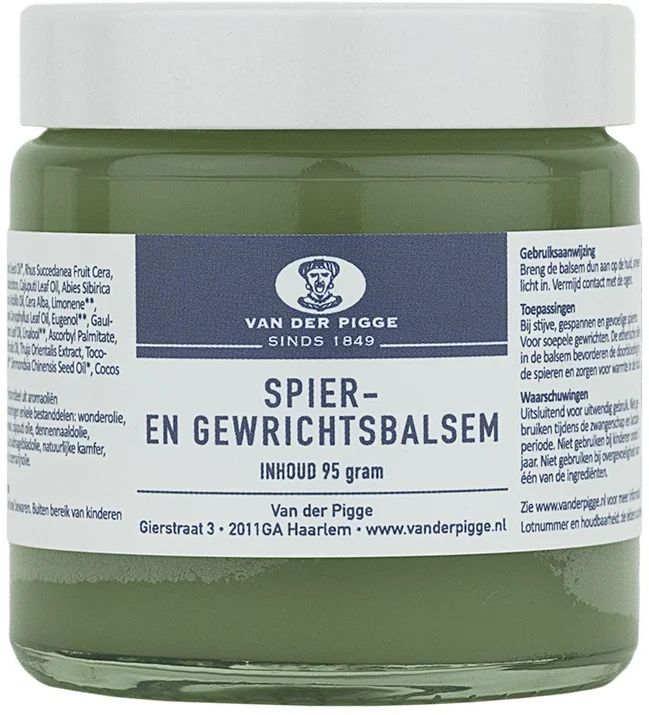
How well does your skin match with Van der Pigge Spier En Gewrichtsbalsem?
Login to see detailsOr continue via
Quick 1-minute survey • Completely free
Ingredients
Analysis results of Ingredients


Ingredient List
| EWG | CIR | Ingredient Name & Cosmetic Function | Notes |
|---|---|---|---|
| 2 | A |  | |
| - | - | Rhus Succedanea Fruit Cera | |
| - | - | Melaleuca Leucadendron Cajuputi Leaf Oil | |
| 1 2 | - | (Masking, Perfuming, Tonic) | |




Van der Pigge Spier En Gewrichtsbalsem - Ingredient Explanation
Ricinus Communis (Castor) Seed Oil
1. Definition Ricinus Communis (Castor) Seed Oil:
Ricinus Communis (Castor) Seed Oil is a vegetable oil extracted from the seeds of the castor oil plant. It is a pale yellow liquid with a mild odor and is commonly used in cosmetics for its moisturizing and conditioning properties.2. Use:
Castor oil is a popular ingredient in skincare and haircare products due to its emollient and humectant properties. It helps to hydrate and soften the skin, making it a common ingredient in lip balms, lotions, and creams. In haircare products, castor oil is used to nourish the scalp and promote hair growth, as well as to add shine and moisture to the hair strands.3. Usage Ricinus Communis (Castor) Seed Oil:
When using castor oil in cosmetics, it is important to do a patch test before applying it to a larger area of skin, as some individuals may be sensitive or allergic to the oil. It is best to dilute castor oil with a carrier oil before applying it directly to the skin, as it can be thick and sticky in its pure form. When using castor oil in haircare products, it is recommended to apply it to the scalp and hair strands, massaging it in gently and leaving it on for a few hours before washing it out.4. References:
- Park, H. M., & Cho, J. H. (2018). Ricinus communis L. (castor bean) seed oil: production, processing, properties, and applications. Journal of the American Oil Chemists' Society, 95(11), 1377-1388.
- Vieira, C., et al. (2018). Ricinus communis L. (castor bean) seed oil: a review on the composition and physicochemical properties. Journal of the American Oil Chemists' Society, 95(1), 1-10.
- Reis, F. S., et al. (2016). Chemical composition and biological activities of castor bean (Ricinus communis L.) seed oil: a review. Journal of the American Oil Chemists' Society, 93(3), 291-303.
Rhus Succedanea Fruit Cera
Ingredient data is being updated. Please check back later.
Melaleuca Leucadendron Cajuputi Leaf Oil
Ingredient data is being updated. Please check back later.
Abies Sibirica Needle Oil
1. Definition Abies Sibirica Needle Oil:
Abies Sibirica Needle Oil is an essential oil extracted from the needles of the Siberian fir tree, also known as the Siberian spruce. It is rich in antioxidants, antimicrobial, and anti-inflammatory properties.2. Use:
Abies Sibirica Needle Oil is commonly used in cosmetics for its skin-soothing and rejuvenating properties. It is often added to skincare products such as lotions, creams, and serums to help improve the overall appearance and health of the skin. The oil is also known for its fresh, woody scent, making it a popular choice for aromatherapy and perfumery.3. Usage Abies Sibirica Needle Oil:
When using Abies Sibirica Needle Oil in cosmetics, it is important to dilute it properly before applying it to the skin. It is recommended to perform a patch test before using the oil to check for any allergic reactions or skin sensitivities. Avoid using the oil near the eyes and mucous membranes, and discontinue use if any irritation occurs. Store the oil in a cool, dark place away from direct sunlight to prolong its shelf life.4. References:
- Khazova, E., & Terekhova, V. (2015). The composition and antimicrobial activity of the essential oil of Abies sibirica Ledeb. needles. Pharmaceutical Chemistry Journal, 49(6), 391-394.
- Kostina, K. F., & Kostin, S. A. (2018). Siberian fir (Abies sibirica Ledeb.) essential oil as a potential source of natural antioxidants. Natural Product Research, 32(1), 57-61.
- Sharopov, F. S., et al. (2014). Essential oil composition of Abies sibirica Ledeb. from Tajikistan. Chemistry of Natural Compounds, 50(5), 942-943.
Review








Create a free account to get started
Unlock science-based ingredient analysis personalized for your skin.
Already have an account? Log in
We protect your privacy. We never send spam.