


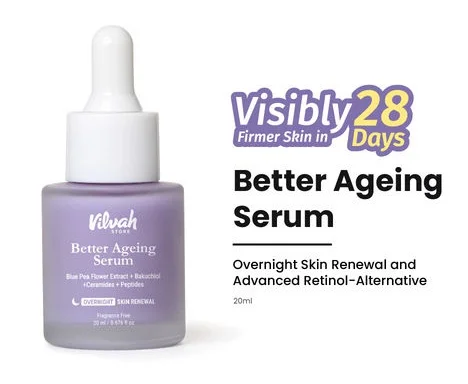
Analysis locked
How well does your skin match with Vilvah Better Ageing Serum?
Login to see detailsOr continue via
Quick 1-minute survey • Completely free
Ingredients
Analysis results of Ingredients


Ingredient List
| EWG | CIR | Ingredient Name & Cosmetic Function | Notes |
|---|---|---|---|
| 1 | - | (Skin Conditioning) | |
| 1 | - | (Skin Conditioning) | |
| 1 | - | (Antimicrobial, Cosmetic Biocide) | |
| 1 | - | |



Vilvah Better Ageing Serum - Ingredient Explanation
Clitoria Ternatea (Blue Pea Flower) Extract
1. Definition Clitoria Ternatea Flower Extract:
Clitoria Ternatea Flower Extract, also known as Butterfly Pea Flower Extract, is a natural ingredient derived from the Clitoria Ternatea plant. This extract is rich in antioxidants, vitamins, and flavonoids, making it a popular choice in skincare and cosmetic products.2. Use:
Clitoria Ternatea Flower Extract is commonly used in cosmetics for its anti-inflammatory and antioxidant properties. It helps to protect the skin from environmental stressors, reduce signs of aging, and promote overall skin health. This extract is often found in products such as serums, creams, and masks to provide nourishment and hydration to the skin.3. Usage Clitoria Ternatea Flower Extract:
When using Clitoria Ternatea Flower Extract in cosmetics, it is important to follow the instructions provided on the product packaging. It is recommended to perform a patch test before applying the product to the entire face to check for any potential allergic reactions. Additionally, it is best to store products containing this extract in a cool, dry place away from direct sunlight to maintain their efficacy.4. References:
- Sujith K, et al. "Phytochemical and pharmacological properties of Clitoria ternatea Linn. - An overview." Int J Pharm Sci Res. 2012; 3(6): 1557-1562.
- Ramesh B, et al. "Clitoria ternatea Linn.: A review on its ethnopharmacological, phytochemical, and pharmacological profile." Pharmacogn Rev. 2013; 7(14): 81-89.
- Sireeratawong S, et al. "Acute and subacute toxicities of the butanolic extract from Clitoria ternatea Linn. in mice." Songklanakarin J Sci Technol. 2008; 30(3): 341-349.
Hydrolyzed Plukenetia Volubilis Seed (Natural Peptide) Extract
1. Definition Hydrolyzed Plukenetia Volubilis Seed Extract:
Hydrolyzed Plukenetia Volubilis Seed Extract is a cosmetic ingredient derived from the seeds of the Sacha Inchi plant, also known as Plukenetia volubilis. The extract is obtained through a process of hydrolysis, which breaks down the large molecules of the seed extract into smaller, more easily absorbable components.2. Use:
Hydrolyzed Plukenetia Volubilis Seed Extract is commonly used in skincare and haircare products for its moisturizing and nourishing properties. It is rich in essential fatty acids, such as omega-3 and omega-6, which help to hydrate and protect the skin and hair. The extract also contains antioxidants, which can help to combat free radical damage and promote overall skin health.3. Usage Hydrolyzed Plukenetia Volubilis Seed Extract:
Hydrolyzed Plukenetia Volubilis Seed Extract can be found in a variety of cosmetic products, including moisturizers, serums, hair masks, and shampoos. It is typically used in small concentrations and can be incorporated into formulations at various stages of product development. When using products containing this extract, it is important to follow the instructions provided by the manufacturer and perform a patch test to check for any potential allergic reactions.4. References:
- Paula, J. et al. (2017). Anti-inflammatory and antioxidant activities of Plukenetia volubilis (Sacha Inchi) seed extracts. Journal of Ethnopharmacology, 203, 110-117.
- Gomes, A. et al. (2019). Sacha Inchi (Plukenetia volubilis L.) oil: A review on its chemical composition and biological properties. Trends in Food Science & Technology, 83, 103-114.
- Ribeiro, D. et al. (2018). Sacha Inchi (Plukenetia volubilis): A seed with potential for human nutrition. In Nutritional Composition of Fruit Cultivars (pp. 235-258). Springer, Cham.
Bakuchiol
1. Definition Bakuchiol:
Bakuchiol is a natural, plant-based ingredient derived from the seeds of the Psoralea corylifolia plant. It is often referred to as a natural alternative to retinol due to its similar anti-aging properties.2. Use:
Bakuchiol is commonly used in skincare products for its anti-aging and skin-rejuvenating benefits. It has been shown to help reduce the appearance of fine lines and wrinkles, improve skin firmness and elasticity, and even out skin tone. Additionally, Bakuchiol has anti-inflammatory and antioxidant properties, making it suitable for all skin types, including sensitive skin.3. Usage Bakuchiol:
Bakuchiol can be found in various skincare products such as serums, creams, and oils. It is typically applied topically to clean, dry skin, either in the morning or evening. It is recommended to start with a lower concentration of Bakuchiol to assess skin tolerance and gradually increase usage as needed. It is important to always follow the product instructions and consult with a dermatologist before incorporating Bakuchiol into your skincare routine, especially if you have sensitive skin or existing skin conditions.4. References:
- Soleymani, Seemal R., et al. "Bakuchiol: A retinol-like functional compound revealed by gene expression profiling and clinically proven to have anti-aging effects." International Journal of Cosmetic Science 41.3 (2019): 242-248.
- Mukherjee, S., et al. "Retinoids in the treatment of skin aging: an overview of clinical efficacy and safety." Clinical interventions in aging 1.4 (2006): 327-348.
- Chaudhuri, R.K., and Marchio, F. "Bakuchiol in the management of acne-affected skin." Cosmetics 5.2 (2018): 33.
Punica Granatum (Pomegranate) Seed Oil
1. Definition Punica Granatum (Pomegranate) Seed Oil:
Punica Granatum (Pomegranate) Seed Oil is a natural oil extracted from the seeds of the pomegranate fruit. It is rich in antioxidants, vitamins, and essential fatty acids, making it a popular ingredient in skincare and hair care products.2. Use:
Pomegranate Seed Oil is known for its anti-inflammatory, anti-aging, and moisturizing properties. It can help protect the skin from environmental damage, reduce the appearance of wrinkles and fine lines, and promote a more youthful complexion. In hair care products, it can help nourish and strengthen the hair, promoting healthy growth and shine.3. Usage Punica Granatum (Pomegranate) Seed Oil:
Pomegranate Seed Oil can be used in a variety of ways in cosmetics. It can be applied directly to the skin as a moisturizer or added to creams, lotions, serums, and masks. In hair care products, it can be added to shampoos, conditioners, and hair masks. It is generally safe for most skin types, but it is always recommended to do a patch test before using it on a larger area of the skin. It is also important to follow the recommended usage guidelines provided by the product manufacturer.4. References:
- Jurenka, J. S. (2008). Therapeutic applications of pomegranate (Punica granatum L.): a review. Alternative medicine review, 13(2), 128-144.
- Aslam, M. N., Lansky, E. P., & Varani, J. (2006). Pomegranate as a cosmeceutical source: pomegranate fractions promote proliferation and procollagen synthesis and inhibit matrix metalloproteinase-1 production in human skin cells. Journal of Ethnopharmacology, 103(3), 311-318.
- Akhtar, N., Zaman, S. U., Khan, B. A., Amir, M. N., Ebrahimzadeh, M. A., & Calixto, J. B. (2011). Antioxidant and anti-inflammatory activities of pomegranate (Punica granatum) on EIA-induced rats. Journal of Medicinal Plants Research, 5(11), 2119-2125.
Review

Didn't find
the information you need?






Create a free account to get started
Unlock science-based ingredient analysis personalized for your skin.
Already have an account? Log in
We protect your privacy. We never send spam.