


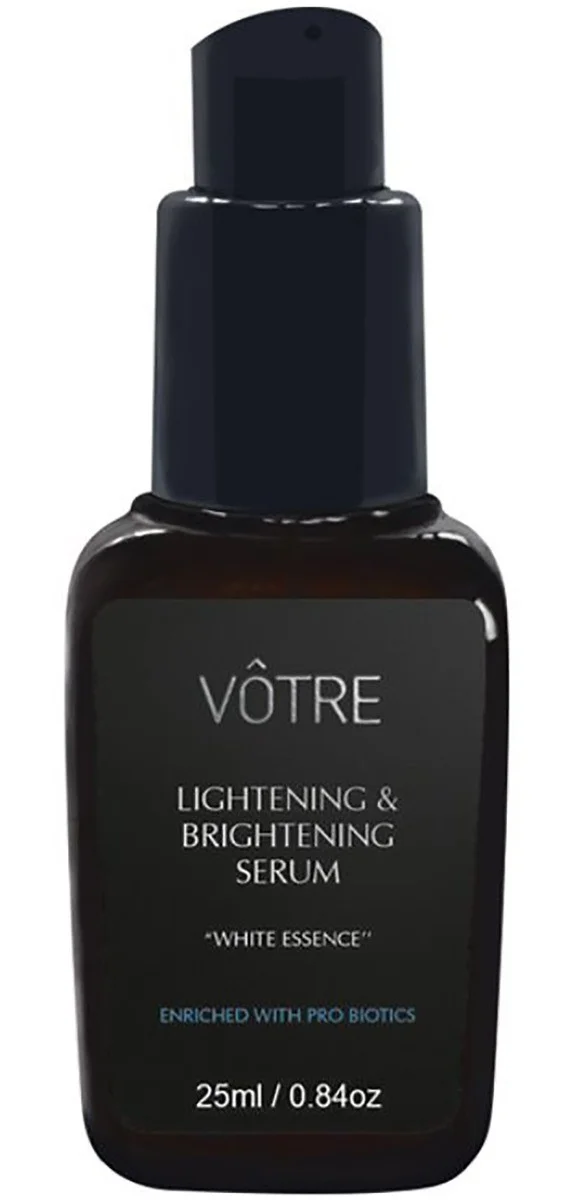
Analysis locked
How well does your skin match with Votre Lightening & Brightening Serum?
Login to see detailsOr continue via
Quick 1-minute survey • Completely free
Ingredients
Analysis results of Ingredients


Ingredient List
| EWG | CIR | Ingredient Name & Cosmetic Function | Notes |
|---|---|---|---|
| 1 | - | (Skin Conditioning, Antioxidant) | |
| 1 | - | (Antioxidant, Moisturising, Smoothing, Skin Bleaching Agent) |    |
| 4 | - | (Emollient, Fragrance, Flavoring Agent, Soothing, Moisturising, Smoothing) |  |
| 1 | - | (Skin Conditioning) | |
Votre Lightening & Brightening Serum - Ingredient Explanation
Alpha Arbutin
1. Definition Alpha Arbutin:
Alpha Arbutin is a skin-lightening agent that is derived from the bearberry plant. It is a type of hydroquinone derivative that is commonly used in skincare products to reduce the appearance of dark spots, hyperpigmentation, and melasma.2. Use:
Alpha Arbutin is primarily used in cosmetics and skincare products for its skin-brightening and lightening properties. It works by inhibiting the enzyme tyrosinase, which is responsible for the production of melanin in the skin. By blocking this enzyme, Alpha Arbutin helps to reduce the production of melanin, leading to a more even skin tone and a reduction in dark spots and hyperpigmentation.3. Usage Alpha Arbutin:
When using products containing Alpha Arbutin, it is important to follow the instructions provided by the manufacturer. Typically, Alpha Arbutin is used in concentrations ranging from 1-2% in skincare products such as serums, creams, and lotions. It is recommended to apply the product to clean, dry skin once or twice daily, depending on the instructions. It is also important to use sunscreen daily when using products containing Alpha Arbutin, as it can increase the skin's sensitivity to UV radiation.4. References:
- Arif, T. (2015). Salicylic acid as a peeling agent: a comprehensive review. Clinical, Cosmetic and Investigational Dermatology, 8, 455–461. https://doi.org/10.2147/CCID.S84765
- Boissy, R. E., & Visscher, M. (2006). DeoxyArbutin: a novel reversible tyrosinase inhibitor with effective in vivo skin lightening potency. Experimental Dermatology, 15(9), 601–608. https://doi.org/10.1111/j.1600-0625.2006.00449.x
- Smit, N., Vicanova, J., & Pavel, S. (2009). The hunt for natural skin whitening agents. International Journal of Molecular Sciences, 10(12), 5326–5349. https://doi.org/10.3390/ijms10125326
Vitamin C
1. Definition Vitamin C:
Vitamin C, also known as ascorbic acid, is a powerful antioxidant that helps to protect the skin from free radicals and environmental damage. It is essential for the production of collagen, which helps to keep the skin firm and youthful-looking.
2. Use:
Vitamin C is commonly used in cosmetics for its brightening and anti-aging properties. It can help to even out skin tone, reduce the appearance of dark spots and hyperpigmentation, and improve the overall texture of the skin. Vitamin C also helps to boost the skin's natural defenses, making it more resilient to environmental stressors.
3. Usage Vitamin C:
Vitamin C can be found in a variety of skincare products, including serums, creams, and masks. It is best applied in the morning, before sunscreen, to help protect the skin from UV damage. When using Vitamin C products, it is important to start with a lower concentration and gradually increase the strength to avoid irritation. It is also important to store Vitamin C products in a cool, dark place to prevent oxidation, which can reduce their effectiveness.
4. References:
- Telang, P. S. (2013). Vitamin C in dermatology. Indian dermatology online journal, 4(2), 143–146. https://doi.org/10.4103/2229-5178.110593
- Pullar, J. M., Carr, A. C., & Vissers, M. C. (2017). The Roles of Vitamin C in Skin Health. Nutrients, 9(8), 866. https://doi.org/10.3390/nu9080866
- Al-Niaimi, F., & Chiang, N. (2017). Topical Vitamin C and the Skin: Mechanisms of Action and Clinical Applications. The Journal of Clinical and Aesthetic Dermatology, 10(7), 14–17.
Glycyrrhiza Glabra (Licorice)
1. Definition Glycyrrhiza Glabra (Licorice):
Glycyrrhiza Glabra, commonly known as Licorice, is a perennial herb native to Europe and Asia. It is known for its sweet flavor and has been used for centuries in traditional medicine for its various health benefits.2. Use:
Licorice extract is commonly used in cosmetics for its skin brightening and anti-inflammatory properties. It is often included in skincare products such as serums, creams, and masks to help reduce hyperpigmentation, soothe irritation, and even out skin tone.3. Usage Glycyrrhiza Glabra (Licorice):
Licorice extract can be found in various skincare products, including cleansers, toners, and moisturizers. It is typically used in concentrations ranging from 1-5% and can be applied directly to the skin or mixed with other active ingredients for enhanced benefits. It is important to patch test products containing licorice extract before use, as some individuals may be sensitive to it. Additionally, it is recommended to use sunscreen when incorporating licorice extract into your skincare routine, as it can make the skin more sensitive to UV radiation.4. References:
- Armanini D, Fiore C, Mattarello MJ, Bielenberg J. Licorice reduces serum testosterone in healthy women. Steroids. 2004;69(11-12):763-766. doi:10.1016/j.steroids.2004.10.002
- Choi J, Kim H, Jung H, et al. Anti-inflammatory and anti-aging effects of licorice extract. Food Sci Biotechnol. 2016;25(3):887-894. doi:10.1007/s10068-016-0125-4
- Fukai T, Marumo A, Kaitou K, Kanda T, Terada S, Nomura T. Anti-Helicobacter pylori flavonoids from licorice extract. Life Sci. 2002;71(12):1449-1463. doi:10.1016/s0024-3205(02)01854-9
Morus Alba Root Extract (White Mulberry)
1. Definition Morus Alba (White Mulberry) Root Extract:
Morus Alba (White Mulberry) Root Extract is a natural ingredient derived from the root of the Morus Alba tree. It is known for its skin-brightening and anti-inflammatory properties.2. Use:
Morus Alba Root Extract is commonly used in cosmetics and skincare products for its ability to brighten and even out skin tone. It is also used for its antioxidant properties, which help protect the skin from environmental damage and premature aging.3. Usage Morus Alba (White Mulberry) Root Extract:
Morus Alba Root Extract can be found in various skincare products such as serums, creams, and masks. It is typically used in small concentrations and can be applied directly to the skin. It is recommended to use products containing Morus Alba Root Extract consistently for best results.Precautions: While Morus Alba Root Extract is generally considered safe for use in cosmetics, it is always recommended to perform a patch test before using a new product to check for any potential allergic reactions. It is also important to follow the recommended usage instructions and not exceed the recommended concentrations.
4. References:
- Kim, Y. M., Jeong, Y. K., Wang, M. H., Lee, W. Y., & Rhee, H. I. (2005). Inhibitory effect of pine extract on alpha-glucosidase activity and postprandial hyperglycemia. Nutrition, 21(6), 756-761.
- Kim, Y. J., Uyama, H., & Kobayashi, S. (2000). Inhibition of melanin synthesis by cystamine and cysteamine. International Journal of Biological Macromolecules, 27(1), 44-48.
- Lee, S. H., Choi, S. Y., Kim, H., Hwang, J. S., & Lee, B. G. (2003). A novel chemiluminescent assay for antioxidant capacity in plant extracts. Analytica Chimica Acta, 501(2), 175-183.
Review

Didn't find
the information you need?








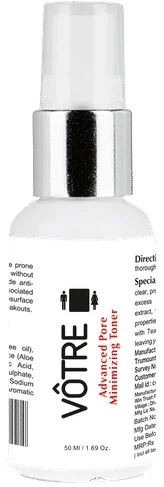
Create a free account to get started
Unlock science-based ingredient analysis personalized for your skin.
Already have an account? Log in
We protect your privacy. We never send spam.