


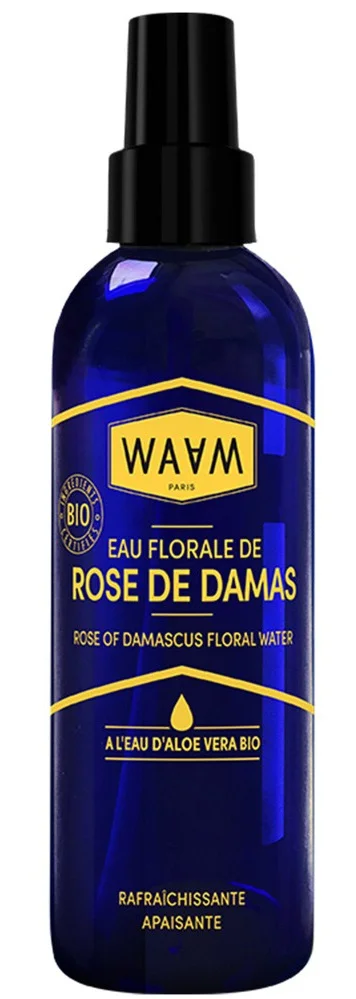
Analysis locked
How well does your skin match with WAAM Eau Florale De Rose De Damas?
Login to see detailsOr continue via
Quick 1-minute survey • Completely free
Ingredients
Analysis results of Ingredients


Ingredient List
| EWG | CIR | Ingredient Name & Cosmetic Function | Notes |
|---|---|---|---|
| 1 3 | B | (Masking) |  |
| 1 | - | (Skin Conditioning, Masking, Skin Protecting) | |
| 4 6 | A | (Solvent, Masking, Fragrance, Viscosity Decreasing Agent, Preservative, External Analgesic ) |   |
| 1 | A | (Preservative) | |
WAAM Eau Florale De Rose De Damas - Ingredient Explanation
Aloe Barbadensis Leaf Water
1. Definition Aloe Barbadensis Leaf Water:
Aloe Barbadensis Leaf Water, also known as Aloe Vera leaf water, is a natural ingredient derived from the leaves of the Aloe Barbadensis plant. It is known for its soothing and hydrating properties, making it a popular ingredient in skincare and cosmetic products.2. Use:
Aloe Barbadensis Leaf Water is commonly used in cosmetics for its moisturizing, calming, and healing properties. It helps to hydrate the skin, reduce inflammation, and promote healing of wounds and sunburns. It is also known to have antioxidant and antibacterial properties, making it beneficial for acne-prone skin. Additionally, Aloe Barbadensis Leaf Water is gentle enough for sensitive skin and can help to soothe irritation and redness.3. Usage Aloe Barbadensis Leaf Water:
Aloe Barbadensis Leaf Water can be found in a variety of skincare and cosmetic products, such as moisturizers, serums, masks, and sunscreens. It can be applied directly to the skin or used as an ingredient in various formulations. To use Aloe Barbadensis Leaf Water, simply apply the product containing the ingredient to clean, dry skin and gently massage it in until fully absorbed. It can be used daily as part of a skincare routine.4. References:
- Lee, S. H., An, S. M., Choi, K. H., Moon, S. W., Park, Y. D., & Kim, S. Z. (2015). Aloe vera gel suppresses the UVB-induced skin photoaging through inhibition of collagenase in human dermal fibroblasts. Journal of Cosmetic Dermatology, 14(4), 291-297.
- Surjushe, A., Vasani, R., & Saple, D. G. (2008). Aloe vera: a short review. Indian Journal of Dermatology, 53(4), 163-166.
- Radha, M. H., & Laxmipriya, N. P. (2015). Evaluation of biological properties and clinical effectiveness of Aloe vera: A systematic review. Journal of Traditional and Complementary Medicine, 5(1), 21-26.
Rosa Damascena Flower Water
1. Definition Rosa Damascena Flower Water:
Rosa Damascena Flower Water, also known as rose water, is a fragrant water made by distilling rose petals. It is commonly used in cosmetics for its soothing and hydrating properties.2. Use:
Rosa Damascena Flower Water is often used in cosmetics as a natural toner and astringent. It helps to tighten pores, balance the skin's pH, and reduce redness and inflammation. Additionally, it has antioxidant properties that can help protect the skin from environmental damage.3. Usage Rosa Damascena Flower Water:
Rosa Damascena Flower Water can be used in a variety of ways in skincare routines. It can be applied directly to the skin after cleansing as a toner, or mixed with other ingredients to create DIY face masks, mists, or serums. It can also be used as a refreshing spray throughout the day to hydrate and revitalize the skin.Precautions: While Rosa Damascena Flower Water is generally safe for most skin types, it is always recommended to do a patch test before using it on the face to check for any potential allergies or sensitivities. If irritation occurs, discontinue use immediately.
4. References:
- Tabassum, N., & Hamdani, M. (2014). Plants used in cosmetics. Phytopharmacology, 5(2), 133-143.
- Riaz, A., & Rasul, A. (2013). Rose water: a natural gift for skincare. International Journal of Chemical and Biochemical Sciences, 4(2), 62-67.
- Boskabady, M. H., Shafei, M. N., Saberi, Z., & Amini, S. (2011). Pharmacological effects of Rosa damascena. Iranian Journal of Basic Medical Sciences, 14(4), 295-307.
Benzyl Alcohol
1. Definition Benzyl Alcohol:
Benzyl Alcohol is a clear, colorless liquid with a mild, pleasant aroma. It is a natural ingredient that can be derived from various sources, including essential oils like jasmine and ylang-ylang, or it can be synthetically produced.2. Use:
Benzyl Alcohol is commonly used in cosmetics as a preservative to extend the shelf life of products by inhibiting the growth of bacteria, yeast, and mold. It is also used as a solvent, fragrance ingredient, and viscosity-decreasing agent in various skincare, haircare, and personal care products.3. Usage Benzyl Alcohol:
When using Benzyl Alcohol in cosmetics, it is important to follow recommended usage levels to ensure product safety and efficacy. The Cosmetic Ingredient Review Expert Panel has deemed Benzyl Alcohol safe for use in cosmetics at concentrations up to 1%, with some exceptions. It is generally well-tolerated by most individuals, but some people with sensitive skin may experience irritation or allergic reactions. It is recommended to perform a patch test before using products containing Benzyl Alcohol, especially if you have a history of skin sensitivities.4. References:
- Cosmetic Ingredient Review Expert Panel. (2008). Final report on the safety assessment of Benzyl Alcohol, Benzoic Acid, and Sodium Benzoate. International Journal of Toxicology, 27(1), 1-23.
- Personal Care Products Council. (2019). Benzyl Alcohol. Retrieved from https://www.cosmeticsinfo.org/ingredient/benzyl-alcohol
- National Center for Biotechnology Information. (2021). PubChem Compound Summary for CID 244, Benzyl Alcohol. Retrieved from https://pubchem.ncbi.nlm.nih.gov/compound/Benzyl-alcohol
Dehydroacetic Acid
1. Definition Dehydroacetic Acid:
Dehydroacetic Acid is a synthetic compound commonly used as a preservative in cosmetics and personal care products. It is a white, odorless powder that is soluble in water and alcohol.2. Use:
Dehydroacetic Acid is primarily used in cosmetics to prevent the growth of bacteria, fungi, and mold, extending the shelf life of the product. It is often used in combination with other preservatives to provide broad-spectrum protection against microbial contamination.3. Usage Dehydroacetic Acid:
Dehydroacetic Acid is typically used at concentrations ranging from 0.1% to 0.6% in cosmetics formulations. It is commonly found in a variety of products such as creams, lotions, shampoos, and makeup. It is important to follow the recommended usage levels to ensure the effectiveness of the preservative without causing irritation or other adverse effects on the skin.4. References:
- "Dehydroacetic Acid" Cosmetic Ingredient Review, 2013.
- "Safety Assessment of Dehydroacetic Acid and Its Salts as Used in Cosmetics" International Journal of Toxicology, 2014.
- "Preservatives in Cosmetics" Personal Care Products Council, 2020.
Review









Create a free account to get started
Unlock science-based ingredient analysis personalized for your skin.
Already have an account? Log in
We protect your privacy. We never send spam.