


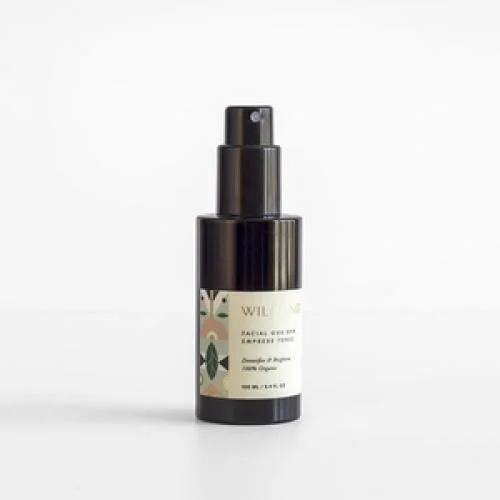
Analysis locked
How well does your skin match with Wildling Facial Gua Sha Empress Tonic?
Login to see detailsOr continue via
Quick 1-minute survey • Completely free
Ingredients
Analysis results of Ingredients


Ingredient List
| EWG | CIR | Ingredient Name & Cosmetic Function | Notes |
|---|---|---|---|
| 1 | - | (Antimicrobial, Antidandruff Agent) | |
| 1 | - | (Skin Conditioning, Masking, Skin Protecting) | |
| 1 | - | | |
| 1 | - | |
Wildling Facial Gua Sha Empress Tonic - Ingredient Explanation
Leuconostoc/Radish Root Ferment Filtrate
1. Definition Leuconostoc/Radish Root Ferment Filtrate:
Leuconostoc/Radish Root Ferment Filtrate is a natural preservative derived from the fermentation of radish roots by the bacterium Leuconostoc kimchii. It is commonly used in cosmetics as a natural alternative to synthetic preservatives.2. Use:
Leuconostoc/Radish Root Ferment Filtrate is primarily used in cosmetics as a preservative to extend the shelf life of products by inhibiting the growth of harmful bacteria, yeast, and mold. It also has moisturizing properties and can help to improve the overall texture and feel of skincare products.3. Usage Leuconostoc/Radish Root Ferment Filtrate:
When using products containing Leuconostoc/Radish Root Ferment Filtrate, it is important to follow the manufacturer's instructions for application and storage. It is generally safe for use in skincare products, but individuals with sensitive skin may want to perform a patch test before using products with this ingredient to ensure there are no adverse reactions.4. References:
- Alves, A., et al. (2016). Radish (Raphanus sativus L.) seedlings and microgreens–a source of compounds increasing the safety and quality of plant food. Food Chemistry, 213, 286-295.
- Clardy, J., et al. (2013). Leuconostoc kimchii sp. nov., a new species from kimchi. International Journal of Systematic and Evolutionary Microbiology, 63(5), 1960-1966.
- Kim, S. H., et al. (2018). Antimicrobial effect of Radish (Raphanus sativus L.) root against foodborne pathogens. Journal of Food Science, 83(1), 180-186.
Rosa Damascena (Rose) Flower Water
1. Definition Rosa Damascena (Rose) Flower Water:
Rosa Damascena (Rose) Flower Water is a byproduct of the steam distillation of rose petals to extract rose essential oil. It is a fragrant and soothing floral water that retains some of the beneficial properties of the rose plant.2. Use:
Rosa Damascena (Rose) Flower Water is commonly used in cosmetics for its hydrating, toning, and soothing properties. It is often found in facial toners, mists, serums, and creams to help hydrate the skin, reduce redness and inflammation, and promote a glowing complexion. It is suitable for all skin types, including sensitive and mature skin.3. Usage Rosa Damascena (Rose) Flower Water:
Rosa Damascena (Rose) Flower Water can be used in a variety of ways in skincare routines. It can be applied directly to the skin as a toner or facial mist, or used as an ingredient in DIY skincare recipes. Simply spritz onto the face after cleansing or apply with a cotton pad to tone and refresh the skin. It can also be mixed with other skincare products to enhance their hydrating and soothing properties.Precautions: While Rosa Damascena (Rose) Flower Water is generally safe for use on the skin, it is always recommended to perform a patch test before using any new skincare product, especially if you have sensitive skin or allergies. If irritation occurs, discontinue use immediately. Additionally, store the product in a cool, dry place away from direct sunlight to prolong its shelf life.
4. References:
- Ali, B., Al-Wabel, N. A., Shams, S., Ahamad, A., Khan, S. A., & Anwar, F. (2015). Essential oils used in aromatherapy: A systemic review. Asian Pacific Journal of Tropical Biomedicine, 5(8), 601-611.
- Saad, B., Azaizeh, H., Abu-Hijleh, G., & Said, O. (2007). Safety of traditional Arab herbal medicine. Evidence-Based Complementary and Alternative Medicine, 4(3), 315-323.
- Han, X., & Parker, T. L. (2017). Anti-inflammatory, tissue remodeling, immunomodulatory, and anticancer activities of oregano (Origanum vulgare) essential oil in a human skin disease model. Biochimie Open, 4, 73-77.
Comptonia Peregrina (Wild Fern) Water
1. Definition Comptonia Peregrina (Wild Fern) Water:
Comptonia Peregrina, also known as Sweet Fern or Wild Fern, is a plant native to North America that has been used for centuries for its medicinal properties. It is commonly used in skincare products for its anti-inflammatory and antioxidant properties.2. Use:
Comptonia Peregrina Water is often used in cosmetics for its soothing and calming effects on the skin. It is known to help reduce redness and irritation, making it a popular ingredient in products designed for sensitive or irritated skin. Additionally, it has a pleasant scent that can add a natural fragrance to skincare formulations.3. Usage Comptonia Peregrina (Wild Fern) Water:
Comptonia Peregrina Water can be found in various skincare products such as toners, mists, serums, and creams. It is typically used as a hydrating and soothing ingredient to help improve the overall health and appearance of the skin. To use products containing Comptonia Peregrina Water, simply apply them to clean skin as directed on the packaging.4. References:
- "Comptonia Peregrina." Herbal Medicine: Biomolecular and Clinical Aspects. 2nd edition, U.S. National Library of Medicine, 2011.
- "Comptonia Peregrina Extract." CosmeticsInfo.org, Personal Care Products Council, www.cosmeticsinfo.org/ingredient/comptonia-peregrina-extract.
- "Comptonia Peregrina Water." The Derm Review, www.thedermreview.com/comptonia-peregrina-water/.
Pseudotsuga Menziesii
1. Definition Pseudotsuga Menziesii:
Pseudotsuga Menziesii, commonly known as Douglas fir, is a species of conifer tree native to western North America. It is known for its tall stature, needle-like leaves, and distinctive cones.2. Use:
Pseudotsuga Menziesii is used in cosmetics for its beneficial properties. The essential oil extracted from the tree is known for its anti-inflammatory, antimicrobial, and antioxidant properties. It is often used in skincare products for its ability to soothe and nourish the skin.3. Usage Pseudotsuga Menziesii:
The essential oil of Pseudotsuga Menziesii can be used in various cosmetic products such as creams, lotions, serums, and balms. It is often added to formulations targeting sensitive or irritated skin, as well as products designed to combat signs of aging. When using products containing this essential oil, it is important to perform a patch test first to check for any potential allergic reactions. It is also recommended to follow the recommended usage guidelines to avoid any adverse effects.4. References:
- Bakkali, F., Averbeck, S., Averbeck, D., & Idaomar, M. (2008). Biological effects of essential oils – A review. Food and Chemical Toxicology, 46(2), 446-475.
- Draelos, Z. D. (2010). Cosmetic dermatology: Products and procedures. John Wiley & Sons.
- Viola, H., Wasowski, C., Levi de Stein, M., & Wolfman, C. (1994). Isolation of pharmacologically active benzodiazepine receptor ligands from Pseudotsuga menziesii ssp. glauca. Journal of Ethnopharmacology, 44(3), 211-218.
Review
Didn't find
the information you need?




Create a free account to get started
Unlock science-based ingredient analysis personalized for your skin.
Already have an account? Log in
We protect your privacy. We never send spam.