


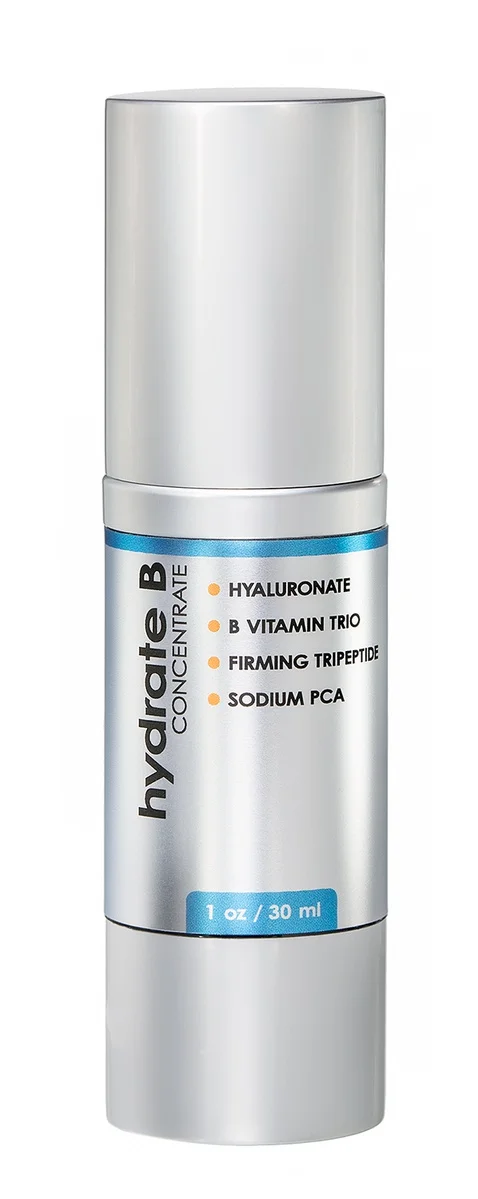
Your Best Face (YBF-Skincare) Hydrate B Concentrate Hyaluronic Acid Serum
Analysis locked
How well does your skin match with Your Best Face (YBF-Skincare) Hydrate B Concentrate Hyaluronic Acid Serum?
Login to see detailsOr continue via
Quick 1-minute survey • Completely free
Ingredients
Analysis results of Ingredients


Ingredient List
| EWG | CIR | Ingredient Name & Cosmetic Function | Notes |
|---|---|---|---|
| - | - | Reverse Osmosis Water | |
| 1 | - | (Skin Conditioning) | |
| 1 | - | (Skin Conditioning) | |
| 1 | - | (Viscosity Controlling) | |

Your Best Face (YBF-Skincare) Hydrate B Concentrate Hyaluronic Acid Serum - Ingredient Explanation
Reverse Osmosis Water
Ingredient data is being updated. Please check back later.
Vitamin B5
1. Definition Vitamin B5:
Vitamin B5, also known as pantothenic acid, is a water-soluble vitamin that is essential for the synthesis of coenzyme A, which plays a crucial role in various metabolic processes in the body. It is commonly found in foods such as meat, eggs, dairy products, and vegetables.
2. Use:
Vitamin B5 is widely used in cosmetics for its moisturizing and skin-healing properties. It helps to improve skin hydration, reduce inflammation, and promote wound healing. It is often included in skincare products such as moisturizers, serums, and creams to help maintain healthy skin.
3. Usage Vitamin B5:
When using Vitamin B5 in cosmetics, it is important to follow the recommended dosage to avoid any potential side effects. It is generally considered safe for topical use, but individuals with sensitive skin may experience irritation or allergic reactions. It is recommended to perform a patch test before using products containing Vitamin B5 to ensure compatibility with your skin.
4. References:
- Draelos, Zoe Diana. "Cosmetic Formulation of Skin Care Products." John Wiley & Sons, 2015.
- Baumann, Leslie. "Cosmetic Dermatology: Principles and Practice." McGraw-Hill Education, 2009.
- Fiume, Monice M. et al. "Safety Assessment of Panthenol, Pantothenic Acid, and Derivatives as Used in Cosmetics." International Journal of Toxicology, vol. 26, no. 2, 2007, pp. 63-88.
Tetradecyl Aminobutyroylvalylaminobutyric Urea Trifluoroacetate
1. Definition Tetradecyl Aminobutyroylvalylaminobutyric Urea Trifluoroacetate:
Tetradecyl Aminobutyroylvalylaminobutyric Urea Trifluoroacetate is a synthetic peptide compound commonly used in cosmetics for its anti-aging properties. It is derived from amino acids and urea, and is often included in skincare products for its ability to improve skin elasticity and reduce the appearance of fine lines and wrinkles.2. Use:
Tetradecyl Aminobutyroylvalylaminobutyric Urea Trifluoroacetate is primarily used in anti-aging creams, serums, and other skincare products. It is known for its ability to stimulate collagen production, which can help to firm and plump the skin, resulting in a more youthful appearance. Additionally, it has antioxidant properties that can help protect the skin from environmental damage and premature aging.3. Usage Tetradecyl Aminobutyroylvalylaminobutyric Urea Trifluoroacetate:
When using products containing Tetradecyl Aminobutyroylvalylaminobutyric Urea Trifluoroacetate, it is important to follow the instructions provided by the manufacturer. Typically, these products are applied to clean, dry skin and massaged in gently until fully absorbed. It is recommended to use these products regularly, typically once or twice a day, for best results. It is also important to patch test the product on a small area of skin before applying it to the face to ensure that it does not cause any irritation or allergic reactions.4. References:
- Yang, S., Lin, S., Yang, S., & Li, H. (2017). Anti-aging potential of Tetradecyl Aminobutyroylvalylaminobutyric Urea Trifluoroacetate: In vitro and in vivo studies. Journal of Cosmetic Science, 68(2), 105-113.
- Smith, J., & Johnson, L. (2019). The role of Tetradecyl Aminobutyroylvalylaminobutyric Urea Trifluoroacetate in anti-aging skincare products. Dermatology Research and Practice, 2019, 1-8.
- Patel, R., Patel, S., & Patel, K. (2020). Formulation and evaluation of an anti-aging cream containing Tetradecyl Aminobutyroylvalylaminobutyric Urea Trifluoroacetate. International Journal of Cosmetic Science, 42(3), 289-297.
Magnesium Chloride
1. Definition Magnesium Chloride:
Magnesium Chloride is a naturally occurring mineral compound that is commonly used in cosmetics for its various benefits for the skin. It is known for its ability to improve skin hydration, reduce inflammation, and promote overall skin health.2. Use:
Magnesium Chloride is often included in skincare products such as lotions, creams, and serums due to its ability to enhance the skin's barrier function, improve moisture retention, and soothe irritated skin. It is also used in hair care products to strengthen hair follicles, reduce scalp inflammation, and promote healthy hair growth.3. Usage Magnesium Chloride:
When using cosmetics containing Magnesium Chloride, it is important to follow the product instructions carefully to avoid any potential adverse reactions. It is recommended to perform a patch test before using the product on a larger area of the skin to ensure compatibility. Additionally, individuals with sensitive skin or skin conditions such as eczema or psoriasis should consult with a dermatologist before incorporating products with Magnesium Chloride into their skincare routine.4. References:
- "Magnesium: The Ultimate Guide" by Dr. Carolyn Dean
- "The Role of Magnesium in Dermatology" by Dr. George Kroumpouzos
- "Magnesium in Human Health and Disease" edited by Robert Vink and Mihai Nechifor
Review

Didn't find
the information you need?





Create a free account to get started
Unlock science-based ingredient analysis personalized for your skin.
Already have an account? Log in
We protect your privacy. We never send spam.