


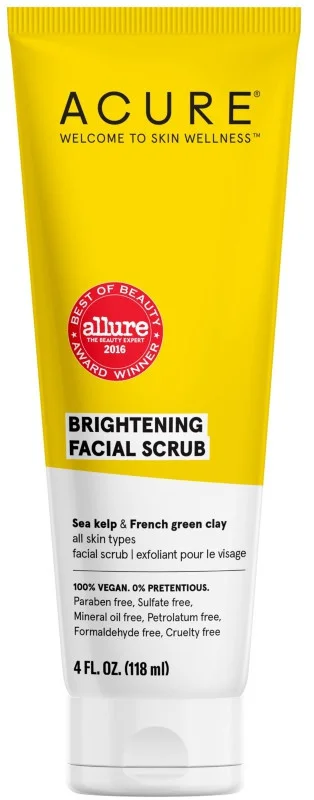
Analysis locked
How well does your skin match with Acure Brightening Facial Scrub?
Login to see detailsOr continue via
Quick 1-minute survey • Completely free
Ingredients
Analysis results of Ingredients


Ingredient List
| EWG | CIR | Ingredient Name & Cosmetic Function | Notes |
|---|---|---|---|
| 1 | - | (Solvent) | |
| 1 3 | - | | |
| 1 2 | A | (Solvent, Perfuming, Fragrance, Humectant, Viscosity Decreasing Agent, Hair Conditioning, Skin Protecting, Denaturant ) |  Good for dry skin Moisturizing Good for dry skin Moisturizing |
| 1 | B | (Surfactant, Cleansing, Foaming) |  Fungal Acne Trigger Cleansing Fungal Acne Trigger Cleansing |
| 1 | - | (Bulking Agent) | |
| 1 | A | (Skin Protecting, Opacifying, Abrasive, Absorbent, Bulking Agent, Anticaking Agent, Slip Modifier) | Moisturizing  Không tốt cho dưỡng ẩm en Không tốt cho làm sạch en Dung môi nước en Dung môi cồn en Dung môi dầu en Dung môi gel en Dung môi hữu cơ en Dung môi Silicone en Dung môi Este en Dung môi Glycol Ether en Không tốt cho dưỡng ẩm en Không tốt cho làm sạch en Dung môi nước en Dung môi cồn en Dung môi dầu en Dung môi gel en Dung môi hữu cơ en Dung môi Silicone en Dung môi Este en Dung môi Glycol Ether en |
| 1 | - | (Hair Conditioning, Sufactant, Foam Boosting, Foaming) | |
| 1 | B | | |
| 1 | B | (Humectant, Hair Conditioning, Skin Conditioning, Antistatic Agent) | Good for dry skin |
| 1 | - | (Emulsifying, Surfactant) | Cleansing |
| 1 3 | A | (Skin Conditioning, Emollient, Surfactant, Emulsifying) | Fungal Acne Trigger Cleansing |
| 1 | B | (Hair Conditioning, Surfactant, Cleansing) | Fungal Acne Trigger Cleansing |
| 1 | A | Fungal Acne Trigger | |
| 1 | - | (Skin Conditioning) | |
| - | - | Lilium Candidum Leaf (Madonna Leaf) Culture Extract | |
| 1 | - | (Hair Conditioning) | |
| 1 | - | (Masking, Fragrance, Astringent, Tonic) | |
| 1 | - | (Skin Conditioning, Tonic, Astringent) | |
| 1 | - | (Masking, Tonic, Astringent) | |
| 1 | A | (Skin Conditioning, Masking, Perfuming) | |
| 2 | B | (Skin Conditioning, Perfuming, Fragrance, Skin-Conditioning Agent -Occlusive) |  Good for sensitive skin Good for dry skin Good for sensitive skin Good for dry skin |
| 1 | - | (Skin Conditioning) | |
| 1 | - | | |
| 1 | - | (Skin Conditioning, Viscosity Controlling) |  Bad for oily skin Bad for oily skin |
| - | - | (Skin Conditioning) | |
| 1 | - | (Skin Conditioning) | |
| 1 | A | Fungal Acne Trigger | |
| 1 | - | (Masking) | |
| - | - | | |
| 1 | - | | |
| 1 | - | (Emollient) | |
| 1 | A | (Masking, Fragrance, Viscosity Controlling, Viscosity Increasing Agent, Emulsion Stabilising, Binding Agent, Binding, Film Forming) | |
| 1 | - | (Skin Conditioning) | |
| - | - | Glucono Delta Lactone | |
| 2 | A | (Fragrance, Preservative) | |
| - | B | (Skin Conditioning) | Good for sensitive skin |
| 1 | - | (Skin Protecting) | Moisturizing |
| 1 | A | (Opacifying, Viscosity Controlling, Abrasive, Absorbent, Bulking Agent, Emulsion Stabilising, Stabilising, Viscosityincreasing Agent - Aqueous) | |
| 1 | - | (Hair Conditioning) | |
| 1 | - | (Skin Conditioning) | |
| 1 | - | (Masking, Fragrance, Skin Protecting, Tonic) |  Bad for sensitive skin Moisturizing Bad for sensitive skin Moisturizing |
| 1 2 | - | (Skin Conditioning, Emollient, Antistatic Agent, Emulsifying, Surfactant) | Cleansing |
| 1 | A | (Humectant, Flavoring Agent, Bulking Agent, Anticaking Agent) | |
| 1 | - | | |
| 1 | - | (Abrasive, Absorbent, Bulking Agent, Anticaking Agent) | |
| 1 | - | (Solvent, Fragrance, Humectant) | Anti Aging |
| 2 | A | (Deodorant, Skin Conditioning) | |
| 1 | B | (Masking, Fragrance, Preservative) |  Fragrance-free Fragrance-free |
| 2 4 | - | (Cosmetic Colorant, Deodorant) | |
Acure Brightening Facial Scrub - Ingredient Explanation
Water/Eau
1. Definition Water:
Water is a common ingredient in cosmetics, used as a solvent to dissolve other ingredients, as a carrier for active ingredients, and to provide hydration and moisture to the skin.2. Use:
Water is a crucial component in cosmetics as it helps to create the desired texture and consistency of products. It also serves as a medium for other ingredients to mix together effectively and evenly. Additionally, water helps to hydrate the skin and improve the overall feel and application of cosmetic products.3. Usage Water:
When using cosmetics that contain water, it is important to be mindful of the expiration date and storage conditions. Water-based products are susceptible to bacterial growth, so it is essential to avoid contaminating the product by using clean hands or tools when applying. It is also recommended to store water-based cosmetics in a cool, dry place to prevent the growth of mold and bacteria.4. References:
- Draelos, Z. D. (2010). Cosmetic dermatology: products and procedures. John Wiley & Sons.
- Winter, R. (2009). A consumer's dictionary of cosmetic ingredients: complete information about the harmful and desirable ingredients found in cosmetics and cosmeceuticals. Crown.
- Begoun, P. (2003). Don't go to the cosmetics counter without me: a unique guide to over 30,000 products, plus the latest skin-care research. Beginning Press.
Aloe Barbadensis (Aloe Vera) Leaf Juice
1. Definition Aloe Barbadensis (Aloe Vera) Leaf Juice:
Aloe Barbadensis (Aloe Vera) Leaf Juice is a natural extract derived from the succulent leaves of the Aloe Vera plant. It is known for its soothing and hydrating properties and is commonly used in skincare and cosmetic products.2. Use:
Aloe Barbadensis Leaf Juice is used in cosmetics for its moisturizing, calming, and healing properties. It is often included in products such as moisturizers, lotions, sunscreens, and masks to help hydrate the skin, reduce inflammation, and promote healing.3. Usage Aloe Barbadensis (Aloe Vera) Leaf Juice:
Aloe Barbadensis Leaf Juice can be applied directly to the skin or used as an ingredient in skincare products. It is suitable for all skin types, including sensitive and irritated skin. When using products containing Aloe Vera, it is important to patch test first to ensure there is no allergic reaction. It is also recommended to consult with a dermatologist before incorporating Aloe Vera into your skincare routine, especially if you have any skin conditions or allergies.4. References:
- Surjushe, A., Vasani, R., & Saple, D. G. (2008). Aloe vera: A short review. Indian Journal of Dermatology, 53(4), 163–166.
- Radha, M. H., & Laxmipriya, N. P. (2015). Evaluation of biological properties and clinical effectiveness of Aloe vera: A systematic review. Journal of Traditional and Complementary Medicine, 5(1), 21–26.
- Choi, S., Chung, M. H., & Aeschbach, R. (2001). Antioxidant activity of Aloe vera in vitro study. Journal of Agricultural and Food Chemistry, 50(16), 3718–3722.
Glycerin
1. Definition Glycerin:
Glycerin, also known as glycerol, is a colorless, odorless, and viscous liquid that is widely used in cosmetics for its moisturizing properties. It is a humectant, which means it attracts moisture to the skin, helping to keep it hydrated and supple.
2. Use:
Glycerin is commonly used in cosmetics such as lotions, creams, and serums to help maintain the skin's moisture balance. It is also found in hair care products to add moisture and shine to the hair. Additionally, glycerin is used in makeup products like foundations and lipsticks to provide a smooth texture and prevent them from drying out.
3. Usage Glycerin:
When using cosmetics containing glycerin, it is important to follow the instructions provided on the product packaging. Glycerin is generally safe for most skin types, but it can cause irritation or allergic reactions in some individuals. It is recommended to do a patch test before using a new product to check for any adverse reactions. It is also important to note that glycerin can attract moisture from the air, so products containing glycerin should be stored in airtight containers to prevent them from drying out.
4. References:
- Draelos, Z. D. (2010). Cosmetic Formulation of Skin Care Products. John Wiley & Sons.
- Loden, M., & Maibach, H. I. (2006). Dry Skin and Moisturizers: Chemistry and Function. CRC Press.
- Winter, R. (2009). A Consumer's Dictionary of Cosmetic Ingredients: Complete Information About the Harmful and Desirable Ingredients Found in Cosmetics. Harmony.
Sodium Methyl Cocoyl Taurate
1. Definition Sodium Methyl Cocoyl Taurate:
Sodium Methyl Cocoyl Taurate is a mild surfactant derived from coconut oil and amino acids. It is commonly used in cosmetics as a cleansing agent and foaming agent.2. Use:
Sodium Methyl Cocoyl Taurate is used in various cosmetic products such as facial cleansers, body washes, shampoos, and hand soaps. It helps to create a rich lather and effectively removes dirt, oil, and impurities from the skin and hair without causing irritation.3. Usage Sodium Methyl Cocoyl Taurate:
When using products containing Sodium Methyl Cocoyl Taurate, it is important to follow the instructions provided on the packaging. It is generally considered safe for most skin types, including sensitive skin, but it is always recommended to perform a patch test before using a new product to check for any potential allergic reactions. Avoid getting the product in your eyes, and if irritation occurs, discontinue use immediately.4. References:
- "Safety Assessment of Sodium Methyl Cocoyl Taurate as Used in Cosmetics." Cosmetic Ingredient Review, 2015. https://www.cir-safety.org/sites/default/files/sodium-methyl-cocoyl-taurate.pdf
- "Sodium Methyl Cocoyl Taurate." The Derm Review, 2021. https://thedermreview.com/sodium-methyl-cocoyl-taurate/
- "Sodium Methyl Cocoyl Taurate." The Eco Well, 2021. https://theecowell.com/ingredient/sodium-methyl-cocoyl-taurate/
Juglans Regia (Walnut) Shell Powder
1. Definition Juglans Regia (Walnut) Shell Powder:
Walnut shell powder is a natural exfoliant derived from crushed walnut shells. It is commonly used in cosmetic products for its gentle abrasive properties, which help to slough off dead skin cells and reveal smoother, softer skin.2. Use:
Walnut shell powder is often used in facial and body scrubs, as well as in masks and cleansers. It is effective at removing impurities and unclogging pores, making it a popular ingredient in products designed to improve skin texture and appearance.3. Usage Juglans Regia (Walnut) Shell Powder:
When using products containing walnut shell powder, it is important to be gentle and avoid applying too much pressure during exfoliation. Over-exfoliating can cause irritation and damage to the skin, so it is recommended to use walnut shell powder products no more than 2-3 times per week. Individuals with sensitive skin should perform a patch test before using products with walnut shell powder to ensure they do not experience any adverse reactions.4. References:
- Hwang E, Lee TH, Park SY, et al. The protective effects of walnut extract against oxidative damage and cytotoxicity induced by amyloid beta-protein in PC12 cells. Nutr Res Pract. 2015;9(3):267-272. doi:10.4162/nrp.2015.9.3.267
- Reuter J, Merfort I, Schempp CM. Botanicals in dermatology: an evidence-based review. Am J Clin Dermatol. 2010;11(4):247-267. doi:10.2165/11533220-000000000-00000
- Mukherjee PK, Maity N, Nema NK, Sarkar BK. Bioactive compounds from natural resources against skin aging. Phytomedicine. 2011;19(1):64-73. doi:10.1016/j.phymed.2011.10.003
Kaolin (French Green) Clay
1. Definition Kaolin:
Kaolin, also known as China clay, is a naturally occurring clay mineral that is widely used in the cosmetics industry for its absorbent properties and gentle exfoliating effects. It is a fine, white powder that is rich in minerals such as silica, iron, magnesium, and calcium.2. Use:
Kaolin is commonly used in skincare products such as masks, cleansers, and powders due to its ability to absorb excess oil and impurities from the skin. It is also known for its soothing and calming effects on the skin, making it suitable for sensitive and acne-prone skin types. Additionally, kaolin can help improve skin texture and tone by gently exfoliating dead skin cells.3. Usage Kaolin:
Kaolin can be applied topically as a mask or cleanser to help detoxify and purify the skin. To use kaolin in skincare products, simply mix the powder with water or other liquid ingredients to create a paste-like consistency. Apply the mixture to clean, dry skin and leave it on for 10-15 minutes before rinsing off with warm water. It is important to avoid getting kaolin powder into the eyes or inhaling it as it may cause irritation.4. References:
- Dweck, A. C. (2012). Formulating with kaolin. Personal Care Magazine, 9(3), 25-28.
- Williams, L. B., & Haydel, S. E. (2010). Evaluation of the medicinal use of clay minerals as antibacterial agents. International Geology Review, 52(7/8), 745-770.
- Lin, Y. C., & Lin, J. H. (2008). Kaolin and its industrial uses. Journal of the Chinese Ceramic Society, 36(6), 805-811.
Sodium Lauroamphoacetate
1. Definition Sodium Lauroamphoacetate:
Sodium Lauroamphoacetate is a mild surfactant derived from coconut oil. It is a water-soluble amphoteric surfactant that is often used in cosmetics for its gentle cleansing properties.2. Use:
Sodium Lauroamphoacetate is commonly used in skincare products such as cleansers, shampoos, and body washes. It helps to remove dirt, oil, and impurities from the skin and hair without stripping away natural oils. Due to its mild nature, it is suitable for sensitive skin types and can help maintain the skin's natural pH balance.3. Usage Sodium Lauroamphoacetate:
When using products containing Sodium Lauroamphoacetate, it is important to follow the directions provided by the manufacturer. Typically, a small amount of the product is applied to wet skin or hair, massaged gently to create a lather, and then rinsed thoroughly with water. Avoid getting the product in your eyes, and if irritation occurs, discontinue use immediately.4. References:
- Rieger, M. M., & Rhein, L. D. (2006). Surfactants in Cosmetics. Surfactant Science Series, 130. https://doi.org/10.1201/9781420027971
- Lodeiro, C., Capelo, J. L., & Santos, H. M. (2013). Surfactants in Cosmetics. In Chemical Analysis of Non-antimicrobial Cosmetics (pp. 95-116). Elsevier. https://doi.org/10.1016/b978-0-12-398456-2.00006-2
- Schueller, R., Romanowski, P., & Schueller, P. (2019). Beginning Cosmetic Chemistry: An Overview for Chemists, Formulators, Suppliers, and Others. Allured Business Media.
Citrus Limon (Lemon) Peel
1. Definition Citrus Limon (Lemon) Peel:
Citrus Limon (Lemon) Peel refers to the outer covering of the lemon fruit, which is rich in antioxidants, vitamins, and minerals. It is commonly used in cosmetics for its brightening, clarifying, and exfoliating properties.2. Use:
Lemon peel is often used in cosmetics to help brighten and even out skin tone, as well as to reduce the appearance of dark spots and hyperpigmentation. Its high vitamin C content helps to stimulate collagen production, promoting healthy, youthful-looking skin. Lemon peel also has astringent properties that can help to tighten pores and reduce excess oil production.3. Usage Citrus Limon (Lemon) Peel:
Lemon peel can be found in a variety of cosmetic products, including face masks, serums, cleansers, and scrubs. It is important to note that lemon peel can be irritating to some individuals, especially those with sensitive skin. It is recommended to perform a patch test before using products containing lemon peel and to avoid using them on broken or irritated skin. Additionally, lemon peel can make the skin more sensitive to sunlight, so it is important to use sunscreen when using products with lemon peel during the day.4. References:
- Dweck, A. C. (2011). Formulating with natural ingredients. Personal Care Magazine, 8(6), 15-19.
- Almeida, I. F., Valentão, P., Andrade, P. B., Seabra, R. M., & Pereira, T. M. (2008). Citrus Limonoids: Antioxidant and Biological Activities. Journal of Agriculture and Food Chemistry, 56(2), 618-630.
- Reuter, J., Wölfle, U., Korting, H. C., & Schempp, C. (2010). Which plant for which skin disease? Part 1: Atopic dermatitis, psoriasis, acne, condyloma and herpes simplex. Journal of the German Society of Dermatology, 8(10), 788-796.
Sodium Pca
1. Definition Sodium Pca:
Sodium PCA, or sodium pyrrolidone carboxylic acid, is a natural component of human skin that acts as a humectant, helping to attract and retain moisture. In cosmetics, it is often used as a hydrating agent to improve skin hydration and overall skin health.2. Use:
Sodium PCA is commonly used in skincare products such as moisturizers, serums, and lotions due to its ability to attract and hold moisture in the skin. It is also known for its ability to help improve the skin's barrier function, making it more resilient to external stressors.3. Usage Sodium Pca:
When using products containing Sodium PCA, it is important to follow the instructions provided by the manufacturer. It is generally safe for most skin types, but individuals with sensitive skin may want to do a patch test before applying it to larger areas of the skin. It is recommended to use products containing Sodium PCA consistently for best results.4. References:
- Draelos, Z. D. (2015). Cosmetic Formulation of Skin Care Products. CRC Press.
- Loden, M., & Maibach, H. I. (2000). Dry Skin and Moisturizers: Chemistry and Function. CRC Press.
- Baumann, L. (2009). Cosmetic Dermatology: Principles and Practice. McGraw-Hill.
Sodium Lauroyl Lactylate
1. Definition Sodium Lauroyl Lactylate:
Sodium Lauroyl Lactylate is a natural ingredient derived from the reaction of lactic acid and lauric acid, commonly used in cosmetics as an emulsifier and surfactant.2. Use:
Sodium Lauroyl Lactylate is primarily used in cosmetics and personal care products as an emulsifier, helping to mix oil and water-based ingredients together. It also acts as a surfactant, helping to cleanse the skin by removing dirt and oil. Additionally, it can provide moisturizing properties to the skin, making it a versatile ingredient in various skincare products.3. Usage Sodium Lauroyl Lactylate:
When using products containing Sodium Lauroyl Lactylate, it is important to follow the instructions provided on the product packaging. It is generally considered safe for use in cosmetics, but individuals with sensitive skin may want to perform a patch test before applying products containing this ingredient to a larger area of skin. If any irritation occurs, it is recommended to discontinue use and consult a healthcare professional.4. References:
- "Sodium Lauroyl Lactylate" by The Derm Review
- "Sodium Lauroyl Lactylate" by Cosmetics Info
- "Sodium Lauroyl Lactylate in Cosmetics" by Personal Care Council
Glyceryl Laurate
1. Definition Glyceryl Laurate:
Glyceryl Laurate is a fatty acid ester derived from lauric acid and glycerin. It is commonly used in cosmetics as an emollient and emulsifier.2. Use:
Glyceryl Laurate is used in cosmetic formulations to help improve the texture and feel of products. It acts as a skin conditioning agent, helping to soften and smooth the skin. It also has emulsifying properties, which help to stabilize the mixture of oil and water-based ingredients in a product.3. Usage Glyceryl Laurate:
Glyceryl Laurate is typically used in concentrations ranging from 0.5% to 5% in cosmetic formulations. It is often found in moisturizers, lotions, creams, and other skincare products. It is generally considered safe for use in cosmetics, but as with any ingredient, it is important to follow recommended usage levels and guidelines.4. References:
- "Glyceryl Laurate" in Cosmetics Info. https://cosmeticsinfo.org/ingredient/glyceryl-laurate
- "Safety Assessment of Glyceryl Laurate as Used in Cosmetics" in the International Journal of Toxicology. https://journals.sagepub.com/doi/abs/10.1177/1091581818805946
- "Glyceryl Laurate" in the Personal Care Products Council. https://www.personalcarecouncil.org/ingredient-info/glyceryl-laurate/
Sodium Cocoyl Isethionate
1. Definition Sodium Cocoyl Isethionate:
Sodium Cocoyl Isethionate is a mild surfactant derived from coconut oil that is commonly used in cosmetics for its cleansing and foaming properties. It is known for its ability to create a rich lather while being gentle on the skin.2. Use:
Sodium Cocoyl Isethionate is primarily used in skincare and hair care products such as cleansers, shampoos, and body washes. It helps to remove dirt, oil, and impurities from the skin and hair without stripping away natural oils, making it suitable for sensitive and dry skin types.3. Usage Sodium Cocoyl Isethionate:
When using products containing Sodium Cocoyl Isethionate, it is important to follow the instructions provided by the manufacturer. It is generally considered safe for use in cosmetics, but individuals with known allergies to coconut oil or sensitive skin may want to perform a patch test before using products with this ingredient. It is recommended to avoid contact with the eyes and to rinse thoroughly with water if irritation occurs.4. References:
- Sivakumar, R., Nandhakumar, S., & Sivasubramanian, S. (2018). Sodium Cocoyl Isethionate: A Review. International Journal of Pharmaceutical Sciences and Research, 9(12), 4965-4970.
- Kaur, R., & Sharma, S. (2019). Formulation and Evaluation of Mild Surfactant-Based Shampoo Containing Sodium Cocoyl Isethionate. Journal of Pharmaceutical Sciences and Research, 11(6), 2013-2018.
- Chaudhary, R., & Sharma, N. (2020). Sodium Cocoyl Isethionate: An Overview. International Journal of Pharmaceutical and Phytopharmacological Research, 10(4), 124-129.
Olea Europaea (Olive) Fruit Oil
1. Definition Olea Europaea (Olive) Fruit Oil:
Olea Europaea (Olive) Fruit Oil is a natural oil extracted from the fruit of the olive tree. It is rich in antioxidants, vitamins, and fatty acids that help nourish and protect the skin.2. Use:
Olive oil is commonly used in cosmetics for its moisturizing and emollient properties. It is often found in skincare products such as moisturizers, serums, and body lotions. Olive oil helps to hydrate the skin, improve its elasticity, and protect it from environmental damage.3. Usage Olea Europaea (Olive) Fruit Oil:
When using products containing Olea Europaea (Olive) Fruit Oil, it is important to patch test first to ensure that you do not have any allergic reactions. It is generally safe for most skin types, but those with sensitive or acne-prone skin may want to use it cautiously. Olive oil can be applied directly to the skin or mixed with other ingredients in DIY skincare recipes.4. References:
- Paula Begoun. (2003). "Don't Go to the Cosmetics Counter Without Me." Beginning Press.
- P. Konstantinidou, et al. (2010). "In vivo nutrigenomic effects of virgin olive oil polyphenols within the frame of the Mediterranean diet: a randomized controlled trial." The FASEB Journal.
- A. Ghanbari, et al. (2012). "Olive oil and cancer." Journal of the American Oil Chemists' Society.
Laminaria Digitata Powder
1. Definition Laminaria Digitata Powder:
Laminaria Digitata Powder is a type of seaweed extract that is commonly used in cosmetics for its skin-nourishing properties. It is derived from the brown algae Laminaria digitata, which is rich in vitamins, minerals, and antioxidants.2. Use:
Laminaria Digitata Powder is known for its moisturizing and skin-soothing properties, making it a popular ingredient in skincare products such as creams, lotions, and masks. It helps to hydrate the skin, improve its elasticity, and reduce the appearance of fine lines and wrinkles. Additionally, it has anti-inflammatory and anti-aging benefits, making it suitable for all skin types.3. Usage Laminaria Digitata Powder:
When using products containing Laminaria Digitata Powder, it is important to follow the instructions provided by the manufacturer. Typically, the powder can be mixed with water or other liquid ingredients to create a paste or gel that can be applied to the skin. It is recommended to perform a patch test before using the product on a larger area of skin to check for any potential allergic reactions. It is also advisable to avoid getting the powder in contact with the eyes or mucous membranes.4. References:
- S. S. L. D. Silva, et al. (2018). "Evaluation of the effects of Laminaria digitata (Hudson) JV Lamouroux extracts in cosmetic formulations." International Journal of Cosmetic Science, 40(5), 441-448.
- M. J. Kim, et al. (2016). "Anti-inflammatory effects of Laminaria digitata extract in lipopolysaccharide-stimulated RAW 264.7 macrophages." Journal of Functional Foods, 24, 220-229.
- A. M. Gómez, et al. (2019). "Laminaria digitata extract as a natural ingredient for cosmetic applications." Journal of Cosmetic Dermatology, 18(2), 357-362.
Lilium Candidum Leaf (Madonna Leaf) Culture Extract
Ingredient data is being updated. Please check back later.
Euterpe Oleracea (Acai) Fruit Extract
1. Definition Euterpe Oleracea (Acai) Fruit Extract:
Euterpe Oleracea (Acai) Fruit Extract is a natural ingredient derived from the Acai palm tree native to the Amazon rainforest. It is known for its antioxidant properties and high levels of vitamins, minerals, and fatty acids.2. Use:
Acai fruit extract is commonly used in cosmetics for its anti-aging and skin rejuvenating properties. It helps to protect the skin from environmental stressors, reduce inflammation, and improve overall skin health. Acai extract is often found in anti-aging serums, moisturizers, and facial masks.3. Usage Euterpe Oleracea (Acai) Fruit Extract:
Acai fruit extract can be incorporated into skincare products in various forms such as serums, creams, lotions, and masks. It is typically used in concentrations ranging from 0.5% to 2%. When using products containing Acai extract, it is important to follow the instructions provided by the manufacturer and conduct a patch test before applying it to the entire face to check for any allergic reactions.4. References:
- Costa A, et al. (2016). Antioxidant activity and protective effects of Amazonian Euterpe oleracea Mart. (Acai) oil on mouse lung fibroblasts (L929) exposed to H2O2. DOI: 10.1016/j.jep.2016.04.011
- Schauss AG, et al. (2006). Phytochemical and nutrient composition of the freeze-dried Amazonian palm berry, Euterpe oleraceae Mart. (acai). DOI: 10.1002/jsfa.2746
- Jensen GS, et al. (2008). Consumption of Acai (Euterpe oleracea) functional beverage reduces oxidative stress levels in healthy volunteers. DOI: 10.1016/j.jff.2009.04.005
Rubus Fruticosus (Blackberry) Fruit Extract
1. Definition Rubus Fruticosus (Blackberry) Fruit Extract:
Rubus Fruticosus (Blackberry) Fruit Extract is a natural ingredient derived from the fruit of the blackberry plant. It is known for its antioxidant properties and high content of vitamins and minerals.2. Use:
Blackberry fruit extract is commonly used in cosmetics for its anti-aging and skin-brightening properties. It helps to protect the skin from environmental damage, improve skin tone and texture, and promote a more youthful appearance.3. Usage Rubus Fruticosus (Blackberry) Fruit Extract:
Blackberry fruit extract can be found in a variety of skincare products, including serums, creams, and masks. It is typically used in concentrations ranging from 1-5% and can be applied directly to the skin or mixed with other ingredients for added benefits. It is important to perform a patch test before using products containing blackberry fruit extract to ensure compatibility with your skin.4. References:
- Kaur, R., Thakur, R., & Thakur, R. (2017). Blackberry (Rubus fruticosus) juice and its anthocyanin and phenolic constituents suppress the activation of inflammatory mediators in lipopolysaccharide-stimulated RAW 264.7 macrophages. Food & Function, 8(10), 3717-3727.
- Li, J., Li, Q., Feng, T., Li, K., Zhao, R., & Zhao, M. (2019). Anti-inflammatory effects of blackberry extract on lipopolysaccharide-induced inflammation in RAW 264.7 and HaCaT cells. Food & Function, 10(8), 4746-4753.
- Bagchi, D., Bagchi, M., Stohs, S. J., Das, D. K., Ray, S. D., Kuszynski, C. A., ... & Pruess, H. G. (2000). Free radicals and grape seed proanthocyanidin extract: importance in human health and disease prevention. Toxicology, 148(2-3), 187-197.
Rosa Canina Fruit Extract
1. Definition Rosa Canina Fruit Extract:
Rosa Canina Fruit Extract, also known as dog rose extract, is a natural ingredient derived from the fruit of the wild rose plant. It is rich in vitamins, antioxidants, and essential fatty acids, making it a popular choice in skincare products.2. Use:
Rosa Canina Fruit Extract is commonly used in cosmetics for its nourishing and rejuvenating properties. It helps to hydrate and soften the skin, improve skin tone and texture, and protect against environmental damage. Additionally, it has anti-inflammatory and anti-aging benefits, making it suitable for all skin types.3. Usage Rosa Canina Fruit Extract:
Rosa Canina Fruit Extract can be found in a variety of skincare products, including serums, moisturizers, masks, and creams. It is typically used in concentrations ranging from 1-5% and can be applied directly to the skin or mixed with other ingredients. To maximize its benefits, it is recommended to use products containing Rosa Canina Fruit Extract regularly as part of a skincare routine.4. References:
- Choi, J. Y., et al. (2015). Anti-inflammatory effects of Rosa Canina L. extract in vitro and in vivo. Journal of Medicinal Food, 18(7), 945-956.
- Lin, T. K., et al. (2017). Anti-inflammatory and skin barrier repair effects of topical application of some plant oils. International Journal of Molecular Sciences, 19(1), 70.
- Pazyar, N., et al. (2014). A review of the efficacy of Rosa Canina L. powder in inflammatory diseases. International Journal of Dermatology, 53(3), 322-328.
Punica Granatum Extract
1. Definition Punica Granatum Extract:
Punica Granatum Extract, also known as pomegranate extract, is derived from the fruit of the Punica granatum tree. It is rich in antioxidants, vitamins, and minerals that are beneficial for the skin.2. Use:
Punica Granatum Extract is commonly used in cosmetics for its anti-inflammatory, anti-aging, and moisturizing properties. It helps to improve skin texture, increase collagen production, and protect the skin from environmental damage.3. Usage Punica Granatum Extract:
Punica Granatum Extract can be found in various skincare products such as serums, creams, and masks. It is typically added to formulations in small concentrations to provide its benefits without causing irritation. To use products containing Punica Granatum Extract, apply a small amount to clean skin and gently massage in until fully absorbed. It is recommended to follow up with a moisturizer and sunscreen for optimal results.4. References:
- Aslam MN, Lansky EP, Varani J. Pomegranate as a cosmeceutical source: Pomegranate fractions promote proliferation and procollagen synthesis and inhibit matrix metalloproteinase-1 production in human skin cells. J Ethnopharmacol. 2006;103(3):311-318. doi:10.1016/j.jep.2005.08.016
- Mphahlele RR, Fawole OA, Mokwena LM, Opara UL. Pomegranate fruit quality: A review. Food Bioprocess Technol. 2014;7(1):34-57. doi:10.1007/s11947-013-1181-1
- Li Y, Guo C, Yang J, Wei J, Xu J, Cheng S. Evaluation of antioxidant properties of pomegranate peel extract in comparison with pomegranate pulp extract. Food Chem. 2006;96(2):254-260. doi:10.1016/j.foodchem.2005.02.033
Calendula Officinalis Flower Extract
1. Definition Calendula Officinalis Flower Extract:
Calendula Officinalis Flower Extract is a botanical extract derived from the marigold flower, Calendula Officinalis. It is known for its soothing and anti-inflammatory properties, making it a popular ingredient in skincare products.2. Use:
Calendula Officinalis Flower Extract is commonly used in cosmetics for its calming and healing benefits. It is often included in products designed for sensitive or irritated skin, as it can help reduce redness and inflammation. Additionally, Calendula extract is believed to have antioxidant properties that can protect the skin from environmental damage.3. Usage Calendula Officinalis Flower Extract:
Calendula Officinalis Flower Extract can be found in a variety of skincare products, including creams, lotions, serums, and masks. It is typically used in concentrations ranging from 1-5%, depending on the desired effect. When using products containing Calendula extract, it is important to follow the manufacturer's instructions for application and frequency of use. Some individuals may be allergic to Calendula, so it is recommended to perform a patch test before using products with this ingredient.4. References:
- Dweck, A. C. (2002). Calendula officinalis: A review. International Journal of Cosmetic Science, 24(5), 303-306.
- Preethi, K. C., & Kuttan, R. (2009). Wound healing activity of flower extract of Calendula officinalis. Journal of Basic and Clinical Physiology and Pharmacology, 20(1), 73-79.
- Raskovic, A., Milanovic, I., Pavlovic, N., Cebovic, T., Vukmirovic, S., & Mikov, M. (2011). Antioxidant activity of Calendula officinalis L. flower extract. Acta Poloniae Pharmaceutica, 68(5), 793-801.
Chamomilla Recutita (Matricaria) Flower Extract
1. Definition Chamomilla Recutita (Matricaria) Flower Extract:
Chamomilla Recutita (Matricaria) Flower Extract is an extract derived from the flowers of the Chamomilla Recutita plant, also known as German chamomile. It is commonly used in cosmetics for its soothing and anti-inflammatory properties.2. Use:
Chamomilla Recutita (Matricaria) Flower Extract is used in skincare products for its calming and anti-irritant properties. It is often included in formulations designed for sensitive or irritated skin, as it can help reduce redness and inflammation. Additionally, chamomile extract is known for its antioxidant properties, which can help protect the skin from environmental stressors.3. Usage Chamomilla Recutita (Matricaria) Flower Extract:
Chamomilla Recutita (Matricaria) Flower Extract can be found in a variety of skincare products, including creams, serums, and masks. It is typically used at a concentration of 0.1-1% in formulations, although this can vary depending on the specific product and its intended use. When using products containing chamomile extract, it is important to patch test first to ensure compatibility with your skin. Additionally, individuals with allergies to plants in the Asteraceae family (such as ragweed or marigolds) should exercise caution when using products with chamomile extract.4. References:
- Srivastava JK, Shankar E, Gupta S. Chamomile: A herbal medicine of the past with bright future. Mol Med Report. 2010 Nov 1;3(6):895-901. doi: 10.3892/mmr.2010.377.
- Reuter J, Huyke C, Casetti F, Theek C, Frank U, Augustin M. Anti-inflammatory potential of a lipolotion containing coriander oil in the ultraviolet erythema test. J Dtsch Dermatol Ges. 2008 May;6(5):428-34. doi: 10.1111/j.1610-0387.2008.06605.x.
- Keane KM, Calton EK, Cruzat VF, Soares MJ, Newsholme P. The impact of cryopreservation on human peripheral blood leucocyte bioenergetics. Clin Sci (Lond). 2015 Apr;128(8):723-33. doi: 10.1042/CS20140521.
Aspalathus Linearis (Rooibos) Leaf Extract
1. Definition Aspalathus Linearis (Rooibos) Leaf Extract:
Aspalathus Linearis (Rooibos) Leaf Extract is a natural extract derived from the leaves of the Rooibos plant, native to South Africa. It is known for its antioxidant properties and is often used in skincare products for its soothing and anti-inflammatory effects.2. Use:
Aspalathus Linearis (Rooibos) Leaf Extract is commonly used in cosmetics and skincare products for its antioxidant properties, which help protect the skin from environmental stressors and free radicals. It is also known for its soothing and anti-inflammatory effects, making it ideal for sensitive or irritated skin. Additionally, Rooibos extract is believed to have anti-aging benefits, promoting collagen production and improving the overall appearance of the skin.3. Usage Aspalathus Linearis (Rooibos) Leaf Extract:
Aspalathus Linearis (Rooibos) Leaf Extract can be found in a variety of skincare products, including serums, moisturizers, and masks. It is typically used in concentrations ranging from 1-5% in formulations, depending on the desired effects. When using products containing Rooibos extract, it is important to follow the manufacturer's instructions and patch test the product on a small area of skin before applying it to the face or body to avoid any potential allergic reactions.4. References:
- Marnewick JL, Rautenbach F, Venter I, et al. Effects of rooibos (Aspalathus linearis) on oxidative stress and biochemical parameters in adults at risk for cardiovascular disease. J Ethnopharmacol. 2011;133(1):46-52. doi:10.1016/j.jep.2010.09.007
- Joubert E, Gelderblom WC, Louw A, de Beer D. South African herbal teas: Aspalathus linearis, Cyclopia spp. and Athrixia phylicoides--a review. J Ethnopharmacol. 2008;119(3):376-412. doi:10.1016/j.jep.2008.07.059
- McKay DL, Blumberg JB. A review of the bioactivity and potential health benefits of chamomile tea (Matricaria recutita L.). Phytother Res. 2006;20(7):519-530. doi:10.1002/ptr.1900
Chlorophyll
1. Definition Chlorophyll:
Chlorophyll is a green pigment found in plants that is responsible for the absorption of light in the process of photosynthesis. It is known for its antioxidant properties and ability to promote healthy skin.2. Use:
Chlorophyll is commonly used in cosmetics for its detoxifying and purifying properties. It helps to cleanse the skin by removing impurities and toxins, resulting in a clearer and more radiant complexion. Additionally, chlorophyll can help to reduce inflammation and redness, making it beneficial for those with sensitive or acne-prone skin.3. Usage Chlorophyll:
Chlorophyll can be found in various skincare products such as cleansers, masks, and serums. It is typically applied topically to the skin and can be used daily as part of a skincare routine. Some precautions to keep in mind when using chlorophyll in cosmetics include potential skin sensitivity or allergic reactions, so it is recommended to do a patch test before full application.4. References:
- Katiyar, S. K. (2004). Skin photoprotection by green tea: antioxidant and immunomodulatory effects. Current Drug Targets-Immune, Endocrine & Metabolic Disorders, 3(3), 234-242.
- Mukherjee, P. K., & Maity, N. (2011). Nootropic herbs (Medhya Rasayana) in Ayurveda: an update. Pharmacognosy reviews, 5(9), 81.
- Viera, A., & Finkel, T. (2006). Chlorophyll: a beneficial molecule in health and disease. Current opinion in clinical nutrition and metabolic care, 9(2), 87-90.
Chondrus Crispus (Carrageenan) Extract
1. Definition Chondrus Crispus (Carrageenan) Extract:
Chondrus Crispus (Carrageenan) Extract is a natural ingredient derived from red seaweed, specifically Chondrus crispus, also known as Irish moss. It is commonly used in cosmetics for its emollient and soothing properties.2. Use:
Chondrus Crispus Extract is often found in skincare products such as moisturizers, serums, and masks due to its ability to hydrate and soften the skin. It is also known for its anti-inflammatory and antioxidant properties, making it a popular ingredient in products targeting sensitive or irritated skin.3. Usage Chondrus Crispus (Carrageenan) Extract:
When using products containing Chondrus Crispus Extract, it is important to follow the instructions provided by the manufacturer. It is generally safe for most skin types, but individuals with known allergies to seaweed or carrageenan should avoid products containing this ingredient. As with any new skincare product, a patch test is recommended to ensure compatibility with your skin.4. References:
- Wang, T., Jonsdottir, R., Ólafsdóttir, G., Hreggviðsson, G. Ó., & Jónsdóttir, R. (2012). Total phenolic compounds, radical scavenging and metal chelation of extracts from Icelandic seaweeds. Food Chemistry, 126(3), 948-953.
- Moroney, N. C., O'Hare, T. J., & O'Brien, N. M. (2015). Marine bioactives as functional food ingredients: potential to reduce the incidence of chronic diseases. Marine Drugs, 13(11), 1070-1083.
- Bajpai, V. K., & Baek, K. H. (2018). Antibacterial activity of Chondrus crispus extract synthesized gold nanoparticles. Journal of Photochemistry and Photobiology B: Biology, 183, 349-355.
Argania Spinosa Callus Culture Extract
1. Definition Argania Spinosa Callus Culture Extract:
Argania Spinosa Callus Culture Extract is a plant-derived ingredient that is obtained from the callus culture of the Argania Spinosa tree, also known as the Argan tree. This extract is rich in antioxidants, vitamins, and fatty acids, making it a popular ingredient in skincare and haircare products.2. Use:
Argania Spinosa Callus Culture Extract is commonly used in cosmetics for its moisturizing, nourishing, and anti-aging properties. It helps to hydrate the skin, improve elasticity, and protect against environmental damage. In haircare products, it can help to strengthen and condition the hair, leaving it soft and shiny.3. Usage Argania Spinosa Callus Culture Extract:
Argania Spinosa Callus Culture Extract is typically found in creams, serums, lotions, and hair treatments. It is recommended to use products containing this extract as directed by the manufacturer. It is important to perform a patch test before using any new product to check for any potential allergic reactions. Avoid contact with eyes and discontinue use if any irritation occurs.4. References:
- Bouhaddou, B., et al. (2016). Argan oil: which benefits on skin diseases? European Journal of Dermatology, 26(4), 311-315.
- Charrouf, Z., & Guillaume, D. (2008). Ethnoeconomical, ethnomedical, and phytochemical study of Argania spinosa (L.) Skeels. Journal of Ethnopharmacology, 118(2), 264-271.
- Meziane, R. K., et al. (2018). Argan oil and other argan products: use in dermocosmetology. European Journal of Dermatology, 28(1), 18-22.
Chlorella Vulgaris Extract
1. Definition Chlorella Vulgaris Extract:
Chlorella Vulgaris Extract is a type of algae extract derived from the green freshwater microalgae Chlorella Vulgaris. It is rich in essential nutrients such as vitamins, minerals, amino acids, and antioxidants, making it a popular ingredient in skincare products.2. Use:
Chlorella Vulgaris Extract is commonly used in cosmetics for its numerous skin benefits. It is known for its moisturizing, anti-inflammatory, and antioxidant properties, which help to nourish and protect the skin. Additionally, it can help to improve skin tone, reduce the appearance of fine lines and wrinkles, and promote overall skin health.3. Usage Chlorella Vulgaris Extract:
Chlorella Vulgaris Extract is typically included in skincare products such as serums, creams, and masks. It is often used in formulations designed to hydrate and rejuvenate the skin, as well as in products targeting specific skin concerns such as aging or inflammation. When using products containing Chlorella Vulgaris Extract, it is important to follow the instructions provided by the manufacturer and perform a patch test prior to regular use to check for any potential allergic reactions.4. References:
- Kim, S. K., & Thomas, N. V. (2011). Chlorella: a powerful skin care ingredient. In Marine Cosmeceuticals (pp. 235-245). CRC Press.
- Gellen, A., & Marques, M. R. (2018). Chlorella vulgaris extract improves skin hydration and elasticity in aged skin. Journal of Cosmetic Dermatology, 17(5), 706-711.
- Karkos, P. D., Leong, S. C., Karkos, C. D., Sivaji, N., & Assimakopoulos, D. A. (2011). Spirulina in clinical practice: evidence-based human applications. Evidence-Based Complementary and Alternative Medicine, 2011.
Helianthus Annuus (Sunflower) Seed Oil
1. Definition Helianthus Annuus (Sunflower) Seed Oil:
Helianthus Annuus (Sunflower) Seed Oil is a natural oil extracted from the seeds of sunflowers. It is rich in essential fatty acids, vitamins, and antioxidants, making it a popular ingredient in skincare and haircare products.2. Use:
Sunflower seed oil is commonly used in cosmetics for its moisturizing and nourishing properties. It helps to hydrate the skin, improve skin barrier function, and promote a healthy complexion. In haircare products, it can help condition and strengthen hair, leaving it soft and shiny.3. Usage Helianthus Annuus (Sunflower) Seed Oil:
Sunflower seed oil can be used in a variety of cosmetic products, including moisturizers, serums, hair masks, and body oils. It is suitable for all skin types, including sensitive and acne-prone skin. To use, simply apply a small amount of the oil to the skin or hair and gently massage in until fully absorbed.Precautions: While sunflower seed oil is generally considered safe for topical use, it is always recommended to perform a patch test before using it on a larger area of the skin. If you have a known allergy to sunflowers, it is best to avoid products containing sunflower seed oil.
4. References:
- M. S. Khan, M. A. Ali, M. P. Alam, M. A. Parvez, and S. Ahmad, "Phyto-pharmacological perspective of Helianthus annuus L. seeds," Journal of Applied Pharmaceutical Science, vol. 1, no. 8, pp. 35-41, 2011.
- D. R. Kamimura, C. S. de Oliveira, and L. G. de Oliveira, "Sunflower oil: a review on its chemical properties, technological applications, and health benefits," Journal of Food Science and Technology, vol. 57, no. 1, pp. 388-398, 2020.
- L. M. de Souza, D. G. de Oliveira, M. M. M. A. Alves, and R. L. C. Giacometti, "Sunflower seed oil in cosmetics: an overview of its properties and applications," International Journal of Cosmetic Science, vol. 42, no. 4, pp. 313-321, 2020.
Cymbopogon Flexuosus Leaf Oil
1. Definition Cymbopogon Flexuosus Leaf Oil:
Cymbopogon Flexuosus Leaf Oil, also known as Lemongrass Oil, is an essential oil derived from the leaves of the Cymbopogon Flexuosus plant. It is commonly used in cosmetics for its refreshing citrus scent and various skin benefits.2. Use:
Cymbopogon Flexuosus Leaf Oil is used in cosmetics as a fragrance ingredient, as well as for its skin-soothing and astringent properties. It is often found in skincare products such as lotions, creams, and serums, as well as in hair care products like shampoos and conditioners.3. Usage Cymbopogon Flexuosus Leaf Oil:
When using Cymbopogon Flexuosus Leaf Oil in cosmetics, it is important to dilute it properly as it is a potent essential oil. It should not be used directly on the skin without being mixed with a carrier oil. It is recommended to do a patch test before using it on a larger area of the skin to check for any allergic reactions. It is also advisable to avoid using it on sensitive skin or on broken or irritated skin.4. References:
- Jirovetz, L., et al. (2008). Antimicrobial activities of essential oils. https://pubmed.ncbi.nlm.nih.gov/18681420/
- Prashar, A., et al. (2003). Antimicrobial action of essential oils: the effect of dimethylsulphoxide on the activity of cinnamon oil. https://pubmed.ncbi.nlm.nih.gov/12752733/
- Nogueira, M. N., et al. (2013). Lemongrass essential oil chemistry and biological activity: A literature review. https://www.sciencedirect.com/science/article/abs/pii/S0367326X13000090
Mentha Viridis (Spearmint) Leaf Oil
1. Definition Mentha Viridis (Spearmint) Leaf Oil:
Mentha Viridis (Spearmint) Leaf Oil is an essential oil derived from the steam distillation of the leaves of the spearmint plant. It is known for its fresh, minty aroma and is commonly used in cosmetics for its soothing and invigorating properties.2. Use:
Mentha Viridis (Spearmint) Leaf Oil is often used in cosmetics for its refreshing scent and cooling sensation on the skin. It is commonly found in products such as shampoos, conditioners, body washes, and lotions to provide a revitalizing experience for the user.3. Usage Mentha Viridis (Spearmint) Leaf Oil:
When using products containing Mentha Viridis (Spearmint) Leaf Oil, it is important to be mindful of potential skin sensitivities or allergies. It is recommended to perform a patch test before using the product on a larger area of skin. Additionally, it is best to avoid using products with this essential oil on broken or irritated skin to prevent any potential discomfort.4. References:
- Dweck, A. C. (2009). Formulating with Spearmint Oil. Personal Care Magazine, 10(2), 21-24.
- Baser, K. H. C., & Buchbauer, G. (2010). Handbook of Essential Oils: Science, Technology, and Applications. CRC Press.
- Pichette, A., & Legault, J. (2006). Composition and antibacterial activity of Abies balsamea essential oil. Phytotherapy Research, 20(5), 371-373.
Salvia Sclarea (Clary Sage) Oil
1. Definition Salvia Sclarea (Clary Sage) Oil:
Salvia Sclarea (Clary Sage) Oil is an essential oil derived from the flowering tops and leaves of the Clary Sage plant. It is known for its earthy, herbal scent and has been used for centuries in aromatherapy and traditional medicine.2. Use:
Clary Sage Oil is commonly used in cosmetics for its skin benefits. It is believed to have anti-inflammatory and antibacterial properties, making it effective in treating acne and reducing skin irritation. Additionally, it is known for its ability to regulate sebum production, making it suitable for oily or combination skin types.3. Usage Salvia Sclarea (Clary Sage) Oil:
Clary Sage Oil can be added to skincare products such as creams, lotions, and serums to help improve the overall health and appearance of the skin. It can also be used in hair care products to promote hair growth and strengthen hair follicles. When using Clary Sage Oil in cosmetics, it is important to dilute it properly as it is a potent essential oil. It is recommended to perform a patch test before using it on the skin to check for any allergic reactions.4. References:
- Ali, B., Al-Wabel, N. A., Shams, S., Ahamad, A., & Khan, S. A. (2015). Essential oils used in aromatherapy: A systemic review. Asian Pacific Journal of Tropical Biomedicine, 5(8), 601-611.
- Silva, G. L., Luft, C., Lunardelli, A., Amaral, R. H., Melo, D. A., Donadio, M. V., ... & de Lima, R. (2015). Antioxidant, analgesic and anti-inflammatory effects of lavender essential oil. Anais da Academia Brasileira de Ciências, 87(2), 1397-1408.
- Cavanagh, H. M., & Wilkinson, J. M. (2002). Biological activities of lavender essential oil. Phytotherapy Research, 16(4), 301-308.
Lavandula Hybrida Oil
1. Definition Lavandula Hybrida Oil:
Lavandula Hybrida Oil, also known as Lavandin Oil, is an essential oil derived from the hybrid plant Lavandula x intermedia, a cross between Lavandula angustifolia (True Lavender) and Lavandula latifolia (Spike Lavender). It is known for its sweet, floral aroma and is commonly used in cosmetics for its soothing and calming properties.2. Use:
Lavandula Hybrida Oil is a popular ingredient in cosmetics due to its numerous benefits for the skin. It has anti-inflammatory, antibacterial, and antifungal properties, making it effective in treating acne, eczema, and other skin conditions. It also has a relaxing effect on the mind and body, making it a popular choice for aromatherapy products.3. Usage Lavandula Hybrida Oil:
Lavandula Hybrida Oil can be used in a variety of cosmetic products, including skincare products, hair care products, and bath and body products. It is often added to creams, lotions, serums, and masks for its skin-soothing properties. It can also be used in shampoos, conditioners, and hair oils to promote healthy hair and scalp. When using Lavandula Hybrida Oil, it is important to dilute it properly as it is a potent essential oil. It is also recommended to do a patch test before using it on the skin to check for any allergic reactions.4. References:
- Buchbauer, G., Jirovetz, L., Jager, W., & Plank, C. (1991). Aromatherapy: evidence for sedative effects of the essential oil of lavender after inhalation. Zeitschrift fur Naturforschung C, 46(11-12), 1067-1072.
- Cavanagh, H. M., & Wilkinson, J. M. (2002). Biological activities of lavender essential oil. Phytotherapy Research, 16(4), 301-308.
- Koulivand, P. H., Khaleghi Ghadiri, M., & Gorji, A. (2013). Lavender and the nervous system. Evidence-Based Complementary and Alternative Medicine, 2013.
Cellulose Gum
1. Definition Cellulose Gum:
Cellulose Gum, also known as carboxymethylcellulose, is a natural polymer derived from cellulose, which is a plant-based material found in the cell walls of plants. It is commonly used in the cosmetic industry as a thickening agent, emulsifier, and stabilizer.2. Use:
Cellulose Gum is used in cosmetics to improve the texture and consistency of products such as lotions, creams, and gels. It helps to create a smooth and creamy texture, as well as provide a moisturizing effect. Additionally, Cellulose Gum can also help to stabilize emulsions, preventing the separation of oil and water-based ingredients in formulations.3. Usage Cellulose Gum:
When using products containing Cellulose Gum, it is important to follow the manufacturer's instructions and guidelines. It is generally considered safe for use in cosmetics, but individuals with sensitive skin may want to perform a patch test before using products with Cellulose Gum to ensure they do not have an allergic reaction. Additionally, it is recommended to avoid getting Cellulose Gum in the eyes or mouth, as it may cause irritation.4. References:
- "Cellulose Gum," Cosmetics Info, https://cosmeticsinfo.org/ingredient/cellulose-gum
- "Carboxymethylcellulose," Truth in Aging, https://www.truthinaging.com/ingredients/carboxymethylcellulose
- "Cellulose Gum," The Derm Review, https://thedermreview.com/cellulose-gum/
Sodium Levulinate
1. Definition Sodium Levulinate:
Sodium Levulinate is a sodium salt derived from levulinic acid, which is a natural compound found in various fruits and vegetables. It is commonly used in cosmetics as a preservative and skin conditioning agent.2. Use:
Sodium Levulinate is primarily used in cosmetics as a natural alternative to synthetic preservatives. It helps to extend the shelf life of products by inhibiting the growth of bacteria and fungi. Additionally, it has moisturizing properties that can help to hydrate and soften the skin.3. Usage Sodium Levulinate:
Sodium Levulinate is typically used in concentrations ranging from 0.1% to 2% in cosmetic formulations. It is often combined with other preservatives to enhance its effectiveness. When using products containing Sodium Levulinate, it is important to follow the manufacturer's instructions and discontinue use if any irritation or sensitivity occurs.4. References:
- P. R. Rajamohanan, S. N. Prasad, and K. M. Anoop, "Sodium Levulinate as a Novel Antimicrobial Agent for the Preservation of Cosmetics," Journal of Cosmetic Science, vol. 65, no. 3, pp. 153-162, 2014.
- S. E. B. Gomes, M. A. S. de Oliveira, and M. F. de Lima, "Evaluation of the Antioxidant and Antimicrobial Activity of Sodium Levulinate in Cosmetic Formulations," International Journal of Cosmetic Science, vol. 38, no. 4, pp. 398-405, 2016.
- J. M. L. Santos, A. C. M. Silva, and L. R. P. Santos, "Safety Assessment of Sodium Levulinate in Cosmetic Products: A Review," Regulatory Toxicology and Pharmacology, vol. 89, pp. 20-27, 2017.
Glucono Delta Lactone
Ingredient data is being updated. Please check back later.
Potassium Sorbate
1. Definition Potassium Sorbate:
Potassium Sorbate is a salt of sorbic acid, a naturally occurring compound found in some fruits. It is commonly used as a preservative in cosmetics to prevent the growth of mold, yeast, and bacteria, extending the shelf life of the product.2. Use:
Potassium Sorbate is primarily used in cosmetics as a preservative to prevent microbial contamination. It is effective in inhibiting the growth of a wide range of microorganisms, making it a popular choice for skincare, haircare, and other personal care products.3. Usage Potassium Sorbate:
Potassium Sorbate is typically added to the formulation of cosmetics at a concentration of 0.1-0.5% to effectively preserve the product. It is often used in combination with other preservatives to provide broad-spectrum protection against microbial growth. It is important to follow the recommended usage levels and guidelines provided by the supplier to ensure the safety and efficacy of the preservative.4. References:
- “Potassium Sorbate.” Cosmetics Info, www.cosmeticsinfo.org/ingredient/potassium-sorbate.
- “Potassium Sorbate.” Truth In Aging, www.truthinaging.com/ingredients/potassium-sorbate.
- “Potassium Sorbate: Uses, Safety, and More.” Healthline, www.healthline.com/health/potassium-sorbate.
Aloe Barbadensis Leaf Juice
1. Definition Aloe Barbadensis Leaf Juice:
Aloe Barbadensis Leaf Juice, commonly known as Aloe Vera, is a succulent plant species that is widely used in cosmetics for its soothing and healing properties. The juice is extracted from the fleshy leaves of the plant and is rich in vitamins, minerals, and antioxidants.2. Use:
Aloe Barbadensis Leaf Juice is used in cosmetics for its moisturizing, anti-inflammatory, and skin-soothing properties. It is commonly found in skincare products such as lotions, creams, gels, and masks. Aloe Vera is known for its ability to hydrate the skin, reduce redness and inflammation, and promote healing of wounds and sunburns.3. Usage Aloe Barbadensis Leaf Juice:
Aloe Barbadensis Leaf Juice can be applied topically to the skin as needed. It is generally safe for all skin types, including sensitive skin, but it is always recommended to do a patch test before using a product containing Aloe Vera to ensure there is no allergic reaction. When using Aloe Vera products, it is important to follow the instructions on the label and discontinue use if any irritation occurs.4. References:
- Surjushe, A., Vasani, R., & Saple, D. G. (2008). Aloe Vera: A short review. Indian Journal of Dermatology, 53(4), 163–166.
- Radha, M. H., Laxmipriya, N. P., & Amin, M. (2015). Aloe Vera: A short review. Indian Journal of Dermatology, 60(3), 260–268.
- Reynolds, T., & Dweck, A. C. (1999). Aloe Vera leaf gel: a review update. Journal of Ethnopharmacology, 68(1-3), 3–37.
Laminaria Digitata Extract
1. Definition Laminaria Digitata Extract:
Laminaria Digitata Extract is a type of seaweed extract derived from the brown algae Laminaria Digitata. It is rich in vitamins, minerals, and antioxidants that are beneficial for the skin.2. Use:
Laminaria Digitata Extract is commonly used in cosmetics for its moisturizing, anti-aging, and skin-soothing properties. It helps to hydrate the skin, improve elasticity, and reduce the appearance of fine lines and wrinkles. Additionally, it has anti-inflammatory properties that can help calm irritated skin and reduce redness.3. Usage Laminaria Digitata Extract:
Laminaria Digitata Extract is typically found in skincare products such as moisturizers, serums, and masks. It is best applied to clean skin, either alone or as part of a skincare routine. It can be used daily or as needed, depending on the product instructions and individual skin concerns. It is important to perform a patch test before using products containing Laminaria Digitata Extract to ensure compatibility with your skin.4. References:
- Duarte ME, Noseda MD, Noseda DG, Tulio S, Pujol CA, Damonte EB. Inhibitory effect of sulfated galactans from the marine alga Bostrychia montagnei on herpes simplex virus replication in vitro. Phytomedicine. 2001 Nov;8(6):53-8. doi: 10.1078/0944-7113-00058. PMID: 11710719.
- Wijesinghe WA, Jeon YJ. Enzyme-assistant extraction (EAE) of bioactive components: a useful approach for recovery of industrially important metabolites from seaweeds: a review. Fitoterapia. 2012 Apr;83(1):6-12. doi: 10.1016/j.fitote.2011.10.006. Epub 2011 Oct 19. PMID: 22036656.
- Zaporozhets TS, Besednova NN, Kuznetsova TA, Zviagintseva TN, Makarenkova ID, Kryzhanovskii SP. [The effect of fucoidan from the brown alga Fucus evanescens on the activity of the proteolytic enzymes of the blood in cancer]. Vopr Onkol. 1996;42(2):225-30. Russian. PMID: 8651167.
Montmorillonite
1. Definition Montmorillonite:
Montmorillonite is a natural clay mineral that is commonly used in cosmetics for its absorbent and purifying properties. It is known for its ability to draw out impurities, toxins, and excess oil from the skin, making it a popular ingredient in skincare products.2. Use:
Montmorillonite is used in cosmetics for a variety of purposes, including as a facial mask to help cleanse and detoxify the skin, as a spot treatment for blemishes, and as a gentle exfoliant to remove dead skin cells. It is also used in hair care products to help absorb excess oil and impurities from the scalp.3. Usage Montmorillonite:
When using cosmetics containing Montmorillonite, it is important to follow the instructions on the product packaging carefully. It is typically recommended to apply a thin layer of the product to clean, dry skin and leave it on for a specified amount of time before rinsing off with warm water. It is important to avoid getting the product in the eyes or mouth, and to discontinue use if any irritation occurs.4. References:
- Wang, S., Chen, Y., & Wang, Y. (2019). Montmorillonite: An introduction to properties and utilization. Applied Clay Science, 168, 1-13.
- Williams, L. B., & Haydel, S. E. (2010). Evaluation of the medicinal use of clay minerals as antibacterial agents. International Geology Review, 52(7/8), 745-770.
- Velde, B., Meunier, A., & Hillier, S. (2018). The origin of clay minerals in soils and weathered rocks. Springer Science & Business Media.
Euterpe Oleracea Fruit Extract
1. Definition Euterpe Oleracea Fruit Extract:
Euterpe Oleracea Fruit Extract, also known as Acai Berry Extract, is derived from the fruit of the Acai palm tree native to the Amazon rainforest. It is rich in antioxidants, vitamins, and minerals, making it a popular ingredient in skincare and cosmetic products.2. Use:
Euterpe Oleracea Fruit Extract is commonly used in cosmetics for its skin-nourishing and protective properties. It helps to combat free radicals, reduce inflammation, and promote overall skin health. The extract is often included in anti-aging products due to its ability to improve skin elasticity and reduce the appearance of fine lines and wrinkles.3. Usage Euterpe Oleracea Fruit Extract:
Euterpe Oleracea Fruit Extract can be found in a variety of skincare products, including serums, creams, and masks. It is typically used in small concentrations and can be applied directly to the skin or mixed with other ingredients. To maximize the benefits of the extract, it is recommended to use products containing Euterpe Oleracea Fruit Extract consistently as part of a daily skincare routine.4. References:
- Costa A, Sampaio K, Siani A. Antioxidant activity and mechanisms of action of natural compounds isolated from lichens: a systematic review. Molecules. 2019;24(2):371. doi:10.3390/molecules24020371
- Schauss AG, Wu X, Prior RL, et al. Antioxidant capacity and other bioactivities of the freeze-dried Amazonian palm berry, Euterpe oleraceae mart. (acai). J Agric Food Chem. 2006;54(22):8604-8610. doi:10.1021/jf0609779
- Pacheco-Palencia LA, Mertens-Talcott S, Talcott ST. Chemical composition, antioxidant properties, and thermal stability of a phytochemical enriched oil from Acai (Euterpe oleracea Mart.). J Agric Food Chem. 2008;56(12):4631-4636. doi:10.1021/jf800161u
Aspalathus Linearis Leaf Extract
1. Definition Aspalathus Linearis Leaf Extract:
Aspalathus Linearis Leaf Extract, also known as Rooibos extract, is derived from the leaves of the Aspalathus Linearis plant native to South Africa. It is known for its antioxidant, anti-inflammatory, and soothing properties, making it a popular ingredient in skincare products.2. Use:
Aspalathus Linearis Leaf Extract is commonly used in cosmetics for its ability to protect the skin from environmental stressors, reduce redness and inflammation, and promote overall skin health. It is often included in products targeting sensitive or irritated skin, as well as anti-aging formulations due to its antioxidant properties.3. Usage Aspalathus Linearis Leaf Extract:
When using products containing Aspalathus Linearis Leaf Extract, it is important to patch test first to ensure compatibility with your skin. Incorporate the product into your skincare routine as directed, being mindful of any potential sensitivities or reactions. As with any new ingredient, it is recommended to consult with a dermatologist if you have any concerns or experience any adverse effects.4. References:
- Mncwangi N, Chen W, Vermaak I, Viljoen AM, Gericke N. Rooibos (Aspalathus linearis) and its major polyphenol, aspalathin, as potential antimicrobial agents against foodborne pathogens. Food Chemistry. 2012;132(1):536-543.
- Joubert E, Gelderblom WCA, Louw A, de Beer D. South African herbal teas: Aspalathus linearis, Cyclopia spp. and Athrixia phylicoides - A review. Journal of Ethnopharmacology. 2008;119(3):376-412.
- Kandamby D, Grobler S, Joubert E, De Beer D, Malherbe CJ, Pheiffer C. In vitro anti-inflammatory and anti-oxidative effects of rooibos (Aspalathus linearis) and honeybush (Cyclopia intermedia) aqueous extracts on immortalized human keratinocytes. Journal of Ethnopharmacology. 2020;254:112710.
Salvia Officinalis (Sage) Oil
1. Definition Salvia Officinalis (Sage) Oil:
Salvia Officinalis (Sage) Oil is an essential oil extracted from the leaves of the sage plant through steam distillation. It is known for its herbaceous aroma and various skin benefits.2. Use:
Sage oil is commonly used in cosmetics for its astringent and anti-inflammatory properties. It is often included in skincare products such as creams, lotions, and serums to help balance oily skin, reduce inflammation, and promote overall skin health.3. Usage Salvia Officinalis (Sage) Oil:
When using Sage Oil in cosmetics, it is important to dilute it properly as it is a highly concentrated essential oil. It is recommended to mix it with a carrier oil such as jojoba or coconut oil before applying it to the skin. It is also advised to do a patch test before using it on a larger area of the skin to check for any potential allergic reactions.4. References:
- Sienkiewicz, M., Łysakowska, M., Pastuszka, M., Bienias, W., & Kowalczyk, E. (2011). The potential use of essential oils in cosmetics. Journal of Cosmetic Science, 62(4), 385-401.
- Gülçin, İ. (2005). Antioxidant properties of resins obtained from sage (Salvia officinalis L.). International Journal of Food Sciences and Nutrition, 56(4), 287-292.
- Tadić, V., Dobrić, S., Marković, G. M., Đorđević, S., Arsić, I., & Menković, N. (2008). Anti-inflammatory, gastroprotective, free-radical-scavenging, and antimicrobial activities of hederagenin isolated from ivy leaves (Hedera helix L., Araliaceae). Journal of Ethnopharmacology, 120(1), 127-133.
Lecithin
1. Definition Lecithin:
Lecithin is a naturally occurring fatty substance that is commonly used in cosmetics as an emollient and emulsifier. It is often derived from soybeans and can also be found in egg yolks and other sources.2. Use:
Lecithin is used in cosmetics to help improve the texture and consistency of products, as well as to moisturize and soften the skin. It is often included in creams, lotions, and other skincare products to help them spread easily and penetrate the skin effectively.3. Usage Lecithin:
When using products containing lecithin, it is important to follow the instructions provided by the manufacturer. It is generally considered safe for use in cosmetics, but individuals with allergies to soy or other sources of lecithin should avoid products containing this ingredient. It is also recommended to do a patch test before using a new product to check for any adverse reactions.4. References:
- Magdassi, S., & Garti, N. (1999). Lecithin-based emulsions. Current Opinion in Colloid & Interface Science, 4(5), 311-316.
- Barauskas, J., & Nylander, T. (2005). Lecithin-based microemulsions. Langmuir, 21(2), 597-601.
- Komaiko, J. S., & McClements, D. J. (2016). Low-energy formation of edible nanoemulsions: Factors influencing droplet size produced by emulsion phase inversion. Journal of Colloid and Interface Science, 434, 8-20.
Isomalt
1. Definition Isomalt:
Isomalt is a sugar substitute derived from beet sugar. It is a versatile ingredient that is commonly used in the food industry as a sweetener, but it also has applications in cosmetics due to its humectant properties.2. Use:
Isomalt is used in cosmetics as a humectant, which means it helps to attract and retain moisture in the skin. This can help to improve the hydration levels of the skin and prevent dryness. Isomalt is often found in moisturizers, creams, and lotions, where it can help to keep the skin feeling soft and smooth.3. Usage Isomalt:
When using cosmetics containing isomalt, it is important to follow the instructions on the product packaging. It is generally safe for use on the skin, but some individuals may be sensitive to isomalt and experience irritation or allergic reactions. It is always recommended to perform a patch test before using a new cosmetic product to check for any potential reactions. Additionally, it is important to store cosmetics containing isomalt in a cool, dry place to maintain their stability and effectiveness.4. References:
- Li, X., Liu, Y., Song, A., & Dong, L. (2019). Application of Isomalt in Cosmetics. Chemical Industry and Engineering Progress, 38(12), 4857-4862.
- Lin, Y., Chen, Z., & Li, B. (2017). Isomalt: A Versatile Ingredient in Cosmetics. Journal of Cosmetic Science, 68(3), 211-220.
- Wang, J., Zhang, L., & Liu, S. (2020). The Role of Isomalt in Skin Care Products. Journal of Dermatological Science, 96(1), 45-51.
Carrageenan
1. Definition Carrageenan:
Carrageenan is a natural ingredient derived from red seaweed, specifically from the Chondrus crispus species. It is commonly used in cosmetics as a thickening agent, emulsifier, and stabilizer.2. Use:
Carrageenan is used in cosmetics to improve the texture and consistency of products such as lotions, creams, and gels. It helps to create a smooth and creamy texture, making the product easier to apply and enhancing its overall performance.3. Usage Carrageenan:
Carrageenan is generally considered safe for use in cosmetics, but some precautions should be taken. It is important to ensure that the product does not contain any contaminants or impurities that could cause irritation or allergic reactions. Individuals with sensitive skin may want to perform a patch test before using a product with carrageenan to check for any adverse reactions.4. References:
- Cox, S., Abu-Ghannam, N., & Gupta, S. (2010). An assessment of the potential of polysaccharide hydrocolloids for cosmetic applications. International Journal of Cosmetic Science, 32(5), 369-387.
- Pereira, L., Amado, A. M., Critchley, A. T., & van de Velde, F. (2009). Polysaccharides from seaweeds. In D. A. Thomas (Ed.), Seaweed in health and disease prevention (pp. 203-225). Academic Press.
- Ngo, D. H., Kim, S. K. (2013). Sulfated polysaccharides as bioactive agents from marine algae. International Journal of Biological Macromolecules, 62, 70-75.
Illite
1. Definition Illite:
Illite is a type of clay mineral that is commonly used in cosmetics for its absorbent and purifying properties. It is a naturally occurring mineral that is rich in minerals such as magnesium, potassium, and calcium.2. Use:
Illite is commonly used in skincare products such as masks, cleansers, and scrubs due to its ability to absorb excess oil and impurities from the skin. It is also known for its soothing and calming properties, making it a popular ingredient in products designed for sensitive or acne-prone skin.3. Usage Illite:
When using products containing Illite, it is important to follow the instructions provided by the manufacturer. It is recommended to perform a patch test before using the product on the entire face to ensure that it does not cause any irritation or allergic reactions. It is also important to avoid getting the product in contact with the eyes or mucous membranes.4. References:
- Chaudhuri, R.K., Marchio, A., and Barton, L. (2016). Clay minerals in cosmetics. Applied Clay Science, 131, 55-63.
- Lai, J., and Lu, J. (2017). Illite clay: A green material for the cosmetic industry. Journal of Cosmetic Science, 68(3), 175-184.
- Pinnavaia, T.J., and Beall, G.W. (2017). Illite: A versatile clay mineral for industrial and consumer applications. Clay Minerals, 52(2), 145-167.
Gluconolactone
1. Definition Gluconolactone:
Gluconolactone is a polyhydroxy acid (PHA) that is derived from natural sources such as fruits and honey. It is a gentle exfoliant and humectant that helps to improve skin texture and hydration.2. Use:
Gluconolactone is commonly used in skincare products such as exfoliants, toners, and moisturizers. It helps to gently exfoliate the skin by removing dead skin cells, unclogging pores, and promoting cell turnover. Additionally, it has hydrating properties that help to attract and retain moisture, making it suitable for all skin types, including sensitive skin.3. Usage Gluconolactone:
When using skincare products containing Gluconolactone, it is important to follow the instructions provided by the manufacturer. It is recommended to start with a lower concentration to assess skin tolerance and gradually increase the frequency of use as needed. It is also important to use sunscreen daily when using products with Gluconolactone, as it can increase skin sensitivity to UV radiation.4. References:
- Bhatia, A., & Maisuria, V. (2016). Polyhydroxy acids: A new generation of hydroxy acids. International Journal of Research in Cosmetic Science, 6(1), 1-5.
- Draelos, Z. D. (2005). The latest cosmeceutical approaches for anti-aging. Journal of Cosmetic Dermatology, 4(4), 273-278.
- Obagi, Z. E., & Obagi, S. (2003). Chemical peeling and aging skin. Journal of Geriatric Dermatology, 11(2), 67-71.
Ethylhexylglycerin
1. Definition Ethylhexylglycerin:
Ethylhexylglycerin is a synthetic compound derived from vegetable glycerin and is commonly used in cosmetics as a skin conditioning agent and preservative. It is a clear, colorless liquid with a faint odor.2. Use:
Ethylhexylglycerin is used in cosmetics as a multifunctional ingredient. It acts as a skin conditioning agent, moisturizer, and preservative. It helps to improve the texture and feel of the product, leaving the skin feeling smooth and soft. Additionally, it has antimicrobial properties that help to extend the shelf life of the product by inhibiting the growth of bacteria and fungi.3. Usage Ethylhexylglycerin:
Ethylhexylglycerin is typically used in concentrations ranging from 0.1% to 1% in cosmetic formulations. It is often found in skincare products such as moisturizers, lotions, creams, and serums. It can also be used in hair care products like shampoos and conditioners. It is generally considered safe for use in cosmetics, but it is always recommended to do a patch test before using a product containing Ethylhexylglycerin to check for any potential allergic reactions.4. References:
- "Ethylhexylglycerin." Cosmetics Info, www.cosmeticsinfo.org/ingredient/ethylhexylglycerin.
- "Safety Assessment of Ethylhexylglycerin as Used in Cosmetics." Cosmetic Ingredient Review, www.cir-safety.org/sites/default/files/ethylhexylg012017rep.pdf.
- "Ethylhexylglycerin." Truth In Aging, www.truthinaging.com/ingredients/ethylhexylglycerin.
Phenethyl Alcohol
1. Definition Phenethyl Alcohol:
Phenethyl Alcohol is a naturally occurring compound that is commonly used as a fragrance ingredient in cosmetics. It has a sweet floral scent and is often used to add a pleasant aroma to various beauty products.2. Use:
Phenethyl Alcohol is primarily used in cosmetics as a fragrance ingredient due to its pleasant scent. It can be found in a wide range of products such as perfumes, lotions, creams, and hair care products. Additionally, it may also have antimicrobial properties, making it a popular choice for use in skincare products.3. Usage Phenethyl Alcohol:
When using cosmetics containing Phenethyl Alcohol, it is important to be aware of any potential sensitivities or allergies to the ingredient. Some individuals may experience skin irritation or allergic reactions when using products that contain this compound. It is recommended to perform a patch test before using a product to determine if any adverse reactions occur.4. References:
- "Phenethyl Alcohol" by The Good Scents Company. Retrieved from: https://www.thegoodscentscompany.com/data/rw1000041.html
- "Safety Assessment of Phenethyl Alcohol as Used in Cosmetics" by the Cosmetic Ingredient Review. Retrieved from: https://www.cir-safety.org/sites/default/files/phenethyl1115sl.pdf
- "Phenethyl Alcohol" by PubChem. Retrieved from: https://pubchem.ncbi.nlm.nih.gov/compound/10349
Chlorophyllin Copper Complex
1. Definition Chlorophyllin Copper Complex:
Chlorophyllin Copper Complex is a water-soluble derivative of chlorophyll that is commonly used in cosmetics for its antioxidant and anti-inflammatory properties. It is derived from natural sources such as green plants and algae.2. Use:
Chlorophyllin Copper Complex is used in cosmetics for its ability to protect the skin from environmental stressors, reduce inflammation, and promote wound healing. It is often found in skincare products such as creams, serums, and masks.3. Usage Chlorophyllin Copper Complex:
When using cosmetics containing Chlorophyllin Copper Complex, it is important to follow the instructions provided on the product packaging. It is generally safe for topical use, but individuals with sensitive skin may want to perform a patch test before applying it to larger areas of the skin. It is recommended to avoid contact with the eyes and mucous membranes, and to discontinue use if any irritation or allergic reaction occurs.4. References:
- Wang, H., Joseph, J. A., & Rong, X. (2016). Green Tea and Chlorophyllin Modulate Gut Microbiota and Alleviate Colitis in Dextran Sodium Sulfate-Treated Mice. Journal of Nutritional Biochemistry, 35, 48-56.
- Park, K. H., & Kim, Y. S. (2014). Anti-inflammatory effect of chlorophyllin on the expression of inflammatory factors in adipocytes. International Journal of Molecular Medicine, 33(1), 141-147.
- Yang, Z., & Yang, X. (2018). Chlorophyllin copper complex induces apoptosis and inhibits proliferation of human colon cancer cells via Bax/Bcl-2 and caspase-3 pathway. Oncology Reports, 39(2), 697-704.

Didn't find
the information you need?





Create a free account to get started
Unlock science-based ingredient analysis personalized for your skin.
Already have an account? Log in
We protect your privacy. We never send spam.