


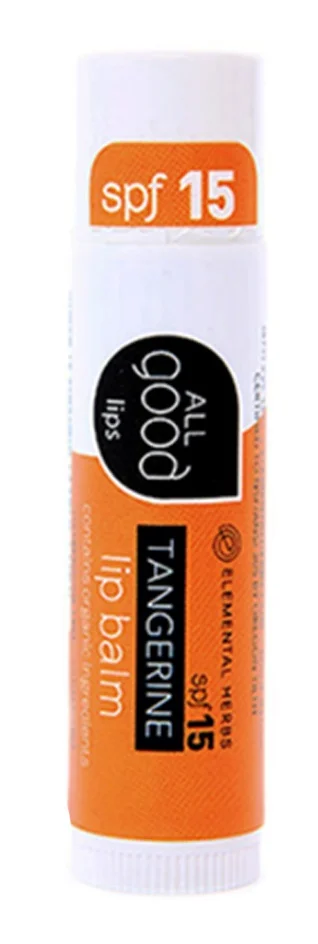
Analysis locked
How well does your skin match with All Good Tangerine Lip Balm?
Login to see detailsOr continue via
Quick 1-minute survey • Completely free
Ingredients
Analysis results of Ingredients


Ingredient List
| EWG | CIR | Ingredient Name & Cosmetic Function | Notes |
|---|---|---|---|
| 2 9 | - | (Skin Protecting, Cosmetic Colorant, Sunscreen Agent, Bulking Agent) |    |
| 1 | - | | |
| 1 | - | | |
| - | - | Pure Cera Alba (Beeswax) | |
All Good Tangerine Lip Balm - Ingredient Explanation
Zinc Oxide (3.5%)
1. Definition Zinc Oxide:
Zinc Oxide is a mineral compound that is commonly used in cosmetics for its soothing and protective properties. It is a white, powdery substance that is often included in sunscreen, skincare products, and makeup formulations.2. Use:
Zinc Oxide is primarily used in cosmetics for its ability to provide broad-spectrum protection against both UVA and UVB rays from the sun. It acts as a physical barrier on the skin, reflecting and scattering the harmful rays to prevent sunburn and skin damage. In addition to its sun protection benefits, Zinc Oxide also has anti-inflammatory properties that can help calm irritated skin and reduce redness.3. Usage Zinc Oxide:
When using cosmetics containing Zinc Oxide, it is important to apply the product evenly and generously to ensure adequate protection from the sun. Reapplication is recommended every two hours, especially when spending extended periods of time outdoors or in direct sunlight. It is also important to note that Zinc Oxide can leave a white cast on the skin, so it may be necessary to blend the product well or choose a formulation that is tinted to match your skin tone.4. References:
- Draelos, Z. D. (2010). Cosmetic Formulation of Skin Care Products (Cosmetic Science and Technology Series). CRC Press.
- Wang, S. Q., & Lim, H. W. (2007). Current status of the sunscreen regulation in the United States: 2011 Food and Drug Administration's final rule on labeling and effectiveness testing. Journal of the American Academy of Dermatology, 66(3), 489-496.
- Nasir, A., Kalam, A., Singh, P., & Sharma, K. (2019). Zinc oxide nanoparticles: a review of their biological synthesis, antimicrobial activity, uptake, translocation and biotransformation in plants. Journal of Materials Science, 54(2), 1016-1042.
Organic Citrus Tangerina (Tangerine Essential Oil)
1. Definition Citrus Tangerina:
Citrus Tangerina, also known as tangerine, is a citrus fruit that belongs to the Rutaceae family. It is native to Southeast Asia and is widely cultivated for its sweet and tangy flavor.2. Use:
Citrus Tangerina is commonly used in cosmetics for its skin-brightening and rejuvenating properties. It is rich in antioxidants, vitamins, and minerals that help to promote healthy skin. Tangerine extract is often included in skincare products such as serums, creams, and masks to help improve skin tone, reduce signs of aging, and enhance overall skin health.3. Usage Citrus Tangerina:
When using cosmetics containing Citrus Tangerina extract, it is important to be aware of potential sensitivities or allergies. It is recommended to perform a patch test before applying the product to the entire face or body to ensure compatibility with your skin. Additionally, it is advisable to follow the instructions provided on the product packaging and consult with a dermatologist if you have any concerns about using tangerine-based cosmetics.4. References:
- Choi, S. Y., Ko, H. C., Ko, S. Y., Hwang, J. H., Park, J. G., Kang, S., ... & Kim, S. J. (2007). Citrus unshiu peel extract alleviates cancer-induced weight loss in mice bearing CT-26 adenocarcinoma. Nutrition Research, 27(4), 210-214.
- Kim, S. Y., Kim, M. J., Lee, Y. H., Kim, S. H., Park, H. J., Lee, J. H., ... & Lee, C. H. (2012). Inhibitory effects of Citrus unshiu peel extracts on the production of inflammatory mediators in HaCaT cells. Journal of Ethnopharmacology, 144(2), 545-550.
- Kim, Y. J., Uyama, H., & Kobayashi, S. (2005). Inhibition of melanogenesis by tangeritin from Citrus unshiu in B16 mouse melanoma cells. Bioscience, Biotechnology, and Biochemistry, 69(3), 451-454.
Organic Olea Europaea (Extra VirginOlive Fruit Oil)
1. Definition Olea Europaea (Olive):
Olea Europaea (Olive) is a species of small tree native to the Mediterranean region, cultivated for its fruit which is commonly used to produce olive oil. Olive extract is a popular ingredient in cosmetics due to its moisturizing, antioxidant, and anti-inflammatory properties.2. Use:
Olive extract is commonly used in skincare products such as moisturizers, serums, and facial oils. It is known for its ability to hydrate and nourish the skin, leaving it soft and supple. Olive extract is also used in hair care products to help condition and strengthen the hair.3. Usage Olea Europaea (Olive):
When using cosmetics containing Olea Europaea (Olive) extract, it is important to follow the instructions provided on the product packaging. It is generally safe for most skin types, but individuals with known allergies to olives should perform a patch test before using the product on a larger area of skin. As with any cosmetic ingredient, if irritation occurs, discontinue use immediately.4. References:
- Paula Begoun, "The Complete Beauty Bible: The Ultimate Guide to Smart Beauty"
- Rebecca L. Johnson, "Olive Oil: An Overview of the Health Benefits and Uses of Olive Oil"
- Nabil A. Ibrahim, "Olive Biophenols: Sources, Bioactivities, and Health Benefits"
Pure Cera Alba (Beeswax)
Ingredient data is being updated. Please check back later.
Review
Didn't find
the information you need?






Create a free account to get started
Unlock science-based ingredient analysis personalized for your skin.
Already have an account? Log in
We protect your privacy. We never send spam.