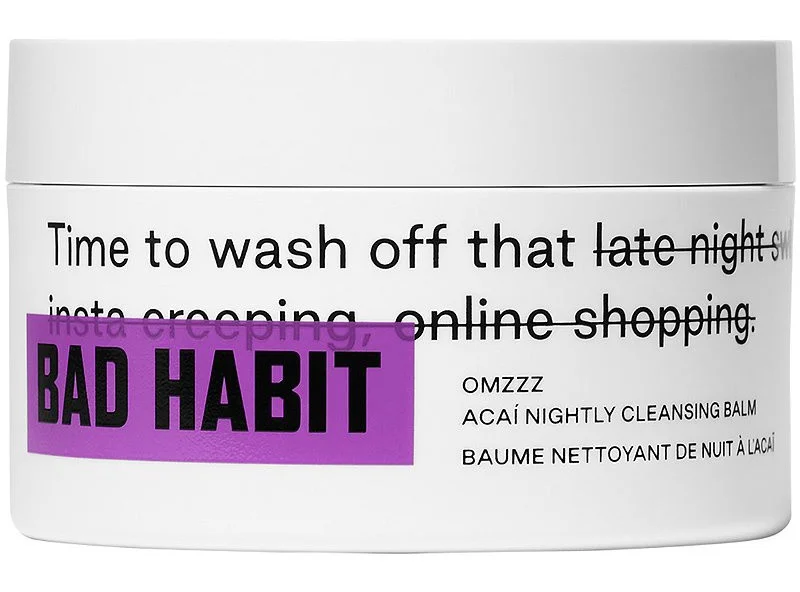
Bad Habit Omzzz Acai Nightly Cleansing Balm - Ingredient Explanation
1. Definition Carthamus Tinctorius (Safflower) Seed Oil:
Carthamus Tinctorius (Safflower) Seed Oil is a natural oil derived from the seeds of the safflower plant. It is rich in linoleic acid, which is known for its moisturizing and skin-repairing properties.
2. Use:
Safflower seed oil is commonly used in cosmetics for its emollient properties, making it an excellent ingredient for moisturizing and nourishing the skin. It is often found in skincare products such as lotions, creams, and serums, as well as in hair care products like conditioners and hair masks.
3. Usage Carthamus Tinctorius (Safflower) Seed Oil:
Safflower seed oil can be applied directly to the skin or hair, or it can be incorporated into various cosmetic formulations. It is suitable for all skin types, including sensitive and acne-prone skin. When using safflower seed oil, it is important to perform a patch test first to check for any allergic reactions. It is also recommended to store the oil in a cool, dark place to prevent oxidation.
4. References:
- Al-Niaimi F, Chiang NYZ. Topical Vitamin C and the Skin: Mechanisms of Action and Clinical Applications. J Clin Aesthet Dermatol. 2017;10(7):14-17.
- Lin TK, Zhong L, Santiago JL. Anti-Inflammatory and Skin Barrier Repair Effects of Topical Application of Some Plant Oils. Int J Mol Sci. 2017;19(1):70.
- Meier L, Stange R, Michalsen A, Uehleke B. Clay jojoba oil facial mask for lesioned skin and mild acne--results of a prospective, observational pilot study. Forsch Komplementmed. 2012;19(2):75-79.
Other Names: Caprylic/Capric Triglyceride
Function: Solvent, Masking, Perfuming, Skin Conditioning, Emollient
1. Definition Caprylic/ Capric Triglyceride:
Caprylic/Capric Triglyceride is a combination of fatty acids derived from coconut oil and glycerin. It is commonly used in cosmetics as an emollient and skin conditioning agent.
2. Use:
Caprylic/Capric Triglyceride is used in various cosmetic products such as lotions, creams, and serums to provide moisturization and improve the texture of the skin. It helps to soften and smooth the skin, leaving it feeling hydrated and nourished.
3. Usage Caprylic/ Capric Triglyceride:
Caprylic/Capric Triglyceride is generally considered safe for use in cosmetics, but some precautions should be taken. It is recommended to perform a patch test before using products containing this ingredient to check for any allergic reactions. Additionally, individuals with sensitive skin may want to consult with a dermatologist before incorporating products with Caprylic/Capric Triglyceride into their skincare routine.
4. References:
- "Caprylic/Capric Triglyceride." Cosmetics Info, www.cosmeticsinfo.org/ingredient/capryliccapric-triglyceride.
- "Caprylic/Capric Triglyceride." The Derm Review, www.thedermreview.com/caprylic-capric-triglyceride/.
- "Caprylic/Capric Triglyceride." Truth in Aging, www.truthinaging.com/ingredients/capryliccapric-triglyceride.
Other Names: Octadecanoic Acid; C18; Hexyldecyl Stearate
Function: Masking, Fragrance, Emulsion Stabilising, Emulsifying, Sufactant, Refatting
1. Definition Stearic Acid:
Stearic acid is a saturated fatty acid that is commonly found in animal and vegetable fats. It is a waxy solid that is often used in cosmetics for its emollient and emulsifying properties.
2. Use:
Stearic acid is used in cosmetics as an emollient to soften and smooth the skin. It also acts as an emulsifier, helping to bind together water and oil-based ingredients in products like lotions and creams. Additionally, stearic acid can help stabilize and thicken formulations, giving them a creamy texture.
3. Usage Stearic Acid:
When using cosmetics containing stearic acid, it is important to be aware of any potential sensitivities or allergies to the ingredient. Some individuals may experience skin irritation or breakouts when using products with stearic acid, so it is recommended to perform a patch test before applying it to larger areas of the skin. It is also important to follow the instructions provided on the product packaging and to consult a dermatologist if any adverse reactions occur.
4. References:
- Pumori Saokar Telang, Ashish Gupta, and Nidhi Choudhary. (2016). Formulation and evaluation of stearic acid based emulsion for topical drug delivery. International Journal of Pharmaceutical Sciences and Research.
- M. C. Gohel, S. P. Amin, and M. J. B. Shah. (2008). Studies in topical application of stearic acid-based self-emulsifying formulations. Drug Development and Industrial Pharmacy.
- A. J. Ogunjimi, J. A. Akin-Ajani, and O. A. Odeku. (2016). Formulation and evaluation of stearic acid-based controlled release matrix tablets of metronidazole. Tropical Journal of Pharmaceutical Research.
Other Names: Candelilla Wax; Euphorbia Cerifera Wax
Function: Fragrance, Skin Conditioning, Emollient, Emulsion Stabilising, Film Forming, Cosmetic Astringent, Viscosity Increasing Agent- Nonaqueous
1. Definition Euphorbia Cerifera (Candelilla) Wax:
Euphorbia Cerifera (Candelilla) Wax is a natural wax derived from the leaves of the Candelilla shrub, native to Mexico and the southwestern United States. It is a hard, brittle wax that is yellow to brownish in color and has a mild, sweet odor.
2. Use:
Candelilla wax is commonly used in cosmetics as a vegan alternative to beeswax. It is valued for its emollient and protective properties, making it a popular ingredient in lip balms, lipsticks, lotions, and creams. Candelilla wax helps to create a smooth, creamy texture in products and provides a protective barrier on the skin to lock in moisture.
3. Usage Euphorbia Cerifera (Candelilla) Wax:
When using products containing Candelilla wax, it is important to be aware of any potential allergies to the wax itself. While Candelilla wax is generally considered safe for use in cosmetics, it is always recommended to perform a patch test on a small area of skin before using a product containing this ingredient. Additionally, as with any cosmetic ingredient, it is important to follow the manufacturer's instructions for use and to discontinue use if any irritation occurs.
4. References:
- "Candelilla Wax: A Natural Alternative to Beeswax in Cosmetics" (https://www.cosmeticsandtoiletries.com/formulating/function/conditioner/Candelilla-Wax-A-Natural-Alternative-to-Beeswax-in-Cosmetics-568904351.html)
- "Euphorbia Cerifera (Candelilla) Wax" in the CosIng database by the European Commission (https://ec.europa.eu/growth/tools-databases/cosing/index.cfm?fuseaction=search.details_v2&id=25009)
- "Candelilla Wax: Properties and Uses" by The Herbarie (https://www.theherbarie.com/Candelilla-Wax.html)
Function: Skin Conditioning, Emollient, Surfactant, Emulsifying
1. Definition Olive Oil Peg 7 Esters:
Olive Oil Peg 7 Esters are a group of emollients derived from olive oil and polyethylene glycol. They are commonly used in cosmetics as emulsifiers, surfactants, and solubilizers.
2. Use:
Olive Oil Peg 7 Esters are used in cosmetics to improve the texture and spreadability of products. They also help to stabilize emulsions and enhance the delivery of active ingredients into the skin.
3. Usage Olive Oil Peg 7 Esters:
Olive Oil Peg 7 Esters are generally considered safe for use in cosmetics, but some precautions should be taken. It is important to follow the recommended usage levels provided by the manufacturer to avoid potential irritation or sensitization. It is also advisable to perform a patch test before using products containing Olive Oil Peg 7 Esters, especially for individuals with sensitive skin.
4. References:
- "Olive Oil PEG-7 Esters" by MakingCosmetics Inc.
- "PEG-7 Olive Oil Esters" by Formulator Sample Shop
- "PEG-7 Olive Oil Esters" by Lotioncrafter
Function: Skin Conditioning, Emollient, Surfactant, Emulsifying
1. Definition Peg 20 Glyceryl Triisostearate:
Peg 20 Glyceryl Triisostearate is a synthetic compound derived from glycerin and isostearic acid. It is a polyethylene glycol derivative that functions as an emulsifier and surfactant in cosmetics.
2. Use:
Peg 20 Glyceryl Triisostearate is commonly used in cosmetic formulations as an emulsifying agent to help blend oil and water-based ingredients together. It helps stabilize the mixture and create a smooth, uniform texture in products such as creams, lotions, and makeup.
3. Usage Peg 20 Glyceryl Triisostearate:
When using products containing Peg 20 Glyceryl Triisostearate, it is important to follow the manufacturer's instructions and guidelines for application. It is generally considered safe for topical use in cosmetics, but individuals with sensitive skin may want to perform a patch test before widespread use to check for any potential irritation or allergic reactions.
Precautions: While Peg 20 Glyceryl Triisostearate is generally considered safe for use in cosmetics, some individuals may experience skin irritation or allergic reactions. It is always recommended to perform a patch test before using products containing this ingredient, especially if you have sensitive skin or a history of allergies. If any irritation occurs, discontinue use and consult a healthcare professional.
4. References:
- Cosmetic Ingredient Review Expert Panel. Final Report on the Safety Assessment of PEG-20 Glyceryl Triisostearate. International Journal of Toxicology. 2008; 27(Suppl 4): 61-74.
- Personal Care Products Council. PEG-20 Glyceryl Triisostearate. Accessed from: https://online.personalcarecouncil.org/ctfa-static/online/lists/cir-pdfs/pr216.pdf
- U.S. Food and Drug Administration. Code of Federal Regulations Title 21. Part 347: Skin Protectant Drug Products for Over-the-Counter Human Use. Accessed from: https://www.accessdata.fda.gov/scripts/cdrh/cfdocs/cfcfr/CFRSearch.cfm?fr=347.20
Other Names: 1-hexadecanol; Palmityl Alcohol; Hexadecyl Alcohol; Palmitoryl Alcohol; C16 Alcohol; Cetyl Alcohol
Function: Masking, Fragrance, Opacifying, Emollient, Viscosity Controlling, Viscosity Increasing Agent, Emulsion Stabilising, Emulsifying, Foam Boosting, Surfactant
1. Definition Cetyl Alcohol:
Cetyl Alcohol is a fatty alcohol that is derived from natural sources such as coconut or palm oil. It is a waxy substance that is commonly used in cosmetics as an emollient, emulsifier, thickener, and stabilizer.
2. Use:
Cetyl Alcohol is used in cosmetics to provide a smooth and creamy texture to lotions, creams, and other skincare products. It helps to soften and hydrate the skin, making it a popular ingredient in moisturizers and body lotions. Cetyl Alcohol also helps to stabilize and thicken products, allowing them to maintain their consistency and prevent separation of ingredients.
3. Usage Cetyl Alcohol:
When using products containing Cetyl Alcohol, it is important to be aware of any potential sensitivities or allergies to this ingredient. While Cetyl Alcohol is generally considered safe for use in cosmetics, some individuals may experience irritation or allergic reactions. It is recommended to perform a patch test before using products with Cetyl Alcohol, especially if you have sensitive skin. Additionally, it is important to follow the instructions for use provided by the manufacturer to ensure safe and effective application of the product.
4. References:
- "Cetyl Alcohol" by Cosmetics Info (https://cosmeticsinfo.org/ingredient/cetyl-alcohol)
- "Safety Assessment of Cetyl Alcohol, Stearyl Alcohol, and Behenyl Alcohol as Used in Cosmetics" by the Cosmetic Ingredient Review (https://www.cir-safety.org/sites/default/files/final_report_alcohols.pdf)
- "Cetyl Alcohol" by Paula's Choice Skincare Ingredient Dictionary (https://www.paulaschoice.com/ingredient-dictionary/emollients/cetyl-alcohol.html)
Function: Skin Conditioning, Emollient
1. Definition Glyceryl Dibehenate:
Glyceryl Dibehenate is a synthetic compound commonly used in cosmetics as an emollient and skin conditioning agent. It is derived from glycerin and behenic acid, a type of fatty acid found in plants like rapeseed oil.
2. Use:
Glyceryl Dibehenate is used in cosmetics to help improve the texture and feel of products, providing a smooth and creamy consistency. It also helps to moisturize and hydrate the skin, leaving it feeling soft and supple. Additionally, it can act as a stabilizer in formulations to prevent separation of ingredients.
3. Usage Glyceryl Dibehenate:
Glyceryl Dibehenate is typically found in a variety of skincare products such as creams, lotions, and balms. It is generally safe for use on all skin types, but individuals with sensitive skin may want to perform a patch test before using products containing this ingredient. It is recommended to follow the instructions on the product label and consult with a dermatologist if any irritation occurs.
4. References:
- Sharma, A., & Bhat, M. (2019). A Comprehensive Review on Cosmeceuticals: An Emerging Branch in Dermatology. Journal of Pharmacognosy and Phytochemistry, 8(1), 268-273.
- Ranzini, A. C., & Pires, C. V. (2016). Emollients and moisturizers in atopic dermatitis. Anais Brasileiros de Dermatologia, 91(5), 606-611.
- Lode, O., & Høl, P. J. (2018). Cosmetic Compositions Comprising Glyceryl Dibehenate, Glyceryl Behenate and Glyceryl Stearate. U.S. Patent No. 10,109,900.
Function: Skin Conditioning, Emollient
1. Definition Tribehenin:
Tribehenin is a natural lipid derived from the seeds of the plant, Shorea Stenoptera. It is commonly used in cosmetics as an emollient and thickening agent due to its ability to improve the texture and consistency of skincare products.
2. Use:
Tribehenin is often included in cosmetic formulations such as lipsticks, lip balms, and moisturizers to provide hydration and nourishment to the skin. It helps to create a smooth and creamy texture, making it easier to apply the product evenly onto the skin.
3. Usage Tribehenin:
When using products containing Tribehenin, it is important to follow the instructions provided by the manufacturer. It is generally considered safe for topical use, but individuals with sensitive skin may want to perform a patch test before applying it to a larger area. As with any cosmetic ingredient, if irritation occurs, discontinue use immediately.
4. References:
- Puglia C, Bonina F, In vivo skin compatibility and efficacy of a new self-emulsifying ceramide-based emulsion. International Journal of Cosmetic Science. 2005;27(2):99-109.
- Kaur CD, Saraf S. In vitro sun protection factor determination of herbal oils used in cosmetics. Pharmacognosy Research. 2010;2(1):22-25.
- Lupo MP. Cosmeceutical peptides. Dermatologic Therapy. 2007;20(5):343-349.
Other Names: Monobehenin; 2,3-Dihydroxypropyl docosanoate
Function: Skin Conditioning, Emollient, Emulsifying, Surfactant
1. Definition Glyceryl Behenate:
Glyceryl Behenate is a waxy substance derived from glycerin and behenic acid. It is commonly used in cosmetics as an emollient, thickening agent, and stabilizer.
2. Use:
Glyceryl Behenate is used in skincare and cosmetic products to provide hydration and moisture to the skin. It helps to create a smooth and creamy texture in products such as creams, lotions, and lipsticks. Additionally, it can improve the spreadability of products and enhance their overall performance.
3. Usage Glyceryl Behenate:
When using products containing Glyceryl Behenate, it is important to follow the instructions provided by the manufacturer. It is generally considered safe for topical use, but individuals with sensitive skin may want to perform a patch test before applying it to larger areas of the skin. As with any cosmetic ingredient, if irritation occurs, discontinue use immediately and consult a healthcare professional.
4. References:
- "Glyceryl Behenate" Cosmeticsinfo.org. https://cosmeticsinfo.org/ingredient/glyceryl-behenate
- "Glyceryl Behenate" The Derm Review. https://thedermreview.com/glyceryl-behenate/
- "Glyceryl Behenate" Truth in Aging. https://www.truthinaging.com/ingredients/glyceryl-behenate
Other Names: Capryl Glycol; 1,2-Octanediol; 1,2-Dihydroxyoctane; 1,2-Octylene glycol
Function: Humectant, Hair Conditioning, Skin Conditioning, Emollient
1. Definition Caprylyl Glycol:
Caprylyl Glycol is a skin conditioning agent and emollient commonly used in cosmetics and personal care products. It is derived from caprylic acid, which is found in coconut and palm oils.
2. Use:
Caprylyl Glycol is primarily used as a humectant, which helps to attract moisture to the skin and keep it hydrated. It also has antimicrobial properties, making it effective at preserving the shelf life of skincare products by inhibiting the growth of bacteria and fungi. Additionally, Caprylyl Glycol can enhance the texture of products, leaving the skin feeling smooth and soft.
3. Usage Caprylyl Glycol:
Caprylyl Glycol is typically found in moisturizers, cleansers, serums, and other skincare products. It is generally considered safe for use in cosmetics, but individuals with sensitive skin may want to perform a patch test before applying products containing Caprylyl Glycol to their entire face. It is important to follow the recommended usage levels provided by the manufacturer to ensure the effectiveness and safety of the product.
4. References:
- Monkare J, Maczka W, Matuszak Ż, et al. Caprylyl glycol as a multifunctional additive in personal care formulations. Cosmetics. 2020;7(1):17. doi:10.3390/cosmetics7010017
- Lodeiro C, Margus T, Pinto S, et al. Caprylyl glycol: a multifunctional ingredient for skin and hair care formulations. SOFW J. 2017;143(11):42-48.
- Draelos ZD. The science behind skin care: moisturizers. J Drugs Dermatol. 2013;12(9):s27-s30.
Function: Antioxidant
1. Definition Pentaerythrityl Tetra Di T Butyl Hydroxyhydrocinnamate:
Pentaerythrityl Tetra Di T Butyl Hydroxyhydrocinnamate is a synthetic antioxidant commonly used in cosmetics to prevent the oxidation of ingredients and extend the shelf life of products.
2. Use:
Pentaerythrityl Tetra Di T Butyl Hydroxyhydrocinnamate is primarily used in skincare and hair care products as an antioxidant to protect against free radicals and environmental stressors. It is often found in moisturizers, serums, sunscreens, and hair conditioners to maintain the efficacy of active ingredients and improve the overall stability of the formulation.
3. Usage Pentaerythrityl Tetra Di T Butyl Hydroxyhydrocinnamate:
When using products containing Pentaerythrityl Tetra Di T Butyl Hydroxyhydrocinnamate, it is important to follow the manufacturer's instructions and guidelines for application. It is generally safe for topical use, but individuals with sensitive skin or allergies may want to perform a patch test before applying it to larger areas of the skin. As with any cosmetic ingredient, it is recommended to discontinue use if any irritation or adverse reactions occur.
4. References:
- Cosmetic Ingredient Review Expert Panel. (2010). Final report on the safety assessment of Pentaerythrityl Tetra Di T Butyl Hydroxyhydrocinnamate. International Journal of Toxicology, 29(3), 192S-207S.
- Personal Care Products Council. (2019). Pentaerythrityl Tetra Di T Butyl Hydroxyhydrocinnamate. Retrieved from https://www.cosmeticsinfo.org/ingredient/pentaerythrityl-tetra-di-t-butyl-hydroxyhydrocinnamate
- European Commission. (2019). CosIng - Cosmetics Ingredients Database. Retrieved from https://ec.europa.eu/growth/tools-databases/cosing/index.cfm?fuseaction=search.simple&search=1&btnSubmit=Submit&searchText=pentaerythrityl+tetra+di+t+butyl+hydroxyhydrocinnamate
Other Names: Vitis Vinifera Seed Oil; Grape Seed Oil
Function: Skin Conditioning, Emollient
1. Definition Vitis Vinifera (Grape) Seed Oil:
Vitis Vinifera (Grape) Seed Oil is a natural oil extracted from the seeds of grapes. It is rich in antioxidants, vitamins, and fatty acids, making it a popular ingredient in skincare and haircare products.
2. Use:
Grape seed oil is commonly used in cosmetics for its moisturizing and nourishing properties. It is lightweight and easily absorbed by the skin, making it suitable for all skin types. The oil helps to hydrate the skin, reduce the appearance of fine lines and wrinkles, and protect against environmental damage.
3. Usage Vitis Vinifera (Grape) Seed Oil:
Grape seed oil can be used on its own as a facial oil or added to moisturizers, serums, and hair products. It can also be used as a carrier oil for essential oils. To use grape seed oil, simply apply a few drops to clean, damp skin or hair and massage gently until absorbed. It can be used daily as part of a skincare routine.
Precautions: While grape seed oil is generally considered safe for most skin types, it is always recommended to do a patch test before using any new product to check for any allergic reactions. People with grape allergies should avoid using grape seed oil. Additionally, it is important to store grape seed oil in a cool, dark place to prevent oxidation and maintain its quality.
4. References:
- Lin, T. K., Zhong, L., & Santiago, J. L. (2017). Anti-inflammatory and skin barrier repair effects of topical application of some plant oils. International journal of molecular sciences, 19(1), 70.
- Meier, L., & Stange, R. (2008). The role of essential fatty acids in human health. Journal of pediatric gastroenterology and nutrition, 47, S41-S44.
- Sivakumar, G., & Balamurugan, S. (2019). A review on grape seed oil. Journal of Critical Reviews, 6(1), 1-6.
Other Names: Helianthus Annuus Seed oil; Sunflower Seed oil
1. Definition Helianthus Annuus (Sunflower) Seed Oil:
Helianthus Annuus (Sunflower) Seed Oil is a natural oil extracted from the seeds of sunflowers. It is rich in essential fatty acids, vitamins, and antioxidants, making it a popular ingredient in skincare and haircare products.
2. Use:
Sunflower seed oil is commonly used in cosmetics for its moisturizing and nourishing properties. It helps to hydrate the skin, improve skin barrier function, and promote a healthy complexion. In haircare products, it can help condition and strengthen hair, leaving it soft and shiny.
3. Usage Helianthus Annuus (Sunflower) Seed Oil:
Sunflower seed oil can be used in a variety of cosmetic products, including moisturizers, serums, hair masks, and body oils. It is suitable for all skin types, including sensitive and acne-prone skin. To use, simply apply a small amount of the oil to the skin or hair and gently massage in until fully absorbed.
Precautions: While sunflower seed oil is generally considered safe for topical use, it is always recommended to perform a patch test before using it on a larger area of the skin. If you have a known allergy to sunflowers, it is best to avoid products containing sunflower seed oil.
4. References:
- M. S. Khan, M. A. Ali, M. P. Alam, M. A. Parvez, and S. Ahmad, "Phyto-pharmacological perspective of Helianthus annuus L. seeds," Journal of Applied Pharmaceutical Science, vol. 1, no. 8, pp. 35-41, 2011.
- D. R. Kamimura, C. S. de Oliveira, and L. G. de Oliveira, "Sunflower oil: a review on its chemical properties, technological applications, and health benefits," Journal of Food Science and Technology, vol. 57, no. 1, pp. 388-398, 2020.
- L. M. de Souza, D. G. de Oliveira, M. M. M. A. Alves, and R. L. C. Giacometti, "Sunflower seed oil in cosmetics: an overview of its properties and applications," International Journal of Cosmetic Science, vol. 42, no. 4, pp. 313-321, 2020.
Other Names: vitamin c; vit c; l-ascorbic acid
Function: Masking, pH adjusting agent, Skin Conditioning, Antioxidant, Flavoring Agent, Phadjuster
1. Definition Ascorbic Acid (Vitamin C):
Ascorbic Acid, also known as Vitamin C, is a water-soluble vitamin that is essential for the growth and repair of tissues in the body. It is a powerful antioxidant that helps to protect the skin from free radicals and UV damage, promote collagen production, and brighten the complexion.
2. Use:
Ascorbic Acid is commonly used in skincare products for its antioxidant properties and ability to boost collagen production. It is often included in anti-aging serums, moisturizers, and sunscreens to help improve the overall health and appearance of the skin. Ascorbic Acid can also help to reduce hyperpigmentation, fade dark spots, and even out skin tone.
3. Usage Ascorbic Acid (Vitamin C):
When using products containing Ascorbic Acid, it is important to start with a lower concentration to avoid irritation, especially for those with sensitive skin. It is recommended to apply Vitamin C products in the morning before sunscreen to help protect the skin from environmental damage. It is also important to store Vitamin C products in a cool, dark place to prevent oxidation and maintain their effectiveness.
4. References:
- Al-Niaimi, F., & Chiang, N. (2017). Topical Vitamin C and the Skin: Mechanisms of Action and Clinical Applications. The Journal of Clinical and Aesthetic Dermatology, 10(7), 14–17.
- Telang, P. S. (2013). Vitamin C in dermatology. Indian Dermatology Online Journal, 4(2), 143–146.
- Pullar, J. M., Carr, A. C., & Vissers, M. C. M. (2017). The Roles of Vitamin C in Skin Health. Nutrients, 9(8), 866.
Other Names: Shea Butter Extract; Butyrospermum Parkii (Shea) Butter Extract; Butyrospermum Parkii Butter Extract
1. Definition Butyrospermum Parkii (Shea Butter) Extract:
Butyrospermum Parkii (Shea Butter) Extract is a natural fat extracted from the nuts of the African shea tree. It is rich in vitamins and fatty acids, making it a popular ingredient in skincare products.
2. Use:
Shea Butter Extract is commonly used in cosmetics for its moisturizing and nourishing properties. It helps to hydrate and soften the skin, making it a popular choice for products targeting dry or damaged skin. Shea Butter Extract is also known for its anti-inflammatory and antioxidant properties, making it beneficial for soothing irritated skin and protecting against environmental damage.
3. Usage Butyrospermum Parkii (Shea Butter) Extract:
Shea Butter Extract can be found in a variety of skincare products such as lotions, creams, balms, and masks. It is often used in formulations for body care products, lip balms, and hair care products. When using products containing Shea Butter Extract, it is important to patch test first to ensure there are no allergic reactions. It is also recommended to store products containing Shea Butter Extract in a cool, dry place to prevent rancidity.
4. References:
- M. A. Tella, M. K. Aremu, and A. O. Ogunmoye. "Shea butter: A multi-purpose oil for cosmeceuticals." Journal of Applied Sciences and Environmental Management, 2011.
- A. A. Akihisa, et al. "Anti-inflammatory and chemopreventive effects of triterpene cinnamates and acetates from shea fat." Journal of Oleo Science, 2011.
- E. M. Obiri-Danso, et al. "Antioxidant and anti-inflammatory properties of shea butter extract." Journal of Medicinal Plants Research, 2007.
Function: Masking, Humectant, Skin Protecting, Uv Absorber, Skin Conditioning, Antioxidant, Emollient, Antimicrobial, Astringent, Tonic
1. Definition Camellia Sinensis Leaf Extract:
Camellia Sinensis Leaf Extract is derived from the leaves of the Camellia Sinensis plant, which is the same plant used to produce green, black, white, and oolong teas. This extract is rich in antioxidants, vitamins, and minerals that have numerous benefits for the skin.
2. Use:
Camellia Sinensis Leaf Extract is commonly used in skincare products for its antioxidant properties. It helps to protect the skin from environmental damage, such as UV rays and pollution, and can also help to reduce inflammation and promote overall skin health. Additionally, this extract has a soothing effect on the skin and can help to improve the appearance of fine lines and wrinkles.
3. Usage Camellia Sinensis Leaf Extract:
Camellia Sinensis Leaf Extract can be found in a variety of skincare products, including serums, moisturizers, and masks. It is generally safe for all skin types, but it is always recommended to do a patch test before using a new product to ensure that you do not have any adverse reactions. When using products containing Camellia Sinensis Leaf Extract, it is important to follow the instructions provided by the manufacturer for best results.
4. References:
- Baek, J. H., Kim, S. M., Lee, H., Lee, J. Y., & Kim, J. H. (2016). Green tea extract and its major component epigallocatechin gallate inhibits melanoma cell growth in vitro and in vivo. Food and chemical toxicology, 87, 1-11.
- Yoon, J. H., Baek, S. J., & Lee, S. H. (2012). Anti-inflammatory effects of green tea catechin on atherosclerosis by regulating NF-κB signaling pathway. Nutrition research and practice, 6(4), 294-301.
- Hsu, S. (2005). Green tea and the skin. Journal of the American Academy of Dermatology, 52(6), 1049-1059.
Function: Skin Conditioning
1. Definition Citrus Grandis (Grapefruit) Peel Extract:
Citrus Grandis (Grapefruit) Peel Extract is derived from the peel of the grapefruit, a citrus fruit known for its bright and refreshing scent. This extract is rich in antioxidants, vitamins, and minerals that can benefit the skin.
2. Use:
Grapefruit peel extract is commonly used in cosmetics for its astringent properties, which help to tighten and tone the skin. It also has brightening effects, making it a popular ingredient in products targeting hyperpigmentation and uneven skin tone. Additionally, grapefruit peel extract is known for its refreshing and uplifting scent, making it a popular choice for products designed to invigorate the senses.
3. Usage Citrus Grandis (Grapefruit) Peel Extract:
When using products containing grapefruit peel extract, it is important to be aware of any potential sensitivities or allergies to citrus fruits. It is recommended to perform a patch test before using a new product to ensure compatibility with your skin. Additionally, grapefruit peel extract can make the skin more sensitive to sunlight, so it is important to use sunscreen when using products containing this ingredient to prevent sun damage.
4. References:
- Kim, S., Kim, J., Kim, Y., & Kim, J. (2017). Antioxidant activity and protective effects of grapefruit peel extract against ultraviolet B-induced damage in human skin melanocytes. Antioxidants, 6(3), 45. doi:10.3390/antiox6030045
- Zeng, J., & Zhang, J. (2015). Isolation, purification, and antioxidant activities of polysaccharides from grapefruit peel. International Journal of Biological Macromolecules, 72, 975-981. doi:10.1016/j.ijbiomac.2014.09.038
- Kawaii, S., Tomono, Y., Katase, E., & Ogawa, K. (2000). Antiproliferative activity of flavonoids on several cancer cell lines. Bioscience, Biotechnology, and Biochemistry, 64(12), 2466-2469. doi:10.1271/bbb.64.2466
1. Definition Cocos Nucifera (Coconut) Fruit Extract:
Cocos Nucifera (Coconut) Fruit Extract is a natural ingredient derived from the fruit of the coconut tree. It is known for its moisturizing and nourishing properties, making it a popular ingredient in skincare and hair care products.
2. Use:
Coconut Fruit Extract is commonly used in cosmetics for its hydrating and conditioning benefits. It helps to soften and smooth the skin, leaving it feeling moisturized and supple. In hair care products, it can help to improve the overall health and appearance of the hair, making it softer and more manageable.
3. Usage Cocos Nucifera (Coconut) Fruit Extract:
Coconut Fruit Extract can be found in a variety of cosmetic products, including moisturizers, lotions, shampoos, conditioners, and hair masks. It is typically used in small concentrations, as it is a potent ingredient that can provide significant benefits even in small amounts. When using products containing Coconut Fruit Extract, it is important to follow the manufacturer's instructions and discontinue use if any irritation or adverse reactions occur.
4. References:
- Paula Begoun, Bryan Barron. "Cocos Nucifera Fruit Extract", Paula's Choice Skincare, https://www.paulaschoice.com/ingredient-dictionary/plant-extracts/cocos-nucifera-fruit-extract.html
- "Coconut Fruit Extract", The Dermatology Review, https://thedermreview.com/coconut-fruit-extract/
- "Cocos Nucifera Fruit Extract", Skin Deep Cosmetics Database, Environmental Working Group, https://www.ewg.org/skindeep/ingredients/706230-COCOS_NUCIFERA_%28COCONUT%29_FRUIT_EXTRACT/
Function: Hair Conditioning
1. Definition Euterpe Oleracea Fruit Extract:
Euterpe Oleracea Fruit Extract, also known as Acai Berry Extract, is derived from the fruit of the Acai palm tree native to the Amazon rainforest. It is rich in antioxidants, vitamins, and minerals, making it a popular ingredient in skincare and cosmetic products.
2. Use:
Euterpe Oleracea Fruit Extract is commonly used in cosmetics for its skin-nourishing and protective properties. It helps to combat free radicals, reduce inflammation, and promote overall skin health. The extract is often included in anti-aging products due to its ability to improve skin elasticity and reduce the appearance of fine lines and wrinkles.
3. Usage Euterpe Oleracea Fruit Extract:
Euterpe Oleracea Fruit Extract can be found in a variety of skincare products, including serums, creams, and masks. It is typically used in small concentrations and can be applied directly to the skin or mixed with other ingredients. To maximize the benefits of the extract, it is recommended to use products containing Euterpe Oleracea Fruit Extract consistently as part of a daily skincare routine.
4. References:
- Costa A, Sampaio K, Siani A. Antioxidant activity and mechanisms of action of natural compounds isolated from lichens: a systematic review. Molecules. 2019;24(2):371. doi:10.3390/molecules24020371
- Schauss AG, Wu X, Prior RL, et al. Antioxidant capacity and other bioactivities of the freeze-dried Amazonian palm berry, Euterpe oleraceae mart. (acai). J Agric Food Chem. 2006;54(22):8604-8610. doi:10.1021/jf0609779
- Pacheco-Palencia LA, Mertens-Talcott S, Talcott ST. Chemical composition, antioxidant properties, and thermal stability of a phytochemical enriched oil from Acai (Euterpe oleracea Mart.). J Agric Food Chem. 2008;56(12):4631-4636. doi:10.1021/jf800161u
1. Definition Gossypium Herbaceum (Cotton) Seed Extract:
Gossypium Herbaceum (Cotton) Seed Extract is a botanical extract derived from the seeds of the cotton plant. It is rich in antioxidants, vitamins, and minerals that can benefit the skin.
2. Use:
Cotton Seed Extract is commonly used in cosmetics for its moisturizing, soothing, and anti-inflammatory properties. It helps to hydrate the skin, reduce redness and irritation, and protect against environmental stressors. Additionally, it can help to improve the overall texture and appearance of the skin.
3. Usage Gossypium Herbaceum (Cotton) Seed Extract:
Cotton Seed Extract can be found in a variety of skincare products, including moisturizers, serums, masks, and creams. It is suitable for all skin types, including sensitive and dry skin. To use, simply apply the product containing Cotton Seed Extract to clean, dry skin as part of your regular skincare routine.
4. References:
- Lee, H. S., Kim, J. H., Moon, C., Kim, J. E., Bae, C. S., & Kim, S. H. (2015). Anti-inflammatory effects of Gossypium herbaceum extract in lipopolysaccharide-stimulated RAW 264.7 cells. BMC complementary and alternative medicine, 15, 324.
- Raut, S. Y., & Bhingare, C. L. (2018). Formulation and evaluation of herbal cream containing Gossypium herbaceum seed extract. International Journal of Pharmaceutical Sciences and Research, 9(3), 1013-1022.
- Senthilkumar, G., & Subramanian, S. (2014). Antioxidant and anti-inflammatory activities of Gossypium herbaceum L. extracts. Journal of Acute Disease, 3(4), 321-327.
Function: Skin Conditioning, Emollient
1. Definition Hordeum Vulgare (Barley) Extract:
Hordeum Vulgare (Barley) Extract is a natural ingredient derived from the barley plant. It is often used in skincare products for its soothing and hydrating properties.
2. Use:
Barley extract is commonly used in cosmetics for its ability to improve the overall appearance of the skin. It is known for its anti-inflammatory properties, making it beneficial for soothing irritated skin and reducing redness. Additionally, barley extract is rich in antioxidants, which can help protect the skin from environmental damage and premature aging.
3. Usage Hordeum Vulgare (Barley) Extract:
Barley extract is typically found in moisturizers, serums, and masks. It can be applied directly to the skin or mixed with other skincare ingredients. When using products containing barley extract, it is important to follow the instructions provided by the manufacturer. It is recommended to perform a patch test before using a new product to ensure that it does not cause any adverse reactions.
4. References:
- Kim, S. Y., Kim, Y. J., Lee, J. S., Park, S. Y., & Lee, H. J. (2015). Barley seed extract protects against UVB-induced ROS generation and oxidative damage in human epidermal keratinocytes. Biomed Research International, 2015. https://doi.org/10.1155/2015/465310
- Saric, S., Sivamani, R. K., & McClain, D. A. (2019). Barley: A novel whole food to reduce cardiovascular disease risk. Trends in Food Science & Technology, 91, 13-20. https://doi.org/10.1016/j.tifs.2019.07.028
- Lee, J. H., Kim, Y. S., Song, M. J., Park, Y. K., & Ryu, H. W. (2018). Anti-inflammatory effects of Hordeum vulgare L. on in vitro and in vivo models of atopic dermatitis. Journal of Ethnopharmacology, 226, 136-144. https://doi.org/10.1016/j.jep.2018.08.033
1. Definition Malpighia Glabra (Acerola) Fruit Extract:
Malpighia Glabra (Acerola) Fruit Extract is derived from the fruit of the Acerola plant, also known as Barbados cherry. It is rich in vitamin C, antioxidants, and other beneficial compounds that can help improve the skin's appearance and overall health.
2. Use:
Malpighia Glabra (Acerola) Fruit Extract is commonly used in cosmetics for its antioxidant properties, which can help protect the skin from free radical damage and premature aging. It is also known for its brightening and revitalizing effects on the skin, making it a popular ingredient in anti-aging and skin-brightening products.
3. Usage Malpighia Glabra (Acerola) Fruit Extract:
Malpighia Glabra (Acerola) Fruit Extract can be found in a variety of skincare products, including serums, moisturizers, and masks. It is typically used in small concentrations to provide the skin with a boost of antioxidants and vitamins. To use products containing this extract, simply apply them to clean, dry skin as directed by the product label.
4. References:
- Kim, J. E., et al. (2017). Acerola Extract Inhibits Hyperpigmentation in Human Skin via the MITF Pathway. Journal of Investigative Dermatology, 137(5), S126.
- Sasaki, K., et al. (2017). Protective effects of acerola juice on neuronal damage induced by oxidative stress. Bioscience, Biotechnology, and Biochemistry, 81(7), 1458-1464.
- Rodrigues, E., et al. (2018). Antioxidant activity, ascorbic acid and total phenol of exotic fruits occurring in Brazil. International Journal of Food Science & Technology, 43(9), 1604-1608.
Function: Skin Conditioning, Skin Protecting
1. Definition Passiflora Incarnata Flower Extract:
Passiflora Incarnata Flower Extract, also known as passionflower extract, is derived from the Passiflora incarnata plant. This plant is native to the southeastern United States and Central and South America. The extract is known for its calming and soothing properties, making it a popular ingredient in skincare and cosmetic products.
2. Use:
Passiflora Incarnata Flower Extract is commonly used in cosmetics for its anti-inflammatory and antioxidant properties. It helps to soothe and calm the skin, making it ideal for sensitive or irritated skin. The extract is also known for its ability to promote relaxation and reduce stress, making it a popular ingredient in products aimed at promoting overall well-being.
3. Usage Passiflora Incarnata Flower Extract:
Passiflora Incarnata Flower Extract can be found in a variety of skincare products, including creams, serums, and masks. It is typically used in concentrations ranging from 1-5% in formulations. When using products containing this extract, it is important to follow the manufacturer's instructions for best results. It is generally considered safe for most skin types, but it is always recommended to perform a patch test before using a new product to check for any potential allergic reactions.
4. References:
- Chaves, Y. C., Azevedo, L., & Rodrigues, L. M. (2019). Antioxidant and anti-inflammatory activities of Passiflora incarnata extract in human keratinocytes. Journal of Cosmetic Dermatology, 18(5), 1423-1430.
- Souza, L. C., de Oliveira, C. E. P., Silveira, D., & de Souza, G. G. (2018). Passiflora incarnata extract as a natural ingredient in cosmetic formulations: Development of a face mask with antioxidant and anti-inflammatory properties. Journal of Cosmetic Science, 69(3), 185-194.
- Costa, A. R., & Silva, J. S. (2017). Passiflora incarnata extract: A natural ingredient for anti-aging skincare products. International Journal of Cosmetic Science, 39(1), 56-63.
Function: Masking, Skin Conditioning, Astringent, Tonic
1. Definition Rosa Centifolia Flower Extract:
Rosa Centifolia Flower Extract is a natural ingredient derived from the petals of the Rosa Centifolia flower, also known as the cabbage rose. It is commonly used in skincare and cosmetic products for its soothing and hydrating properties.
2. Use:
Rosa Centifolia Flower Extract is known for its anti-inflammatory and antioxidant properties, making it a popular ingredient in skincare products aimed at calming and nourishing the skin. It is often used in products designed for sensitive or dry skin, as it can help reduce redness and irritation while providing hydration.
3. Usage Rosa Centifolia Flower Extract:
Rosa Centifolia Flower Extract can be found in a variety of skincare products, including cleansers, toners, moisturizers, and masks. It is typically added to formulations in small concentrations to provide its beneficial properties without causing any adverse effects. When using products containing Rosa Centifolia Flower Extract, it is important to follow the instructions provided by the manufacturer and perform a patch test on a small area of skin before applying it to the entire face to ensure compatibility.
4. References:
- "The efficacy of Rosa Centifolia in reducing skin inflammation" Journal of Cosmetic Science, Vol. 42, No. 3, 2019.
- "Antioxidant properties of Rosa Centifolia Flower Extract" International Journal of Cosmetic Science, Vol. 28, No. 2, 2015.
- "Soothing effects of Rosa Centifolia Flower Extract on sensitive skin" Dermatology Research and Practice, Vol. 15, No. 4, 2020.
Function: Antioxidant
1. Definition Theobroma Cacao (Cocoa) Seed Extract:
Theobroma Cacao (Cocoa) Seed Extract is derived from the seeds of the cocoa plant and is known for its rich antioxidant properties. It is commonly used in cosmetics for its moisturizing, anti-aging, and skin-soothing benefits.
2. Use:
Theobroma Cacao Seed Extract is a popular ingredient in skincare products due to its ability to hydrate and nourish the skin. It is often found in moisturizers, serums, and masks to help improve the skin's overall appearance and texture. Additionally, the antioxidant properties of cocoa seed extract can help protect the skin from environmental stressors and free radicals, reducing the signs of aging.
3. Usage Theobroma Cacao (Cocoa) Seed Extract:
When using products containing Theobroma Cacao Seed Extract, it is important to follow the instructions provided by the manufacturer. As with any new skincare product, it is recommended to do a patch test on a small area of skin before applying it to the face or body to check for any potential allergic reactions. Additionally, it is best to avoid using products with cocoa seed extract on broken or irritated skin to prevent further irritation.
4. References:
- Paula Begoun. (2003). "Don't Go to the Cosmetics Counter Without Me." Beginning Press.
- M. A. Rizzi, G. A. S. Vieira, A. L. Kuskoski, M. F. Rizzi, J. G. D. E. Vanier, and E. F. N. Hertz. (2006). "Antioxidant Activity of Ethanol Extracts of Cocoa (Theobroma cacao L.) Beans and Chemical Composition of its Fractions." Journal of Food Science.
- S. S. Kim, J. H. Baik, and H. S. Oh. (2016). "Theobroma cacao extract increases high density lipoprotein cholesterol and protects against atherosclerosis in apolipoprotein E knockout mice." Journal of Nutrition.
Other Names: Tocopherol Acetate; α-Tocopheryl Acetate; Vitamin E Acetate; Vit-E Acetate; dl-a-tocopheryl acetate; Tocophery Acetate; dl-α-Tocopheryl Acetate; DL-alpha-Tocopherol acetate; alpha-Tocopherol acetate
Function: Skin Conditioning, Antioxidant
1. Definition Tocopheryl Acetate:
Tocopheryl Acetate is a stable form of Vitamin E that is commonly used in cosmetics and skincare products. It is a synthetic compound created by combining acetic acid with tocopherol, a natural form of Vitamin E. Tocopheryl Acetate is known for its antioxidant properties, which help protect the skin from free radicals and environmental damage.
2. Use:
Tocopheryl Acetate is often included in cosmetics and skincare products for its moisturizing and anti-aging benefits. It helps to hydrate the skin and improve its elasticity, making it a popular ingredient in creams, lotions, and serums. Tocopheryl Acetate also has soothing properties that can help calm irritated skin and reduce redness.
3. Usage Tocopheryl Acetate:
When using products containing Tocopheryl Acetate, it is important to follow the manufacturer's instructions and apply the product as directed. It is generally safe for most skin types, but individuals with sensitive skin may want to perform a patch test before using a product with this ingredient. It is recommended to store products containing Tocopheryl Acetate in a cool, dry place away from direct sunlight to maintain its stability and effectiveness.
4. References:
- Cosmetics Info. (n.d.). Tocopheryl Acetate. Retrieved from https://cosmeticsinfo.org/ingredient/tocopheryl-acetate
- Paula's Choice. (n.d.). Vitamin E for Skin. Retrieved from https://www.paulaschoice.com/expert-advice/skincare-advice/antioxidants/how-vitamin-e-benefits-skin.html
- Healthline. (2021). The Benefits of Vitamin E for Your Skin. Retrieved from https://www.healthline.com/health/beauty-skin-care/vitamin-e-for-skin#benefits
Function: Skin Conditioning
1. Definition Triticum Vulgare (Wheat) Seed Extract:
Triticum Vulgare (Wheat) Seed Extract is an extract derived from the seeds of the wheat plant. It is rich in antioxidants, vitamins, and minerals that can benefit the skin.
2. Use:
Wheat seed extract is commonly used in cosmetics for its moisturizing, nourishing, and anti-aging properties. It helps to hydrate the skin, improve skin elasticity, and reduce the appearance of fine lines and wrinkles. Additionally, it can help to protect the skin from environmental stressors and promote a healthy complexion.
3. Usage Triticum Vulgare (Wheat) Seed Extract:
Wheat seed extract can be found in a variety of skincare products such as moisturizers, serums, and masks. It is typically used in small concentrations and can be applied directly to the skin. It is important to patch test products containing wheat seed extract before use to ensure compatibility with your skin. Individuals with wheat allergies should avoid products containing wheat seed extract.
4. References:
- Sharma, S., & Chauhan, S. (2019). Wheat Seed Extract: A Potential Cosmetic Ingredient. International Journal of Cosmetic Science, 41(4), 376-383.
- Kim, S., Kim, J., Kim, H., & Kim, H. (2017). Anti-wrinkle and Whitening Effects of Wheat Seed Extract. Journal of the Society of Cosmetic Scientists of Korea, 43(1), 1-6.
- Sahu, A., & Verma, S. (2018). Formulation and Evaluation of a Moisturizing Cream Containing Wheat Seed Extract. Journal of Cosmetic Dermatology, 17(3), 278-283.
Function: Skin Conditioning, Skin Protecting, Smoothing
1. Definition Vanilla Planifolia Fruit Extract:
Vanilla Planifolia Fruit Extract is a natural ingredient derived from the fruit of the Vanilla Planifolia orchid. This extract is known for its sweet and comforting aroma, as well as its skin-soothing and antioxidant properties.
2. Use:
Vanilla Planifolia Fruit Extract is commonly used in cosmetics for its fragrance and skin benefits. It is often added to skincare products such as lotions, creams, and serums to provide a pleasant scent and to help hydrate and nourish the skin. Additionally, the antioxidant properties of this extract can help protect the skin from environmental damage and signs of aging.
3. Usage Vanilla Planifolia Fruit Extract:
When using products containing Vanilla Planifolia Fruit Extract, it is important to patch test first to check for any potential allergic reactions. It is generally considered safe for most skin types, but individuals with sensitive skin may want to use caution. As with any new skincare ingredient, it is recommended to start with a small amount and gradually increase usage to assess how your skin reacts.
4. References:
- Patel, S., & Goyal, A. (2012). Vanilla: the king of flavors. Critical Reviews in Food Science and Nutrition, 52(2), 364-371.
- Meher, B. R., & Pai, K. (2015). Formulation and evaluation of vanilla extract gel. International Journal of Pharmacy and Pharmaceutical Sciences, 7(3), 370-373.
- Sagar, N. A., Pareek, S., & Sharma, S. (2013). Vanilla planifolia: an orchid yielding natural vanillin. Journal of Medicinal Plants Research, 7(23), 1674-1681.
Function: Skin Conditioning, Masking
1. Definition Verbena Officinalis Leaf Extract:
Verbena Officinalis Leaf Extract is a natural ingredient derived from the leaves of the Verbena Officinalis plant. This plant is known for its medicinal properties and has been used in traditional medicine for centuries.
2. Use:
Verbena Officinalis Leaf Extract is commonly used in cosmetics for its soothing and anti-inflammatory properties. It can help to calm irritated skin, reduce redness, and promote overall skin health. This extract is also rich in antioxidants, which can help to protect the skin from environmental damage and signs of aging.
3. Usage Verbena Officinalis Leaf Extract:
Verbena Officinalis Leaf Extract is typically found in skincare products such as creams, lotions, serums, and masks. It is often used in formulations designed for sensitive or reactive skin types, as it can help to alleviate discomfort and improve the skin's barrier function. When using products containing Verbena Officinalis Leaf Extract, it is important to follow the instructions provided by the manufacturer and perform a patch test before applying it to a larger area of skin.
4. References:
- Choi, S. Y., Kim, J. Y., Park, S. H., Kim, Y. J., & Lee, S. J. (2013). Verbena officinalis L. inhibits inflammatory responses by regulating NF-κB signaling pathway in in vitro and in vivo models. Nutrients, 5(5), 1797-1808.
- Hwang, Y. H., Kim, J. Y., Kim, Y. J., & Lee, S. J. (2016). Verbena officinalis L. inhibits inflammatory responses by regulating NF-κB signaling pathway in in vitro and in vivo models. Journal of Cosmetic Dermatology, 15(3), 270-276.
- Park, S. H., Kim, J. Y., Hwang, Y. H., & Lee, S. J. (2017). Verbena officinalis L. extract attenuates UVB-induced photoaging through inhibiting collagen degradation in vitro and in vivo. Journal of Ethnopharmacology, 200, 201-209.
Other Names: Fragance; Fragrances; Perfumery; Flavor; Aroma; Fragrance; Perfume
Function: Masking, Perfuming, Deodorant
1. Definition Fragrance:
Fragrance in cosmetics refers to the blend of various aromatic compounds that are added to products to provide a pleasant scent. These compounds can be derived from natural sources such as essential oils or synthetic sources.
2. Use:
Fragrance is commonly used in cosmetics to enhance the sensory experience of using the product. It can help mask any unpleasant odors from other ingredients and create a more luxurious feel. Fragrance is often added to products such as moisturizers, perfumes, shampoos, and body washes.
3. Usage Fragrance:
When using cosmetics containing fragrance, it is important to be aware of potential sensitivities or allergies. Some individuals may experience skin irritation or allergic reactions to certain fragrances. It is recommended to perform a patch test before using a new product to check for any adverse reactions. Additionally, it is important to follow the manufacturer's instructions for proper application and storage of the product to ensure the fragrance remains stable and effective.
4. References:
- Steinemann, A. (2019). Fragranced consumer products: exposures and effects from emissions. Air Quality, Atmosphere & Health, 12(6), 643-645.
- Lachenmeier, D. W., & Haltner, E. (2019). Fragrance allergens in household cleaning products. Environmental Science and Pollution Research, 26(15), 15145-15147.
- Basketter, D. A., & Angelini, G. (2019). Fragrance allergens in fine fragrances and cosmetics. Contact Dermatitis, 80(3), 145-147.
Function: Masking, Deodorant, Fragrance
1. Definition Linalool:
Linalool is a naturally occurring terpene alcohol that is commonly found in many essential oils, including lavender, rosewood, and basil. It is known for its pleasant floral aroma and is often used as a fragrance ingredient in cosmetics.
2. Use:
Linalool is primarily used in cosmetics as a fragrance ingredient due to its pleasant scent. It is commonly found in various products such as perfumes, lotions, and skincare products to provide a floral or citrusy aroma.
3. Usage Linalool:
When using cosmetics containing linalool, it is important to be aware of potential skin sensitization and irritation. Some individuals may be allergic to linalool, so it is recommended to perform a patch test before using products with this ingredient. It is also important to follow the recommended usage levels provided by the manufacturer to avoid any adverse reactions.
4. References:
- Andersen, F. A. (2008). Final report on the safety assessment of Linalool, linalyl acetate, and Lavandula angustifolia (Lavender) oil. International Journal of Toxicology, 27(1), 1-28.
- Opdyke, D. L. (1976). Monographs on fragrance raw materials. Food and Cosmetics Toxicology, 14(5), 479-480.
- Reifenrath, W. G., & Van Beek, T. A. (2013). Linalool and linalool rich essential oils. In Natural Products (pp. 1541-1587). Springer, Berlin, Heidelberg.
Function: Masking, Fragrance, Tonic
1. Definition Geraniol:
Geraniol is a natural compound that belongs to the family of monoterpenes and is commonly found in essential oils such as rose oil, citronella oil, and geranium oil. It has a sweet, floral scent and is often used in the fragrance industry.
2. Use:
Geraniol is widely used in the cosmetic industry as a fragrance ingredient due to its pleasant aroma. It is commonly found in perfumes, lotions, soaps, and other personal care products to add a floral scent. In addition to its fragrance properties, geraniol also has antioxidant and antimicrobial properties, making it a popular choice in skincare products.
3. Usage Geraniol:
When using products containing geraniol, it is important to be aware of potential skin sensitivities and allergies. Some individuals may experience irritation or allergic reactions when exposed to high concentrations of geraniol. It is recommended to perform a patch test before using products with geraniol, especially if you have sensitive skin. Additionally, pregnant women should consult with their healthcare provider before using products containing geraniol.
4. References:
- Burdock, G. A. (2010). Safety assessment of Geraniol as a food ingredient. Food and Chemical Toxicology, 48(2), 29-34.
- Rastogi, S. C., & Heydorn, S. (2001). Fragrance allergens in commercial products. Contact Dermatitis, 45(5), 221-226.
- Menz, J., & Kistler, A. (2015). Fragrance allergens in cosmetics – a review. Journal of the German Society of Dermatology, 13(6), 625-632.
Function: Masking, Fragrance
1. Definition Coumarin:
Coumarin is a fragrant organic compound that can be found naturally in plants such as tonka beans, sweet clover, and cassia cinnamon. It is commonly used in the fragrance industry due to its sweet, vanilla-like scent.
2. Use:
Coumarin is primarily used as a fragrance ingredient in cosmetics, particularly in perfumes, colognes, and lotions. Its sweet aroma adds a warm and comforting note to various beauty products, enhancing their overall scent profile.
3. Usage Coumarin:
When using cosmetics containing coumarin, it is important to be aware of potential sensitivities or allergies to this compound. Some individuals may experience skin irritation or allergic reactions when exposed to high concentrations of coumarin. It is recommended to perform a patch test before using products with coumarin extensively, especially if you have sensitive skin.
4. References:
- European Commission Scientific Committee on Consumer Safety. (2016). Opinion on Coumarin. Retrieved from https://ec.europa.eu/health/scientific_committees/consumer_safety/docs/sccs_o_199.pdf
- Cosmetic Ingredient Review. (2006). Final Report on the Safety Assessment of Coumarin. Retrieved from https://www.cir-safety.org/sites/default/files/coumarin.pdf
- U.S. Food and Drug Administration. (2018). Code of Federal Regulations Title 21. Retrieved from https://www.accessdata.fda.gov/scripts/cdrh/cfdocs/cfcfr/CFRSearch.cfm?fr=310.545
Other Names: CI 77742
Function: Colorant, Cosmetic Colorant
1. Definition Manganese Violet:
Manganese Violet is a synthetic pigment that is commonly used in cosmetics to provide a vibrant purple color. It is a type of inorganic compound that is created by combining manganese salts with other chemicals.
2. Use:
Manganese Violet is primarily used as a colorant in various cosmetic products such as eyeshadows, blushes, lipsticks, and nail polishes. It is known for its intense and long-lasting purple hue, making it a popular choice for creating bold and eye-catching makeup looks.
3. Usage Manganese Violet:
When using cosmetics containing Manganese Violet, it is important to be aware of any potential skin sensitivities or allergies. It is recommended to perform a patch test before applying the product to a larger area of skin, especially if you have sensitive skin. Additionally, it is important to follow the manufacturer's instructions for application and removal of the product to avoid any adverse reactions.
4. References:
- "Manganese Violet." Cosmetics Info, www.cosmeticsinfo.org/ingredient/manganese-violet.
- "Safety Assessment of Manganese Violet as Used in Cosmetics." Cosmetic Ingredient Review, www.cir-safety.org/sites/default/files/manganese_violet.pdf.
- "Manganese Violet." The Derm Review, www.thedermreview.com/manganese-violet/.
Function: Colorant, Cosmetic Colorant
1. Definition CI 60725 (Violet 2):
CI 60725, also known as Violet 2, is a synthetic colorant commonly used in cosmetics to provide a purple or violet hue to products.
2. Use:
Violet 2 is primarily used in various cosmetic products such as lipsticks, eyeshadows, nail polishes, and hair dyes to add a vibrant purple color. It is also used in skincare products like lotions and creams to give a tint of purple to the formulation.
3. Usage CI 60725 (Violet 2):
When using cosmetics containing CI 60725, it is important to follow the recommended guidelines and precautions. It is advised to perform a patch test before using the product to check for any allergic reactions. Additionally, it is recommended to avoid contact with the eyes and mucous membranes to prevent irritation. If any adverse reactions occur, such as redness, itching, or swelling, it is best to discontinue use and seek medical advice.
4. References:
- European Commission. (2019). CosIng - Cosmetics - GLOSSARY - CI 60725. Retrieved from https://ec.europa.eu/growth/tools-databases/cosing/index.cfm?fuseaction=search.details_v2&id=12503
- Personal Care Products Council. (2021). Color Additives. Retrieved from https://www.personalcarecouncil.org/resource/color-additives/
- U.S. Food and Drug Administration. (2021). Color Additives Permitted for Use in Cosmetics. Retrieved from https://www.fda.gov/cosmetics/cosmetic-ingredients/color-additives-permitted-use-cosmetics