


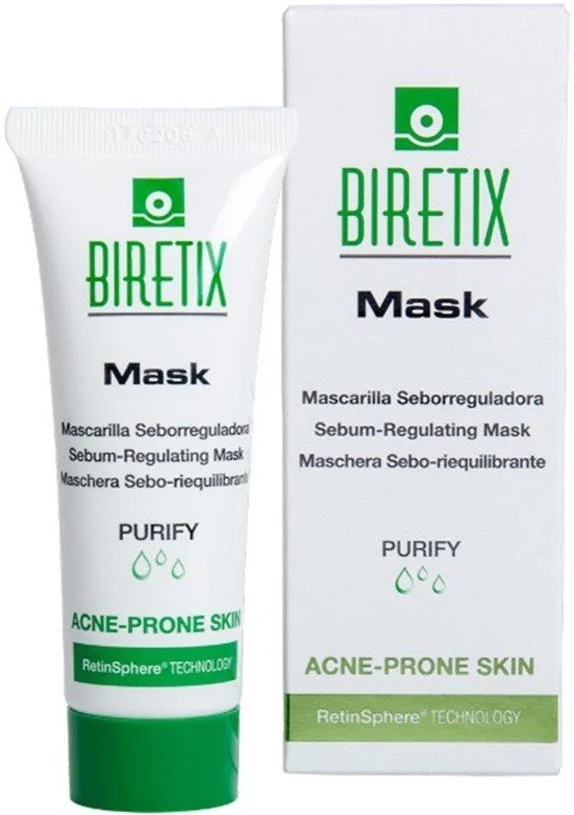
Analysis locked
How well does your skin match with BiRetix Sebum-regulating Mask?
Login to see detailsOr continue via
Quick 1-minute survey • Completely free
Analysis results of Ingredients


Ingredient List
| EWG | CIR | Ingredient Name & Cosmetic Function | Notes |
|---|---|---|---|
| 1 | - | | |
| - | - | | |
| 1 2 | A | (Skin-Conditioning Agent - Occlusive) |  |
| - | - | (Skin Conditioning) |  |
BiRetix Sebum-regulating Mask - Ingredient Explanation
Green Clay
1. Definition Green Clay:
Green clay, also known as French green clay or sea clay, is a type of mineral-rich clay that is harvested from quarries in France. It is known for its natural healing and detoxifying properties, making it a popular ingredient in skincare and cosmetic products.2. Use:
Green clay is commonly used in cosmetics for its ability to absorb excess oil and impurities from the skin, making it ideal for oily and acne-prone skin types. It is also known for its anti-inflammatory and antibacterial properties, making it effective in treating acne and other skin conditions. Additionally, green clay can help to improve skin tone and texture, leaving the skin looking brighter and more radiant.3. Usage Green Clay:
Green clay can be found in a variety of skincare products, including masks, cleansers, and exfoliators. To use green clay as a face mask, simply mix the clay with water or aloe vera gel to create a paste, apply it to the skin, and leave it on for 10-15 minutes before rinsing off with warm water. It is important to follow the instructions on the product packaging and to do a patch test before using green clay for the first time to ensure that it does not cause any irritation or allergic reactions.4. References:
- Chauhan, A., & Chauhan, P. (2015). The therapeutic effects of green clay in cosmetic and dermatological preparations. International Journal of Cosmetic Science, 37(6), 592-598.
- Dweck, A. C. (2002). Clay minerals in cosmetics. Cosmetics and Toiletries, 117(7), 57-63.
- Williams, L. B., & Haydel, S. E. (2010). Evaluation of the medicinal use of clay minerals as antibacterial agents. International Geology Review, 52(7/8), 745-770.
White Clay
1. Definition White Clay:
White clay, also known as kaolin clay, is a naturally occurring mineral that is widely used in cosmetics for its gentle cleansing, exfoliating, and oil-absorbing properties. It is a soft, white powder that is rich in minerals such as silica, magnesium, and calcium.2. Use:
White clay is commonly used in skincare products such as masks, cleansers, and scrubs due to its ability to draw out impurities and toxins from the skin. It is suitable for all skin types, including sensitive and acne-prone skin, as it is gentle and non-irritating. White clay helps to detoxify the skin, unclog pores, and improve skin texture, leaving the skin looking brighter and more radiant.3. Usage White Clay:
To use white clay in cosmetics, mix the clay powder with water or other liquid ingredients to form a paste. Apply the paste to clean, dry skin and leave it on for 10-15 minutes before rinsing off with warm water. It can also be mixed with other ingredients such as honey, yogurt, or essential oils for added benefits. It is recommended to do a patch test before using white clay on the face to check for any allergic reactions.4. References:
- Chaudhary, H., Kohli, K., Kumar, V. (2019). Kaolin: An excellent natural product in the cosmetic industry. Journal of Pharmacognosy and Phytochemistry, 8(1), 297-300.
- Williams, L.B., Haydel, S.E. (2010). Evaluation of the medicinal use of clay minerals as antibacterial agents. International Geology Review, 52(7/8), 745-770.
- Katiyar, D., Kumar, A., Kumar, A., Singh, B., Singh, R. (2016). Kaolin and its industrial applications. Journal of Materials Science and Chemical Engineering, 4(3), 1-11.
Oryza Sativa (Rice) Bran Oil
1. Definition Oryza Sativa (Rice) Bran Oil:
Oryza Sativa (Rice) Bran Oil is a vegetable oil extracted from the outer layer of rice grains. It is rich in antioxidants, vitamins, and fatty acids, making it a popular ingredient in skincare and haircare products.2. Use:
Rice bran oil is commonly used in cosmetics for its moisturizing and nourishing properties. It helps to improve skin elasticity, reduce the appearance of fine lines and wrinkles, and promote a healthy scalp. Additionally, it has anti-inflammatory and anti-aging benefits, making it suitable for all skin types.3. Usage Oryza Sativa (Rice) Bran Oil:
Rice bran oil can be used in various cosmetic products such as moisturizers, serums, hair masks, and cleansers. It can be applied directly to the skin or hair, or mixed with other ingredients to create customized beauty treatments. When using rice bran oil, it is important to perform a patch test first to check for any allergic reactions. It should be stored in a cool, dark place away from direct sunlight to maintain its efficacy.4. References:
- Lin, T. K., Zhong, L., & Santiago, J. L. (2017). Anti-inflammatory and skin barrier repair effects of topical application of some plant oils. International Journal of Molecular Sciences, 19(1), 70.
- Mukherjee, S., Date, A., Patravale, V., Korting, H. C., Roeder, A., & Weindl, G. (2006). Retinoids in the treatment of skin aging: an overview of clinical efficacy and safety. Clinical Interventions in Aging, 1(4), 327-348.
- Rizwan, M., Rodriguez-Blanco, I., Harbottle, A., Birch-Machin, M. A., & Watson, R. E. B. (2013). Skin photodamage: how the skin can protect itself. Journal of Cosmetic Dermatology, 12(4), 247-253.
Vitamin E
1. Definition Vitamin E:
Vitamin E is a fat-soluble antioxidant that helps protect skin cells from damage caused by free radicals and UV radiation. It is commonly used in cosmetics for its moisturizing and anti-aging properties.2. Use:
Vitamin E is often included in skincare products such as creams, lotions, and serums to help hydrate and nourish the skin. It is also used in hair care products to promote healthy hair growth and prevent split ends. In addition, Vitamin E can help improve the appearance of scars and stretch marks by promoting skin regeneration.3. Usage Vitamin E:
When using Vitamin E in cosmetics, it is important to follow the instructions provided on the product packaging. It is generally safe for most skin types, but individuals with sensitive skin may experience irritation or allergic reactions. It is recommended to do a patch test before using Vitamin E products on a larger area of the skin. Additionally, Vitamin E should be stored in a cool, dark place to prevent oxidation and maintain its efficacy.4. References:
- Baumann, L. (2007). Cosmetic Dermatology: Principles and Practice. New York: McGraw-Hill Medical.
- Farris, P. K. (2007). Cosmeceuticals and Cosmetic Practice. Hoboken, NJ: Wiley-Blackwell.
- Draelos, Z. D. (2010). Cosmetic Formulation of Skin Care Products. Boca Raton, FL: CRC Press.
Review
Didn't find
the information you need?




Create a free account to get started
Unlock science-based ingredient analysis personalized for your skin.
Already have an account? Log in
We protect your privacy. We never send spam.