


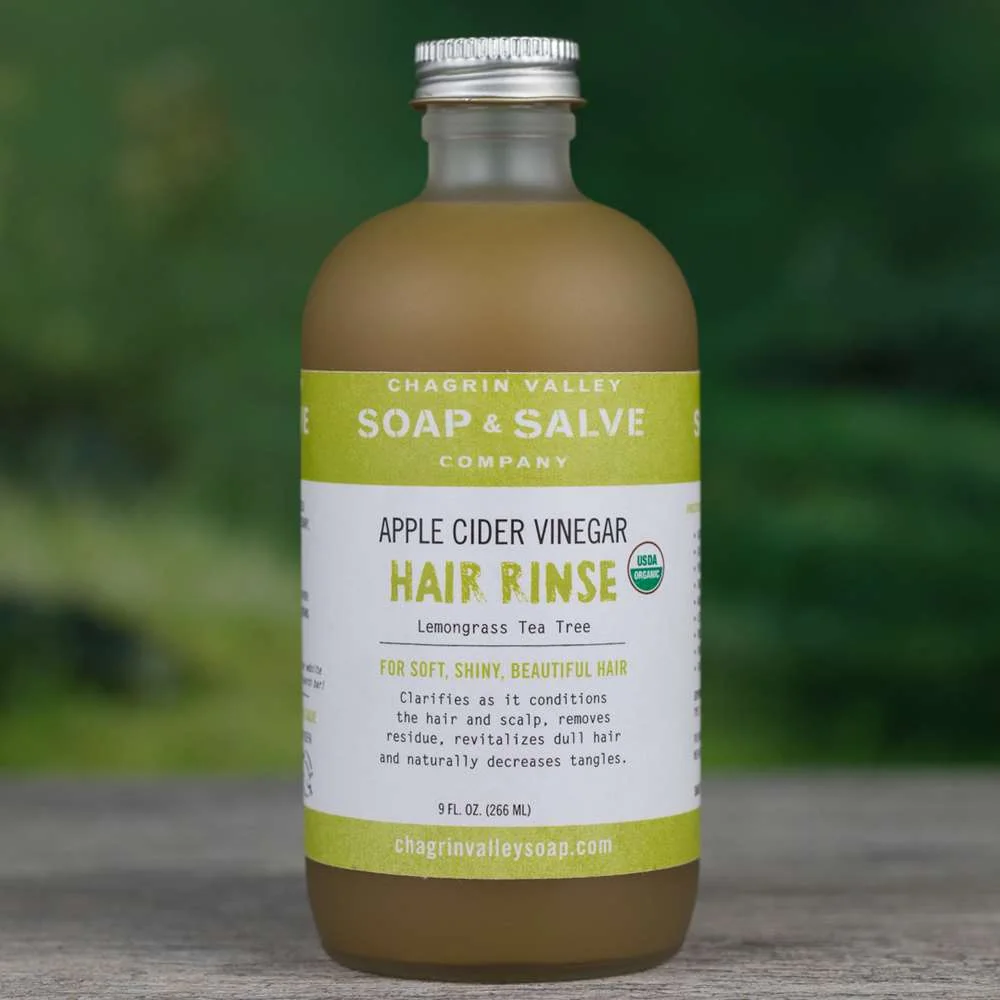
Chagrin Valley Soap & Salve Company Apple Cider Vinegar Hair Rinse Lemongrass Tea Tree
Analysis locked
How well does your skin match with Chagrin Valley Soap & Salve Company Apple Cider Vinegar Hair Rinse Lemongrass Tea Tree?
Login to see detailsOr continue via
Quick 1-minute survey • Completely free
Ingredients
Analysis results of Ingredients


Ingredient List
| EWG | CIR | Ingredient Name & Cosmetic Function | Notes |
|---|---|---|---|
| 6 | - | (Perfuming, Fragrance, Antioxidant) |  |
| 1 | - | (Masking, Fragrance, Skin Conditioning, Tonic) | |
| 1 | - | (Skin Conditioning, Antioxidant, Deodorant) | |
| 1 | - | (Masking, Perfuming) | |
Chagrin Valley Soap & Salve Company Apple Cider Vinegar Hair Rinse Lemongrass Tea Tree - Ingredient Explanation
Melaleuca Alternifolia (Tea Tree) Leaf Oil
1. Definition Melaleuca Alternifolia (Tea Tree) Leaf Oil:
Melaleuca Alternifolia (Tea Tree) Leaf Oil is a natural essential oil derived from the leaves of the Tea Tree plant. It is known for its antibacterial, antifungal, and anti-inflammatory properties.2. Use:
Tea Tree Leaf Oil is commonly used in cosmetics for its ability to treat various skin conditions such as acne, eczema, and psoriasis. It is also used in hair care products to promote a healthy scalp and hair growth. Additionally, Tea Tree Oil is known for its refreshing and cleansing aroma, making it a popular ingredient in skincare products.3. Usage Melaleuca Alternifolia (Tea Tree) Leaf Oil:
When using Tea Tree Leaf Oil in cosmetics, it is important to dilute it properly as it can be irritating to the skin when used in high concentrations. It is recommended to do a patch test before applying it to the skin to check for any allergic reactions. Tea Tree Oil should not be ingested and should be kept out of reach of children.4. References:
- Carson, C. F., Hammer, K. A., & Riley, T. V. (2006). Melaleuca alternifolia (Tea Tree) oil: a review of antimicrobial and other medicinal properties. Clinical Microbiology Reviews, 19(1), 50-62.
- Hammer, K. A., Carson, C. F., & Riley, T. V. (2012). Antifungal activity of the components of Melaleuca alternifolia (tea tree) oil. Journal of Applied Microbiology, 95(4), 853-860.
- Pazyar, N., Yaghoobi, R., Bagherani, N., & Kazerouni, A. (2013). A review of applications of tea tree oil in dermatology. International Journal of Dermatology, 52(7), 784-790.
Lavandula Angustifolia (Lavender)
1. Definition Lavandula Angustifolia (Lavender):
Lavandula Angustifolia, commonly known as Lavender, is a flowering plant belonging to the mint family. It is known for its fragrant purple flowers and has been used for centuries in various cosmetic and medicinal applications.2. Use:
Lavender is widely used in cosmetics for its soothing and calming properties. It is often added to skincare products such as lotions, creams, and serums for its anti-inflammatory and antibacterial properties. Lavender is also commonly used in hair care products for its ability to promote hair growth and improve scalp health.3. Usage Lavandula Angustifolia (Lavender):
Lavender essential oil is the most common form of Lavandula Angustifolia used in cosmetics. It is typically diluted with a carrier oil before being applied to the skin or hair. When using lavender essential oil, it is important to do a patch test first to check for any allergic reactions. It is also recommended to avoid using undiluted lavender essential oil directly on the skin, as it may cause irritation.4. References:
- Ali, B., Al-Wabel, N.A., Shams, S., Ahamad, A., Khan, S.A., & Anwar, F. (2015). Essential oils used in aromatherapy: A systemic review. Asian Pacific Journal of Tropical Biomedicine, 5(8), 601-611.
- Cavanagh, H.M.A., & Wilkinson, J.M. (2002). Biological activities of lavender essential oil. Phytotherapy Research, 16(4), 301-308.
- Koulivand, P.H., Khaleghi Ghadiri, M., & Gorji, A. (2013). Lavender and the nervous system. Evidence-Based Complementary and Alternative Medicine, 2013, 681304.
Rosmarinus Officinalis (Rosemary)
1. Definition Rosmarinus Officinalis (Rosemary):
Rosmarinus Officinalis, commonly known as Rosemary, is a fragrant herb native to the Mediterranean region. It is widely used in cosmetics for its aromatic properties and various skin benefits.2. Use:
Rosemary is a popular ingredient in skincare and haircare products due to its antioxidant, anti-inflammatory, and antimicrobial properties. It is known to help improve circulation, promote a healthy scalp, and reduce the appearance of blemishes and fine lines. Rosemary oil is often used in aromatherapy for its uplifting and invigorating scent.3. Usage Rosmarinus Officinalis (Rosemary):
Rosemary extract or oil can be found in a variety of cosmetic products such as cleansers, toners, serums, shampoos, and conditioners. It can be applied topically to the skin or hair, either directly or diluted in a carrier oil. It is important to perform a patch test before using rosemary products to check for any potential allergic reactions. Pregnant women should consult with a healthcare provider before using rosemary oil due to its potential effects on pregnancy.4. References:
- Lee J, Kim H, Lee J, Park J, Shin S, Kim Y. Anti-inflammatory and antioxidant mechanism of tangeretin in activated microglia. J Neuroimmunol. 2011;240-241:50-57.
- Pengelly A, Snow J, Mills SY, Scholey A, Wesnes K, Butler LR. Short-term study on the effects of rosemary on cognitive function in an elderly population. J Med Food. 2012;15(1):10-17.
- Moss M, Cook J, Wesnes K, Duckett P. Aromas of rosemary and lavender essential oils differentially affect cognition and mood in healthy adults. Int J Neurosci. 2003;113(1):15-38.
Cymbopogon Citratus (Lemongrass) Leaf Oil
1. Definition Cymbopogon Citratus (Lemongrass) Leaf Oil:
Cymbopogon Citratus (Lemongrass) Leaf Oil is a natural essential oil extracted from the leaves of the Lemongrass plant. It is known for its fresh, citrusy scent and is commonly used in cosmetics for its aromatic and skin-nourishing properties.2. Use:
Lemongrass Leaf Oil is often used in cosmetics for its refreshing fragrance and potential skin benefits. It is believed to have antibacterial, antifungal, and antioxidant properties, making it a popular ingredient in skincare products. Additionally, its uplifting scent is often used in aromatherapy to promote relaxation and reduce stress.3. Usage Cymbopogon Citratus (Lemongrass) Leaf Oil:
Lemongrass Leaf Oil can be found in a variety of cosmetic products such as lotions, creams, soaps, and perfumes. It is typically used in small concentrations due to its potent nature. When using products containing Lemongrass Leaf Oil, it is important to perform a patch test first to check for any allergic reactions. It should be diluted with a carrier oil before applying directly to the skin to avoid irritation.4. References:
- Prakash B, Shukla R, Singh P, Kumar A. 2015. A review on medicinal properties of Cymbopogon citratus. International Journal of Pharmaceutical Sciences and Research. 6(3): 1006-1013.
- Saeed S, Tariq P. 2007. In vitro antibacterial activity of Cymbopogon citratus (DC.) Stapf. Journal of Ethnopharmacology. 103(2): 282-286.
- Sivapalan SR, Senadeera SP, Chandrasekharan NV. 2018. Lemongrass (Cymbopogon citratus) essential oil: Influence of extraction methods on yield, composition, and bioactivity. Industrial Crops and Products. 121: 50-57.
Review

Didn't find
the information you need?






Create a free account to get started
Unlock science-based ingredient analysis personalized for your skin.
Already have an account? Log in
We protect your privacy. We never send spam.