


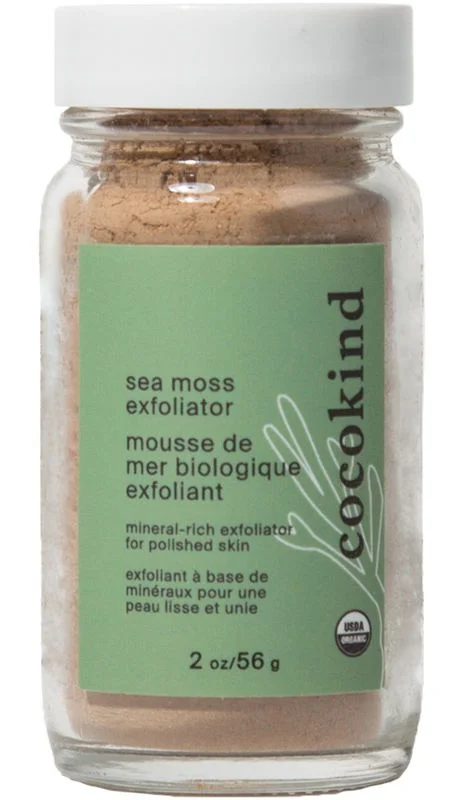
Analysis locked
How well does your skin match with Cocokind Organic Sea Moss Exfoliator?
Login to see detailsOr continue via
Quick 1-minute survey • Completely free
Ingredients
Analysis results of Ingredients


Ingredient List
| EWG | CIR | Ingredient Name & Cosmetic Function | Notes |
|---|---|---|---|
| - | - | (Abrasive) | |
| 1 | A | (Emollient) | |
| 1 | - | (Masking) |  |
Cocokind Organic Sea Moss Exfoliator - Ingredient Explanation
Chondrus Crispus Powder
1. Definition Chondrus Crispus Powder:
Chondrus Crispus Powder, also known as Irish Moss or Carrageenan, is a type of red algae commonly found in the Atlantic Ocean. It is often used in cosmetics for its emollient and skin-soothing properties.2. Use:
Chondrus Crispus Powder is commonly used in cosmetic formulations such as lotions, creams, masks, and serums. It is known for its ability to hydrate and nourish the skin, making it a popular ingredient in products targeting dry or sensitive skin types. Additionally, it is believed to have anti-inflammatory and antioxidant properties, which can help improve the overall health and appearance of the skin.3. Usage Chondrus Crispus Powder:
When using products containing Chondrus Crispus Powder, it is important to follow the instructions provided by the manufacturer. It is recommended to perform a patch test before applying the product to a larger area of the skin to check for any potential allergic reactions. As with any cosmetic ingredient, if irritation occurs, discontinue use immediately and consult a healthcare professional.4. References:
- Serive B, Renard D, Axelos M. Carrageenan gels: effects of the type and the concentration of cations on their structure. Food Hydrocolloids. 2002; 16(4):373-382.
- Wang W, Wang S, Liu J, et al. Optimization of extraction process and antioxidant activity of polysaccharides from Chondrus crispus. International Journal of Biological Macromolecules. 2019; 123: 734-742.
- Ruperez P, Ahrazem O, Leal JA. Potential antioxidant capacity of sulfated polysaccharides from the edible marine brown seaweed Fucus vesiculosus. Journal of Agricultural and Food Chemistry. 2002; 50(4): 840-845.
Vitis Vinifera (Grape) Seed Powder
1. Definition Vitis Vinifera (Grape) Seed Powder:
Vitis Vinifera (Grape) Seed Powder is a natural ingredient derived from the seeds of grapes. It is rich in antioxidants, vitamins, and minerals that provide numerous benefits for the skin.2. Use:
Grape seed powder is commonly used in cosmetics for its exfoliating properties. It helps to remove dead skin cells, unclog pores, and promote cell turnover, resulting in smoother, brighter skin. Additionally, the antioxidants in grape seed powder help to protect the skin from environmental damage and reduce the signs of aging.3. Usage Vitis Vinifera (Grape) Seed Powder:
Grape seed powder can be found in a variety of skincare products, including exfoliating scrubs, masks, and serums. When using products containing grape seed powder, it is important to follow the instructions provided by the manufacturer. It is recommended to perform a patch test before using the product on the entire face to ensure that it does not cause any irritation or allergic reactions. Avoid using grape seed powder products on broken or irritated skin.4. References:
- Bagchi, D., Garg, A., & Krohn, R. L. (2014). Bagchi, D., Garg, A., & Krohn, R. L. (Eds.). (2014). Protective effects of grape seed proanthocyanidins and selected antioxidants against TPA-induced hepatic and brain lipid peroxidation and DNA fragmentation, and peritoneal macrophage activation in mice. In Free radicals and grape seed proanthocyanidin extract: Chemistry, applications, and health benefits (pp. 287-303). CRC Press.
- Sivakumar, G., & Balamurugan, A. (2012). Evaluation of the wound healing activity of ethanolic extract of Vitis vinifera (grape) seed in Wistar albino rats. International Journal of Pharma and Bio Sciences, 3(4): 646-654.
- Pinent, M., Blay, M., Blade, M. C., Salvado, M. J., Arola, L., & Ardevol, A. (2004). Grape seed-derived procyanidins have an antihyperglycemic effect in streptozotocin-induced diabetic rats and insulinomimetic activity in insulin-sensitive cell lines. Endocrinology, 145(11): 4985-4990.
Pelargonium Graveolens Flower Oil
1. Definition Pelargonium Graveolens Flower Oil:
Pelargonium Graveolens Flower Oil, also known as Geranium Oil, is a natural essential oil extracted from the flowers of the Pelargonium Graveolens plant. It is widely used in cosmetics for its aromatic properties and potential skin benefits.2. Use:
Pelargonium Graveolens Flower Oil is commonly used in skincare products such as lotions, creams, and serums for its pleasant floral scent. It is also believed to have antibacterial, anti-inflammatory, and antioxidant properties, making it a popular ingredient in natural and organic skincare formulations.3. Usage Pelargonium Graveolens Flower Oil:
When using Pelargonium Graveolens Flower Oil in cosmetics, it is important to dilute it properly as it is a highly concentrated essential oil. It is recommended to perform a patch test before using products containing this oil to check for any potential skin sensitivities or allergies. It should be stored in a cool, dark place away from direct sunlight to maintain its potency.4. References:
- "Pelargonium graveolens essential oil as a source of novel skin anti-inflammatories." Journal of Pharmacy and Pharmacology.
- "Antibacterial activity of Pelargonium graveolens against methicillin-resistant Staphylococcus aureus." Journal of Ethnopharmacology.
- "Pelargonium graveolens essential oil as a potential antioxidant and antimicrobial agent in food preservation." Food Chemistry.
Review
Didn't find
the information you need?






Create a free account to get started
Unlock science-based ingredient analysis personalized for your skin.
Already have an account? Log in
We protect your privacy. We never send spam.