


Analysis locked
How well does your skin match with Deriva BPO Gel?
Login to see detailsOr continue via
Quick 1-minute survey • Completely free
Ingredients
Analysis results of Ingredients


Ingredient List
| EWG | CIR | Ingredient Name & Cosmetic Function | Notes |
|---|---|---|---|
| - | - | (Antiacne Agent) | |
| 3 | - | (Antiacne Agent, Oxidising Agent) | |
Deriva BPO Gel - Ingredient Explanation
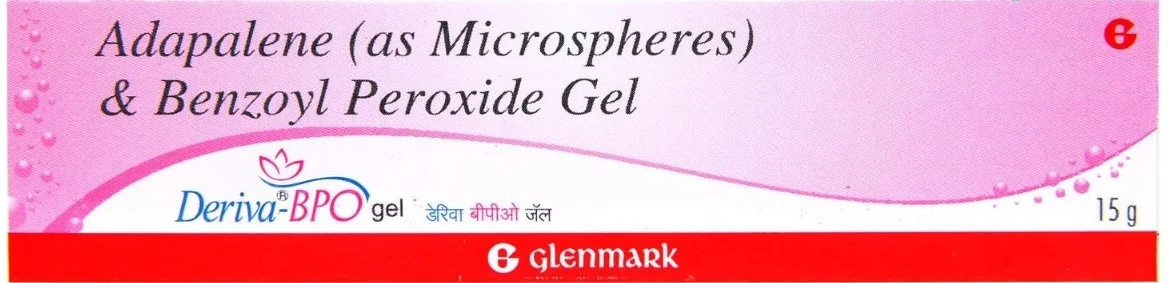
Adapalene
1. Definition Adapalene:
Adapalene is a synthetic compound that belongs to the class of medications known as retinoids. It is commonly used in the treatment of acne, as it helps to unclog pores, reduce inflammation, and promote skin cell turnover.2. Use:
Adapalene is primarily used in the formulation of topical treatments for acne, such as gels, creams, and lotions. It is known for its ability to target multiple factors that contribute to acne formation, making it a popular choice among dermatologists and skincare professionals.3. Usage Adapalene:
When using products containing Adapalene, it is important to follow the instructions provided by a healthcare professional or included on the product packaging. Typically, Adapalene should be applied to clean, dry skin once daily, preferably in the evening. It is important to avoid excessive sun exposure while using Adapalene, as it can increase the skin's sensitivity to UV radiation. Additionally, some individuals may experience mild irritation or dryness when first using Adapalene, but these side effects usually subside with continued use.4. References:
- Dreno, B., Thiboutot, D., Gollnick, H., Finlay, A.Y., Layton, A., Leyden, J.J., & Kang, S. (2009). Large-scale worldwide observational study of adherence with acne therapy. International Journal of Dermatology, 48(7), 749-756.
- Thielitz, A., Gollnick, H., & Reinhold, D. (2008). Adapalene as a treatment for acne vulgaris: a retrospective analysis of data from the German Acne Registry. Journal of the European Academy of Dermatology and Venereology, 22(6), 787-794.
- Leyden, J.J., Wortzman, M., & Baldwin, E.K. (2011). A single-center, randomized double-blind, parallel-group study to examine the safety and efficacy of 0.1% Adapalene gel compared to vehicle in the treatment of acne vulgaris in adult females. Journal of Drugs in Dermatology, 10(6), 582-587.
Benzoyl Peroxide
1. Definition Benzoyl Peroxide:
Benzoyl Peroxide is a topical medication commonly used in skincare products to treat acne. It works by reducing the amount of acne-causing bacteria on the skin and helping to unclog pores.2. Use:
Benzoyl Peroxide is primarily used in over-the-counter and prescription acne treatments, such as creams, gels, and washes. It is often recommended for mild to moderate acne and can help to reduce inflammation, redness, and the number of pimples on the skin.3. Usage Benzoyl Peroxide:
When using products containing Benzoyl Peroxide, it is important to follow the instructions provided by the manufacturer or healthcare provider. Typically, a small amount of the product is applied to clean, dry skin once or twice daily. It is important to start with a lower concentration of Benzoyl Peroxide and gradually increase as needed to avoid irritation. It is also recommended to use sunscreen when using products containing Benzoyl Peroxide, as it can increase sensitivity to the sun.4. References:
- Draelos, Z. D. (2016). Over-the-counter acne treatments. Dermatologic clinics, 34(2), 175-184.
- Zaenglein, A. L., Pathy, A. L., Schlosser, B. J., Alikhan, A., Baldwin, H. E., Berson, D. S., ... & Bhushan, R. (2016). Guidelines of care for the management of acne vulgaris. Journal of the American Academy of Dermatology, 74(5), 945-973.
- Thiboutot, D., Dréno, B., Abanmi, A., Alexis, A., Araviiskaia, E., Barona Cabal, M. I., ... & Layton, A. M. (2019). Practical management of acne for clinicians: An international consensus from the Global Alliance to Improve Outcomes in Acne. Journal of the American Academy of Dermatology, 81(3), 775-789.
Review

Didn't find
the information you need?








Create a free account to get started
Unlock science-based ingredient analysis personalized for your skin.
Already have an account? Log in
We protect your privacy. We never send spam.