


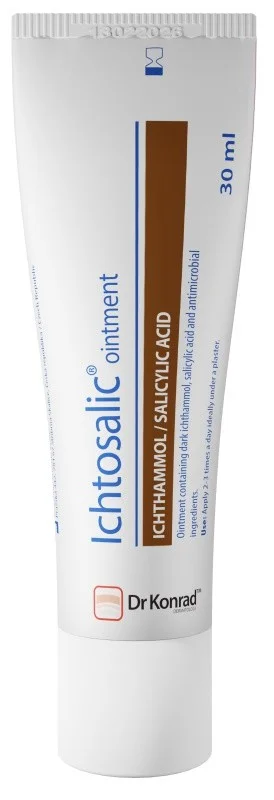
Analysis locked
How well does your skin match with Dr Konrad Ichtosalic® Ointment?
Login to see detailsOr continue via
Quick 1-minute survey • Completely free
Ingredients
Analysis results of Ingredients


Ingredient List
| EWG | CIR | Ingredient Name & Cosmetic Function | Notes |
|---|---|---|---|
| 1 4 | - | (Hair Conditioning, Skin Protecting, Uv Absorber, Emollient, Skin-Conditioning Agent - Occlusive, Moisturising) |  |
| 1 | - | (Antimicrobial, Cosmetic Biocide) | |
| 3 | B | (Solvent, Fragrance, Humectant, Viscosity Decreasing Agent, Skin Conditioning, Viscosity Controlling, Skin-Conditioningagent - Miscellaneous) |  |
| 1 | - | (Surfactant, Emulsifying, Cleansing, Antimicrobial, Antidandruff Agent) | |


Dr Konrad Ichtosalic® Ointment - Ingredient Explanation
Petrolatum
1. Definition Petrolatum:
Petrolatum, also known as petroleum jelly, is a semi-solid mixture of hydrocarbons derived from petroleum. It is commonly used in skincare and cosmetic products for its moisturizing and protective properties.2. Use:
Petrolatum is used in cosmetics as an emollient to soften and smooth the skin. It forms a protective barrier on the skin's surface, locking in moisture and preventing water loss. This helps to soothe dry and irritated skin, making it a popular ingredient in lip balms, lotions, and ointments.3. Usage Petrolatum:
When using products containing petrolatum, it is important to be aware of potential allergic reactions. Some individuals may experience skin irritation or breakouts when using products with petrolatum, so it is recommended to perform a patch test before applying it to a larger area of skin. Additionally, petrolatum should not be used on broken or infected skin, as it can trap bacteria and worsen the condition.4. References:
- Draelos, Z. D. (2010). Cosmetic Formulation of Skin Care Products. CRC Press.
- Baumann, L. (2009). Cosmetic Dermatology: Principles and Practice. McGraw-Hill Education.
- Loden, M., & Maibach, H. I. (1999). Dry Skin and Moisturizers: Chemistry and Function. CRC Press.
Ichthammol
1. Definition Ichthammol:
Ichthammol, also known as ammonium bituminosulfonate, is a dark, tar-like substance derived from shale oil that has been used for centuries in various medicinal applications due to its anti-inflammatory, antibacterial, and antifungal properties.2. Use:
Ichthammol is commonly used in cosmetics for its ability to draw out impurities and toxins from the skin, making it a popular ingredient in products designed to treat acne, boils, eczema, and other skin conditions. It is also known for its soothing and healing properties, making it effective in reducing inflammation and promoting skin healing.3. Usage Ichthammol:
When using cosmetics containing ichthammol, it is important to follow the manufacturer's instructions carefully to avoid any potential side effects. It is typically applied topically to the affected area, either as a spot treatment or as part of a larger skincare regimen. Some individuals may experience mild skin irritation or allergic reactions when using products containing ichthammol, so it is recommended to perform a patch test before full application.4. References:
- Draelos, Z. D. (2016). Cosmeceuticals (3rd ed.). Elsevier Health Sciences.
- Baumann, L. (2009). Cosmetic dermatology: Principles and practice (2nd ed.). McGraw-Hill Medical.
- Pazyar, N., Yaghoobi, R., & Bagherani, N. (2013). A review of applications of Ichthammol in dermatology. Journal of Dermatological Treatment, 24(5), 385-389.
Propylene Glycol
1. Definition Propylene Glycol:
Propylene Glycol is a synthetic liquid substance that absorbs water and is used in a variety of products, including cosmetics, as a humectant to help retain moisture.2. Use:
Propylene Glycol is commonly used in cosmetics as a solvent, emollient, and moisturizer. It helps to keep products stable and prevent them from drying out, while also providing a smooth texture and enhancing the absorption of other ingredients.3. Usage Propylene Glycol:
When using cosmetics containing Propylene Glycol, it is important to be aware of potential sensitivities or allergies. Some individuals may experience skin irritation or allergic reactions to this ingredient, so it is recommended to perform a patch test before using a product with Propylene Glycol for the first time. Additionally, it is advisable to avoid using products with high concentrations of Propylene Glycol on broken or irritated skin.4. References:
- "Safety Assessment of Propylene Glycol, Tripropylene Glycol, and PPGs as Used in Cosmetics" by the Cosmetic Ingredient Review Expert Panel
- "Propylene Glycol" by the Environmental Working Group
- "Propylene Glycol in Cosmetics" by the Personal Care Products Council
Sodium Caproyl/Lauroyl Lactylate
1. Definition Sodium Caproyl/Lauroyl Lactylate:
Sodium Caproyl/Lauroyl Lactylate is a naturally derived emulsifier and surfactant commonly used in cosmetics and personal care products. It is a combination of sodium caproyl lactylate and sodium lauroyl lactylate, which are derived from coconut oil and lactic acid.2. Use:
Sodium Caproyl/Lauroyl Lactylate is used in cosmetics as an emulsifier, helping to blend together ingredients that would not normally mix, such as oil and water. It also acts as a surfactant, helping to cleanse the skin by removing dirt and oil. Additionally, it can enhance the texture and feel of products, providing a smooth and creamy consistency.3. Usage Sodium Caproyl/Lauroyl Lactylate:
When using products containing Sodium Caproyl/Lauroyl Lactylate, it is important to follow the recommended usage instructions provided by the manufacturer. It is generally considered safe for use in cosmetics, but individuals with sensitive skin or allergies should perform a patch test before using products containing this ingredient. If irritation occurs, discontinue use and consult a healthcare professional.4. References:
- "Sodium Caproyl/Lauroyl Lactylate." Cosmetics Info, www.cosmeticsinfo.org/ingredient/sodium-caproyllauroyl-lactylate.
- "Safety and Health Topics: Cosmetic Ingredients." Occupational Safety and Health Administration, www.osha.gov/cosmetics/cosmetic-ingredients.
- "Sodium Caproyl/Lauroyl Lactylate." Truth In Aging, www.truthinaging.com/ingredients/sodium-caproyl-lauroyl-lactylate.
Review

Didn't find
the information you need?








Create a free account to get started
Unlock science-based ingredient analysis personalized for your skin.
Already have an account? Log in
We protect your privacy. We never send spam.