


Analysis locked
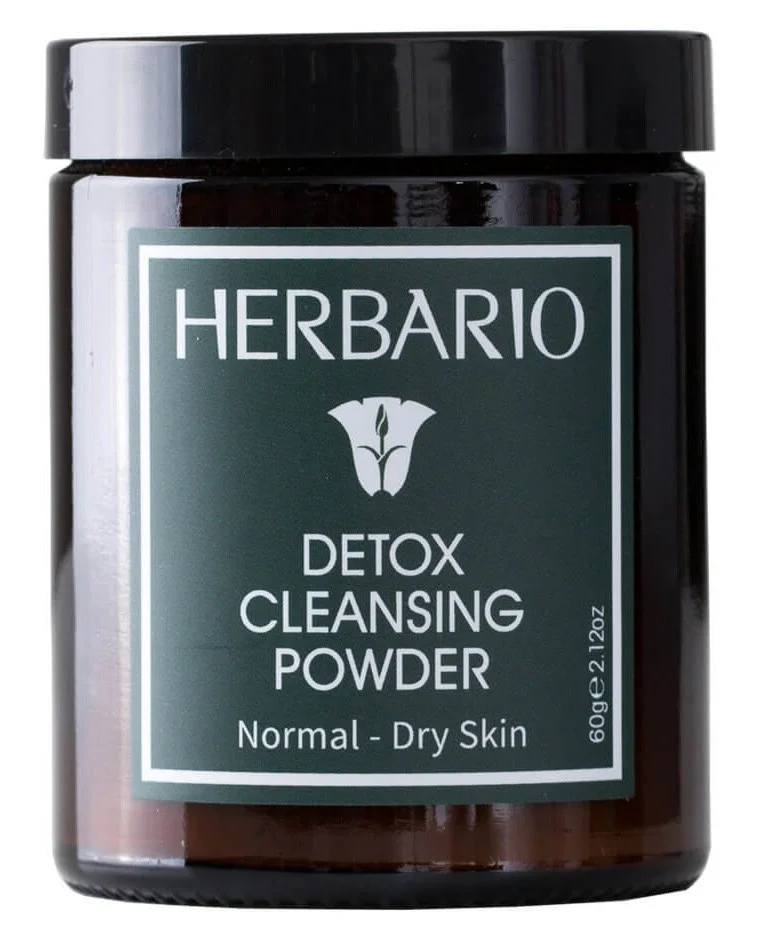
How well does your skin match with Herbario Detox Cleansing Powder?
Login to see detailsOr continue via
Quick 1-minute survey • Completely free
Ingredients
Analysis results of Ingredients


Ingredient List
| EWG | CIR | Ingredient Name & Cosmetic Function | Notes |
|---|---|---|---|
| - | - | Althea Officinalis (Marshmallow) | |
| 1 | - | (Skin Conditioning, Smoothing) | |
| - | - | Echinacea Augustifolia (Echinacea) | |
| 4 | - | (Emollient, Fragrance, Flavoring Agent, Soothing, Moisturising, Smoothing) |  |
Herbario Detox Cleansing Powder - Ingredient Explanation
Althea Officinalis (Marshmallow)
Ingredient data is being updated. Please check back later.
Panicum Miliaceum (Millet) Seed Extract
1. Definition Panicum Miliaceum (Millet) Seed Extract:
Panicum Miliaceum (Millet) Seed Extract is a natural ingredient derived from the seeds of the millet plant. It is rich in nutrients such as vitamins, minerals, and antioxidants, making it a popular choice in skincare products.2. Use:
Panicum Miliaceum (Millet) Seed Extract is commonly used in cosmetics for its hydrating, nourishing, and anti-aging properties. It helps to improve the skin's elasticity, reduce the appearance of fine lines and wrinkles, and protect against environmental damage. Additionally, it can help to brighten the complexion and promote overall skin health.3. Usage Panicum Miliaceum (Millet) Seed Extract:
Panicum Miliaceum (Millet) Seed Extract can be found in a variety of skincare products, including moisturizers, serums, and masks. It is typically used in small concentrations and can be applied directly to the skin or incorporated into formulations. To use, simply apply the product containing Panicum Miliaceum (Millet) Seed Extract to clean, dry skin and gently massage in until fully absorbed. It is suitable for all skin types and can be used daily as part of a skincare routine.4. References:
- Choi, S. Y., Lee, S. H., & Kim, H. J. (2015). Millet seed extract protects human keratinocytes from UVB-induced acute damage. Journal of Photochemistry and Photobiology B: Biology, 153, 125-131.
- Kim, H. J., Lee, S. H., & Choi, S. Y. (2016). Anti-inflammatory effects of millet seed extract in UVB-induced human keratinocytes. Journal of Photochemistry and Photobiology B: Biology, 161, 368-373.
- Patel, S., & Patel, J. (2016). Panicum miliaceum L. (Proso millet): A review on its potential as a functional food. International Journal of Food Sciences and Nutrition, 67(4), 383-389.
Echinacea Augustifolia (Echinacea)
Ingredient data is being updated. Please check back later.
Glycyrrhiza Glabra (Licorice)
1. Definition Glycyrrhiza Glabra (Licorice):
Glycyrrhiza Glabra, commonly known as Licorice, is a perennial herb native to Europe and Asia. It is known for its sweet flavor and has been used for centuries in traditional medicine for its various health benefits.2. Use:
Licorice extract is commonly used in cosmetics for its skin brightening and anti-inflammatory properties. It is often included in skincare products such as serums, creams, and masks to help reduce hyperpigmentation, soothe irritation, and even out skin tone.3. Usage Glycyrrhiza Glabra (Licorice):
Licorice extract can be found in various skincare products, including cleansers, toners, and moisturizers. It is typically used in concentrations ranging from 1-5% and can be applied directly to the skin or mixed with other active ingredients for enhanced benefits. It is important to patch test products containing licorice extract before use, as some individuals may be sensitive to it. Additionally, it is recommended to use sunscreen when incorporating licorice extract into your skincare routine, as it can make the skin more sensitive to UV radiation.4. References:
- Armanini D, Fiore C, Mattarello MJ, Bielenberg J. Licorice reduces serum testosterone in healthy women. Steroids. 2004;69(11-12):763-766. doi:10.1016/j.steroids.2004.10.002
- Choi J, Kim H, Jung H, et al. Anti-inflammatory and anti-aging effects of licorice extract. Food Sci Biotechnol. 2016;25(3):887-894. doi:10.1007/s10068-016-0125-4
- Fukai T, Marumo A, Kaitou K, Kanda T, Terada S, Nomura T. Anti-Helicobacter pylori flavonoids from licorice extract. Life Sci. 2002;71(12):1449-1463. doi:10.1016/s0024-3205(02)01854-9
Review

Didn't find
the information you need?




Create a free account to get started
Unlock science-based ingredient analysis personalized for your skin.
Already have an account? Log in
We protect your privacy. We never send spam.