


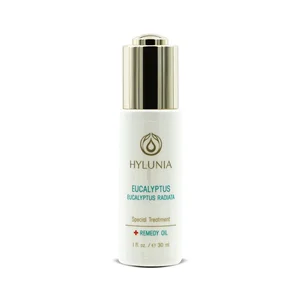
Analysis locked
How well does your skin match with Hylunia Remedy Oil Eucalyptus?
Login to see detailsOr continue via
Quick 1-minute survey • Completely free
Analysis results of Ingredients


Ingredient List
| EWG | CIR | Ingredient Name & Cosmetic Function | Notes |
|---|---|---|---|
| 1 | A | (Masking, Fragrance, Hair Conditioning, Skin Conditioning, Emollient) |   |
| 1 | - | (Skin Conditioning, Perfuming) | |
Hylunia Remedy Oil Eucalyptus - Ingredient Explanation
Sesamum Indicum (Sesame) Seed Oil
1. Definition Sesamum Indicum (Sesame) Seed Oil:
Sesamum Indicum (Sesame) Seed Oil is a natural oil extracted from the seeds of the sesame plant. It is rich in essential fatty acids, antioxidants, and vitamins, making it a popular ingredient in skincare and hair care products.2. Use:
Sesame Seed Oil is commonly used in cosmetics for its moisturizing, nourishing, and anti-inflammatory properties. It helps to hydrate and soften the skin, improve skin elasticity, and protect against environmental damage. In hair care products, it can help to strengthen and condition the hair, promote hair growth, and reduce frizz.3. Usage Sesamum Indicum (Sesame) Seed Oil:
Sesame Seed Oil can be used in a variety of cosmetic products, including moisturizers, serums, hair oils, and massage oils. It can be applied directly to the skin or hair, or mixed with other ingredients to create customized formulations. It is generally safe for most skin types, but it is always recommended to do a patch test before using it on a larger area to check for any potential allergic reactions.4. References:
- Saeedi M, Morteza-Semnani K, Ghoreishi MR. The treatment of atopic dermatitis with licorice gel. Journal of Dermatological Treatment. 2003;14(3):153-157.
- Ahmad Z. The uses and properties of almond oil. Complementary Therapies in Clinical Practice. 2010;16(1):10-12.
- Parveen A, Parveen B, Parveen R, Ahmad S. Medicinal and cosmetic uses of sesame: A review. International Journal of Pharmacognosy and Phytochemical Research. 2014;6(3):677-681.
Eucalyptus Radiata Extract
1. Definition Eucalyptus Radiata Extract:
Eucalyptus Radiata Extract is a natural ingredient derived from the leaves of the Eucalyptus Radiata tree. It is known for its antimicrobial, anti-inflammatory, and soothing properties, making it a popular ingredient in skincare and haircare products.2. Use:
Eucalyptus Radiata Extract is commonly used in cosmetics for its purifying and cleansing properties. It is often found in products such as cleansers, toners, and masks to help unclog pores, reduce inflammation, and promote clearer skin. Additionally, its refreshing scent makes it a popular choice for aromatherapy products.3. Usage Eucalyptus Radiata Extract:
When using products containing Eucalyptus Radiata Extract, it is important to perform a patch test first to check for any potential allergic reactions. It is also recommended to follow the product instructions carefully and avoid using it on broken or irritated skin. As with any skincare ingredient, it is best to consult with a dermatologist before incorporating it into your routine, especially if you have sensitive skin.4. References:
- "Eucalyptus Radiata Oil." Tisserand Institute, www.tisserandinstitute.org/essential-oils/eucalyptus-radiata-oil/.
- "Eucalyptus Radiata Extract." Cosmetics Info, www.cosmeticsinfo.org/ingredient/eucalyptus-radiata-extract.
- Hammer, K.A., et al. "In vitro activity of essential oils, in particular Melaleuca alternifolia (tea tree) oil and tea tree oil products, against Candida spp." Journal of Antimicrobial Chemotherapy, vol. 42, no. 5, 1998, pp. 591-595.
Review

Didn't find
the information you need?






Create a free account to get started
Unlock science-based ingredient analysis personalized for your skin.
Already have an account? Log in
We protect your privacy. We never send spam.