


Analysis locked
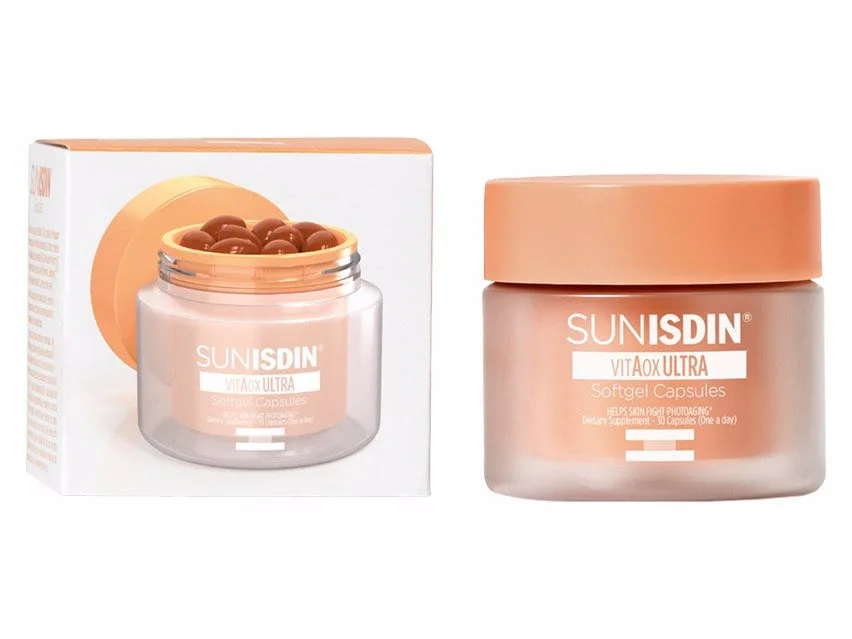
How well does your skin match with ISDIN Photo Sunisdin Daily Antioxidant Skin Supplement With Vitamin D?
Login to see detailsOr continue via
Quick 1-minute survey • Completely free
Ingredients
Analysis results of Ingredients


Ingredient List
| EWG | CIR | Ingredient Name & Cosmetic Function | Notes |
|---|---|---|---|
| 1 | A | (Masking, pH adjusting agent, Skin Conditioning, Antioxidant, Flavoring Agent, Phadjuster) |  |
| - | - | (Skin Protecting) | |
| - | - | Vitamin A (As Beta-Carotene) | |
| 1 | - | (Antioxidant, Moisturising, Smoothing, Skin Bleaching Agent) |   |

ISDIN Photo Sunisdin Daily Antioxidant Skin Supplement With Vitamin D - Ingredient Explanation
Ascorbic Acid (Vitamin C)
1. Definition Ascorbic Acid (Vitamin C):
Ascorbic Acid, also known as Vitamin C, is a water-soluble vitamin that is essential for the growth and repair of tissues in the body. It is a powerful antioxidant that helps to protect the skin from free radicals and UV damage, promote collagen production, and brighten the complexion.2. Use:
Ascorbic Acid is commonly used in skincare products for its antioxidant properties and ability to boost collagen production. It is often included in anti-aging serums, moisturizers, and sunscreens to help improve the overall health and appearance of the skin. Ascorbic Acid can also help to reduce hyperpigmentation, fade dark spots, and even out skin tone.3. Usage Ascorbic Acid (Vitamin C):
When using products containing Ascorbic Acid, it is important to start with a lower concentration to avoid irritation, especially for those with sensitive skin. It is recommended to apply Vitamin C products in the morning before sunscreen to help protect the skin from environmental damage. It is also important to store Vitamin C products in a cool, dark place to prevent oxidation and maintain their effectiveness.4. References:
- Al-Niaimi, F., & Chiang, N. (2017). Topical Vitamin C and the Skin: Mechanisms of Action and Clinical Applications. The Journal of Clinical and Aesthetic Dermatology, 10(7), 14–17.
- Telang, P. S. (2013). Vitamin C in dermatology. Indian Dermatology Online Journal, 4(2), 143–146.
- Pullar, J. M., Carr, A. C., & Vissers, M. C. M. (2017). The Roles of Vitamin C in Skin Health. Nutrients, 9(8), 866.
Polypodium Leucotomos Leaf Extract (Polypodium Leucotomos L)
1. Definition Polypodium Leucotomos Leaf Extract:
Polypodium Leucotomos Leaf Extract is derived from a fern native to Central and South America. It is known for its antioxidant, anti-inflammatory, and photoprotective properties.2. Use:
Polypodium Leucotomos Leaf Extract is commonly used in cosmetics and skincare products for its ability to protect the skin from UV radiation and environmental stressors. It is often included in sunscreens, moisturizers, and serums to help prevent premature aging and damage caused by sun exposure.3. Usage Polypodium Leucotomos Leaf Extract:
When using products containing Polypodium Leucotomos Leaf Extract, it is important to follow the manufacturer's instructions for application. Typically, these products should be applied liberally to the skin before sun exposure and reapplied as needed throughout the day. It is also recommended to use additional sun protection measures, such as wearing protective clothing and seeking shade, when spending time outdoors.4. References:
- Middelkamp-Hup MA, Pathak MA, Parrado C, Garcia-Caballero T, Rius-Díaz F, Fitzpatrick TB, González S. Orally administered Polypodium leucotomos extract decreases psoralen-UVA-induced phototoxicity, pigmentation, and damage of human skin. J Am Acad Dermatol. 2004;50(1):41-49. doi:10.1016/s0190-9622(03)02087-0
- Philips N, Smith J, Keller T, Gonzalez S. Predominant effects of Polypodium leucotomos on membrane integrity, lipid peroxidation, and expression of elastin and matrixmetalloproteinase-1 in ultraviolet radiation exposed fibroblasts, and keratinocytes. J Dermatol Sci. 2003;32(1):1-9. doi:10.1016/s0923-1811(03)00024-2
- Nestor MS, Bucay VW, Callender VD, Cohen JL, Sadick NS, Waldorf HA. Polypodium leucotomos as an adjunct treatment of pigmentary disorders. J Clin Aesthet Dermatol. 2014;7(3):13-17.
Vitamin A (As Beta-Carotene)
Ingredient data is being updated. Please check back later.
Vitamin C (As Ascorbic Acid)
1. Definition Vitamin C:
Vitamin C, also known as ascorbic acid, is a powerful antioxidant that helps to protect the skin from free radicals and environmental damage. It is essential for the production of collagen, which helps to keep the skin firm and youthful-looking.
2. Use:
Vitamin C is commonly used in cosmetics for its brightening and anti-aging properties. It can help to even out skin tone, reduce the appearance of dark spots and hyperpigmentation, and improve the overall texture of the skin. Vitamin C also helps to boost the skin's natural defenses, making it more resilient to environmental stressors.
3. Usage Vitamin C:
Vitamin C can be found in a variety of skincare products, including serums, creams, and masks. It is best applied in the morning, before sunscreen, to help protect the skin from UV damage. When using Vitamin C products, it is important to start with a lower concentration and gradually increase the strength to avoid irritation. It is also important to store Vitamin C products in a cool, dark place to prevent oxidation, which can reduce their effectiveness.
4. References:
- Telang, P. S. (2013). Vitamin C in dermatology. Indian dermatology online journal, 4(2), 143–146. https://doi.org/10.4103/2229-5178.110593
- Pullar, J. M., Carr, A. C., & Vissers, M. C. (2017). The Roles of Vitamin C in Skin Health. Nutrients, 9(8), 866. https://doi.org/10.3390/nu9080866
- Al-Niaimi, F., & Chiang, N. (2017). Topical Vitamin C and the Skin: Mechanisms of Action and Clinical Applications. The Journal of Clinical and Aesthetic Dermatology, 10(7), 14–17.
Review

Didn't find
the information you need?








Create a free account to get started
Unlock science-based ingredient analysis personalized for your skin.
Already have an account? Log in
We protect your privacy. We never send spam.