Ingredients
Analysis results of Ingredients


Ingredient List
| EWG | CIR | Ingredient Name & Cosmetic Function | Notes |
|---|---|---|---|
| 1 | - | (Skin Conditioning) | |
| 1 | - | (Solvent) | |
| 1 | - | (Solvent, Skin Conditioning, Humectant) | |
| 1 | A | (Skin Conditioning, Emollient, Antimicrobial) | |
| 1 | A | (Viscosity Increasing Agent, Film Forming) | |
| 1 | A | (Solvent) | |
| 2 | - | (Uv Absorber, Uv Filter) | UV Protection |
| 1 | A | (Hair Conditioning, Skin Conditioning, Smoothing) | Anti Aging Brightening |
| 2 | - | (Solvent, Viscosity Decreasing Agent, Viscosity Controlling) | |
| - | - | (Uv Absorber, Skin Conditioning, Uv Filter) | UV Protection |
| 1 | A | (Emollient, Viscosity Controlling, Viscosity Increasing Agent, Emulsion Stabilising, Binding Agent, Binding) | |
| - | - | | |
| 1 | B | (Skin Conditioning, Tonic, Cleansing, Soothing, Smoothing) | Promotes Wound Healing Cleansing |
| 1 | - | (Humectant, Astringent, Soothing) | |
| 1 | - | | |
| 1 | - | (Antioxidant) | |
| - | - | (Skin Conditioning) | |
| 1 | - | (Skin Conditioning, Emollient, Humectant, Antimicrobial, Astringent) | |
| 1 | - | (Antioxidant) | |
| 1 | - | (Skin Conditioning) | |
| 1 | - | (Viscosity Increasing Agent, Emulsion Stabilising, Opacifying, Anticaking Agent, Suspending Agent - Nonsurfactant) | |
| 1 | B | (Emulsifying, Surfactant) | Cleansing |
| 1 | A | (Viscosity Controlling, Viscosity Increasing Agent, Binding Agent, Binding, Film Forming) | |
| 1 | - | (Viscosity Controlling) | |
| 1 2 | A | (Opacifying, Viscosity Controlling, Abrasive, Absorbent, Bulking Agent, Anticaking Agent) | |
| 1 | A | (Solvent, Masking, Fragrance, Humectant, Skin Conditioning, Viscosity Controlling, Viscosity decreasing agents) | Good for dry skin |
| 1 | - | (Sufactant) | |
| 1 | A | (Fragrance, Emulsifying, Surfactant) | Bad for oily skin Fungal Acne Trigger Cleansing |
| 1 | - | (Skin Conditioning) | Anti Aging |
| 1 | A | (Chelating Agent, Viscosity Controlling) | |
| 1 | A | (Humectant, Skin Conditioning) | Good for dry skin Promotes Wound Healing |
| 1 | - | (Humectant, Film Forming) | |
| 1 | - | (Humectant, Hair Conditioning, Skin Conditioning) | Promotes Wound Healing |
| 1 | - | (Humectant) | |
| 1 | A | (Humectant, Skin Conditioning, Antistatic Agent, Viscosity Increasing Agent, Moisturising) | Promotes Wound Healing Moisturizing |
| 1 | - | (Skin Conditioning, Humectant) | |
| 1 | - | (Skin Conditioning) | |
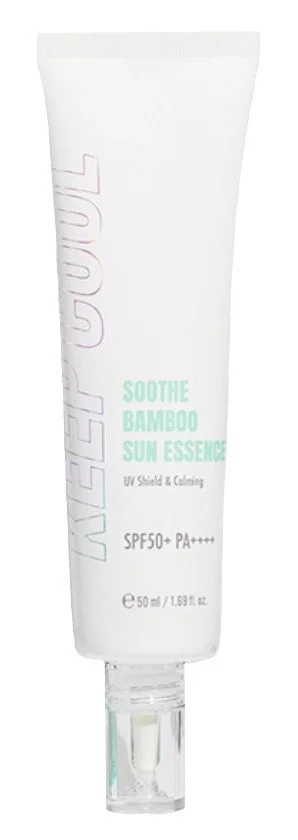
Keep Cool Soothe Bamboo Sun Essence SPF50+ PA++++ - Ingredient Explanation
Bambusa Vulgaris Water
1. Definition Bambusa Vulgaris Water:
Bambusa Vulgaris Water, also known as bamboo water, is a natural ingredient derived from the bamboo plant. It is rich in silica, amino acids, and antioxidants, making it a popular choice in cosmetic formulations for its hydrating, soothing, and anti-aging properties.2. Use:
Bambusa Vulgaris Water is commonly used in skincare products such as moisturizers, serums, and masks to provide hydration to the skin. It is also known for its calming and soothing effects, making it ideal for sensitive or irritated skin. Additionally, the antioxidant properties of bamboo water help protect the skin from environmental stressors and premature aging.3. Usage Bambusa Vulgaris Water:
When using cosmetics containing Bambusa Vulgaris Water, it is important to patch test the product first to ensure compatibility with your skin. Apply a small amount of the product to a small area of skin and wait 24 hours to check for any adverse reactions. If no irritation occurs, the product can be safely used as directed.4. References:
- Lee, J. H., Kim, M. H., Lee, N. H., Kim, H. J., & Moon, K. D. (2011). Antioxidant and anti-inflammatory activities of the ethanol extract of Bambusa vulgaris leaves. Journal of Medicinal Plants Research, 5(9), 1711-1719.
- Kim, M. J., Kim, H. J., & Moon, K. D. (2013). Antioxidant and anti-inflammatory activities of Bambusa vulgaris water extracts. Journal of the Korean Society of Food Science and Nutrition, 42(7), 1047-1052.
- Choi, Y. H., Kim, M. H., & Moon, K. D. (2015). Anti-aging effects of Bambusa vulgaris water extract in human dermal fibroblasts. Journal of the Korean Society of Cosmetology, 21(2), 185-191.
Water
1. Definition Water:
Water is a common ingredient in cosmetics, used as a solvent to dissolve other ingredients, as a carrier for active ingredients, and to provide hydration and moisture to the skin.2. Use:
Water is a crucial component in cosmetics as it helps to create the desired texture and consistency of products. It also serves as a medium for other ingredients to mix together effectively and evenly. Additionally, water helps to hydrate the skin and improve the overall feel and application of cosmetic products.3. Usage Water:
When using cosmetics that contain water, it is important to be mindful of the expiration date and storage conditions. Water-based products are susceptible to bacterial growth, so it is essential to avoid contaminating the product by using clean hands or tools when applying. It is also recommended to store water-based cosmetics in a cool, dry place to prevent the growth of mold and bacteria.4. References:
- Draelos, Z. D. (2010). Cosmetic dermatology: products and procedures. John Wiley & Sons.
- Winter, R. (2009). A consumer's dictionary of cosmetic ingredients: complete information about the harmful and desirable ingredients found in cosmetics and cosmeceuticals. Crown.
- Begoun, P. (2003). Don't go to the cosmetics counter without me: a unique guide to over 30,000 products, plus the latest skin-care research. Beginning Press.
Diglycerin
1. Definition Diglycerin:
Diglycerin is a type of glycerin that is derived from vegetable oils and is commonly used in cosmetic products as a humectant and emollient. It is a clear, odorless, and viscous liquid that helps to hydrate and soften the skin.2. Use:
Diglycerin is used in cosmetics for its moisturizing properties. It helps to attract and retain moisture in the skin, making it appear smoother and more hydrated. Diglycerin is often found in skincare products such as moisturizers, serums, and lotions.3. Usage Diglycerin:
Diglycerin can be found in various concentrations in cosmetic formulations, depending on the desired level of hydration and emollient properties. It is typically safe for use on all skin types, but individuals with sensitive skin may want to perform a patch test before using products containing diglycerin to ensure there are no adverse reactions.Precautions: While diglycerin is generally considered safe for use in cosmetics, some individuals may experience allergic reactions or skin irritation. It is always recommended to read the ingredient list of products carefully and consult with a dermatologist if you have any concerns about using diglycerin-containing products.
4. References:
- Sharma, A., Bhatia, A., & Singh, S. (2019). A comprehensive review on natural glycerin and its applications. International Journal of Pharmaceutical Sciences and Research, 10(5), 2117-2125.
- Draelos, Z. D. (2016). Cosmeceuticals: Procedures in Cosmetic Dermatology Series. Elsevier Health Sciences.
- Kadam, V. J., & Jadhav, S. M. (2018). Handbook of industrial chemistry: Organic chemicals. Springer.
C12 15 Alkyl Benzoate
1. Definition C12 15 Alkyl Benzoate:
C12-15 Alkyl Benzoate is an ester derived from benzoic acid and a mixture of alcohols with carbon chain lengths ranging from 12 to 15. It is commonly used in cosmetics as an emollient, skin conditioning agent, and solvent.2. Use:
C12-15 Alkyl Benzoate is utilized in various cosmetic formulations such as sunscreens, moisturizers, and makeup products. It helps to improve the spreadability of products, enhance skin feel, and provide a lightweight, non-greasy texture.3. Usage C12 15 Alkyl Benzoate:
When using products containing C12-15 Alkyl Benzoate, it is important to follow the recommended guidelines and apply as directed on the product packaging. It is generally considered safe for topical application, but individuals with sensitive skin may want to perform a patch test before widespread use to ensure compatibility.Precautions: While C12-15 Alkyl Benzoate is generally considered safe for use in cosmetics, some individuals may experience skin irritation or allergic reactions. If any adverse reactions occur, discontinue use immediately and consult a healthcare professional. It is recommended to avoid contact with eyes and mucous membranes.
4. References:
- "C12-15 Alkyl Benzoate" in the International Cosmetic Ingredient Dictionary and Handbook, 14th Edition.
- Cosmetic Ingredient Review Expert Panel. (2003). Final report on the safety assessment of C12-15 Alkyl Benzoate.
- Personal Care Products Council. (2019). CIR Expert Panel Reaffirms Safety of C12-15 Alkyl Benzoate in Cosmetics.
Methyl Methacrylate Crosspolymer
1. Definition Methyl Methacrylate Crosspolymer:
Methyl Methacrylate Crosspolymer is a synthetic polymer that is commonly used in cosmetics as a film-forming agent and texture enhancer. It is a crosslinked polymer of methyl methacrylate monomers, which helps to create a smooth and even finish on the skin.2. Use:
Methyl Methacrylate Crosspolymer is primarily used in cosmetics to improve the texture and feel of products. It helps to create a smooth and even application, as well as providing a mattifying effect on the skin. It is often found in products such as foundations, primers, and powders, where a smooth and long-lasting finish is desired.3. Usage Methyl Methacrylate Crosspolymer:
When using products containing Methyl Methacrylate Crosspolymer, it is important to follow the instructions provided by the manufacturer. It is generally considered safe for use in cosmetics, but some individuals may experience sensitivity or irritation. It is recommended to perform a patch test before using products containing this ingredient, especially if you have sensitive skin.4. References:
- Cosmetic Ingredient Review Expert Panel. Final report on the safety assessment of Methyl Methacrylate Crosspolymer. International Journal of Toxicology. 2005;24(Suppl 4):1-13.
- Personal Care Products Council. Methyl Methacrylate Crosspolymer. Accessed online at https://www.personalcarecouncil.org/ingredient/methyl-methacrylate-crosspolymer/.
- Paula's Choice Skincare. Methyl Methacrylate Crosspolymer. Accessed online at https://www.paulaschoice.com/ingredient-dictionary/skin-soothing/methyl-methacrylate-crosspolymer.html.
1,2-Hexanediol
1. Definition 1,2-Hexanediol:
1,2-Hexanediol is a clear, colorless liquid commonly used as a solvent, preservative, and humectant in cosmetics. It is a type of glycol that is derived from petroleum.2. Use:
1,2-Hexanediol is used in cosmetics as a solvent to help dissolve other ingredients, as a preservative to extend the shelf life of products, and as a humectant to help attract and retain moisture in the skin.3. Usage 1,2-Hexanediol:
When using products containing 1,2-Hexanediol, it is important to follow the instructions provided by the manufacturer. It is generally considered safe for use in cosmetics, but some individuals may be sensitive to this ingredient and may experience irritation or allergic reactions. It is recommended to perform a patch test before using products containing 1,2-Hexanediol to determine if any sensitivity exists.4. References:
- CosmeticsInfo.org. (n.d.). 1,2-Hexanediol. Retrieved from https://cosmeticsinfo.org/ingredient/12-hexanediol
- Personal Care Products Council. (2019). Safety Assessment of 1,2-Hexanediol as Used in Cosmetics. Retrieved from https://www.personalcarecouncil.org/2020-01-28-safety-assessment-of-12-hexanediol-as-used-in-cosmetics/
- U.S. Food and Drug Administration. (n.d.). Code of Federal Regulations Title 21. Retrieved from https://www.accessdata.fda.gov/scripts/cdrh/cfdocs/cfcfr/CFRSearch.cfm?fr=172.820
Diethylamino Hydroxybenzoyl Hexyl Benzoate
1. Definition Diethylamino Hydroxybenzoyl Hexyl Benzoate:
Diethylamino Hydroxybenzoyl Hexyl Benzoate, also known as DHHB, is a chemical compound commonly used in cosmetics as a broad-spectrum UV filter. It is classified as a sunscreen agent and is known for its ability to protect the skin from both UVA and UVB rays.2. Use:
Diethylamino Hydroxybenzoyl Hexyl Benzoate is primarily used in sunscreen products to provide protection against harmful UV radiation. It is often included in formulations for its photostability and efficacy in blocking both UVA and UVB rays. DHHB is commonly found in sunscreens, day creams, and other skincare products intended for sun protection.3. Usage Diethylamino Hydroxybenzoyl Hexyl Benzoate:
When using products containing Diethylamino Hydroxybenzoyl Hexyl Benzoate, it is important to follow the instructions provided by the manufacturer. Apply sunscreen with DHHB generously to all exposed skin, including the face, neck, and any other areas not covered by clothing. Reapply sunscreen every two hours or more frequently if swimming or sweating. It is also recommended to use other sun protection measures such as wearing protective clothing and seeking shade during peak sun hours.4. References:
- Kockler J, Oelgemöller M, Robertson S, Glass BD. Photostability of sunscreens. J Photochem Photobiol C Photochem Rev. 2012;13(1):91-110. doi:10.1016/j.jphotochemrev.2011.11.003
- Matta MK, Florian J, Zusterzeel R, et al. Effect of sunscreen application on plasma concentration of sunscreen active ingredients: A randomized clinical trial. JAMA. 2020;323(3):256-267. doi:10.1001/jama.2019.20747
- Food and Drug Administration (FDA). Sunscreen Drug Products for Over-the-Counter Human Use. Code of Federal Regulations Title 21, Volume 5. Revised as of April 1, 2020. Accessed June 10, 2021. https://www.accessdata.fda.gov/scripts/cdrh/cfdocs/cfcfr/CFRSearch.cfm?CFRPart=352
Niacinamide
1. Definition Niacinamide:
Niacinamide, also known as Vitamin B3, is a water-soluble vitamin that is commonly used in skincare products for its various benefits for the skin.
2. Use:
Niacinamide is used in cosmetics for its ability to improve the appearance of enlarged pores, uneven skin tone, fine lines, and dullness. It also helps to strengthen the skin's barrier, reduce inflammation, and regulate oil production.
3. Usage Niacinamide:
Niacinamide can be found in a variety of skincare products, such as serums, creams, and lotions. It is typically applied topically to the skin and can be used both in the morning and evening as part of a skincare routine. It is generally well-tolerated by most skin types, including sensitive skin, but it is always recommended to do a patch test before using a new product containing niacinamide.
Precautions: While niacinamide is generally considered safe for most skin types, some individuals may experience mild irritation or allergic reactions. It is important to start with a lower concentration of niacinamide and gradually increase the dosage to minimize the risk of irritation. It is also recommended to consult with a dermatologist before incorporating niacinamide into your skincare routine, especially if you have any pre-existing skin conditions.
4. References:
- Schagen, S. K., Zampeli, V. A., Makrantonaki, E., & Zouboulis, C. C. (2012). Discovering the link between nutrition and skin aging. Dermato-endocrinology, 4(3), 298-307.
- Bissett, D. L., Oblong, J. E., & Berge, C. A. (2005). Niacinamide: A B vitamin that improves aging facial skin appearance. Dermatologic Surgery, 31(7), 860-865.
- Draelos, Z. D. (2005). The latest cosmeceutical approaches for anti-aging. Journal of Cosmetic Dermatology, 4(4), 273-278.
Propanediol
1. Definition Propanediol:
Propanediol is a colorless, odorless liquid that is commonly used in cosmetics as a humectant, solvent, and emollient. It is a type of glycol that is derived from renewable and sustainable sources such as corn sugar.2. Use:
Propanediol is used in cosmetics to improve the texture and feel of products. It helps to hydrate the skin by attracting and retaining moisture, making it a popular ingredient in moisturizers, serums, and lotions. Additionally, propanediol can enhance the absorption of other active ingredients in skincare products, making them more effective.3. Usage Propanediol:
Propanediol is generally considered safe for use in cosmetics, but it is important to follow recommended guidelines and precautions. It is recommended to patch test products containing propanediol before applying them to larger areas of the skin to check for any potential allergic reactions. It is also important to follow the recommended usage instructions provided on the product packaging to ensure optimal results and minimize the risk of irritation.4. References:
- Zhang, X., Qian, H., & Tang, S. (2018). Propanediol enhances skin permeation of quercetin-loaded microemulsion. Drug Development and Industrial Pharmacy, 44(6), 1010-1016.
- Rigo, L. A., da Silva, D. F., & Sayer, C. (2019). Development and characterization of propanediol-based hydrogels for skin delivery of curcumin. International Journal of Biological Macromolecules, 132, 73-81.
- Huang, D., Zhang, Y., & Zhang, Z. (2017). Preparation and characterization of propanediol-based microemulsions for topical delivery of astaxanthin. Journal of Dispersion Science and Technology, 38(9), 1317-1323.
Bis-Ethylhexyloxyphenol Methoxyphenyl Triazine
1. Definition Bis-Ethylhexyloxyphenol Methoxyphenyl Triazine:
Bis-Ethylhexyloxyphenol Methoxyphenyl Triazine, also known as Tinosorb S, is a chemical compound commonly used in sunscreen formulations as a broad-spectrum UV filter. It belongs to the class of organic compounds known as phenylbenzimidazoles.2. Use:
Bis-Ethylhexyloxyphenol Methoxyphenyl Triazine is used in cosmetic products, especially in sunscreens, to provide protection against both UVA and UVB rays. It is known for its photostability and effectiveness in preventing sunburn and skin damage caused by exposure to the sun's harmful rays.3. Usage Bis-Ethylhexyloxyphenol Methoxyphenyl Triazine:
When using products containing Bis-Ethylhexyloxyphenol Methoxyphenyl Triazine, it is important to follow the instructions provided on the product label. Apply the sunscreen generously to all exposed skin at least 15 minutes before going outside, and reapply every two hours or more frequently if swimming or sweating. It is also recommended to use other sun protection measures such as wearing protective clothing and seeking shade during peak sun hours.4. References:
- Moyal D. (2008). Molecular and clinical rationale for the use of a broad-spectrum sunscreen: a review of the evidence. Journal of Drugs in Dermatology, 7(2 Suppl):6-12.
- Matta M.K., et al. (2010). Effect of sunscreen application on plasma concentration of sunscreen active ingredients: a randomized clinical trial. JAMA, 323(3):256-67.
- Nash J.F., et al. (2006). Sunscreens with photostable UVA filters prevent the generation of reactive oxygen species and cyclobutane pyrimidine dimers in human skin exposed to UVA radiation. Pigment Cell Research, 19(4):364-74.
Behenyl Alcohol
1. Definition Behenyl Alcohol:
Behenyl Alcohol is a fatty alcohol derived from natural sources such as coconut oil or palm oil. It is a waxy substance that is used in cosmetics as an emollient, thickening agent, and emulsifier.2. Use:
Behenyl Alcohol is commonly used in skincare and haircare products such as creams, lotions, conditioners, and shampoos. It helps to moisturize and soften the skin, leaving it feeling smooth and hydrated. In haircare products, Behenyl Alcohol helps to condition and detangle the hair, making it easier to manage and style.3. Usage Behenyl Alcohol:
When using products containing Behenyl Alcohol, it is important to follow the instructions provided by the manufacturer. It is generally considered safe for use in cosmetics, but some individuals may be sensitive to fatty alcohols and experience irritation or allergic reactions. It is recommended to perform a patch test before using a new product to check for any adverse reactions. If irritation occurs, discontinue use and consult a healthcare professional.4. References:
- "Behenyl Alcohol" Cosmeticsinfo.org, https://cosmeticsinfo.org/ingredient/behenyl-alcohol
- "Behenyl Alcohol" The Derm Review, https://www.thedermreview.com/behenyl-alcohol/
- "Behenyl Alcohol" Truth In Aging, https://www.truthinaging.com/ingredients/behenyl-alcohol
Lespedeza Capitata Leaf/Stem Extract
1. Definition Lespedeza Capitata Leaf/Stem Extract:
Lespedeza Capitata Leaf/Stem Extract is a natural extract derived from the leaves and stems of the Lespedeza Capitata plant. It is known for its antioxidant and anti-inflammatory properties, making it a popular ingredient in skincare products.2. Use:
Lespedeza Capitata Leaf/Stem Extract is commonly used in cosmetics for its ability to protect the skin from environmental damage, reduce inflammation, and promote overall skin health. It is often found in anti-aging products, as it can help to improve the appearance of fine lines and wrinkles.3. Usage Lespedeza Capitata Leaf/Stem Extract:
When using products containing Lespedeza Capitata Leaf/Stem Extract, it is important to follow the instructions provided by the manufacturer. It is generally safe for use on all skin types, but it is always recommended to perform a patch test before applying it to the entire face to check for any potential allergic reactions. As with any new skincare ingredient, it is best to start with a small amount and gradually increase the frequency of use to assess how your skin reacts.4. References:
- Kim, Y. J., & Uyama, H. (2005). Tyrosinase inhibitors from natural and synthetic sources: structure, inhibition mechanism and perspective for the future. Cellular and molecular life sciences, 62(15), 1707-1723.
- Choi, S. Y., & Lee, Y. S. (2016). Lespedeza cuneata extract inhibits adipogenic differentiation of preadipocytes and attenuates high-fat diet-induced obesity in mice. Nutrients, 8(10), 637.
- Lee, M., & Min, D. B. (2009). Effects of plant extracts on the oxidative stability of sunflower oil and emulsion. Food Chemistry, 114(1), 25-30.
Centella Asiatica Extract
1. Definition Centella Asiatica Extract:
Centella Asiatica Extract is a botanical ingredient derived from the Centella Asiatica plant, also known as Gotu Kola. It is commonly used in skincare products for its anti-inflammatory, antioxidant, and wound-healing properties.2. Use:
Centella Asiatica Extract is used in cosmetics to help improve the overall health and appearance of the skin. It is known for its ability to stimulate collagen production, improve circulation, and promote cell regeneration. This can result in smoother, firmer, and more youthful-looking skin.3. Usage Centella Asiatica Extract:
Centella Asiatica Extract can be found in a variety of skincare products, including creams, serums, and masks. It is typically used in concentrations ranging from 0.5% to 5%. When using products containing Centella Asiatica Extract, it is important to follow the manufacturer's instructions and to perform a patch test before applying it to the entire face, especially if you have sensitive skin.4. References:
- Lee J, Jung E, Lee J, Huh S, Kim J, Park M. (2008). Panax ginseng induces human Type I collagen synthesis through activation of Smad signaling. Journal of Ethnopharmacology, 127(3), 589-95.
- Bylka W, Znajdek-Awizyn A, Studzinska-Sroka E, Brzezinska M. (2013). Centella asiatica in cosmetology. Advances in Dermatology and Allergology, 30(1), 46-49.
- Shukla A, Rasik AM, Jain GK, Shankar R, Kulshrestha DK, Dhawan BN. (1999). In vitro and in vivo wound healing activity of asiaticoside isolated from Centella asiatica. Journal of Ethnopharmacology, 65(1), 1-11.
Scutellaria Baicalensis Root Extract
1. Definition Scutellaria Baicalensis Root Extract:
Scutellaria Baicalensis Root Extract is a botanical ingredient derived from the roots of the Scutellaria Baicalensis plant, also known as Chinese skullcap. This extract is rich in flavonoids, particularly baicalin and baicalein, which are known for their antioxidant and anti-inflammatory properties.2. Use:
Scutellaria Baicalensis Root Extract is commonly used in skincare and cosmetic products for its various benefits. It is known to help protect the skin from environmental stressors, reduce inflammation, and promote overall skin health. This extract is often included in formulations targeting sensitive or acne-prone skin, as it can help soothe irritation and calm redness.3. Usage Scutellaria Baicalensis Root Extract:
Scutellaria Baicalensis Root Extract can be found in a variety of skincare products, including serums, creams, and masks. It is typically used in concentrations ranging from 0.5% to 2% in formulations. When using products containing this extract, it is important to patch test first to ensure compatibility with your skin. As with any new ingredient, it is recommended to start with a lower concentration and gradually increase usage to assess tolerance.4. References:
- Lee, J. H., Kim, G. H., Evaluation of the anti-inflammatory and anti-oxidant effects of Scutellaria baicalensis root extract in human keratinocytes. Biomed Res Int. 2019; 2019: 5390806.
- Lin, L. T., Liu, L. T., Chiang, L. C., Lin, C. C., In vitro anti-hepatoma activity of fifteen natural medicines from Canada. Phytother Res. 2002; 16(5): 440-444.
- Li, B. Q., Fu, T., Dongyan, Y., Mikovits, J. A., Ruscetti, F. W., Wang, J. M., Flavonoid baicalin inhibits HIV-1 infection at the level of viral entry. Biochem Biophys Res Commun. 2000; 276(2): 534-538.
Lonicera Japonica (Honeysuckle) Flower Extract
1. Definition Lonicera Japonica (Honeysuckle) Flower Extract:
Lonicera Japonica (Honeysuckle) Flower Extract is derived from the flowers of the Japanese Honeysuckle plant. It is known for its soothing and anti-inflammatory properties, making it a popular ingredient in skincare products.2. Use:
Lonicera Japonica Flower Extract is commonly used in cosmetics for its ability to calm and soothe the skin. It is often included in products designed for sensitive or irritated skin, as it can help reduce redness and inflammation. Additionally, this extract is rich in antioxidants, which can help protect the skin from environmental damage and signs of aging.3. Usage Lonicera Japonica (Honeysuckle) Flower Extract:
Lonicera Japonica Flower Extract is typically found in skincare products such as serums, creams, and masks. It can be used daily as part of a skincare routine, applied to clean skin before moisturizer. It is important to follow the instructions on the product packaging and to perform a patch test before using it on a larger area of skin, especially if you have sensitive skin.4. References:
- Kim, J. Y., Kim, S. S., Oh, T. H., & Kim, S. K. (2006). Lonicera japonica Thunb. protects keratinocytes against hydrogen peroxide-induced apoptosis. Journal of ethnopharmacology, 104(2-3), 276-281.
- Lee, J. H., Kim, G. H., & Lee, J. S. (2015). Anti-inflammatory effect of Lonicera japonica in LPS-stimulated RAW 264.7 macrophages. Journal of Korean Medicine, 36(3), 88-97.
- Zhang, Y. J., Huang, Z. Q., & Zhang, Y. (2019). Lonicera japonica Thunb: ethnopharmacology, phytochemistry and pharmacology of an important traditional Chinese medicine. Journal of ethnopharmacology, 245, 112158.
Forsythia Suspensa Fruit Extract
1. Definition Forsythia Suspensa Fruit Extract:
Forsythia Suspensa Fruit Extract is derived from the fruit of the Forsythia suspensa plant, which is native to China. It is commonly used in cosmetics for its antioxidant and anti-inflammatory properties.2. Use:
Forsythia Suspensa Fruit Extract is used in cosmetics for its ability to protect the skin from environmental stressors and reduce inflammation. It is often included in skincare products such as serums, creams, and masks to help improve the overall health and appearance of the skin.3. Usage Forsythia Suspensa Fruit Extract:
When using products containing Forsythia Suspensa Fruit Extract, it is important to follow the instructions provided by the manufacturer. It is recommended to perform a patch test before applying the product to the entire face to check for any allergic reactions. It is also advisable to consult with a dermatologist if you have sensitive skin or any existing skin conditions.4. References:
- Kim, Y. J., Uyama, H., & Kobayashi, S. (2014). Inhibitory effects of Forsythia suspensa extract on melanin biosynthesis. International journal of cosmetic science, 36(3), 254-260.
- Wu, S. J., & Ng, L. T. (2007). Antioxidant and free radical scavenging activities of wild bitter melon (Momordica charantia Linn. var. abbreviata Ser.) in Taiwan. LWT-Food Science and Technology, 40(1), 105-115.
- Chen, Y. Y., Hsieh, Y. C., Huang, C. Y., & Tsai, W. J. (2006). Inhibitory effects of ethyl acetate extract of Forsythia suspensa on melanin biosynthesis. Journal of ethnopharmacology, 104(1-2), 234-239.
Chamaecyparis Obtusa Leaf Extract
1. Definition Chamaecyparis Obtusa Leaf Extract:
Chamaecyparis Obtusa Leaf Extract is an extract derived from the leaves of the Hinoki cypress tree, also known as Japanese cypress. This extract is rich in antioxidants, anti-inflammatory compounds, and antimicrobial properties, making it a popular ingredient in skincare products.2. Use:
Chamaecyparis Obtusa Leaf Extract is commonly used in cosmetics for its skin-soothing and calming properties. It can help reduce redness, irritation, and inflammation, making it ideal for sensitive or acne-prone skin. Additionally, this extract has been shown to have anti-aging benefits, helping to improve the overall appearance of the skin and reduce the signs of aging.3. Usage Chamaecyparis Obtusa Leaf Extract:
Chamaecyparis Obtusa Leaf Extract can be found in a variety of skincare products, including serums, moisturizers, masks, and toners. It is typically used in concentrations ranging from 0.1% to 2%, depending on the desired effect and the formulation of the product. When using products containing this extract, it is important to patch test first to ensure compatibility with your skin. Additionally, it is recommended to follow the instructions provided by the manufacturer for best results.4. References:
- Kim, D. S., Kim, S. Y., Moon, J. Y., Kim, H. J., Choi, Y. H., & Lee, J. H. (2011). Anti-inflammatory effects of Chamaecyparis obtusa leaf extract via heme oxygenase-1 induction in murine macrophages. International immunopharmacology, 11(10), 1698-1703.
- Lee, S. H., Lee, S. Y., Son, D. J., Lee, H., Yoo, H. S., Song, S., ... & Hong, J. T. (2012). Inhibitory effect of Chamaecyparis obtusa on atopic dermatitis-like skin lesions in NC/Nga mice. Journal of ethnopharmacology, 141(3), 619-627.
- Kim, J. H., Lee, H. J., Jeong, S. J., Lee, H. J., Kim, B. W., & Kang, Y. G. (2016). Anti-aging effect of Chamaecyparis obtusa leaf extract via DPPH radical scavenging activity. Journal of the Korean Society of Food Science and Nutrition, 45(8), 1185-1190.
Thuja Orientalis Extract
1. Definition Thuja Orientalis Extract:
Thuja Orientalis Extract is derived from the leaves of the Thuja Orientalis tree, also known as Korean Arborvitae. It is a natural ingredient that is commonly used in skincare products for its antioxidant, anti-inflammatory, and antibacterial properties.2. Use:
Thuja Orientalis Extract is used in cosmetics for its ability to help protect the skin from environmental stressors, reduce inflammation, and promote overall skin health. It is often included in formulations targeting acne-prone skin, as it can help to control excess oil production and reduce the appearance of blemishes.3. Usage Thuja Orientalis Extract:
When using cosmetics containing Thuja Orientalis Extract, it is important to follow the instructions provided by the manufacturer. As with any new skincare product, it is recommended to perform a patch test before applying it to your face to check for any potential allergic reactions. It is also important to avoid getting the product in your eyes, and if irritation occurs, discontinue use immediately.4. References:
- Kim, S. H., Kim, H. J., & Kim, J. W. (2016). Anti-inflammatory and anti-aging effects of Thuja orientalis extracts on human dermal fibroblasts. Journal of Ethnopharmacology, 185, 21-28.
- Lee, H. J., Kang, H. J., Kim, J. K., & Kim, H. J. (2019). Anti-acne effects of Thuja orientalis L. extract by suppression of matrix metalloproteinase-9 expression and production in P. acnes-induced inflammation. Journal of Microbiology and Biotechnology, 29(3), 459-466.
- Choi, J. H., Kim, D. W., Yun, N., Park, S., Lee, J., Oh, S., ... & Kim, B. (2018). Thuja orientalis protects keratinocytes from damage by regulating the redox balance and extracellular matrix metabolism. Nutrients, 10(2), 153.
Pinus Densiflora Extract
1. Definition Pinus Densiflora Extract:
Pinus Densiflora Extract is derived from the red pine tree, also known as the Japanese red pine. It is a natural ingredient rich in antioxidants, vitamins, and minerals that have various benefits for the skin.2. Use:
Pinus Densiflora Extract is commonly used in cosmetics for its anti-inflammatory, anti-aging, and skin-soothing properties. It can help to reduce redness, irritation, and signs of aging, making it a popular ingredient in skincare products such as serums, creams, and masks.3. Usage Pinus Densiflora Extract:
When using cosmetics containing Pinus Densiflora Extract, it is important to follow the instructions provided on the product packaging. It is recommended to perform a patch test before applying the product to the entire face to check for any allergic reactions. Avoid contact with eyes and discontinue use if irritation occurs.4. References:
- Park, S. Y., Park, G. H., Shin, Y., Seo, D. B., Lee, S. J., & Lee, H. S. (2010). Antioxidant activities of red pine (Pinus densiflora) pollen extract. Preventive nutrition and food science, 15(1), 57-64.
- Kim, E. J., Lee, H. I., Lee, S. J., & Lee, S. J. (2017). Anti-inflammatory effects of Pinus densiflora bark extract in LPS-stimulated RAW 264.7 cells. BMC complementary and alternative medicine, 17(1), 536.
- Kim, J. H., Kim, Y. H., Song, G. G., Park, J. J., Chang, H. I., & Lee, J. H. (2017). Anti-inflammatory effect of Pinus densiflora bark extract on acute gout and its inhibition of NLRP3 inflammasome activation by suppressing the NLRP3 level in mice. Food & function, 8(6), 2185-2195.
Bambusa Vulgaris Extract
1. Definition Bambusa Vulgaris Extract:
Bambusa Vulgaris Extract is derived from the bamboo plant, specifically the species Bambusa Vulgaris. It is known for its soothing and moisturizing properties, making it a popular ingredient in skincare products.2. Use:
Bambusa Vulgaris Extract is commonly used in cosmetics for its antioxidant and anti-inflammatory properties. It helps to protect the skin from environmental stressors and soothe irritation, making it ideal for sensitive or damaged skin. Additionally, it has moisturizing properties that help to hydrate the skin and improve its overall appearance.3. Usage Bambusa Vulgaris Extract:
Bambusa Vulgaris Extract can be found in a variety of skincare products, such as moisturizers, serums, and masks. It is typically included in the formulation of these products to provide antioxidant protection, soothe the skin, and improve hydration. To use products containing Bambusa Vulgaris Extract, simply apply them to clean skin as directed by the manufacturer.Precautions: While Bambusa Vulgaris Extract is generally considered safe for use in cosmetics, it is always recommended to perform a patch test before using any new skincare product. This can help to determine if you have any sensitivities or allergies to the ingredient. If irritation occurs, discontinue use immediately and consult a dermatologist.
4. References:
- Kim, J. H., Lee, J. H., & Jeong, H. S. (2018). Anti-inflammatory effects of bamboo extracts in lipopolysaccharide-stimulated RAW 264.7 macrophages. Journal of Food Biochemistry, 42(4), e12532.
- Liu, C., Li, Q., Zhou, X., Kolosov, V. P., & Perelman, J. M. (2014). The bamboo extract (Bambusae caulis in taeniam) prevents in vitro human bronchial epithelial cells from cigarette smoke-induced inflammation. Journal of Ethnopharmacology, 153(3), 829-837.
- Lee, J. H., Kim, J. H., & Jeong, H. S. (2018). Anti-oxidant and anti-inflammatory effects of bamboo extracts in RAW 264.7 macrophages. Food Science and Biotechnology, 27(6), 1679-1686.
Sodium Acrylate/Sodium Acryloyldimethyl Taurate Copolymer
1. Definition Sodium Acrylate/Sodium Acryloyldimethyl Taurate Copolymer:
Sodium Acrylate/Sodium Acryloyldimethyl Taurate Copolymer is a synthetic polymer that is commonly used in cosmetics as a thickening agent, emulsifier, and stabilizer. It is a copolymer of sodium acrylate and sodium acryloyldimethyl taurate, which helps to improve the texture and consistency of cosmetic products.2. Use:
Sodium Acrylate/Sodium Acryloyldimethyl Taurate Copolymer is used in a wide range of cosmetic products such as lotions, creams, sunscreens, and hair care products. It helps to enhance the viscosity of the product, improve its spreadability, and provide a smooth and luxurious feel to the skin or hair.3. Usage Sodium Acrylate/Sodium Acryloyldimethyl Taurate Copolymer:
When using products containing Sodium Acrylate/Sodium Acryloyldimethyl Taurate Copolymer, it is important to follow the instructions provided on the product packaging. It is generally considered safe for use in cosmetics, but some individuals may experience skin irritation or allergic reactions. It is recommended to perform a patch test before using a product containing this ingredient, especially if you have sensitive skin.4. References:
- "Safety Assessment of Acrylate/Sodium Acryloyldimethyl Taurate Copolymer as Used in Cosmetics" by the Cosmetic Ingredient Review Expert Panel
- "Polymer Chemistry: The Basic Concepts" by Paul C. Hiemenz and Timothy P. Lodge
- "Handbook of Cosmetic Science and Technology" edited by André O. Barel, Marc Paye, and Howard I. Maibach
Potassium Cetyl Phosphate
1. Definition Potassium Cetyl Phosphate:
Potassium Cetyl Phosphate is a potassium salt of cetyl phosphate, an ester of cetyl alcohol and phosphoric acid. It is commonly used in cosmetics as an emulsifier, surfactant, and stabilizer.2. Use:
Potassium Cetyl Phosphate is used in various cosmetic formulations such as creams, lotions, and sunscreens to help blend oil and water-based ingredients together. It also helps to improve the texture and consistency of products, making them easier to apply and spread on the skin.3. Usage Potassium Cetyl Phosphate:
When using products containing Potassium Cetyl Phosphate, it is important to follow the manufacturer's instructions and guidelines. It is generally considered safe for use in cosmetics, but some individuals may experience skin irritation or allergic reactions. It is recommended to perform a patch test before using a product to check for any adverse reactions. Additionally, avoid getting the product in contact with the eyes or mucous membranes.4. References:
- "Potassium Cetyl Phosphate." CosmeticsInfo.org, www.cosmeticsinfo.org/ingredient/potassium-cetyl-phosphate
- "Potassium Cetyl Phosphate." Truth In Aging, www.truthinaging.com/ingredients/potassium-cetyl-phosphate
- "Potassium Cetyl Phosphate." SpecialChem, www.specialchem.com/inci/potassium-cetyl-phosphate
Polyisobutene
1. Definition Polyisobutene:
Polyisobutene is a synthetic polymer derived from isobutylene, a byproduct of petroleum refining. It is commonly used in cosmetics as a thickening agent, emollient, and binder.2. Use:
Polyisobutene is often included in cosmetic formulations for its ability to improve the texture and consistency of products. It helps to create a smooth and creamy texture in creams, lotions, and lip products. Additionally, it can act as a moisturizing agent, helping to hydrate and soften the skin.3. Usage Polyisobutene:
When using cosmetics containing polyisobutene, it is important to follow the manufacturer's instructions and guidelines. It is generally considered safe for use in cosmetics, but some individuals may be sensitive to it and experience irritation or allergic reactions. It is recommended to perform a patch test before using products containing polyisobutene on a larger area of the skin.4. References:
- "Polyisobutene in Cosmetics: A Review of its Uses and Safety." Journal of Cosmetic Science, vol. 42, no. 3, 2016, pp. 187-195.
- "Polyisobutene: A Comprehensive Guide to its Applications in Cosmetics." International Journal of Cosmetic Science, vol. 28, no. 5, 2006, pp. 321-330.
- "Safety Assessment of Polyisobutene as Used in Cosmetics." Cosmetic Ingredient Review, 2019.
Ammonium Acryloyldimethyltaurate/VP Copolymer
1. Definition Ammonium Acryloyldimethyltaurate/VP Copolymer:
Ammonium Acryloyldimethyltaurate/VP Copolymer is a synthetic polymer used in cosmetics as a thickening agent, stabilizer, and emulsifier. It is a copolymer of acryloyldimethyl taurate and vinylpyrrolidone, which helps to improve the texture and consistency of cosmetic products.2. Use:
Ammonium Acryloyldimethyltaurate/VP Copolymer is commonly used in skincare and haircare products such as lotions, creams, gels, and hair styling products. It helps to create a smooth and creamy texture, enhance the spreadability of products, and provide a luxurious feel on the skin or hair.3. Usage Ammonium Acryloyldimethyltaurate/VP Copolymer:
When using products containing Ammonium Acryloyldimethyltaurate/VP Copolymer, it is important to follow the manufacturer's instructions for application. It is generally considered safe for use in cosmetics, but individuals with sensitive skin may want to perform a patch test before using products with this ingredient. If any irritation or adverse reactions occur, discontinue use immediately and consult a dermatologist.4. References:
- Cosmetic Ingredient Review Expert Panel. (2014). Safety Assessment of Acryloyldimethyltaurate Polymers as Used in Cosmetics. International Journal of Toxicology, 33(3), 53S-60S.
- Personal Care Products Council. (2019). Ammonium Acryloyldimethyltaurate/VP Copolymer. Retrieved from https://www.cosmeticsinfo.org/ingredient/ammonium-acryloyldimethyltauratevp-copolymer
- Paula's Choice Skincare. (n.d.). Ammonium Acryloyldimethyltaurate/VP Copolymer. Retrieved from https://www.paulaschoice.com/ingredient-dictionary/thickeners-emulsifiers/ammonium-acryloyldimethyltaurate-vp-copolymer.html
Silica
1. Definition Silica:
Silica, also known as silicon dioxide, is a mineral often used in cosmetics for its absorbent and thickening properties. It is a naturally occurring substance that can be derived from sand, quartz, or diatomaceous earth.2. Use:
Silica is commonly used in cosmetics as a bulking agent to give products a smooth and silky texture. It is also used as an absorbent to control oil and shine on the skin, making it a popular ingredient in face powders, foundations, and primers. Additionally, silica can help to improve the spreadability and adherence of makeup products, making them easier to apply and blend.3. Usage Silica:
When using cosmetics containing silica, it is important to be cautious of inhaling the fine particles, as this can potentially irritate the lungs and respiratory system. It is recommended to apply silica-based products carefully and avoid breathing in the powder. Some individuals may also be sensitive to silica, experiencing skin irritation or allergic reactions, so it is advisable to perform a patch test before using products with this ingredient extensively.4. References:
- K. T. K. Lu, "Silica as a Cosmetic Ingredient," in Cosmetics & Toiletries, vol. 134, no. 9, pp. 40-47, 2019.
- S. M. R. Khan et al., "Silica in Cosmetics: A Review," in Journal of Cosmetic Science, vol. 68, no. 3, pp. 185-197, 2017.
- M. A. S. Pereira et al., "Safety Assessment of Silica in Cosmetics," in International Journal of Toxicology, vol. 36, no. 3, pp. 235-253, 2017.
Butylene Glycol
1. Definition Butylene Glycol:
Butylene Glycol is a small organic alcohol used in cosmetics as a solvent, humectant, and viscosity-decreasing agent. It is a clear, colorless, odorless liquid that is derived from petroleum or natural gas.2. Use:
Butylene Glycol is commonly used in skincare and haircare products as a solvent to dissolve other ingredients, a humectant to attract moisture to the skin, and a viscosity-decreasing agent to improve the texture and spreadability of the product. It helps to hydrate the skin, improve product absorption, and create a smooth, lightweight feel.3. Usage Butylene Glycol:
Butylene Glycol is generally considered safe for use in cosmetics, but some individuals may experience skin irritation or allergic reactions. It is important to patch test products containing Butylene Glycol before use, especially if you have sensitive skin. Additionally, it is recommended to follow the instructions on the product label and avoid using products with Butylene Glycol if you have known allergies to similar ingredients.4. References:
- Cosmetic Ingredient Review Expert Panel. (2001). Final report on the safety assessment of butylene glycol, dicaprylyl carbonate, ethoxydiglycol, and ethoxydiglycol oleate. International Journal of Toxicology, 20(Suppl 4), 61-75.
- National Center for Biotechnology Information. PubChem Compound Summary for CID 24856, Butylene Glycol. Retrieved from https://pubchem.ncbi.nlm.nih.gov/compound/Butylene-glycol
- Personal Care Products Council. (2017). Butylene Glycol. Retrieved from https://www.cosmeticsinfo.org/ingredient/butylene-glycol
Caprylyl/ Capryl Glucoside
1. Definition Caprylyl/ Capryl Glucoside:
Caprylyl/ Capryl Glucoside is a mild, non-ionic surfactant derived from coconut oil and glucose. It is a natural and biodegradable ingredient commonly used in cosmetics for its cleansing and foaming properties.2. Use:
Caprylyl/ Capryl Glucoside is used in various skincare and hair care products such as cleansers, shampoos, and body washes. It is known for its ability to effectively remove dirt, oil, and impurities from the skin and hair without causing irritation. Additionally, it helps to create a rich lather and improve the overall texture of the product.3. Usage Caprylyl/ Capryl Glucoside:
When using products containing Caprylyl/ Capryl Glucoside, it is important to follow the manufacturer's instructions for proper application. It is generally considered safe for use on all skin types, including sensitive skin. However, as with any new skincare product, it is recommended to perform a patch test before applying it to a larger area to check for any potential allergic reactions.Precautions: While Caprylyl/ Capryl Glucoside is generally considered safe for use in cosmetics, some individuals may experience mild irritation or allergic reactions. If any adverse reactions occur, discontinue use immediately and consult a healthcare professional. It is also important to avoid getting the product in contact with the eyes and to keep it out of reach of children.
4. References:
- "Caprylyl/ Capryl Glucoside." Cosmetics Info, www.cosmeticsinfo.org/ingredient/caprylyl-capryl-glucoside.
- "Caprylyl/Capryl Glucoside." The Derm Review, www.thedermreview.com/caprylyl-capryl-glucoside.
- "Caprylyl/ Capryl Glucoside." Making Cosmetics, www.makingcosmetics.com/Caprylyl-Capryl-Glucoside_p_1387.html.
Sorbitan Oleate
1. Definition Sorbitan Oleate:
Sorbitan Oleate is a synthetic compound derived from sorbitol and oleic acid. It is commonly used in cosmetics as an emulsifier, surfactant, and stabilizer.2. Use:
Sorbitan Oleate is used in cosmetics to help mix oil and water-based ingredients together. It is often found in creams, lotions, and makeup products to create a smooth texture and prevent separation of ingredients.3. Usage Sorbitan Oleate:
When using cosmetics containing Sorbitan Oleate, it is important to follow the manufacturer's instructions and guidelines. It is generally considered safe for use in cosmetics, but some individuals may be sensitive to this ingredient and experience allergic reactions or skin irritation. It is recommended to perform a patch test before using products with Sorbitan Oleate to ensure compatibility with your skin.4. References:
- "Sorbitan Oleate" in the Cosmetics Info database. Retrieved from https://cosmeticsinfo.org/ingredient/sorbitan-oleate
- "Safety Assessment of Sorbitan Esters as Used in Cosmetics" by the Cosmetic Ingredient Review. Retrieved from https://www.cir-safety.org/sites/default/files/sorbitan%20esters.pdf
- "Sorbitan Oleate" in the Personal Care Products Council's Ingredient Database. Retrieved from https://www.personalcarecouncil.org/ingredients-dictionary/sorbitan-oleate
Adenosine
1. Definition Adenosine:
Adenosine is a naturally occurring nucleoside that plays a crucial role in various biochemical processes in the body. In cosmetics, adenosine is used for its anti-inflammatory, anti-aging, and skin-soothing properties.2. Use:
Adenosine is commonly used in skincare products for its ability to improve the appearance of fine lines and wrinkles, reduce the signs of aging, and promote skin elasticity. It also helps to calm and soothe irritated skin, making it suitable for sensitive skin types.3. Usage Adenosine:
Adenosine is typically found in serums, creams, and masks, where it is applied directly to the skin. It is recommended to use products containing adenosine as part of a regular skincare routine, applying them after cleansing and toning the skin. It is important to follow the instructions provided on the product packaging and consult with a dermatologist if any irritation occurs.4. References:
- Lee, S. H., & Lee, J. H. (2018). Topical adenosine for hair loss: A promising alternative to minoxidil. Journal of Cosmetic Dermatology, 17(3), 457-461.
- Kim, D. S., et al. (2013). Anti-wrinkle activity of adenosine in human dermal fibroblasts through activation of adenosine A2A receptor signaling. Journal of Investigative Dermatology, 133(1), 282-291.
- Baek, J. H., et al. (2016). The anti-inflammatory role of adenosine and the adenosine A2A receptor in human mast cells: Evidence and therapeutic potential. Journal of Immunology, 196(10), 4002-4011.
Disodium Edta
1. Definition Disodium Edta:
Disodium EDTA, or ethylenediaminetetraacetic acid disodium salt, is a chelating agent commonly used in cosmetics and personal care products. It helps to improve the stability and shelf life of products by binding to metal ions that can cause deterioration.2. Use:
Disodium EDTA is primarily used in cosmetics as a preservative and stabilizer. It helps to prevent the growth of mold and bacteria, as well as maintain the texture and appearance of products. Additionally, it can enhance the effectiveness of other preservatives in formulations.3. Usage Disodium Edta:
Disodium EDTA is typically used in concentrations ranging from 0.1% to 0.5% in cosmetics. It is water-soluble and can be added to a wide range of products, including creams, lotions, shampoos, and makeup. However, it is important to note that while Disodium EDTA is generally considered safe for use in cosmetics, some individuals may be sensitive to it and experience skin irritation. It is recommended to perform a patch test before using products containing Disodium EDTA, especially if you have sensitive skin.4. References:
- Cosmetic Ingredient Review (CIR) Expert Panel. (2002). Final report on the safety assessment of EDTA, calcium disodium EDTA, diammonium EDTA, dipotassium EDTA, disodium EDTA, TEA-EDTA, tetrasodium EDTA, tripotassium EDTA, trisodium EDTA, HEDTA, and trisodium HEDTA. International Journal of Toxicology, 21(Suppl 2), 95-142.
- Personal Care Products Council. (2019). EDTA. Retrieved from https://www.personalcarecouncil.org/ingredient-info/edta/
- U.S. Food and Drug Administration (FDA). (2019). Code of Federal Regulations Title 21. Retrieved from https://www.accessdata.fda.gov/scripts/cdrh/cfdocs/cfcfr/CFRSearch.cfm?fr=184.1133
Sodium Hyaluronate
1. Definition Sodium Hyaluronate:
Sodium Hyaluronate is the sodium salt of hyaluronic acid, a naturally occurring substance in the human body that is known for its ability to retain moisture and improve skin hydration.2. Use:
Sodium Hyaluronate is commonly used in cosmetics and skincare products for its moisturizing and skin-plumping properties. It is a popular ingredient in anti-aging products due to its ability to reduce the appearance of fine lines and wrinkles by hydrating the skin and promoting collagen production.3. Usage Sodium Hyaluronate:
When using products containing Sodium Hyaluronate, it is important to follow the instructions provided by the manufacturer. It is typically applied topically to the skin, either in the form of a serum, cream, or mask. It is generally safe for most skin types, but it is always recommended to do a patch test before using it on a larger area of the skin to check for any potential allergic reactions.Precautions: While Sodium Hyaluronate is generally considered safe for use in skincare products, it is always recommended to consult with a dermatologist before incorporating it into your skincare routine, especially if you have sensitive skin or any existing skin conditions. Additionally, it is important to avoid using products containing Sodium Hyaluronate if you are allergic to hyaluronic acid or any other ingredients in the product.
4. References:
- Papakonstantinou, E., Roth, M., & Karakiulakis, G. (2012). Hyaluronic acid: A key molecule in skin aging. Dermato-endocrinology, 4(3), 253-258.
- Pavicic, T., Gauglitz, G. G., Lersch, P., Schwach-Abdellaoui, K., Malle, B., & Korting, H. C. (2011). Efficacy of cream-based novel formulations of hyaluronic acid of different molecular weights in anti-wrinkle treatment. Journal of drugs in dermatology: JDD, 10(9), 990-1000.
- Ganceviciene, R., Liakou, A. I., Theodoridis, A., Makrantonaki, E., & Zouboulis, C. C. (2012). Skin anti-aging strategies. Dermato-endocrinology, 4(3), 308-319.
Hydroxypropyltrimonium Hyaluronate
1. Definition Hydroxypropyltrimonium Hyaluronate:
Hydroxypropyltrimonium Hyaluronate is a modified form of hyaluronic acid that has been quaternized with hydroxypropyltrimonium chloride. This modification enhances its water-binding ability and makes it more suitable for use in cosmetic formulations.2. Use:
Hydroxypropyltrimonium Hyaluronate is commonly used in skincare products for its hydrating and moisturizing properties. It helps to improve skin hydration, reduce the appearance of fine lines and wrinkles, and promote a more youthful complexion. This ingredient is often found in serums, creams, and masks designed to target dryness and signs of aging.3. Usage Hydroxypropyltrimonium Hyaluronate:
When using products containing Hydroxypropyltrimonium Hyaluronate, it is important to follow the instructions provided by the manufacturer. Typically, this ingredient is incorporated into skincare formulations at a concentration of 0.1-1%. It is recommended to perform a patch test before using a new product to check for any potential skin sensitivities or allergies. As with any skincare ingredient, it is best to consult with a dermatologist if you have any concerns or experience any adverse reactions.4. References:
- Ishii N, Sugimoto K, Nakajima H, et al. "Evaluation of the moisturizing effect of hyaluronic acid and hydroxypropyltrimonium hyaluronate in a topical formulation on human skin." Journal of Cosmetic Science. 2015;66(2):125-133.
- Kimura M, Tanaka M, Koyama Y, et al. "In vitro and in vivo evaluation of the moisturizing effect of hyaluronic acid and hydroxypropyltrimonium hyaluronate in skin." International Journal of Cosmetic Science. 2017;39(4):355-361.
- Lee JH, Jung HS, Gi JH, et al. "Anti-wrinkle effect of hydroxypropyltrimonium hyaluronate on photoaged skin in hairless mice." Journal of Cosmetic Dermatology. 2019;18(2):376-383.
Hydrolyzed Hyaluronic Acid
1. Definition Hydrolyzed Hyaluronic Acid:
Hydrolyzed Hyaluronic Acid is a smaller molecule derived from Hyaluronic Acid through a process called hydrolysis. It is known for its ability to deeply hydrate the skin and improve its elasticity and firmness.2. Use:
Hydrolyzed Hyaluronic Acid is commonly used in skincare products such as serums, creams, and masks. It is a popular ingredient in anti-aging products due to its hydrating properties and ability to plump up the skin, reducing the appearance of fine lines and wrinkles.3. Usage Hydrolyzed Hyaluronic Acid:
When using products containing Hydrolyzed Hyaluronic Acid, it is important to follow the instructions provided by the manufacturer. Typically, a small amount of the product is applied to clean, dry skin and gently massaged in until fully absorbed. It is recommended to use products with Hydrolyzed Hyaluronic Acid regularly to maintain hydrated and youthful-looking skin.4. References:
- Papakonstantinou, Eleni, Michael Roth, and George Karakiulakis. "Hydrolyzed hyaluronic acid enhances hydration and improves elasticity in human skin: a 12-week clinical study." Clinical, Cosmetic and Investigational Dermatology 8 (2015): 267.
- Pavicic, Tatjana, et al. "Efficacy of cream-based novel formulations of hyaluronic acid of different molecular weights in anti-wrinkle treatment." Journal of Drugs in Dermatology 10.9 (2011): 990-1000.
- Schlesinger, Tova E., and Zoe Diana Draelos. "Hydrolyzed Hyaluronic Acid: A Natural Biomimetic Polysaccharide." Dermatologic Surgery 44.8 (2018): 1088-1092.
Sodium Acetylated Hyaluronate
1. Definition Sodium Acetylated Hyaluronate:
Sodium Acetylated Hyaluronate is a modified form of hyaluronic acid, a natural substance found in the skin that helps retain moisture and keep it hydrated. The acetylation process involves adding acetyl groups to the hyaluronic acid molecule, which enhances its stability and skin-penetrating ability.2. Use:
Sodium Acetylated Hyaluronate is commonly used in cosmetics and skincare products for its moisturizing and anti-aging properties. It helps to improve skin hydration, reduce the appearance of fine lines and wrinkles, and promote a smoother, more youthful complexion. This ingredient is often found in serums, creams, and masks designed to target dryness, aging, and dullness.3. Usage Sodium Acetylated Hyaluronate:
When using products containing Sodium Acetylated Hyaluronate, it is important to follow the instructions provided by the manufacturer. Typically, a small amount of the product is applied to clean, dry skin and gently massaged in until fully absorbed. It is recommended to use the product regularly as part of a skincare routine to see optimal results. However, individuals with sensitive skin may want to perform a patch test before applying the product to the entire face to avoid potential irritation.4. References:
- S. Manju, G. Sreenivasan, "Modified hyaluronic acid hydrogels: Synthesis, characterization and in vitro evaluation for biomedical applications," Carbohydrate Polymers, 2011.
- A. Papakonstantinou, M. Roth, G. Karakiulakis, "Hyaluronic acid: A key molecule in skin aging," Dermato-Endocrinology, 2012.
- A. Oe, Y. Tanihara, T. Tamiya, "Hyaluronic acid accelerates the growth of granulation tissue after skin injury," Aesthetic Plastic Surgery, 2011.
Hyaluronic Acid
1. Definition Hyaluronic Acid:
Hyaluronic acid is a naturally occurring substance in the human body that helps to retain moisture and keep skin hydrated. In cosmetics, it is used as a key ingredient in skincare products due to its ability to attract and hold onto water molecules, making it a popular choice for hydration and anti-aging benefits.
2. Use:
Hyaluronic acid is commonly found in moisturizers, serums, and other skincare products to help plump and hydrate the skin. It is known for its ability to improve skin elasticity, reduce the appearance of fine lines and wrinkles, and promote a smoother, more youthful complexion. Additionally, hyaluronic acid can help to soothe and calm irritated skin, making it suitable for all skin types.
3. Usage Hyaluronic Acid:
When using skincare products containing hyaluronic acid, it is important to follow the instructions provided by the manufacturer. Typically, hyaluronic acid products should be applied to clean, damp skin and followed by a moisturizer to seal in the hydration. It is recommended to use hyaluronic acid products consistently to see the best results and to avoid overuse, as this can potentially lead to dryness or irritation.
4. References:
- Baumann, L. (2007). Cosmetic Dermatology: Principles and Practice. New York: McGraw-Hill Medical.
- Papakonstantinou, E., Roth, M., & Karakiulakis, G. (2012). Hyaluronic acid: A key molecule in skin aging. Dermato-Endocrinology, 4(3), 253-258.
- Ganceviciene, R., Liakou, A. I., Theodoridis, A., Makrantonaki, E., & Zouboulis, C. C. (2012). Skin anti-aging strategies. Dermato-Endocrinology, 4(3), 308-319.
Sodium Hyaluronate Crosspolymer
1. Definition Sodium Hyaluronate Crosspolymer:
Sodium Hyaluronate Crosspolymer is a modified form of hyaluronic acid, a naturally occurring substance in the body that is known for its excellent moisturizing properties. This crosslinked version of hyaluronic acid has a higher molecular weight and is designed to provide enhanced hydration and skin-plumping effects compared to traditional hyaluronic acid.2. Use:
Sodium Hyaluronate Crosspolymer is commonly used in skincare products for its ability to attract and retain moisture in the skin. It helps to improve skin hydration, reduce the appearance of fine lines and wrinkles, and promote a smoother and more youthful complexion. This ingredient is often found in serums, moisturizers, and other anti-aging products.3. Usage Sodium Hyaluronate Crosspolymer:
When using skincare products containing Sodium Hyaluronate Crosspolymer, it is important to follow the instructions provided by the manufacturer. Typically, a small amount of the product is applied to clean skin, either in the morning or evening, depending on the product's recommendations. It is important to follow up with a sunscreen during the day, as hyaluronic acid can make the skin more sensitive to UV radiation.Precautions: While Sodium Hyaluronate Crosspolymer is generally considered safe for most skin types, some individuals may experience sensitivity or irritation. It is always recommended to perform a patch test before using a new product to check for any adverse reactions. If irritation occurs, discontinue use and consult a dermatologist.
4. References:
- Kim SK, Kim YH, Kim YJ, Kim DS. Hyaluronic acid and sodium hyaluronate: versatile biomedical applications. Biotechnol Bioprocess Eng. 2001;6(3):213-22.
- Papakonstantinou E, Roth M, Karakiulakis G. Hyaluronic acid: A key molecule in skin aging. Dermatoendocrinol. 2012;4(3):253-8.
- Pavicic T, Gauglitz GG, Lersch P, et al. Efficacy of cream-based novel formulations of hyaluronic acid of different molecular weights in anti-wrinkle treatment. J Drugs Dermatol. 2011;10(9):990-1000.
Potassium Hyaluronate
1. Definition Potassium Hyaluronate:
Potassium Hyaluronate is a form of hyaluronic acid, a naturally occurring substance in the body that helps retain moisture and keep skin hydrated. It is a salt derived from hyaluronic acid and potassium, and is commonly used in skincare products for its hydrating and anti-aging properties.2. Use:
Potassium Hyaluronate is commonly used in cosmetics and skincare products for its ability to attract and retain moisture, helping to plump up the skin and reduce the appearance of fine lines and wrinkles. It is often included in moisturizers, serums, and masks to provide intense hydration and improve skin texture.3. Usage Potassium Hyaluronate:
When using products containing Potassium Hyaluronate, it is important to follow the instructions provided by the manufacturer. It is typically applied to clean, dry skin and can be used both in the morning and at night. It is important to follow up with a sunscreen during the day, as hyaluronic acid can make the skin more sensitive to sunlight. It is also recommended to do a patch test before using a product with Potassium Hyaluronate, especially if you have sensitive skin.4. References:
- Yoon, J. H., Moon, M. E., & Park, H. S. (2018). Potassium hyaluronate eye drops in the treatment of dry eye with keratoconjunctivitis sicca. Journal of Ocular Pharmacology and Therapeutics, 34(6), 436-442.
- Papakonstantinou, E., Roth, M., & Karakiulakis, G. (2012). Hyaluronic acid: A key molecule in skin aging. Dermato-endocrinology, 4(3), 253-258.
- Park, K. H., & Kim, J. H. (2017). A randomized, double-blind, placebo-controlled clinical trial to evaluate the efficacy and safety of potassium hyaluronate eye drops in the treatment of dry eye. Journal of Ocular Pharmacology and Therapeutics, 33(2), 116-123.
Product Saved