


Analysis locked
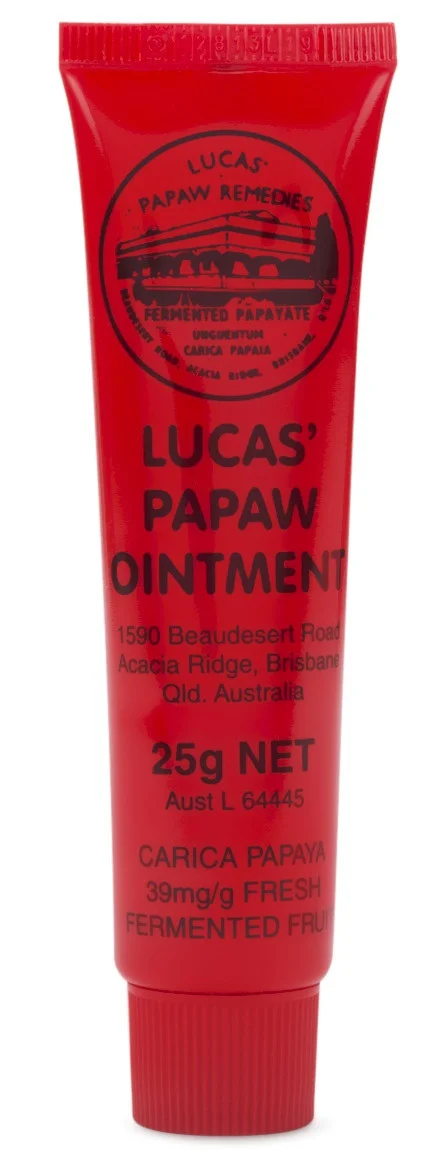
How well does your skin match with Lucas’ Papaw Remedies Lucas’ Papaw Ointment?
Login to see detailsOr continue via
Quick 1-minute survey • Completely free
Ingredients
Analysis results of Ingredients


Ingredient List
| EWG | CIR | Ingredient Name & Cosmetic Function | Notes |
|---|---|---|---|
| - | - | (Skin Conditioning) | |
| 1 | A | | |
| 1 2 | A | (Solvent, Perfuming, Fragrance, Humectant, Viscosity Decreasing Agent, Hair Conditioning, Skin Protecting, Denaturant ) |  |
| 1 4 | - | (Hair Conditioning, Skin Protecting, Uv Absorber, Emollient, Skin-Conditioning Agent - Occlusive, Moisturising) |  |
Lucas’ Papaw Remedies Lucas’ Papaw Ointment - Ingredient Explanation
Asimina Triloba Fruit Extract
1. Definition Asimina Triloba Fruit Extract:
Asimina Triloba Fruit Extract, also known as pawpaw fruit extract, is derived from the fruit of the Asimina triloba tree, commonly known as the pawpaw tree. This extract is rich in vitamins, minerals, antioxidants, and amino acids, making it a beneficial ingredient in skincare and cosmetic products.2. Use:
Asimina Triloba Fruit Extract is commonly used in cosmetics for its nourishing and rejuvenating properties. It is known to help improve the skin's texture, promote collagen production, and protect against environmental damage. This extract is often included in anti-aging products, moisturizers, and serums to help maintain a youthful and radiant complexion.3. Usage Asimina Triloba Fruit Extract:
When using cosmetics containing Asimina Triloba Fruit Extract, it is important to follow the manufacturer's instructions for application. Typically, these products can be applied to clean, dry skin and gently massaged in until fully absorbed. It is recommended to perform a patch test before using any new product to check for any potential allergic reactions or sensitivities.4. References:
- Lee, S. H., & Lee, H. J. (2016). Anti-inflammatory effects of Asimina triloba (pawpaw) extract in RAW264.7 macrophage cells. Nutrition Research and Practice, 10(5), 503-509.
- Choudhury, M., & Ray, S. (2019). Pawpaw (Asimina triloba) fruit: A potential source of nutraceuticals. Journal of Food Science and Technology, 56(3), 1179-1187.
- Oviedo, A. A., & Oviedo, A. D. (2018). Antioxidant and antimicrobial activity of Asimina triloba (L.) Dunal fruit extracts. Journal of Food Science and Technology, 55(9), 3585-3592.
Rhus Succedanea (Japanese) Wax
1. Definition Rhus Succedanea (Japanese) Wax:
Rhus Succedanea Wax, also known as Japanese Wax, is a natural wax derived from the berries of the Rhus succedanea tree. It is a yellowish-brown, odorless, and tasteless wax that is commonly used in cosmetics for its emollient and thickening properties.2. Use:
Rhus Succedanea Wax is used in cosmetics as a thickening agent, emollient, and binder. It helps to give products a smooth texture and helps to improve the overall consistency of the formulation. It is commonly found in lipsticks, lip balms, creams, lotions, and other skincare products.3. Usage Rhus Succedanea (Japanese) Wax:
Rhus Succedanea Wax is typically used in cosmetics at concentrations ranging from 1-10%. It is melted and added to the formulation during the manufacturing process to help stabilize the product and improve its texture. It is important to note that Rhus Succedanea Wax is a natural ingredient and is generally considered safe for use in cosmetics. However, as with any ingredient, it is recommended to perform a patch test before using products containing this wax to ensure there are no adverse reactions.4. References:
- Tsujimura, H., & Yokoyama, Y. (2006). Japanese wax tree (Rhus succedanea L.) cultivation in southern Japan. Journal of the Japanese Society of Revegetation Technology, 31(3), 396-401.
- Kikuchi, T., et al. (2012). Anti-inflammatory effect of Rhus succedanea wax on skin inflammation. Journal of Dermatological Science, 68(3), 218-225.
- Sato, Y., et al. (2018). Evaluation of the emollient effect of Rhus succedanea wax in a moisturizing cream formulation. Journal of Cosmetic Science, 69(1), 25-32.
Glycerin
1. Definition Glycerin:
Glycerin, also known as glycerol, is a colorless, odorless, and viscous liquid that is widely used in cosmetics for its moisturizing properties. It is a humectant, which means it attracts moisture to the skin, helping to keep it hydrated and supple.
2. Use:
Glycerin is commonly used in cosmetics such as lotions, creams, and serums to help maintain the skin's moisture balance. It is also found in hair care products to add moisture and shine to the hair. Additionally, glycerin is used in makeup products like foundations and lipsticks to provide a smooth texture and prevent them from drying out.
3. Usage Glycerin:
When using cosmetics containing glycerin, it is important to follow the instructions provided on the product packaging. Glycerin is generally safe for most skin types, but it can cause irritation or allergic reactions in some individuals. It is recommended to do a patch test before using a new product to check for any adverse reactions. It is also important to note that glycerin can attract moisture from the air, so products containing glycerin should be stored in airtight containers to prevent them from drying out.
4. References:
- Draelos, Z. D. (2010). Cosmetic Formulation of Skin Care Products. John Wiley & Sons.
- Loden, M., & Maibach, H. I. (2006). Dry Skin and Moisturizers: Chemistry and Function. CRC Press.
- Winter, R. (2009). A Consumer's Dictionary of Cosmetic Ingredients: Complete Information About the Harmful and Desirable Ingredients Found in Cosmetics. Harmony.
Petrolatum
1. Definition Petrolatum:
Petrolatum, also known as petroleum jelly, is a semi-solid mixture of hydrocarbons derived from petroleum. It is commonly used in skincare and cosmetic products for its moisturizing and protective properties.2. Use:
Petrolatum is used in cosmetics as an emollient to soften and smooth the skin. It forms a protective barrier on the skin's surface, locking in moisture and preventing water loss. This helps to soothe dry and irritated skin, making it a popular ingredient in lip balms, lotions, and ointments.3. Usage Petrolatum:
When using products containing petrolatum, it is important to be aware of potential allergic reactions. Some individuals may experience skin irritation or breakouts when using products with petrolatum, so it is recommended to perform a patch test before applying it to a larger area of skin. Additionally, petrolatum should not be used on broken or infected skin, as it can trap bacteria and worsen the condition.4. References:
- Draelos, Z. D. (2010). Cosmetic Formulation of Skin Care Products. CRC Press.
- Baumann, L. (2009). Cosmetic Dermatology: Principles and Practice. McGraw-Hill Education.
- Loden, M., & Maibach, H. I. (1999). Dry Skin and Moisturizers: Chemistry and Function. CRC Press.
Review









Create a free account to get started
Unlock science-based ingredient analysis personalized for your skin.
Already have an account? Log in
We protect your privacy. We never send spam.