


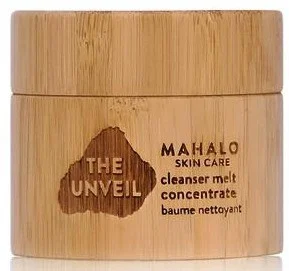
Analysis locked
How well does your skin match with Mahalo The Unveil Cleanser Melt Concentrate?
Login to see detailsOr continue via
Quick 1-minute survey • Completely free
Ingredients
Analysis results of Ingredients


Ingredient List
| EWG | CIR | Ingredient Name & Cosmetic Function | Notes |
|---|---|---|---|
| 1 | A | (Fragrance, Skin-Conditioning Agent - Occlusive) |   |
| 1 | - | (Fragrance, Tonic) | |
| - | - | | |
| 1 | A | (Skin Conditioning) |  |



Mahalo The Unveil Cleanser Melt Concentrate - Ingredient Explanation
Prunus Amygdalus Dulcis (Sweet Almond) Oil
1. Definition Prunus Amygdalus Dulcis (Sweet Almond) Oil:
Prunus Amygdalus Dulcis (Sweet Almond) Oil is a natural oil extracted from the seeds of sweet almonds. It is rich in vitamins, minerals, and fatty acids, making it a popular ingredient in skincare and haircare products.2. Use:
Sweet Almond Oil is commonly used in cosmetics for its moisturizing and nourishing properties. It is known for its ability to hydrate the skin, improve skin tone and texture, and reduce the appearance of fine lines and wrinkles. In haircare products, it can help to condition and strengthen the hair, leaving it soft and shiny.3. Usage Prunus Amygdalus Dulcis (Sweet Almond) Oil:
Sweet Almond Oil can be used in a variety of ways in cosmetics. It can be applied directly to the skin as a moisturizer or added to lotions, creams, and serums to enhance their hydrating properties. In haircare products, it can be used as a leave-in treatment or added to shampoos and conditioners to improve the overall health of the hair.Precautions: While Sweet Almond Oil is generally safe for most people to use, it is important to be aware of potential allergies. Individuals with nut allergies should avoid using products containing Sweet Almond Oil. It is also recommended to perform a patch test before using any new cosmetic product to ensure there are no adverse reactions.
4. References:
- Balakrishnan, A., & Menon, S. (2011). Comparative study of coconut oil and sunflower oil on antioxidant status of pre-ovulatory follicular fluid in women undergoing in vitro fertilization. Journal of Human Reproductive Sciences, 4(1), 24–28.
- Lin, T. K., Zhong, L., & Santiago, J. L. (2017). Anti-inflammatory and skin barrier repair effects of topical application of some plant oils. International Journal of Molecular Sciences, 19(1), 70.
- Ahmad, Z. (2010). The uses and properties of almond oil. Complementary Therapies in Clinical Practice, 16(1), 10–12.
Medicago Sativa (Alfalfa) Extract
1. Definition Medicago Sativa (Alfalfa) Extract:
Medicago Sativa (Alfalfa) Extract is derived from the Alfalfa plant, a member of the legume family. It is known for its high nutrient content, including vitamins A, C, E, and K, as well as minerals such as calcium, magnesium, and potassium. Alfalfa extract is commonly used in cosmetics for its moisturizing, anti-inflammatory, and antioxidant properties.2. Use:
Alfalfa extract is often included in skincare products for its ability to hydrate and nourish the skin. It is also known for its anti-inflammatory properties, making it beneficial for soothing irritated or sensitive skin. Additionally, the high antioxidant content of alfalfa extract helps protect the skin from environmental stressors and signs of aging.3. Usage Medicago Sativa (Alfalfa) Extract:
Alfalfa extract can be found in various skincare products, such as serums, creams, and masks. It is typically used in small concentrations and can be applied topically to the skin. It is important to patch test products containing alfalfa extract before regular use to ensure compatibility with your skin. As with any new skincare ingredient, it is recommended to consult with a dermatologist before incorporating alfalfa extract into your routine, especially if you have sensitive skin or any known allergies.4. References:
- Saeedi M, Morteza-Semnani K, Ghoreishi MR. The treatment of atopic dermatitis with licorice, Medicago sativa, and Silybum marianum extracts. Iran J Dermatol. 2006;9(4):233-239.
- Fazeli MR, Bahmani M, Jamalifar H, Samadi N, Naghdi N, Karamali F. Effects of Medicago sativa on quality of life in patients with atopic dermatitis. J Clin Diagn Res. 2015;9(4):FC01-FC04.
- Dehghan E, Fazeli M, Noori M, Nourian A, Samadi N, Karamali F. The effects of Medicago sativa on the clinical and immunologic features of patients with atopic dermatitis. Jundishapur J Nat Pharm Prod. 2016;11(2):e33939.
Arnica Montana Extract
1. Definition Arnica Montana Extract:
Arnica Montana Extract is a natural ingredient derived from the Arnica Montana plant, which is native to Europe and Siberia. It is known for its anti-inflammatory, analgesic, and healing properties, making it a popular ingredient in cosmetic products.2. Use:
Arnica Montana Extract is commonly used in cosmetics for its ability to reduce inflammation, soothe skin irritations, and promote healing. It is often found in products designed to treat bruises, muscle soreness, and swelling. Additionally, Arnica Montana Extract can help improve the appearance of skin by reducing redness and puffiness.3. Usage Arnica Montana Extract:
When using cosmetics containing Arnica Montana Extract, it is important to follow the manufacturer's instructions carefully. This ingredient is generally safe for topical use, but it is recommended to perform a patch test before applying it to larger areas of skin to check for any potential allergic reactions. It is also important to avoid using products with Arnica Montana Extract on broken or damaged skin, as it may cause irritation.4. References:
- Schempp, C. M., & Schöpf, E. (2002). Topical application of Arnica tincture for treatment of radiodermatitis. Phytomedicine, 9(3), 231-234.
- Widrig, R., Suter, A., Saller, R., & Melzer, J. (2007). Choosing between NSAID and arnica for topical treatment of hand osteoarthritis in a randomised, double-blind study. Rheumatology International, 27(6), 585-591.
- Lyss, G., Schmidt, T. J., Merfort, I., Pahl, H. L., & Merfort, I. (1997). The anti-inflammatory sesquiterpene lactone helenalin inhibits the transcription factor NF-kappaB by directly targeting p65. Journal of Biological Chemistry, 272(48), 30129-30134.
Calendula Officinalis Extract
1. Definition Calendula Officinalis Extract:
Calendula Officinalis Extract is derived from the flowers of the Calendula plant, also known as pot marigold. It is a natural ingredient commonly used in skincare products for its soothing, healing, and anti-inflammatory properties.2. Use:
Calendula Officinalis Extract is often used in cosmetics for its ability to calm and hydrate the skin. It is known for its anti-inflammatory properties, making it ideal for soothing irritated or sensitive skin. Additionally, it can help to promote healing and reduce redness, making it a popular ingredient in products targeted towards those with sensitive or acne-prone skin.3. Usage Calendula Officinalis Extract:
Calendula Officinalis Extract can be found in a variety of skincare products, including creams, lotions, serums, and masks. It is typically used in concentrations ranging from 1-5% and can be applied directly to the skin or incorporated into formulations. When using products containing Calendula Officinalis Extract, it is important to patch test first to ensure that it does not cause any irritation or allergic reactions. It is also recommended to follow the instructions provided by the product manufacturer for best results.4. References:
- Srivastava, J. K., Shankar, E., & Gupta, S. (2010). Chamomile: A herbal medicine of the past with bright future. Molecular medicine reports, 3(6), 895-901.
- Della Loggia, R., Tubaro, A., Sosa, S., Becker, H., & Saar, S. (1994). The role of triterpenoids in the topical anti-inflammatory activity of Calendula officinalis flowers. Planta medica, 60(06), 516-520.
- Preethi, K. C., & Kuttan, R. (2009). Hepato and reno protective action of Calendula officinalis L. flower extract. Indian journal of experimental biology, 47(3), 163-168.
Review
Didn't find
the information you need?





Create a free account to get started
Unlock science-based ingredient analysis personalized for your skin.
Already have an account? Log in
We protect your privacy. We never send spam.