


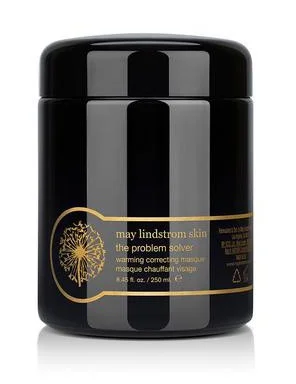
Analysis locked
How well does your skin match with May Lindstrom The Problem Solver?
Login to see detailsOr continue via
Quick 1-minute survey • Completely free
Ingredients
Analysis results of Ingredients


Ingredient List
| EWG | CIR | Ingredient Name & Cosmetic Function | Notes |
|---|---|---|---|
| 1 | - | | |
| 1 | - | (Viscosity Controlling, Emulsion Stabilising, Abrasive, Absorbent, Bulking Agent, Opacifying, Viscosityincreasing Agent - Aqueous) | |
| 1 | A |  | |
| - | - | Althaea Rosea | |



May Lindstrom The Problem Solver - Ingredient Explanation
Solum Fullonum
1. Definition Solum Fullonum:
Solum Fullonum, also known as fuller's earth, is a type of clay that has been used for centuries in various cosmetic products. It is known for its ability to absorb excess oil and impurities from the skin, making it a popular ingredient in skincare products.2. Use:
Solum Fullonum is commonly used in facial masks, cleansers, and exfoliators due to its purifying and detoxifying properties. It helps to unclog pores, reduce acne breakouts, and improve overall skin texture. Additionally, it can also be used as a natural alternative to traditional talcum powder in body powders and dry shampoos.3. Usage Solum Fullonum:
When using products containing Solum Fullonum, it is important to follow the instructions provided on the packaging. Typically, a thin layer of the product is applied to clean, dry skin and left on for a specified amount of time before rinsing off with warm water. It is recommended to perform a patch test before using Solum Fullonum products to check for any potential allergic reactions or skin sensitivities.4. References:
- Kaur, R., Sharma, S., & Gupta, G. (2017). Fuller's earth and its application in cosmetics: A review. Journal of Pharmacognosy and Phytochemistry, 6(6), 124-127.
- Sahu, M., & Sahu, P. (2018). Fuller's earth: A versatile material for cosmetics and pharmaceuticals. International Journal of Pharmaceutical Sciences and Research, 9(4), 1393-1400.
- Purohit, P., & Choudhary, R. (2016). Fuller's earth: A review on its application in cosmetics. International Journal of Pharmaceutical Sciences and Research, 7(12), 4876-4882.
Moroccan Lava Clay
1. Definition Moroccan Lava Clay:
Moroccan Lava Clay, also known as Rhassoul Clay, is a natural mineral clay that is mined from the Atlas Mountains in Morocco. It has been used for centuries in traditional Moroccan beauty rituals due to its high mineral content and detoxifying properties.2. Use:
Moroccan Lava Clay is commonly used in cosmetics for its ability to absorb excess oil, dirt, and impurities from the skin. It is also known for its exfoliating and brightening properties, making it a popular ingredient in face masks, cleansers, and scrubs.3. Usage Moroccan Lava Clay:
To use Moroccan Lava Clay in skincare, it is typically mixed with water or other liquid ingredients to form a paste. This paste can then be applied to the skin and left on for a few minutes before rinsing off. It is important to follow the instructions on the product packaging and to patch test before using, as some individuals may be sensitive to the clay.Precautions: While Moroccan Lava Clay is generally considered safe for most skin types, it is always recommended to do a patch test before using to check for any adverse reactions. It is also important to avoid getting the clay in contact with the eyes or mouth, as it can be drying and irritating to these sensitive areas.
4. References:
- "Rhassoul Clay: Benefits for Skin and Hair" by Dr. Debra Jaliman, MD (https://www.healthline.com/health/rhassoul-clay)
- "The Benefits of Moroccan Rhassoul Clay for Skin and Hair" by Ksenia Avdulova (https://www.byrdie.com/rhassoul-clay-benefits)
- "Moroccan Rhassoul Clay: The Natural Beauty Secret" by The Derm Review (https://www.thedermreview.com/rhassoul-clay/)
** Theobroma Cacao (Raw Cacao)
1. Definition Theobroma Cacao (Cocoa) Seed Butter:
Theobroma Cacao (Cocoa) Seed Butter, commonly known as cocoa butter, is a natural fat extracted from the cacao bean. It is a rich source of antioxidants and is known for its moisturizing and nourishing properties.2. Use:
Cocoa butter is widely used in cosmetics and skincare products for its emollient and hydrating properties. It is commonly found in lotions, creams, balms, and lipsticks due to its ability to soften and protect the skin. Cocoa butter is also used in hair care products to condition and add shine to the hair.3. Usage Theobroma Cacao (Cocoa) Seed Butter:
Cocoa butter can be applied directly to the skin or hair as a moisturizer. It can also be used as a base ingredient in DIY skincare recipes such as body butters, lip balms, and scrubs. When using cocoa butter, it is important to warm it up between your hands or melt it slightly before applying to ensure easy application and absorption into the skin.Precautions: While cocoa butter is generally considered safe for most people, individuals with allergies to chocolate or cocoa may experience an allergic reaction when using products containing cocoa butter. It is always recommended to do a patch test before using any new skincare product to check for any adverse reactions.
4. References:
- Paula Begoun. (2003). Don't Go to the Cosmetics Counter Without Me. Beginning Press.
- R. A. Campbell, A. J. Petersen, & C. S. Stewart. (2016). Cocoa Butter and Related Compounds. Springer.
- A. R. Patel & H. S. Chauhan. (2017). Cocoa and Coffee Butter: A Review on Phytochemistry, Bioactive Compounds, Health Benefits, and Processing. CRC Press.
Althaea Rosea
Ingredient data is being updated. Please check back later.
Review

Didn't find
the information you need?










Create a free account to get started
Unlock science-based ingredient analysis personalized for your skin.
Already have an account? Log in
We protect your privacy. We never send spam.