


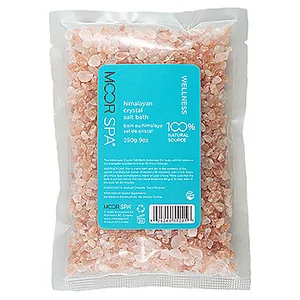
Analysis locked
How well does your skin match with Moor Spa Himalayan Crystal Salt Bath?
Login to see detailsOr continue via
Quick 1-minute survey • Completely free
Ingredients
Analysis results of Ingredients


Ingredient List
| EWG | CIR | Ingredient Name & Cosmetic Function | Notes |
|---|---|---|---|
| 1 | - | (Masking, Viscosity Controlling, Bulking Agent) | |
| 4 | - | |
Moor Spa Himalayan Crystal Salt Bath - Ingredient Explanation
Sodium Chloride
1. Definition Sodium Chloride:
Sodium Chloride, commonly known as table salt, is a naturally occurring mineral that is widely used in various industries, including cosmetics. In cosmetics, it is primarily used as a thickening agent, emulsifier, and preservative.2. Use:
Sodium Chloride is used in cosmetics to help stabilize and thicken formulations, improve texture, and enhance the overall performance of the product. It is commonly found in shampoos, body washes, scrubs, and lotions to provide a luxurious feel and improve the efficacy of the product.3. Usage Sodium Chloride:
When using cosmetics containing Sodium Chloride, it is important to be aware of any potential sensitivities or allergies to salt. Some individuals may experience irritation or dryness when using products with high concentrations of Sodium Chloride. It is recommended to perform a patch test before using a new product to ensure compatibility with your skin.Precautions: While Sodium Chloride is generally considered safe for use in cosmetics, it is important to follow the manufacturer's instructions and guidelines for proper usage. Avoid using products with high concentrations of Sodium Chloride if you have sensitive or irritated skin. If you experience any adverse reactions, discontinue use immediately and consult a healthcare professional.
4. References:
- "Sodium Chloride in Cosmetics: Functions and Safety." Cosmetics & Toiletries, www.cosmeticsandtoiletries.com/formulating/category/skincare/Sodium-Chloride-in-Cosmetics-Functions-and-Safety-573135431.html.
- "The Benefits of Sodium Chloride in Skincare." The Derm Review, www.thedermreview.com/Sodium-Chloride-in-skincare/.
- "Safety Assessment of Sodium Chloride as Used in Cosmetics." Cosmetic Ingredient Review, www.cir-safety.org/sites/default/files/SodiumChloride.pdf.
Unspecified Minerals
1. Definition Unspecified Minerals:
Unspecified minerals in cosmetics refer to minerals that are not specifically named or disclosed on the product label. These minerals can include a variety of naturally occurring or synthetic substances that are used for their various properties in cosmetic formulations.2. Use:
Unspecified minerals are commonly used in cosmetics for their ability to provide color, texture, and other beneficial properties to the product. They can act as pigments, thickeners, absorbents, or even as exfoliants in skincare products. These minerals are often added to enhance the overall performance and appearance of the cosmetic product.3. Usage Unspecified Minerals:
When using cosmetics containing unspecified minerals, it is important to be aware of any potential sensitivities or allergies to these ingredients. Some minerals may cause irritation or adverse reactions in certain individuals, so it is recommended to perform a patch test before applying the product to a larger area of skin. Additionally, it is advisable to read the product label carefully and consult with a healthcare professional if you have any concerns about the ingredients.4. References:
- Loretz, L., Api, A. M., Barraj, L., Burdick, J., Dressler, W., Gettings, S. D., ... & Robison, S. (2008). Exposure data for personal care products: hairspray, spray perfume, liquid foundation, shampoo, body wash, and solid antiperspirant. Food and Chemical Toxicology, 46(4), 1516-1524.
- SCCS (Scientific Committee on Consumer Safety). (2011). Opinion on the safety of aluminium in cosmetic products. European Commission, Health & Consumer Protection Directorate-General.
- SCCS (Scientific Committee on Consumer Safety). (2012). Opinion on the safety of zinc oxide in cosmetic products. European Commission, Health & Consumer Protection Directorate-General.
Review
Didn't find
the information you need?







Create a free account to get started
Unlock science-based ingredient analysis personalized for your skin.
Already have an account? Log in
We protect your privacy. We never send spam.