


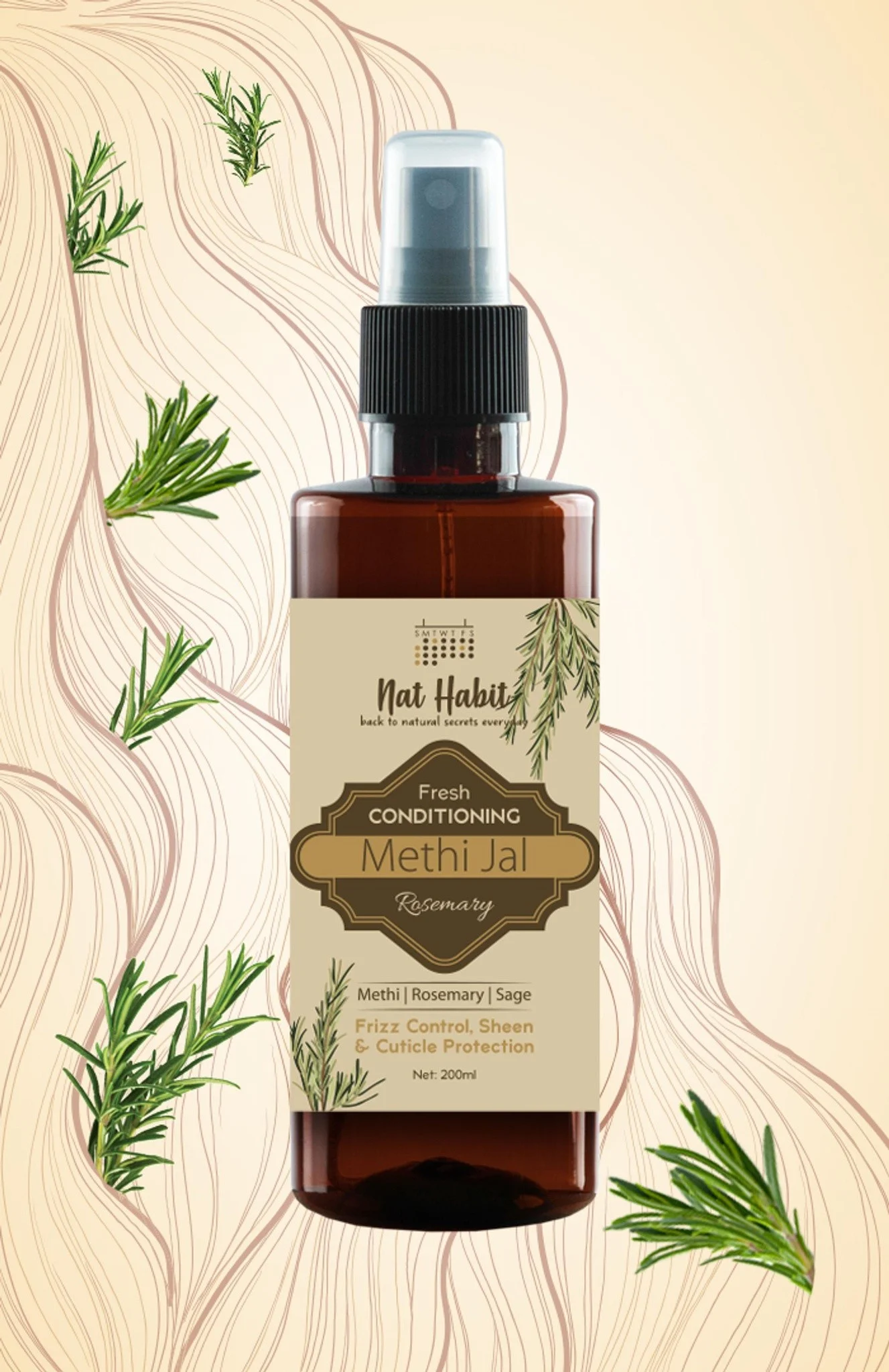
Analysis locked
How well does your skin match with Nat habit Methi Jal?
Login to see detailsOr continue via
Quick 1-minute survey • Completely free
Ingredients
Analysis results of Ingredients


Ingredient List
| EWG | CIR | Ingredient Name & Cosmetic Function | Notes |
|---|---|---|---|
| 1 | - | (Skin Conditioning, Antioxidant, Deodorant) | |
| - | - | *Sage | |
| - | - | Methi | |
| 1 | - | (pH adjusting agent) | |
Nat habit Methi Jal - Ingredient Explanation
*Rosemary
1. Definition Rosmarinus Officinalis (Rosemary):
Rosmarinus Officinalis, commonly known as Rosemary, is a fragrant herb native to the Mediterranean region. It is widely used in cosmetics for its aromatic properties and various skin benefits.2. Use:
Rosemary is a popular ingredient in skincare and haircare products due to its antioxidant, anti-inflammatory, and antimicrobial properties. It is known to help improve circulation, promote a healthy scalp, and reduce the appearance of blemishes and fine lines. Rosemary oil is often used in aromatherapy for its uplifting and invigorating scent.3. Usage Rosmarinus Officinalis (Rosemary):
Rosemary extract or oil can be found in a variety of cosmetic products such as cleansers, toners, serums, shampoos, and conditioners. It can be applied topically to the skin or hair, either directly or diluted in a carrier oil. It is important to perform a patch test before using rosemary products to check for any potential allergic reactions. Pregnant women should consult with a healthcare provider before using rosemary oil due to its potential effects on pregnancy.4. References:
- Lee J, Kim H, Lee J, Park J, Shin S, Kim Y. Anti-inflammatory and antioxidant mechanism of tangeretin in activated microglia. J Neuroimmunol. 2011;240-241:50-57.
- Pengelly A, Snow J, Mills SY, Scholey A, Wesnes K, Butler LR. Short-term study on the effects of rosemary on cognitive function in an elderly population. J Med Food. 2012;15(1):10-17.
- Moss M, Cook J, Wesnes K, Duckett P. Aromas of rosemary and lavender essential oils differentially affect cognition and mood in healthy adults. Int J Neurosci. 2003;113(1):15-38.
*Sage
Ingredient data is being updated. Please check back later.
Methi
Ingredient data is being updated. Please check back later.
Apple Cider Vinegar
1. Definition Apple Cider Vinegar:
Apple Cider Vinegar (ACV) is a type of vinegar made from fermented apple juice. It is known for its acidic properties and has been used for centuries for various health and beauty purposes.2. Use:
Apple Cider Vinegar is commonly used in cosmetics for its natural antibacterial and antifungal properties. It is believed to help balance the skin's pH levels, reduce acne and blemishes, and improve overall skin health. ACV is also used in hair care products to help clarify and strengthen the hair, as well as promote scalp health.3. Usage Apple Cider Vinegar:
When using Apple Cider Vinegar in cosmetics, it is important to dilute it with water before applying it to the skin or hair. A common ratio is one part ACV to three parts water. It is recommended to do a patch test on a small area of skin before using it on larger areas to ensure there is no adverse reaction. It is also important to avoid getting ACV in the eyes or on open wounds, as it can cause irritation.4. References:
- Yagnik, D., Serafin, V., & J. Shah, A. (2018). Antimicrobial activity of apple cider vinegar against Escherichia coli, Staphylococcus aureus and Candida albicans; downregulating cytokine and microbial protein expression. Scientific Reports, 8(1), 1732.
- Park, K. (2018). A review of the use of apple cider vinegar in cosmetic products. Journal of Cosmetic Dermatology, 17(2), 223-227.
- Johnston, C. S., & Gaas, C. A. (2006). Vinegar: Medicinal uses and antiglycemic effect. MedGenMed : Medscape general medicine, 8(2), 61.
Review








Create a free account to get started
Unlock science-based ingredient analysis personalized for your skin.
Already have an account? Log in
We protect your privacy. We never send spam.