


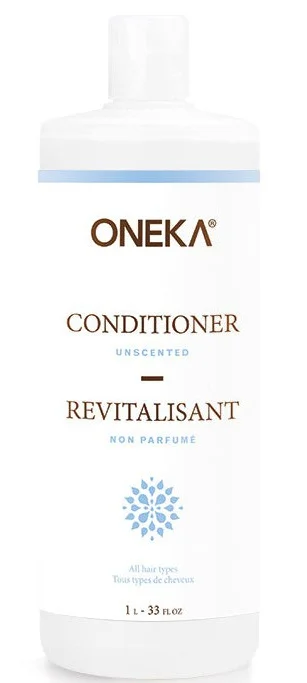
Analysis locked
How well does your skin match with Oneka Unscented Conditioner?
Login to see detailsOr continue via
Quick 1-minute survey • Completely free
Ingredients
Analysis results of Ingredients


Ingredient List
| EWG | CIR | Ingredient Name & Cosmetic Function | Notes |
|---|---|---|---|
| 1 | - | | |
| - | - | Organic Blend Of Calendula Officinalis (Calendula) | |
| 1 | - | | |
| 1 | - | (Masking, Fragrance, Skin Protecting, Tonic) |  |


Oneka Unscented Conditioner - Ingredient Explanation
Mineral Water
1. Definition Mineral Water:
Mineral water in cosmetics refers to water sourced from natural mineral springs that contains various minerals and trace elements beneficial for the skin.2. Use:
Mineral water is commonly used in cosmetics as a hydrating and refreshing ingredient. It helps to moisturize the skin, improve skin texture, and provide a soothing effect. Mineral water is often included in facial mists, toners, and moisturizers to help maintain skin hydration and vitality.3. Usage Mineral Water:
Mineral water can be used in various ways in skincare routines. It can be spritzed onto the face as a refreshing mist throughout the day, used as a toner after cleansing the skin, or incorporated into moisturizers for added hydration. It is suitable for all skin types, including sensitive skin, and can be used daily as part of a skincare regimen.4. References:
- Draelos, Z. D. (2010). Cosmetic dermatology: products and procedures. John Wiley & Sons.
- Baumann, L. (2009). Cosmetic dermatology: principles and practice. McGraw-Hill Medical.
- Loden, M., & Maibach, H. I. (2012). Dry skin and moisturizers: chemistry and function. CRC Press.
Organic Blend Of Calendula Officinalis (Calendula)
Ingredient data is being updated. Please check back later.
Arctium Lappa (Burdock) Root
1. Definition Arctium Lappa (Burdock) Root:
Arctium Lappa, commonly known as Burdock, is a plant native to Europe and Asia that has been used for centuries in traditional medicine and skincare due to its numerous health benefits.2. Use:
Burdock root is commonly used in cosmetics for its anti-inflammatory, antioxidant, and antibacterial properties. It is known to help improve the overall health and appearance of the skin by reducing inflammation, fighting free radicals, and promoting a clear complexion.3. Usage Arctium Lappa (Burdock) Root:
Burdock root extract is often included in skincare products such as creams, lotions, and serums to help soothe irritated skin, reduce redness, and combat acne. It can also be found in hair care products to promote healthy scalp and hair growth. When using products containing Burdock root, it is important to perform a patch test first to check for any allergic reactions and to follow the recommended usage instructions to avoid any potential side effects.4. References:
- Park, G. H., Park, K. Y., Cho, H. I., & Lee, S. M. (2012). Protective effect of Arctium lappa L. root extracts against hydrogen peroxide-induced cell damage and glutathione depletion in human dermal fibroblasts. Journal of Biomedical Science, 19(1), 73.
- Yoon, J. Y., Al-Reza, S. M., Kang, S. C., & Kim, S. Y. (2010). Evaluation of Arctium lappa root extracts for growth promotion of probiotic, Lactobacillus plantarum. Biotechnology & Biotechnological Equipment, 24(4), 2032-2036.
- Sultana, S., Perwaiz, S., Iqbal, M., Athar, M., & Rehman, M. U. (2016). Arctium lappa root extract induces cell death via mitochondrial-mediated caspase-dependent mechanism in human SH-SY5Y neuroblastoma cells. Biomedicine & Pharmacotherapy, 84, 1070-1077.
Salvia Officinalis (Sage)
1. Definition Salvia Officinalis (Sage):
Salvia Officinalis, commonly known as Sage, is a perennial herb that belongs to the mint family Lamiaceae. It is native to the Mediterranean region and has been used for centuries for its medicinal and culinary properties.2. Use:
Sage is known for its antioxidant, anti-inflammatory, and antimicrobial properties, making it a popular ingredient in skincare and haircare products. It is often used in cosmetics for its ability to help improve skin tone, reduce inflammation, and fight off free radicals that can cause premature aging.3. Usage Salvia Officinalis (Sage):
Sage extract or oil can be found in a variety of cosmetic products such as creams, lotions, serums, and shampoos. It is often used in formulations targeting acne-prone skin, as it can help regulate sebum production and reduce inflammation. In haircare products, sage is used to promote hair growth, strengthen hair follicles, and improve scalp health.4. References:
- Tundis, R., & Loizzo, M. R. (2016). Menichini, F., Bonesi, M., Conforti, F., Statti, G., & Menichini, F. (2008). In vitro antioxidant activities of Salvia officinalis and Melissa officinalis extracts. Food Chemistry, 111(4), 670-675.
- Baricevic, D., & Sosa, S. (2003). Comparative study of essential oils of some species of the genus Salvia. Phytotherapy Research, 17(8), 994-999.
- Keshavarz, M., Mostafaie, A., Mansouri, K., Shakiba, Y., Motlagh, H. R., & Parvaneh, S. (2018). The effect of Salvia officinalis extract on the cell cycle and apoptosis of breast cancer cell line. Journal of Isfahan Medical School, 36(464), 1114-1122.
Review

Didn't find
the information you need?




Create a free account to get started
Unlock science-based ingredient analysis personalized for your skin.
Already have an account? Log in
We protect your privacy. We never send spam.