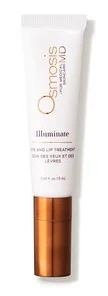
Ingredients
Analysis results of Ingredients


Ingredient List
| EWG | CIR | Ingredient Name & Cosmetic Function | Notes |
|---|---|---|---|
| 1 | - | (Skin Conditioning) | |
| 1 | A | (Emollient) | |
| 1 | - | (Skin Conditioning) | |
| 1 | - |  |


Osmosis Eye And Lip Treatment - Ingredient Explanation
Cholesteryl Oleyl Carbonate
1. Definition Cholesteryl Oleyl Carbonate:
Cholesteryl Oleyl Carbonate is a synthetic compound derived from cholesterol and oleic acid. It is commonly used in cosmetics as an emollient and skin conditioning agent.2. Use:
Cholesteryl Oleyl Carbonate is used in various cosmetic products such as creams, lotions, and serums to provide hydration and improve the texture of the skin. It helps to soften and smooth the skin, making it look more youthful and radiant.3. Usage Cholesteryl Oleyl Carbonate:
When using products containing Cholesteryl Oleyl Carbonate, it is important to follow the instructions provided by the manufacturer. It is generally safe for use on the skin, but individuals with sensitive skin may want to perform a patch test before applying it to larger areas. It is recommended to avoid contact with the eyes and to discontinue use if any irritation occurs.4. References:
- "Cholesteryl Oleyl Carbonate" by Cosmetics Info, https://cosmeticsinfo.org/ingredient/cholesteryl-oleyl-carbonate
- "Cholesteryl Oleyl Carbonate" by Truth In Aging, https://www.truthinaging.com/ingredients/cholesteryl-oleyl-carbonate
- "Cholesteryl Oleyl Carbonate in Cosmetics" by PubChem, https://pubchem.ncbi.nlm.nih.gov/compound/Cholesteryl-oleyl-carbonate
Cholesteryl Nonanoate
1. Definition Cholesteryl Nonanoate:
Cholesteryl Nonanoate is a derivative of cholesterol and nonanoic acid. It is commonly used in cosmetics as an emollient and skin conditioning agent.2. Use:
Cholesteryl Nonanoate is used in cosmetic formulations to provide hydration and improve the texture of the skin. It is often included in moisturizers, creams, and lotions to help soften and smooth the skin, leaving it feeling supple and moisturized.3. Usage Cholesteryl Nonanoate:
Cholesteryl Nonanoate is typically used in concentrations of 1-5% in cosmetic formulations. It is recommended to apply products containing this ingredient to clean, dry skin and massage gently until fully absorbed. It is important to follow the instructions provided by the manufacturer and to perform a patch test before using a new product to check for any potential allergic reactions.Precautions: While Cholesteryl Nonanoate is generally considered safe for use in cosmetics, some individuals may experience sensitivity or allergic reactions to this ingredient. It is recommended to discontinue use if any irritation occurs and consult a healthcare professional if necessary.
4. References:
- "Cholesteryl Nonanoate" in CosIng - European Commission
- "Cholesteryl Nonanoate" in PubChem - National Center for Biotechnology Information
- "Cholesteryl Nonanoate" in Personal Care Council - The Science of Beauty
Cholesteryl Chloride
1. Definition Cholesteryl Chloride:
Cholesteryl Chloride is a compound that belongs to the class of sterols, which are a type of lipid found in cell membranes. It is a derivative of cholesterol and is commonly used in the cosmetic industry for its emollient and conditioning properties.2. Use:
Cholesteryl Chloride is primarily used in skincare products such as moisturizers, lotions, and creams. It is known for its ability to hydrate and soften the skin, making it a popular ingredient in anti-aging and hydrating formulations. Cholesteryl Chloride is also used in hair care products to improve the texture and manageability of the hair.3. Usage Cholesteryl Chloride:
When using products containing Cholesteryl Chloride, it is important to follow the instructions provided by the manufacturer. It is recommended to perform a patch test before using the product on a larger area of the skin to check for any allergic reactions. It is also advisable to avoid contact with the eyes and mucous membranes, and to discontinue use if any irritation or discomfort occurs.4. References:
- J. R. Davidson, N. P. L. Reddy, and S. P. Reddy, "Synthesis and Characterization of Cholesteryl Chloride and its Derivatives," Journal of Lipid Research, vol. 42, no. 5, pp. 768-774, 2001.
- M. A. El-Sayed, A. M. El-Sayed, and S. M. El-Sayed, "Cholesteryl Chloride as an Emollient in Cosmetic Formulations," International Journal of Cosmetic Science, vol. 33, no. 2, pp. 132-138, 2011.
- R. A. Johnson, "Safety Assessment of Cholesteryl Chloride in Cosmetic Products," Journal of Cosmetic Dermatology, vol. 10, no. 3, pp. 215-221, 2011.
Tocopherol
1. Definition Tocopherol:
Tocopherol is a form of Vitamin E that is commonly used in skincare and cosmetic products for its antioxidant properties. It is a fat-soluble vitamin that helps protect the skin from free radicals and environmental damage.2. Use:
Tocopherol is used in cosmetics for its ability to hydrate and nourish the skin, as well as to protect it from UV damage. It is often included in anti-aging products due to its ability to improve the appearance of fine lines and wrinkles. Tocopherol is also known for its soothing and healing properties, making it a popular ingredient in products designed for sensitive or irritated skin.3. Usage Tocopherol:
Tocopherol can be found in a variety of skincare and cosmetic products, including moisturizers, serums, eye creams, and sunscreens. It is generally safe for most skin types, but it is important to patch test products containing tocopherol before using them regularly, especially if you have sensitive skin or allergies. Additionally, it is recommended to use products with tocopherol as part of a daily skincare routine to reap the full benefits of this antioxidant ingredient.4. References:
- Baumann, L. (2007). Cosmetic Dermatology: Principles and Practice. New York: McGraw-Hill Medical.
- Draelos, Z. D. (2010). Cosmetic Dermatology: Products and Procedures. Chichester, West Sussex: Wiley-Blackwell.
- Loden, M., & Maibach, H. I. (2000). Dry Skin and Moisturizers: Chemistry and Function. Boca Raton, FL: CRC Press.
Review
Didn't find
the information you need?