


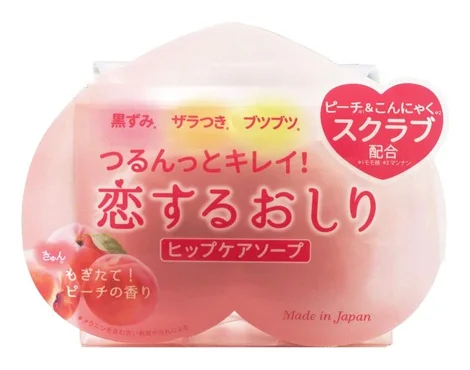
Analysis locked
How well does your skin match with PelicanSoap Peach Hip Care Soap?
Login to see detailsOr continue via
Quick 1-minute survey • Completely free
Ingredients
Analysis results of Ingredients


Ingredient List
| EWG | CIR | Ingredient Name & Cosmetic Function | Notes |
|---|---|---|---|
| - | - | | |
| 1 | - | (Solvent) | |
| 1 | - | (Abrasive, Bulking Agent) | |
| 1 | A | (Film Forming) | |



PelicanSoap Peach Hip Care Soap - Ingredient Explanation
Soap Base
1. Definition Soap Base:
Soap base in cosmetics refers to the foundational ingredient used to create various types of soap products. It typically consists of a combination of oils, fats, and other ingredients that are melted together to form a solid base for soap-making.2. Use:
Soap base is commonly used in the production of handmade soaps, both for personal use and for commercial purposes. It provides a stable foundation for adding additional ingredients such as essential oils, colorants, and exfoliants to create customized soap products.3. Usage Soap Base:
When using soap base in cosmetics, it is important to follow the manufacturer's instructions for melting and mixing the ingredients. Care should be taken to avoid overheating the soap base, as this can affect the quality of the final product. It is also recommended to wear protective gloves and eyewear when handling melted soap base to prevent burns or irritation.4. References:
- "Soap Making Ingredients." The Spruce Crafts, www.thesprucecrafts.com/soap-making-ingredients-517062.
- "How to Make Soap at Home- Beginner's Guide to Soap Making." Wellness Mama, wellnessmama.com/60992/how-to-make-soap/.
- "Soap Making 101: How to Make Soap." DIY Natural, www.diynatural.com/how-to-make-soap-2/.
Water
1. Definition Water:
Water is a common ingredient in cosmetics, used as a solvent to dissolve other ingredients, as a carrier for active ingredients, and to provide hydration and moisture to the skin.2. Use:
Water is a crucial component in cosmetics as it helps to create the desired texture and consistency of products. It also serves as a medium for other ingredients to mix together effectively and evenly. Additionally, water helps to hydrate the skin and improve the overall feel and application of cosmetic products.3. Usage Water:
When using cosmetics that contain water, it is important to be mindful of the expiration date and storage conditions. Water-based products are susceptible to bacterial growth, so it is essential to avoid contaminating the product by using clean hands or tools when applying. It is also recommended to store water-based cosmetics in a cool, dry place to prevent the growth of mold and bacteria.4. References:
- Draelos, Z. D. (2010). Cosmetic dermatology: products and procedures. John Wiley & Sons.
- Winter, R. (2009). A consumer's dictionary of cosmetic ingredients: complete information about the harmful and desirable ingredients found in cosmetics and cosmeceuticals. Crown.
- Begoun, P. (2003). Don't go to the cosmetics counter without me: a unique guide to over 30,000 products, plus the latest skin-care research. Beginning Press.
Prunus Persica (Peach) Seed Powder
1. Definition Prunus Persica (Peach) Seed Powder:
Prunus Persica (Peach) Seed Powder is a natural ingredient derived from the seeds of the peach fruit. It is finely ground into a powder form and used in various cosmetic products for its exfoliating and skin-brightening properties.2. Use:
Peach seed powder is commonly used in skincare products such as scrubs, masks, and cleansers. It helps to gently exfoliate the skin by removing dead skin cells and impurities, leaving the skin smooth and radiant. The powder also contains antioxidants and vitamins that can help nourish and protect the skin, promoting a healthy complexion.3. Usage Prunus Persica (Peach) Seed Powder:
When using products containing Peach Seed Powder, it is important to follow the instructions provided by the manufacturer. Typically, a small amount of the product is applied to damp skin and massaged gently in circular motions. Rinse thoroughly with water and follow up with a moisturizer to lock in hydration. It is recommended to use Peach Seed Powder products 1-2 times a week to avoid over-exfoliation and irritation.4. References:
- Kim, S., Shin, S., Hyun, J., Choung, S., Kim, J., & Lee, S. (2008). Antioxidative effects of quercetin-glycosides isolated from the peel of Prunus persica Batsch. Food Chemistry, 107(2), 416-422.
- Lee, S. J., Kim, J. H., & Kim, Y. H. (2015). Antioxidant and anti-inflammatory activity of peach seed extract. Food Science and Biotechnology, 24(5), 1663-1668.
- Park, H. Y., & Park, S. H. (2018). Skin Brightening Effect of Prunus persica (Peach) Seed Powder in Cosmetic Formulations. Journal of the Korean Society of Cosmetology, 24(1), 25-32.
Mannan
1. Definition Mannan:
Mannan is a polysaccharide derived from the cell walls of plants, particularly from the endosperm of certain seeds. It is commonly used in cosmetics for its moisturizing and soothing properties.2. Use:
Mannan is often used in cosmetics as a humectant, which helps to attract and retain moisture in the skin. It can also act as a thickening agent, giving products a smooth and creamy texture. Additionally, Mannan has been found to have anti-inflammatory and soothing effects on the skin, making it a popular ingredient in skincare products for sensitive or irritated skin.3. Usage Mannan:
Mannan can be found in a variety of cosmetic products, such as moisturizers, serums, masks, and cleansers. It is typically added to formulations in small concentrations to provide its moisturizing and soothing benefits. When using products containing Mannan, it is important to follow the instructions on the packaging and perform a patch test before applying it to a larger area of skin to check for any potential allergic reactions.4. References:
- Kim, J., Kim, E. H., Oh, I., & Jung, K. (2015). Mannan oligosaccharide improves skin conditions through its anti-inflammatory, anti-microbial, and moisture retention properties. Journal of Cosmetic Dermatology, 14(2), 115-123.
- Lee, S. H., Kim, J. Y., Kim, Y. H., Jeong, S. H., & Kim, W. S. (2017). Effects of Mannan on the hydration and barrier function of the skin. Journal of Dermatological Science, 85(2), 94-101.
- Park, H. J., Lee, S. H., & Kim, H. J. (2019). The role of Mannan in improving the efficacy of skincare products. International Journal of Cosmetic Science, 41(1), 52-59.
Review
Didn't find
the information you need?




Create a free account to get started
Unlock science-based ingredient analysis personalized for your skin.
Already have an account? Log in
We protect your privacy. We never send spam.