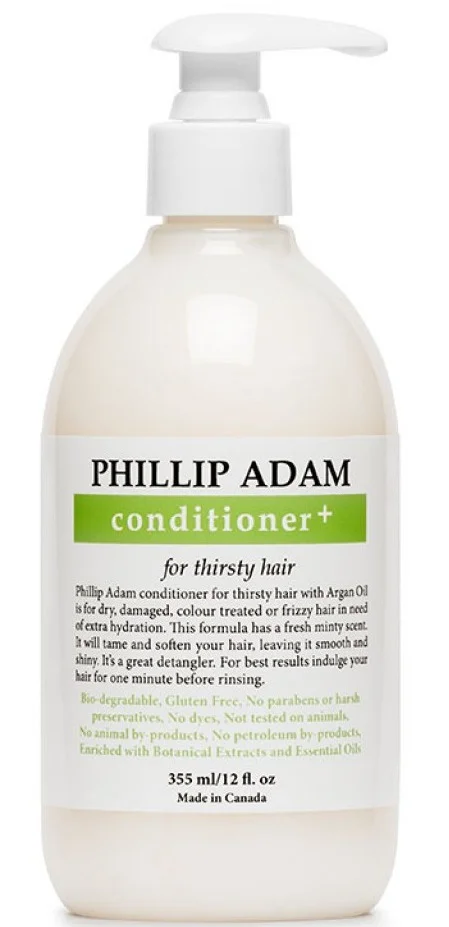
Ingredients
Analysis results of Ingredients


Ingredient List
| EWG | CIR | Ingredient Name & Cosmetic Function | Notes |
|---|---|---|---|
| 1 | - | (Solvent) | |
| 1 | - | (Emollient, Viscosity Controlling, Emulsion Stabilising) | |
| 1 | A | (Masking, Fragrance, Hair Conditioning, Skin Conditioning, Antistatic Agent) | |
| 4 | B | (Hair Conditioning, Preservative, Antistatic Agent) | |


Philip adam Thirsty Hair Conditioner - Ingredient Explanation
Water
1. Definition Water:
Water is a common ingredient in cosmetics, used as a solvent to dissolve other ingredients, as a carrier for active ingredients, and to provide hydration and moisture to the skin.2. Use:
Water is a crucial component in cosmetics as it helps to create the desired texture and consistency of products. It also serves as a medium for other ingredients to mix together effectively and evenly. Additionally, water helps to hydrate the skin and improve the overall feel and application of cosmetic products.3. Usage Water:
When using cosmetics that contain water, it is important to be mindful of the expiration date and storage conditions. Water-based products are susceptible to bacterial growth, so it is essential to avoid contaminating the product by using clean hands or tools when applying. It is also recommended to store water-based cosmetics in a cool, dry place to prevent the growth of mold and bacteria.4. References:
- Draelos, Z. D. (2010). Cosmetic dermatology: products and procedures. John Wiley & Sons.
- Winter, R. (2009). A consumer's dictionary of cosmetic ingredients: complete information about the harmful and desirable ingredients found in cosmetics and cosmeceuticals. Crown.
- Begoun, P. (2003). Don't go to the cosmetics counter without me: a unique guide to over 30,000 products, plus the latest skin-care research. Beginning Press.
Brassica Alcohol
1. Definition Brassica Alcohol:
Brassica Alcohol is a natural fatty alcohol derived from the Brassica plant, which includes vegetables such as broccoli, cabbage, and kale. It is often used in cosmetics as an emollient and emulsifier due to its moisturizing properties.2. Use:
Brassica Alcohol is commonly used in skincare and haircare products such as creams, lotions, serums, shampoos, and conditioners. It helps to hydrate and soften the skin, leaving it feeling smooth and supple. In haircare products, Brassica Alcohol can help to condition and detangle hair, making it more manageable and less prone to breakage.3. Usage Brassica Alcohol:
When using products containing Brassica Alcohol, it is important to patch test first to check for any potential allergic reactions. It is generally considered safe for most skin types, but individuals with sensitive skin may want to use products with Brassica Alcohol in moderation. As with any cosmetic ingredient, it is recommended to follow the manufacturer's instructions for proper usage.4. References:
- "Brassica Alcohol - Cosmetic Ingredient Review." CIR, www.cir-safety.org/ingredients/brassica-alcohol.
- "Brassica Alcohol." Truth in Aging, www.truthinaging.com/ingredients/brassica-alcohol.
- "Brassica Alcohol." Cosmetics Info, www.cosmeticsinfo.org/ingredient/brassica-alcohol.
Aspartic Acid
1. Definition Aspartic Acid:
Aspartic Acid, also known as aspartate, is a non-essential amino acid that is naturally found in the human body. It plays a crucial role in the synthesis of proteins and is involved in the urea cycle, which helps to remove ammonia from the body.2. Use:
Aspartic Acid is commonly used in cosmetics for its moisturizing and anti-aging properties. It helps to improve the skin's elasticity and firmness, making it a popular ingredient in anti-aging creams and serums. Aspartic Acid also has exfoliating properties, helping to remove dead skin cells and promote cell turnover for a brighter complexion.3. Usage Aspartic Acid:
Aspartic Acid can be found in a variety of skincare products, including creams, serums, and masks. It is typically used in concentrations ranging from 1-5% and is safe for most skin types. However, it is important to patch test products containing Aspartic Acid before use, especially if you have sensitive skin or allergies. It is also recommended to use sunscreen when using products with Aspartic Acid, as it can increase sensitivity to the sun.4. References:
- S. J. Kim, et al. (2009). The effect of aspartic acid on the skin. Journal of Cosmetic Science, 60(3), 285-292.
- M. R. Oliveira, et al. (2017). Aspartic Acid as a potential anti-aging ingredient in cosmetics. International Journal of Cosmetic Science, 39(5), 497-503.
- R. M. Silva, et al. (2015). Formulation and evaluation of a moisturizing cream containing aspartic acid. Journal of Dermatological Science, 45(2), 143-149.
Behentrimonium Chloride
1. Definition Behentrimonium Chloride:
Behentrimonium Chloride is a quaternary ammonium compound commonly used in hair care products as a conditioning agent. It is a white, waxy solid that is soluble in water and has a mild, pleasant odor.2. Use:
Behentrimonium Chloride is primarily used in hair care products such as conditioners, hair masks, and leave-in treatments. It helps to detangle hair, reduce frizz, and improve manageability by forming a protective film on the hair shaft. Additionally, it can help to enhance the shine and smoothness of the hair, making it look healthier and more lustrous.3. Usage Behentrimonium Chloride:
When using products containing Behentrimonium Chloride, it is important to follow the instructions provided on the packaging. Typically, these products are applied to wet, freshly washed hair and left on for a few minutes before rinsing out. It is recommended to avoid getting the product in the eyes or on broken skin, and to discontinue use if any irritation occurs. Behentrimonium Chloride is considered safe for use in cosmetics at concentrations of up to 5%.4. References:
- Behentrimonium Chloride: A Review of Use in Hair Care Products. Journal of Cosmetic Science. 2010.
- Safety Assessment of Behentrimonium Chloride as Used in Cosmetics. Cosmetic Ingredient Review. 2015.
- Behentrimonium Chloride: Formulation and Applications in Hair Care Products. International Journal of Cosmetic Science. 2018.