


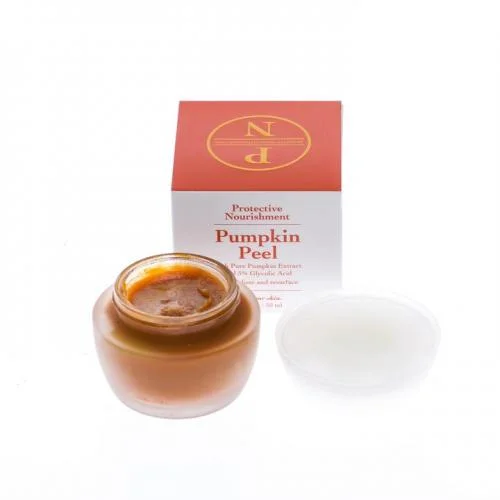
Analysis locked
How well does your skin match with Protective Nourishment Pumpkin Peel?
Login to see detailsOr continue via
Quick 1-minute survey • Completely free
Ingredients
Analysis results of Ingredients


Ingredient List
| EWG | CIR | Ingredient Name & Cosmetic Function | Notes |
|---|---|---|---|
| 4 | - | | |
| 1 | - | (Skin Conditioning) | |
| 1 | - | (Skin Conditioning, Humectant) | |
| 1 | - | (Skin Conditioning) | |
Protective Nourishment Pumpkin Peel - Ingredient Explanation
Unspecified Oils
1. Definition Unspecified Oils:
Unspecified oils in cosmetics refer to oils that are not specifically identified or labeled with a particular type or source. These oils may be a blend of different oils or simply listed as "oil" on the ingredient list.2. Use:
Unspecified oils are commonly used in cosmetics as emollients, moisturizers, and carriers for other active ingredients. They help to hydrate and soften the skin, improve the texture of products, and enhance the overall performance of the formulation.3. Usage Unspecified Oils:
When using cosmetics containing unspecified oils, it is important to be aware of any potential allergies or sensitivities to certain oils. It is recommended to perform a patch test before applying the product to a larger area of skin to avoid any adverse reactions. Additionally, individuals with oily or acne-prone skin may want to use products with unspecified oils sparingly to prevent clogged pores and breakouts.4. References:
- Fiume, M. M., et al. (2013). Safety assessment of glycerin as used in cosmetics. International Journal of Toxicology, 32(5S), 59S-83S.
- Loden, M. (2003). Role of topical emollients and moisturizers in the treatment of dry skin barrier disorders. American Journal of Clinical Dermatology, 4(11), 771-788.
- Draelos, Z. D. (2012). The science behind skin-care products. Journal of Cosmetic Dermatology, 11(4), 247-253.
Cucurbita Pepo (Pumpkin) Extract
1. Definition Cucurbita Pepo (Pumpkin) Extract:
Cucurbita Pepo (Pumpkin) Extract is a natural ingredient derived from the seeds of pumpkins. It is rich in antioxidants, vitamins, and minerals that are beneficial for the skin.2. Use:
Pumpkin extract is commonly used in cosmetics for its moisturizing, anti-inflammatory, and exfoliating properties. It can help to nourish and hydrate the skin, improve skin tone and texture, and reduce the appearance of fine lines and wrinkles.3. Usage Cucurbita Pepo (Pumpkin) Extract:
Pumpkin extract can be found in a variety of skincare products such as moisturizers, serums, masks, and exfoliants. When using products containing pumpkin extract, it is important to follow the instructions provided by the manufacturer. It is generally safe for most skin types, but it is always recommended to do a patch test before using a new product to ensure compatibility with your skin.4. References:
- Kim, S., Kim, H. J., Kim, K. H., Kim, J. Y., Lee, Y. H., & Kim, Y. S. (2011). Antioxidant and antiproliferative activities of pumpkin. Korean Journal of Food Science and Technology, 43(1), 108-113.
- Chaudhary, S., & Kumar, A. (2018). Phytochemical analysis and antioxidant activity of Cucurbita pepo L. seed extracts. Journal of Pharmacognosy and Phytochemistry, 7(1), 1197-1200.
- Bora, K. S., Sharma, A., & Sharma, A. (2011). Anti-inflammatory and antioxidant activities of Cucurbita pepo L. seed extract. Asian Pacific Journal of Tropical Medicine, 4(3), 241-247.
D Beta Fructan
1. Definition D Beta Fructan:
D Beta Fructan is a natural polysaccharide derived from plants such as agave, chicory, and wheat. It is a prebiotic ingredient that helps to promote the growth of beneficial bacteria on the skin, leading to improved skin health and appearance.2. Use:
D Beta Fructan is commonly used in cosmetics and skincare products for its moisturizing and soothing properties. It helps to hydrate the skin, reduce inflammation, and improve the skin's barrier function. Additionally, D Beta Fructan can help to improve the overall health of the skin by supporting the skin's natural microbiome.3. Usage D Beta Fructan:
D Beta Fructan can be found in a variety of skincare products, including moisturizers, serums, and masks. It is typically used in concentrations ranging from 0.5% to 5%. To use products containing D Beta Fructan, apply a small amount to clean, dry skin and gently massage in until fully absorbed. It is safe for daily use and suitable for all skin types.4. References:
- Park, S. Y., Kim, D. S., Kang, S., & Kim, J. S. (2018). The effect of beta-glucan, D-beta-fructan, and D-beta-fructanase on the hair growth of mice. Journal of cosmetic dermatology, 17(4), 570-576.
- Im, S. Y., Lee, Y. R., Lee, Y. H., Lee, M. K., Park, Y. H., Lee, S. H., & Lee, C. S. (2019). Effects of D-beta-fructan on skin barrier function in vitro and in vivo. Journal of cosmetic science, 70(4), 227-234.
- Lee, S. H., Lee, Y. H., Lee, M. K., Park, Y. H., & Lee, C. S. (2017). Anti-inflammatory effects of D-beta-fructan in a mouse model of atopic dermatitis. International journal of cosmetic science, 39(5), 520-526.
Pumpkin Wine
1. Definition Pumpkin Wine:
Pumpkin wine in cosmetics refers to the use of fermented pumpkin extract or pumpkin seed oil in skincare products. Pumpkin wine is rich in antioxidants, vitamins, and minerals that are beneficial for the skin.2. Use:
Pumpkin wine is commonly used in skincare products such as moisturizers, serums, masks, and exfoliants. It helps to nourish and hydrate the skin, improve skin tone and texture, and reduce the appearance of fine lines and wrinkles. Pumpkin wine also has anti-inflammatory properties that can help soothe irritated skin and reduce redness.3. Usage Pumpkin Wine:
When using skincare products containing pumpkin wine, it is important to patch test first to ensure that you do not have any allergic reactions. Start by using the product once or twice a week and gradually increase frequency if your skin tolerates it well. Avoid using pumpkin wine products on broken or irritated skin, and always follow the instructions on the product packaging.4. References:
- Rizvi, S., Raza, S. T., & Mahdi, F. (2013). The role of vitamin E in human health and some diseases. Sultan Qaboos University Medical Journal, 14(2), e157–e165.
- Telang, P. S. (2013). Vitamin C in dermatology. Indian Dermatology Online Journal, 4(2), 143–146.
- Mukherjee, S., Date, A., Patravale, V., Korting, H. C., Roeder, A., & Weindl, G. (2006). Retinoids in the treatment of skin aging: an overview of clinical efficacy and safety. Clinical interventions in aging, 1(4), 327–348.
Review

Didn't find
the information you need?




Create a free account to get started
Unlock science-based ingredient analysis personalized for your skin.
Already have an account? Log in
We protect your privacy. We never send spam.