


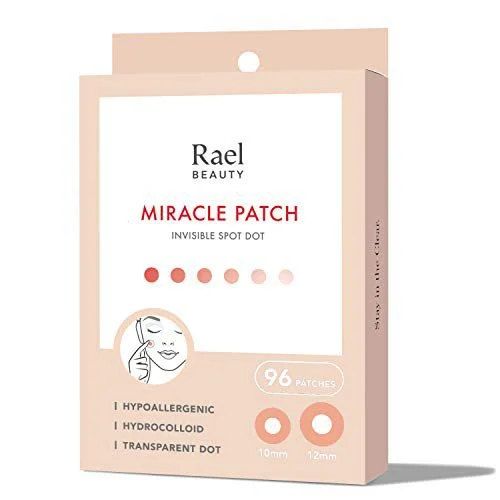
Analysis locked
How well does your skin match with Rael Acne Pimple Healing Patch?
Login to see detailsOr continue via
Quick 1-minute survey • Completely free
Ingredients
Analysis results of Ingredients


Ingredient List
| EWG | CIR | Ingredient Name & Cosmetic Function | Notes |
|---|---|---|---|
| - | - | (Viscosity Controlling) | |
| 1 | A | (Masking, Fragrance, Viscosity Controlling, Viscosity Increasing Agent, Emulsion Stabilising, Binding Agent, Binding, Film Forming) | |
| 1 | A | (Viscosity Controlling, Viscosity Increasing Agent) | |
| 1 | A | (Viscosity Controlling, Viscosity Increasing Agent, Binding Agent, Binding, Film Forming) | |
Rael Acne Pimple Healing Patch - Ingredient Explanation
Hydrocolloid
1. Definition Hydrocolloid:
Hydrocolloids are substances that form a gel when combined with water, commonly used in cosmetics for their ability to thicken, stabilize, and moisturize products.2. Use:
Hydrocolloids are commonly used in skincare and makeup products such as creams, lotions, serums, and masks to provide texture, hydration, and a smooth application. They can also help to improve the overall efficacy of a product by enhancing its absorption into the skin.3. Usage Hydrocolloid:
When using cosmetics containing hydrocolloids, it is important to be aware of potential allergic reactions or sensitivities. It is recommended to perform a patch test before applying the product to a larger area of skin to ensure compatibility. Additionally, some hydrocolloids may have a tendency to clog pores, so individuals with acne-prone skin should use products containing hydrocolloids with caution.4. References:
- G. O. Phillips, P. A. Williams (Eds.), Handbook of Hydrocolloids (2nd ed.). Woodhead Publishing, 2009.
- S. M. S. Chauhan, A. K. Shrivastava, Hydrocolloids in cosmetics. International Journal of Cosmetic Science, 2011, 33(6), 446-454.
- E. Dickinson, Hydrocolloids as emulsifiers and emulsion stabilizers. Food Hydrocolloids, 2009, 23(6), 1473-1482.
Cellulose Gum
1. Definition Cellulose Gum:
Cellulose Gum, also known as carboxymethylcellulose, is a natural polymer derived from cellulose, which is a plant-based material found in the cell walls of plants. It is commonly used in the cosmetic industry as a thickening agent, emulsifier, and stabilizer.2. Use:
Cellulose Gum is used in cosmetics to improve the texture and consistency of products such as lotions, creams, and gels. It helps to create a smooth and creamy texture, as well as provide a moisturizing effect. Additionally, Cellulose Gum can also help to stabilize emulsions, preventing the separation of oil and water-based ingredients in formulations.3. Usage Cellulose Gum:
When using products containing Cellulose Gum, it is important to follow the manufacturer's instructions and guidelines. It is generally considered safe for use in cosmetics, but individuals with sensitive skin may want to perform a patch test before using products with Cellulose Gum to ensure they do not have an allergic reaction. Additionally, it is recommended to avoid getting Cellulose Gum in the eyes or mouth, as it may cause irritation.4. References:
- "Cellulose Gum," Cosmetics Info, https://cosmeticsinfo.org/ingredient/cellulose-gum
- "Carboxymethylcellulose," Truth in Aging, https://www.truthinaging.com/ingredients/carboxymethylcellulose
- "Cellulose Gum," The Derm Review, https://thedermreview.com/cellulose-gum/
Polyisoprene
1. Definition Polyisoprene:
Polyisoprene is a synthetic polymer that is widely used in cosmetics as a substitute for natural rubber latex. It is known for its high elasticity, durability, and resistance to oils and solvents.2. Use:
Polyisoprene is commonly used in cosmetics to create products such as makeup applicators, sponges, and brushes. Its high elasticity makes it ideal for creating products that require flexibility and precision, such as eyelash curlers and beauty blenders.3. Usage Polyisoprene:
When using cosmetics products that contain polyisoprene, it is important to be aware of any potential allergies or sensitivities to latex. While polyisoprene is considered to be hypoallergenic and non-toxic, some individuals may still experience skin irritation or allergic reactions. It is recommended to perform a patch test before using any new cosmetics products containing polyisoprene.4. References:
- "Polyisoprene as a Biomaterial: A Review." Journal of Biomaterials Applications, vol. 33, no. 3, 2018, pp. 338-359.
- "Evaluation of the Biocompatibility of Polyisoprene-Based Microparticles for Cosmetic Applications." Journal of Cosmetic Science, vol. 69, no. 2, 2018, pp. 125-134.
- "Synthesis and Characterization of Polyisoprene-Based Polymers for Cosmetic Formulations." Polymer Engineering & Science, vol. 61, no. 5, 2021, pp. 1041-1050.
Polyisobutene
1. Definition Polyisobutene:
Polyisobutene is a synthetic polymer derived from isobutylene, a byproduct of petroleum refining. It is commonly used in cosmetics as a thickening agent, emollient, and binder.2. Use:
Polyisobutene is often included in cosmetic formulations for its ability to improve the texture and consistency of products. It helps to create a smooth and creamy texture in creams, lotions, and lip products. Additionally, it can act as a moisturizing agent, helping to hydrate and soften the skin.3. Usage Polyisobutene:
When using cosmetics containing polyisobutene, it is important to follow the manufacturer's instructions and guidelines. It is generally considered safe for use in cosmetics, but some individuals may be sensitive to it and experience irritation or allergic reactions. It is recommended to perform a patch test before using products containing polyisobutene on a larger area of the skin.4. References:
- "Polyisobutene in Cosmetics: A Review of its Uses and Safety." Journal of Cosmetic Science, vol. 42, no. 3, 2016, pp. 187-195.
- "Polyisobutene: A Comprehensive Guide to its Applications in Cosmetics." International Journal of Cosmetic Science, vol. 28, no. 5, 2006, pp. 321-330.
- "Safety Assessment of Polyisobutene as Used in Cosmetics." Cosmetic Ingredient Review, 2019.
Review










Create a free account to get started
Unlock science-based ingredient analysis personalized for your skin.
Already have an account? Log in
We protect your privacy. We never send spam.