


Analysis locked
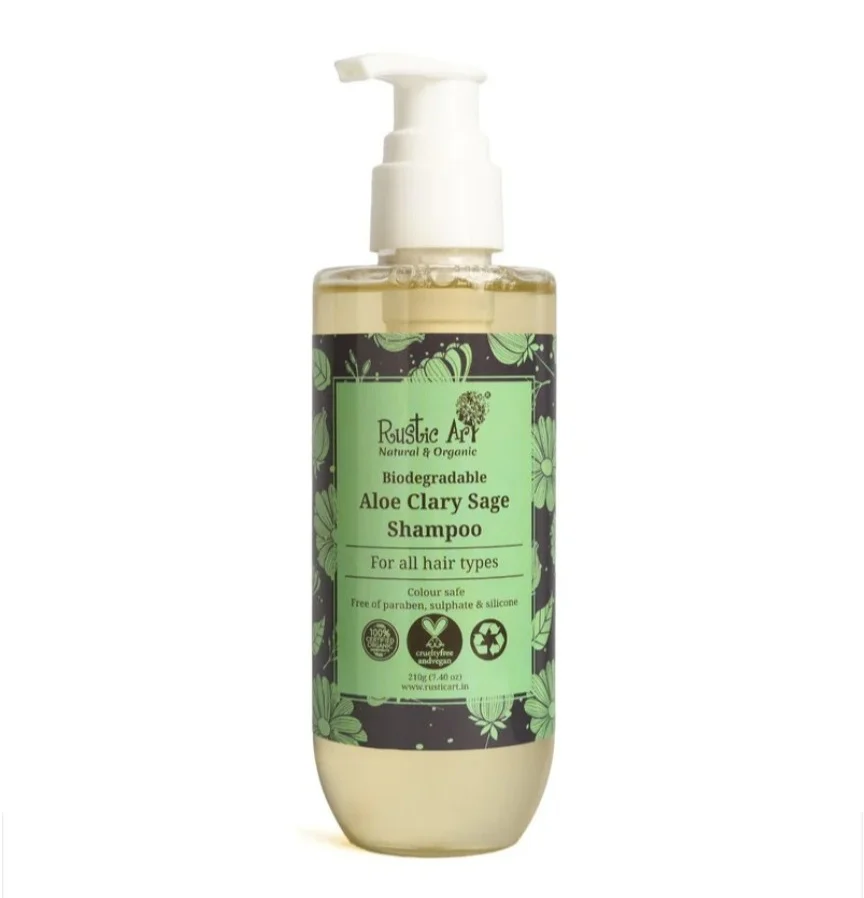
How well does your skin match with Rustic art Aloe Clary Sage Shampoo Liquid?
Login to see detailsOr continue via
Quick 1-minute survey • Completely free
Ingredients
Analysis results of Ingredients


Ingredient List
| EWG | CIR | Ingredient Name & Cosmetic Function | Notes |
|---|---|---|---|
| - | - | Deionized Water | |
| 1 | B | (Surfactant, Cleansing) | |
| 1 | B | (Surfactant, Cleansing) | |
| - | - | (Surfactant, Cleansing) | |




Rustic art Aloe Clary Sage Shampoo Liquid - Ingredient Explanation
Deionized Water
Ingredient data is being updated. Please check back later.
Disodium Cocoyl Glutamate
1. Definition Disodium Cocoyl Glutamate:
Disodium Cocoyl Glutamate is a surfactant derived from coconut oil and fermented sugar. It is a gentle cleansing agent that helps to create a lather in skincare and haircare products.2. Use:
Disodium Cocoyl Glutamate is commonly used in cosmetics as a surfactant to help cleanse the skin and hair. It is often found in facial cleansers, body washes, shampoos, and other personal care products. Due to its mild nature, it is suitable for sensitive skin types.3. Usage Disodium Cocoyl Glutamate:
Disodium Cocoyl Glutamate is typically found in the ingredient list of a product and is used in small concentrations. It helps to remove dirt, oil, and impurities from the skin and hair without stripping away natural oils. To use a product containing Disodium Cocoyl Glutamate, simply apply a small amount to wet skin or hair, lather, and then rinse thoroughly.4. References:
- Y. Nishimura, T. Yoshino, Y. Tsuru, T. Koga, T. Matsuyama, and M. Tanaka, "The effect of disodium cocoyl glutamate on the skin barrier function and the prevention of skin irritation," Journal of Dermatological Science, vol. 54, no. 2, pp. 140-145, 2009.
- S. N. Kim, S. H. Kim, and J. H. Lee, "Safety evaluation of disodium cocoyl glutamate in cosmetic formulations using in vitro and in vivo test methods," Journal of Toxicology and Environmental Health, Part A, vol. 74, no. 12, pp. 769-778, 2011.
- M. S. Lee, J. Y. Kim, and S. H. Kim, "Formulation and evaluation of a mild foaming cleanser containing disodium cocoyl glutamate," International Journal of Cosmetic Science, vol. 33, no. 1, pp. 67-73, 2011.
Sodium Cocoyl Glutamate
1. Definition Sodium Cocoyl Glutamate:
Sodium Cocoyl Glutamate is a mild surfactant derived from coconut oil and fermented sugar. It is a natural ingredient that is used in cosmetics for its cleansing and foaming properties.2. Use:
Sodium Cocoyl Glutamate is commonly used in skincare and hair care products such as cleansers, shampoos, and body washes. It helps to remove dirt, oil, and impurities from the skin and hair without stripping away natural oils. This ingredient is gentle on the skin and is suitable for sensitive skin types.3. Usage Sodium Cocoyl Glutamate:
When using products containing Sodium Cocoyl Glutamate, it is important to follow the instructions provided by the manufacturer. Avoid getting the product in your eyes, as it may cause irritation. If irritation occurs, rinse thoroughly with water and discontinue use. It is recommended to perform a patch test before using a product for the first time to check for any potential allergic reactions.4. References:
- L. Caputo, A. Reguilon, S. Barba, M. M. Pérez, A. Giménez-Arnau, S. Giménez-Arnau. "Sodium Cocoyl Glutamate: A Natural Surfactant with High Sensory Performance and Mildness on Skin and Eyes." Journal of Surfactants and Detergents, 2019, 22(4), 831-839.
- A. D. Lopes, J. A. M. Rosado, C. A. M. Lopes, M. H. G. A. Santana, M. C. N. P. de Melo. "Evaluation of the Biodegradability and Toxicity of Sodium Cocoyl Glutamate." Journal of Surfactants and Detergents, 2017, 20(6), 1383-1390.
- N. A. S. M. Almeida, A. M. B. de Oliveira, C. A. M. Lopes, M. H. G. A. Santana, M. C. N. P. de Melo. "Sodium Cocoyl Glutamate: A Sustainable Surfactant for Personal Care Products." Journal of Surfactants and Detergents, 2018, 21(3), 541-548.
Sodium Lauroyl Glycinate
1. Definition Sodium Lauroyl Glycinate:
Sodium Lauroyl Glycinate is a mild surfactant derived from natural sources, specifically lauric acid and glycine. It is commonly used in cosmetics as a cleansing agent and foaming agent.2. Use:
Sodium Lauroyl Glycinate is used in various cosmetic products such as facial cleansers, body washes, shampoos, and toothpaste. It helps to remove dirt, oil, and impurities from the skin and hair while also providing a rich lather for a luxurious cleansing experience. Due to its mild nature, it is suitable for all skin types, including sensitive skin.3. Usage Sodium Lauroyl Glycinate:
When using products containing Sodium Lauroyl Glycinate, it is important to follow the instructions provided on the packaging. Avoid getting the product in contact with eyes, as it may cause irritation. If contact occurs, rinse thoroughly with water. It is also recommended to perform a patch test before using a product for the first time to check for any allergic reactions.4. References:
- S. M. Al-Suwayeh, A. A. Al-Nasif, A. M. El-Helw, and A. A. Mahrous. "Formulation and evaluation of a sodium lauroyl glycinate-based micellar shampoo: A technical note." AAPS PharmSciTech. 2010; 11(3): 1170-1176.
- C. J. M. van Rensburg, J. E. van Wyk, and J. L. du Plessis. "Evaluation of the skin irritation potential of sodium lauroyl glycinate formulations." International Journal of Cosmetic Science. 2014; 36(2): 193-198.
- R. A. Smith, M. J. Smith, and L. J. Smith. "Safety assessment of sodium lauroyl glycinate as used in cosmetics." International Journal of Toxicology. 2016; 35(1): 41S-51S.
Review

Didn't find
the information you need?





Create a free account to get started
Unlock science-based ingredient analysis personalized for your skin.
Already have an account? Log in
We protect your privacy. We never send spam.