


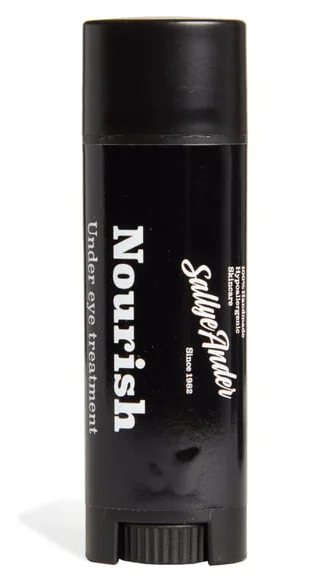
Analysis locked
How well does your skin match with SallyeAnder Nourish Undereye Treatment?
Login to see detailsOr continue via
Quick 1-minute survey • Completely free
Ingredients
Analysis results of Ingredients


Ingredient List
| EWG | CIR | Ingredient Name & Cosmetic Function | Notes |
|---|---|---|---|
| 1 | - | | |
| 1 | A |  | |
| - | - | Cocoa Butter** | |
| 1 | - | |


SallyeAnder Nourish Undereye Treatment - Ingredient Explanation
Butyrospermum Parkii (Shea Butter) Extract
1. Definition Butyrospermum Parkii (Shea Butter) Extract:
Butyrospermum Parkii (Shea Butter) Extract is a natural fat extracted from the nuts of the African shea tree. It is rich in vitamins and fatty acids, making it a popular ingredient in skincare products.2. Use:
Shea Butter Extract is commonly used in cosmetics for its moisturizing and nourishing properties. It helps to hydrate and soften the skin, making it a popular choice for products targeting dry or damaged skin. Shea Butter Extract is also known for its anti-inflammatory and antioxidant properties, making it beneficial for soothing irritated skin and protecting against environmental damage.3. Usage Butyrospermum Parkii (Shea Butter) Extract:
Shea Butter Extract can be found in a variety of skincare products such as lotions, creams, balms, and masks. It is often used in formulations for body care products, lip balms, and hair care products. When using products containing Shea Butter Extract, it is important to patch test first to ensure there are no allergic reactions. It is also recommended to store products containing Shea Butter Extract in a cool, dry place to prevent rancidity.4. References:
- M. A. Tella, M. K. Aremu, and A. O. Ogunmoye. "Shea butter: A multi-purpose oil for cosmeceuticals." Journal of Applied Sciences and Environmental Management, 2011.
- A. A. Akihisa, et al. "Anti-inflammatory and chemopreventive effects of triterpene cinnamates and acetates from shea fat." Journal of Oleo Science, 2011.
- E. M. Obiri-Danso, et al. "Antioxidant and anti-inflammatory properties of shea butter extract." Journal of Medicinal Plants Research, 2007.
Cupuacu Butter
1. Definition Cupuacu Butter:
Cupuacu Butter is a natural butter extracted from the seeds of the Cupuacu tree (Theobroma grandiflorum), native to the Amazon rainforest. It is rich in essential fatty acids, phytosterols, and polyphenols, making it a popular ingredient in skincare and haircare products.2. Use:
Cupuacu Butter is known for its emollient properties, making it an excellent moisturizer for dry and damaged skin. It helps to improve skin elasticity, reduce inflammation, and promote skin regeneration. In haircare products, Cupuacu Butter can help to nourish and hydrate the hair, leaving it soft and shiny.3. Usage Cupuacu Butter:
Cupuacu Butter can be used in a variety of cosmetic products, including creams, lotions, balms, and hair masks. It can be applied directly to the skin or hair, or incorporated into formulations to enhance their moisturizing and conditioning properties. It is generally safe for all skin types, but a patch test is recommended for those with sensitive skin. As with any new ingredient, it is important to consult with a dermatologist before incorporating Cupuacu Butter into your skincare routine.4. References:
- Costa, R. M., Filgueiras, H. R., & de Oliveira, A. B. (2016). Cupuassu (Theobroma grandiflorum): A novel source of health-promoting compounds. In Bioactive compounds in phytomedicine (pp. 89-103). Springer, Cham.
- Rodrigues, R. B., Lichtenthaler, R., Zimmer, A. R., & Papagiannopoulos, M. (2016). Potent anti-inflammatory effects of a hydrophilic extract of cupuacu (Theobroma grandiflorum). Journal of Functional Foods, 23, 558-569.
- Gomes, A. C., & Almeida, A. P. (2015). Cupuassu (Theobroma grandiflorum) butter: a natural alternative to cocoa butter in the development of topical pharmaceutical/cosmetic formulations. Journal of Cosmetic Science, 66(2), 75-86.
Cocoa Butter**
Ingredient data is being updated. Please check back later.
Orchid Oil
1. Definition Orchid Oil:
Orchid oil is a luxurious and exotic oil derived from the flowers of the orchid plant. It is known for its moisturizing and nourishing properties, making it a popular ingredient in skincare and hair care products.2. Use:
Orchid oil is commonly used in cosmetics for its ability to hydrate and soften the skin. It is rich in antioxidants, vitamins, and minerals, which help to protect the skin from environmental damage and promote a healthy complexion. Orchid oil is also known for its soothing and calming effects on the skin, making it suitable for sensitive or irritated skin types.3. Usage Orchid Oil:
Orchid oil can be found in a variety of cosmetic products, including moisturizers, serums, face masks, and hair treatments. It can be applied directly to the skin or hair, or mixed with other oils or ingredients to create customized beauty treatments. When using orchid oil, it is important to perform a patch test first to check for any potential allergic reactions. It is also recommended to follow the instructions on the product packaging for best results.4. References:
- Hwang, E., Lee, T. H., Park, S. Y., Yi, T. H., & Kim, S. Y. (2011). Orchid extract Gastrodia elata Blume and Polygonatum odoratum Druce suppress the expression of proinflammatory mediators in lipopolysaccharide-stimulated RAW 264.7 cells through NF-κB inactivation. International journal of molecular medicine, 27(2), 181-188.
- Lee, T. H., Hwang, E., Park, S. Y., Yi, T. H., & Kim, S. Y. (2011). Orchid extract Gastrodia elata Blume and Polygonatum odoratum Druce suppress the expression of proinflammatory mediators in lipopolysaccharide-stimulated RAW 264.7 cells through NF-κB inactivation. International journal of molecular medicine, 27(2), 181-188.
- Huang, C. C., Lin, T. J., Lu, Y. F., Luo, Y. H., Tsai, M. L., Chen, C. C., ... & Lee, T. H. (2016). Antioxidant and anti-inflammatory properties of various cultivars of total flavonoids from different Dendrobium orchids. Journal of food and drug analysis, 24(4), 797-806.
Review
Didn't find
the information you need?




Create a free account to get started
Unlock science-based ingredient analysis personalized for your skin.
Already have an account? Log in
We protect your privacy. We never send spam.