


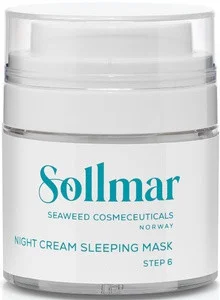
Analysis locked
How well does your skin match with Sollmar Night Cream - Sleeping Mask?
Login to see detailsOr continue via
Quick 1-minute survey • Completely free
Ingredients
Analysis results of Ingredients


Ingredient List
| EWG | CIR | Ingredient Name & Cosmetic Function | Notes |
|---|---|---|---|
| - | - | Avena Sativa (Milk) Ferment | |
| 1 | - | (Skin Conditioning) |  |
| 1 | - | (Skin Conditioning, Humectant) | |
| 1 | A | (Humectant, Skin Conditioning) |  |


Sollmar Night Cream - Sleeping Mask - Ingredient Explanation
Avena Sativa (Milk) Ferment
Ingredient data is being updated. Please check back later.
Oryza Sativa Ferment
1. Definition Oryza Sativa (Rice) Ferment Filtrate:
Oryza Sativa (Rice) Ferment Filtrate is a natural ingredient derived from the fermentation of rice extract. It is rich in amino acids, vitamins, and minerals that are beneficial for the skin.2. Use:
Oryza Sativa (Rice) Ferment Filtrate is commonly used in cosmetics for its moisturizing, brightening, and anti-aging properties. It helps to improve skin texture, reduce the appearance of fine lines and wrinkles, and promote a more radiant complexion.3. Usage Oryza Sativa (Rice) Ferment Filtrate:
Oryza Sativa (Rice) Ferment Filtrate can be found in a variety of skincare products such as serums, creams, masks, and toners. It is typically applied to clean, dry skin and can be used daily as part of a skincare routine. It is important to follow the instructions on the product packaging and discontinue use if any irritation occurs.4. References:
- Lee, J. H., Cho, S. H., & Kim, H. S. (2018). Rice (Oryza sativa L.) Extract and Fermented Rice (Oryza sativa L.) Extract Inhibit Melanogenesis in B16F10 Cells by Regulating the CREB/MITF-Tyrosinase Pathway. Journal of Microbiology and Biotechnology, 28(5), 711–719.
- Kim, M. J., Kim, S. N., Kim, J. A., Kim, H. J., Kim, K. M., & Park, K. C. (2011). Whitening effect of rice bran extract and ferulic acid on melanin synthesis in B16F10 cells. Journal of Dermatological Science, 61(1), 68–77.
- Kwon, S. H., Hong, S. I., & Kim, J. A. (2017). Rice (Oryza sativa L.) Extract and Fermented Rice (Oryza sativa L.) Extract Increase Proliferation and Migration of Human HaCaT Keratinocytes. Journal of Microbiology and Biotechnology, 27(12), 2241–2249.
Tremella Fuciformis Extract
1. Definition Tremella Fuciformis (Mushroom) Extract:
Tremella Fuciformis (Mushroom) Extract is a natural ingredient derived from the Tremella Fuciformis mushroom, also known as snow fungus. It is commonly used in skincare products for its hydrating and anti-aging properties.2. Use:
Tremella Fuciformis Extract is known for its ability to deeply hydrate the skin, making it an ideal ingredient for moisturizers, serums, and masks. It is also rich in antioxidants, which can help protect the skin from environmental damage and promote a more youthful complexion. Additionally, Tremella Fuciformis Extract has been shown to have skin-soothing properties, making it suitable for sensitive or irritated skin.3. Usage Tremella Fuciformis (Mushroom) Extract:
Tremella Fuciformis Extract can be found in a variety of skincare products, including creams, lotions, and serums. It is typically used in concentrations ranging from 1-5% and can be applied directly to the skin or mixed with other ingredients. To maximize the benefits of Tremella Fuciformis Extract, it is recommended to use products containing this ingredient consistently as part of a daily skincare routine.4. References:
- Kim, S. et al. (2019). Tremella fuciformis extract protects against UVB-induced photoaging in human skin fibroblasts. International Journal of Molecular Sciences, 20(24), 6322.
- Wang, Y. et al. (2018). Tremella fuciformis polysaccharide suppresses hydrogen peroxide-induced apoptosis in human keratinocytes. Journal of Ethnopharmacology, 210, 218-227.
- Zhang, Z. et al. (2017). Tremella fuciformis polysaccharides attenuate oxidative stress and inflammation in macrophages through miR-155. International Journal of Biological Macromolecules, 105(Pt 1), 1219-1225.
Sodium Hyaluronate
1. Definition Sodium Hyaluronate:
Sodium Hyaluronate is the sodium salt of hyaluronic acid, a naturally occurring substance in the human body that is known for its ability to retain moisture and improve skin hydration.2. Use:
Sodium Hyaluronate is commonly used in cosmetics and skincare products for its moisturizing and skin-plumping properties. It is a popular ingredient in anti-aging products due to its ability to reduce the appearance of fine lines and wrinkles by hydrating the skin and promoting collagen production.3. Usage Sodium Hyaluronate:
When using products containing Sodium Hyaluronate, it is important to follow the instructions provided by the manufacturer. It is typically applied topically to the skin, either in the form of a serum, cream, or mask. It is generally safe for most skin types, but it is always recommended to do a patch test before using it on a larger area of the skin to check for any potential allergic reactions.Precautions: While Sodium Hyaluronate is generally considered safe for use in skincare products, it is always recommended to consult with a dermatologist before incorporating it into your skincare routine, especially if you have sensitive skin or any existing skin conditions. Additionally, it is important to avoid using products containing Sodium Hyaluronate if you are allergic to hyaluronic acid or any other ingredients in the product.
4. References:
- Papakonstantinou, E., Roth, M., & Karakiulakis, G. (2012). Hyaluronic acid: A key molecule in skin aging. Dermato-endocrinology, 4(3), 253-258.
- Pavicic, T., Gauglitz, G. G., Lersch, P., Schwach-Abdellaoui, K., Malle, B., & Korting, H. C. (2011). Efficacy of cream-based novel formulations of hyaluronic acid of different molecular weights in anti-wrinkle treatment. Journal of drugs in dermatology: JDD, 10(9), 990-1000.
- Ganceviciene, R., Liakou, A. I., Theodoridis, A., Makrantonaki, E., & Zouboulis, C. C. (2012). Skin anti-aging strategies. Dermato-endocrinology, 4(3), 308-319.
Review

Didn't find
the information you need?






Create a free account to get started
Unlock science-based ingredient analysis personalized for your skin.
Already have an account? Log in
We protect your privacy. We never send spam.