


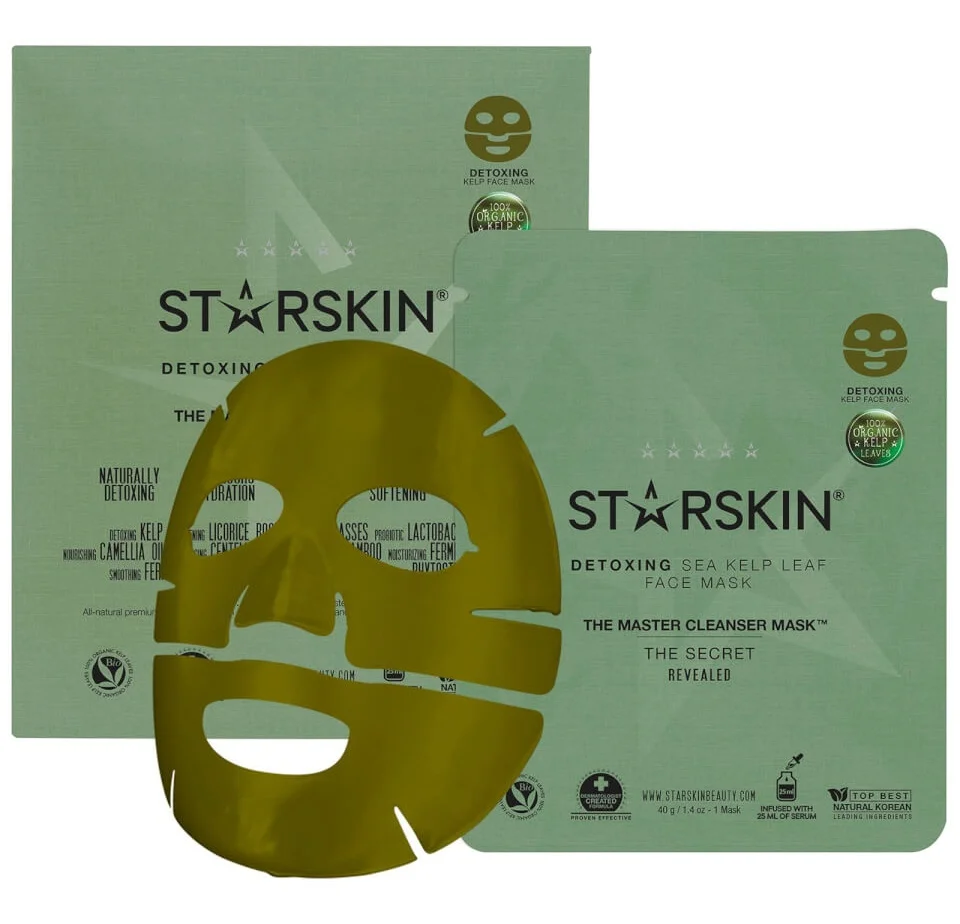
Starskin The Master Cleanser Mask™ Detoxing Sea Kelp Leaf Face Mask
Analysis locked
How well does your skin match with Starskin The Master Cleanser Mask™ Detoxing Sea Kelp Leaf Face Mask?
Login to see detailsOr continue via
Quick 1-minute survey • Completely free
Ingredients
Analysis results of Ingredients


Ingredient List
| EWG | CIR | Ingredient Name & Cosmetic Function | Notes |
|---|---|---|---|
| - | - | | |
| 1 | - | (Solvent) | |
| - | B | (Masking) |  |
| 1 | - | (Skin Conditioning) | |



Starskin The Master Cleanser Mask™ Detoxing Sea Kelp Leaf Face Mask - Ingredient Explanation
Laminaria Japonica
1. Definition Laminaria Japonica:
Laminaria Japonica, also known as Japanese kelp or kombu, is a type of brown seaweed commonly found in the waters of Japan and Korea. It is rich in essential vitamins, minerals, and antioxidants, making it a popular ingredient in skincare and cosmetic products.2. Use:
Laminaria Japonica is known for its hydrating, anti-aging, and skin-brightening properties. It is often used in cosmetics to help improve skin elasticity, reduce inflammation, and protect against environmental damage. The high concentration of vitamins and minerals in Laminaria Japonica can help nourish and revitalize the skin, leaving it looking healthier and more radiant.3. Usage Laminaria Japonica:
Laminaria Japonica is commonly found in various skincare products such as serums, creams, masks, and cleansers. It is often used in formulations targeting dry or aging skin, as well as products designed to brighten and rejuvenate the complexion. When using products containing Laminaria Japonica, it is important to follow the instructions provided by the manufacturer and perform a patch test before applying it to the entire face to avoid any potential allergic reactions.4. References:
- Park, J. I., Lee, Y. T., Park, S. C., & Lee, J. H. (2016). Anti-inflammatory effects of laminaria japonica extract in RAW 264.7 cells. Pharmaceutical Biology, 54(12), 2851-2857.
- Kim, S. K., & Wijesekara, I. (2011). Development and biological activities of marine-derived bioactive peptides: a review. Journal of Functional Foods, 3(4), 278-294.
- Cho, S., Lee, S., Lee, M. J., Lee, D. H., Won, C. H., Kim, S. M., ... & Chung, J. H. (2009). Dietary Aloe Vera Supplementation Improves Facial Wrinkles and Elasticity and It Increases the Type I Procollagen Gene Expression in Human Skin in vivo. Annals of Dermatology, 21(1), 6-11.
Water
1. Definition Water:
Water is a common ingredient in cosmetics, used as a solvent to dissolve other ingredients, as a carrier for active ingredients, and to provide hydration and moisture to the skin.2. Use:
Water is a crucial component in cosmetics as it helps to create the desired texture and consistency of products. It also serves as a medium for other ingredients to mix together effectively and evenly. Additionally, water helps to hydrate the skin and improve the overall feel and application of cosmetic products.3. Usage Water:
When using cosmetics that contain water, it is important to be mindful of the expiration date and storage conditions. Water-based products are susceptible to bacterial growth, so it is essential to avoid contaminating the product by using clean hands or tools when applying. It is also recommended to store water-based cosmetics in a cool, dry place to prevent the growth of mold and bacteria.4. References:
- Draelos, Z. D. (2010). Cosmetic dermatology: products and procedures. John Wiley & Sons.
- Winter, R. (2009). A consumer's dictionary of cosmetic ingredients: complete information about the harmful and desirable ingredients found in cosmetics and cosmeceuticals. Crown.
- Begoun, P. (2003). Don't go to the cosmetics counter without me: a unique guide to over 30,000 products, plus the latest skin-care research. Beginning Press.
Aloe Barbadensis Leaf
1. Definition Aloe Barbadensis Leaf:
Aloe Barbadensis Leaf, commonly known as Aloe Vera, is a succulent plant species that is widely used in various cosmetic products for its soothing and healing properties. The gel extracted from the leaves of the Aloe Vera plant is rich in vitamins, minerals, enzymes, and amino acids, making it a popular ingredient in skincare and haircare products.2. Use:
Aloe Barbadensis Leaf is known for its moisturizing, anti-inflammatory, and wound-healing properties, making it a versatile ingredient in cosmetics. It is often used in creams, lotions, gels, masks, and serums to hydrate the skin, reduce redness and irritation, and promote healing of minor skin injuries. Aloe Vera is also used in shampoos and conditioners to nourish and strengthen hair, leaving it soft and shiny.3. Usage Aloe Barbadensis Leaf:
When using products containing Aloe Barbadensis Leaf, it is important to patch test first to ensure that you are not allergic to the ingredient. Apply a small amount of the product on a small area of skin and wait for 24 hours to check for any adverse reactions. If no irritation occurs, you can safely use the product as directed. Avoid contact with the eyes and do not ingest Aloe Vera products.4. References:
- Surjushe, A., Vasani, R., & Saple, D. G. (2008). Aloe Vera: A short review. Indian Journal of Dermatology, 53(4), 163–166.
- Reynolds, T., & Dweck, A. C. (1999). Aloe Vera leaf gel: a review update. Journal of Ethnopharmacology, 68(1-3), 3-37.
- Radha, M. H., & Laxmipriya, N. P. (2015). Evaluation of biological properties and clinical effectiveness of Aloe Vera: A systematic review. Journal of Traditional and Complementary Medicine, 5(1), 21-26.
Molasses
1. Definition Molasses:
Molasses is a thick, dark syrup that is a byproduct of the sugar-making process. It is typically made from sugar cane or sugar beets and is rich in vitamins and minerals, including iron, calcium, and potassium.2. Use:
Molasses is commonly used in cosmetics for its moisturizing and exfoliating properties. It helps to hydrate the skin and improve its overall texture, making it a popular ingredient in lotions, creams, and masks. Molasses also contains antioxidants that can help protect the skin from damage caused by free radicals.3. Usage Molasses:
When using molasses in cosmetics, it is important to patch test the product first to ensure that you do not have any allergic reactions. Molasses can be sticky and difficult to wash off, so it is best used in products that can be easily rinsed away, such as masks or scrubs. It is also important to note that molasses has a strong, sweet smell that may not be appealing to everyone.4. References:
- "The benefits of molasses for skin." Healthline. https://www.healthline.com/health/molasses-for-skin
- "Molasses: A sweet ingredient for skin care." The Dermatology Review. https://thedermreview.com/molasses-skin-care/
- "Molasses in skincare: Benefits and uses." Byrdie. https://www.byrdie.com/molasses-in-skincare-4779374
Review

Didn't find
the information you need?







Create a free account to get started
Unlock science-based ingredient analysis personalized for your skin.
Already have an account? Log in
We protect your privacy. We never send spam.