


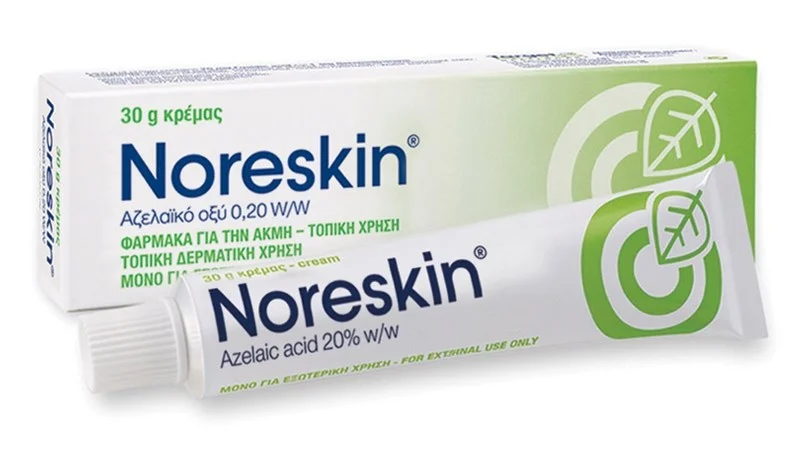
Analysis locked
How well does your skin match with Target pharma Noreskin?
Login to see detailsOr continue via
Quick 1-minute survey • Completely free
Ingredients
Analysis results of Ingredients


Ingredient List
| EWG | CIR | Ingredient Name & Cosmetic Function | Notes |
|---|---|---|---|
| 1 | A | (Masking, Fragrance, pH adjusting agent, pH adjusting agent) | |
| 3 | B | (Emulsifying) | |
| 1 3 | A | (Masking, Fragrance, Preservative, pH adjusting agent, Bulking Agent) |  |
| 1 2 | A | (Solvent, Perfuming, Fragrance, Humectant, Viscosity Decreasing Agent, Hair Conditioning, Skin Protecting, Denaturant ) |   |
Target pharma Noreskin - Ingredient Explanation
Azelaic Acid
1. Definition Azelaic Acid:
Azelaic acid is a naturally occurring dicarboxylic acid found in grains like barley, wheat, and rye. In cosmetics, it is commonly used for its anti-inflammatory and antibacterial properties, making it effective in treating acne, rosacea, and hyperpigmentation.
2. Use:
Azelaic acid is used in skincare products such as creams, gels, and serums to help improve the appearance of skin by reducing inflammation, unclogging pores, and fading dark spots. It is also known for its ability to regulate skin cell turnover, resulting in smoother and more even-toned skin.
3. Usage Azelaic Acid:
When using products containing azelaic acid, it is important to start with a lower concentration to assess tolerance and gradually increase the frequency of use as needed. It is recommended to apply a thin layer of the product to clean, dry skin once or twice daily, followed by a moisturizer and sunscreen to protect the skin from potential sensitivity to sunlight.
4. References:
- Del Rosso, J. Q. (2013). Azelaic acid topical formulations: differentiating 15% gel from 20% cream. Journal of Drugs in Dermatology, 12(9), 1012-1016.
- Thiboutot, D., Dréno, B., Abanmi, A., Alexis, A., Araviiskaia, E., Barona Cabal, M. I., ... & Zouboulis, C. C. (2018). Practical management of acne for clinicians: an international consensus from the Global Alliance to Improve Outcomes in Acne. Journal of the American Academy of Dermatology, 78(2), S1-S23.
- Kircik, L. H. (2014). Azelaic acid 15% gel: in the treatment of papulopustular rosacea. Journal of Clinical and Aesthetic Dermatology, 7(12), 27-29.
PEG-8 Caprylic-Capric Glycerides (Labrasol)
1. Definition PEG-8 Caprylic/Capric Glycerides:
PEG-8 Caprylic/Capric Glycerides is a clear, colorless liquid derived from caprylic and capric acids, which are naturally occurring fatty acids found in coconut oil. It is a mild surfactant and emulsifier commonly used in cosmetics and personal care products.2. Use:
PEG-8 Caprylic/Capric Glycerides is primarily used as a cleansing agent in skincare products such as facial cleansers, body washes, and shampoos. It helps to remove dirt, oil, and impurities from the skin and hair while also providing a moisturizing and conditioning effect. Additionally, it can be used as an emulsifier to stabilize the mixture of water and oil-based ingredients in formulations.3. Usage PEG-8 Caprylic/Capric Glycerides:
When using products containing PEG-8 Caprylic/Capric Glycerides, it is important to follow the manufacturer's instructions and guidelines. It is generally considered safe for topical use, but individuals with sensitive skin may want to perform a patch test before using a product with this ingredient to ensure compatibility. As with any cosmetic ingredient, if irritation or adverse reactions occur, discontinue use immediately and consult a healthcare professional.4. References:
- "PEG-8 Caprylic/Capric Glycerides." Cosmeticsinfo.org, www.cosmeticsinfo.org/ingredient/peg-8-capryliccapric-glycerides
- "Caprylic/Capric Glycerides." TruthInAging.com, www.truthinaging.com/ingredients/caprylic-capric-glycerides
- "PEG-8 Caprylic/Capric Glycerides." MakingCosmetics.com, www.makingcosmetics.com/PEG-8-Caprylic-Capric-Glycerides
Benzoic Acid
1. Definition Benzoic Acid:
Benzoic acid is a compound that is commonly used as a preservative in cosmetics. It is a white, crystalline powder with a faint, pleasant odor.2. Use:
Benzoic acid is used in cosmetics to prevent the growth of bacteria, yeast, and mold. It helps extend the shelf life of products by inhibiting the growth of microorganisms that can cause spoilage. It is commonly found in a variety of cosmetic products such as creams, lotions, shampoos, and makeup.3. Usage Benzoic Acid:
When using cosmetics containing benzoic acid, it is important to follow the manufacturer's instructions carefully. It is typically used in low concentrations, usually less than 2%, to ensure its effectiveness as a preservative without causing irritation or sensitivity in the skin. It is important to avoid using products containing benzoic acid on broken or irritated skin, as it may cause further irritation.Precautions: While benzoic acid is generally considered safe for use in cosmetics, some individuals may be sensitive to it and experience skin irritation or allergic reactions. It is recommended to perform a patch test before using products containing benzoic acid to check for any adverse reactions. If irritation occurs, discontinue use immediately and consult a healthcare professional.
4. References:
- "Cosmetic Ingredient Review Expert Panel. Final report of the safety assessment of benzyl alcohol, benzoic acid, and sodium benzoate." Int J Toxicol. 2001;20 Suppl 3:23-50.
- "Benzoic Acid." CosmeticsInfo.org, https://cosmeticsinfo.org/ingredient/benzoic-acid.
- "Benzoic Acid." PubChem, National Library of Medicine, https://pubchem.ncbi.nlm.nih.gov/compound/Benzoic-acid.
Glycerine (85%)
1. Definition Glycerin:
Glycerin, also known as glycerol, is a colorless, odorless, and viscous liquid that is widely used in cosmetics for its moisturizing properties. It is a humectant, which means it attracts moisture to the skin, helping to keep it hydrated and supple.
2. Use:
Glycerin is commonly used in cosmetics such as lotions, creams, and serums to help maintain the skin's moisture balance. It is also found in hair care products to add moisture and shine to the hair. Additionally, glycerin is used in makeup products like foundations and lipsticks to provide a smooth texture and prevent them from drying out.
3. Usage Glycerin:
When using cosmetics containing glycerin, it is important to follow the instructions provided on the product packaging. Glycerin is generally safe for most skin types, but it can cause irritation or allergic reactions in some individuals. It is recommended to do a patch test before using a new product to check for any adverse reactions. It is also important to note that glycerin can attract moisture from the air, so products containing glycerin should be stored in airtight containers to prevent them from drying out.
4. References:
- Draelos, Z. D. (2010). Cosmetic Formulation of Skin Care Products. John Wiley & Sons.
- Loden, M., & Maibach, H. I. (2006). Dry Skin and Moisturizers: Chemistry and Function. CRC Press.
- Winter, R. (2009). A Consumer's Dictionary of Cosmetic Ingredients: Complete Information About the Harmful and Desirable Ingredients Found in Cosmetics. Harmony.
Review









Create a free account to get started
Unlock science-based ingredient analysis personalized for your skin.
Already have an account? Log in
We protect your privacy. We never send spam.