


Analysis locked
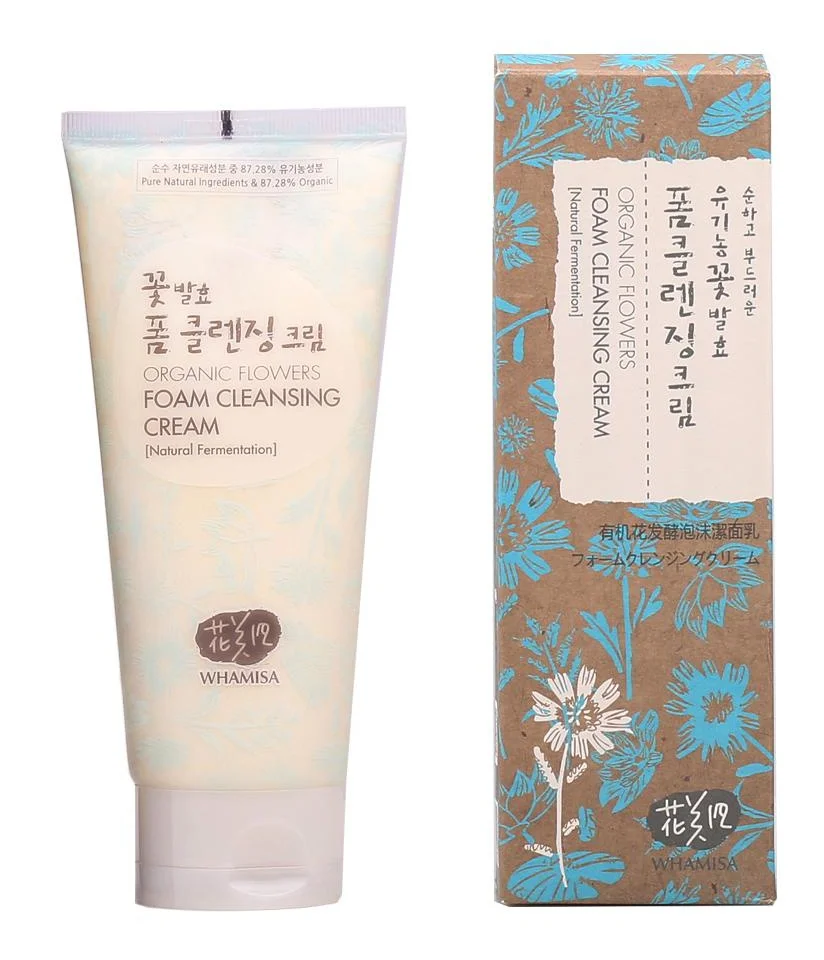
How well does your skin match with Whamisa Organic Flowers Foam Cleansing Cream?
Login to see detailsOr continue via
Quick 1-minute survey • Completely free
Ingredients
Analysis results of Ingredients


Ingredient List
| EWG | CIR | Ingredient Name & Cosmetic Function | Notes |
|---|---|---|---|
| 1 2 | - | (Skin Conditioning) | |
| 1 2 | A | (Skin Conditioning, Emollient, Hair Conditioning) | |
| 1 | A | (Opacifying, Emollient, Viscosity Controlling, Viscosity Increasing Agent, Emulsion Stabilising, Emulsifying, Foam Boosting, Viscosity Increasingagent - Aqueous) | |
| 1 | A | (Masking, Fragrance, Opacifying, Emollient, Viscosity Controlling, Viscosity Increasing Agent, Emulsion Stabilising, Emulsifying, Foam Boosting, Surfactant, Refatting) | |


Whamisa Organic Flowers Foam Cleansing Cream - Ingredient Explanation
Aloe Maculata Leaf Extract
1. Definition Aloe Maculata Leaf Extract:
Aloe Maculata Leaf Extract is a natural ingredient derived from the leaves of the Aloe Maculata plant, also known as the Soap Aloe. This extract is known for its soothing, hydrating, and anti-inflammatory properties, making it a popular ingredient in skincare and cosmetic products.2. Use:
Aloe Maculata Leaf Extract is commonly used in cosmetics for its ability to calm and moisturize the skin. It is often found in products such as lotions, creams, serums, and masks, where it can help to reduce redness, irritation, and dryness. Additionally, this extract is known for its antioxidant properties, which can help to protect the skin from environmental damage and signs of aging.3. Usage Aloe Maculata Leaf Extract:
When using products containing Aloe Maculata Leaf Extract, it is important to follow the instructions provided by the manufacturer. This extract is generally considered safe for most skin types, including sensitive skin, but it is always recommended to perform a patch test before using a new product to ensure compatibility. As with any skincare ingredient, it is best to discontinue use if any irritation or adverse reactions occur.4. References:
- Lee, J. H., Kim, Y. G., Ra, H. J., & Kim, K. R. (2016). Anti-inflammatory effect of Aloe maculata in an in vitro model of acne infection. PloS one, 11(8), e0161217.
- Yoon, J. Y., & Kim, J. Y. (2017). Anti-inflammatory effects of Aloe maculata on phthalic anhydride-induced atopic dermatitis animal models. Journal of Investigative Dermatology, 137(5), S235.
- Park, S. Y., Kim, M. J., Lee, S. J., Lee, J. H., & Kim, K. R. (2018). Antioxidant and anti-inflammatory effects of Aloe maculata extract in UVB-irradiated human keratinocytes. Journal of Dermatological Science, 92(3), 273-275.
Oryza Sativa (Rice) Extract
1. Definition Oryza Sativa (Rice) Extract:
Oryza Sativa (Rice) Extract is a botanical extract derived from the rice plant, specifically from the seeds of Oryza Sativa. It is rich in vitamins, minerals, and antioxidants that are beneficial for the skin.2. Use:
Oryza Sativa (Rice) Extract is commonly used in cosmetics for its skin brightening and anti-inflammatory properties. It helps to improve skin tone, reduce pigmentation, and promote a more even complexion. Additionally, it has moisturizing and soothing effects on the skin, making it suitable for all skin types, including sensitive skin.3. Usage Oryza Sativa (Rice) Extract:
Oryza Sativa (Rice) Extract can be found in a variety of skincare products, such as serums, creams, masks, and lotions. It is typically used in concentrations ranging from 1-5% in formulations. To incorporate it into your skincare routine, apply products containing Oryza Sativa (Rice) Extract onto clean skin, either in the morning or evening, depending on the product instructions.4. References:
- Lee, H. S., Kim, Y. H., & Kim, S. Y. (2011). Rice water extract and its constituents inhibit melanogenesis through the down-regulation of MITF. Bioscience, biotechnology, and biochemistry, 75(3), 489-493.
- Jung, S. H., Kim, S. K., & Kim, Y. K. (2015). Anti-wrinkle and skin-moisturizing effects of rice extract. International journal of cosmetic science, 37(6), 579-585.
- Yoon, H. S., Hyun, C. G., & Kim, S. J. (2009). Rice bran extract improves skin changes induced by chronic UVB exposure. Journal of cosmetic science, 60(3), 321-328.
Cetearyl Alcohol
1. Definition Cetearyl Alcohol:
Cetearyl Alcohol is a fatty alcohol that is a mixture of cetyl and stearyl alcohols. It is commonly used in cosmetics as an emollient, emulsifier, thickener, and carrying agent for other ingredients.2. Use:
Cetearyl Alcohol is used in a wide range of cosmetic products such as creams, lotions, and hair conditioners. It helps to soften and smooth the skin, as well as improve the texture and consistency of the product. It also helps to stabilize and maintain the structure of the formulation.3. Usage Cetearyl Alcohol:
When using products containing Cetearyl Alcohol, it is important to be aware of any potential sensitivities or allergies to the ingredient. Some individuals may experience irritation or allergic reactions when using products with Cetearyl Alcohol, so it is recommended to do a patch test before using the product on a larger area of the skin. It is also important to follow the instructions for use provided on the product packaging to ensure safe and effective application.4. References:
- "Cetearyl Alcohol" by Paula Begoun, Cosmetics Cop, https://www.paulaschoice.com/ingredient-dictionary/emollients/cetearyl-alcohol.html
- "Cetearyl Alcohol in Cosmetics: Safe or Harmful?" by Dr. Anvita Arora, Dermatologist, https://www.dranvitaarora.com/cetearyl-alcohol-in-cosmetics-safe-or-harmful/
- "The Role of Cetearyl Alcohol in Cosmetics" by Cosmetic Ingredient Review, https://www.cir-safety.org/sites/default/files/cetearylcir.pdf
Stearyl Alcohol
1. Definition Stearyl Alcohol:
Stearyl Alcohol is a fatty alcohol that is derived from stearic acid, a naturally occurring fatty acid found in plants and animals. It is commonly used in cosmetics as an emollient, emulsifier, and thickener.2. Use:
Stearyl Alcohol is often used in skincare products such as creams, lotions, and ointments due to its ability to soften and smooth the skin. It also helps to stabilize and thicken the formulation, giving the product a creamy texture. Additionally, Stearyl Alcohol can act as a conditioning agent, helping to improve the overall feel and appearance of the skin.3. Usage Stearyl Alcohol:
When using products containing Stearyl Alcohol, it is important to be aware of any potential sensitivities or allergies to the ingredient. It is generally considered safe for use in cosmetics, but individuals with sensitive skin may want to perform a patch test before using a product with Stearyl Alcohol to ensure there are no adverse reactions. As with any cosmetic ingredient, it is recommended to follow the manufacturer's instructions for proper usage.4. References:
- "Stearyl Alcohol", Cosmetics Info, https://cosmeticsinfo.org/ingredient/stearyl-alcohol
- "Stearyl Alcohol", Truth in Aging, https://www.truthinaging.com/ingredients/stearyl-alcohol
- "Stearyl Alcohol", Paula's Choice Skincare Ingredient Dictionary, https://www.paulaschoice.com/ingredient-dictionary/emollients/stearyl-alcohol
Review

Didn't find
the information you need?







Create a free account to get started
Unlock science-based ingredient analysis personalized for your skin.
Already have an account? Log in
We protect your privacy. We never send spam.