


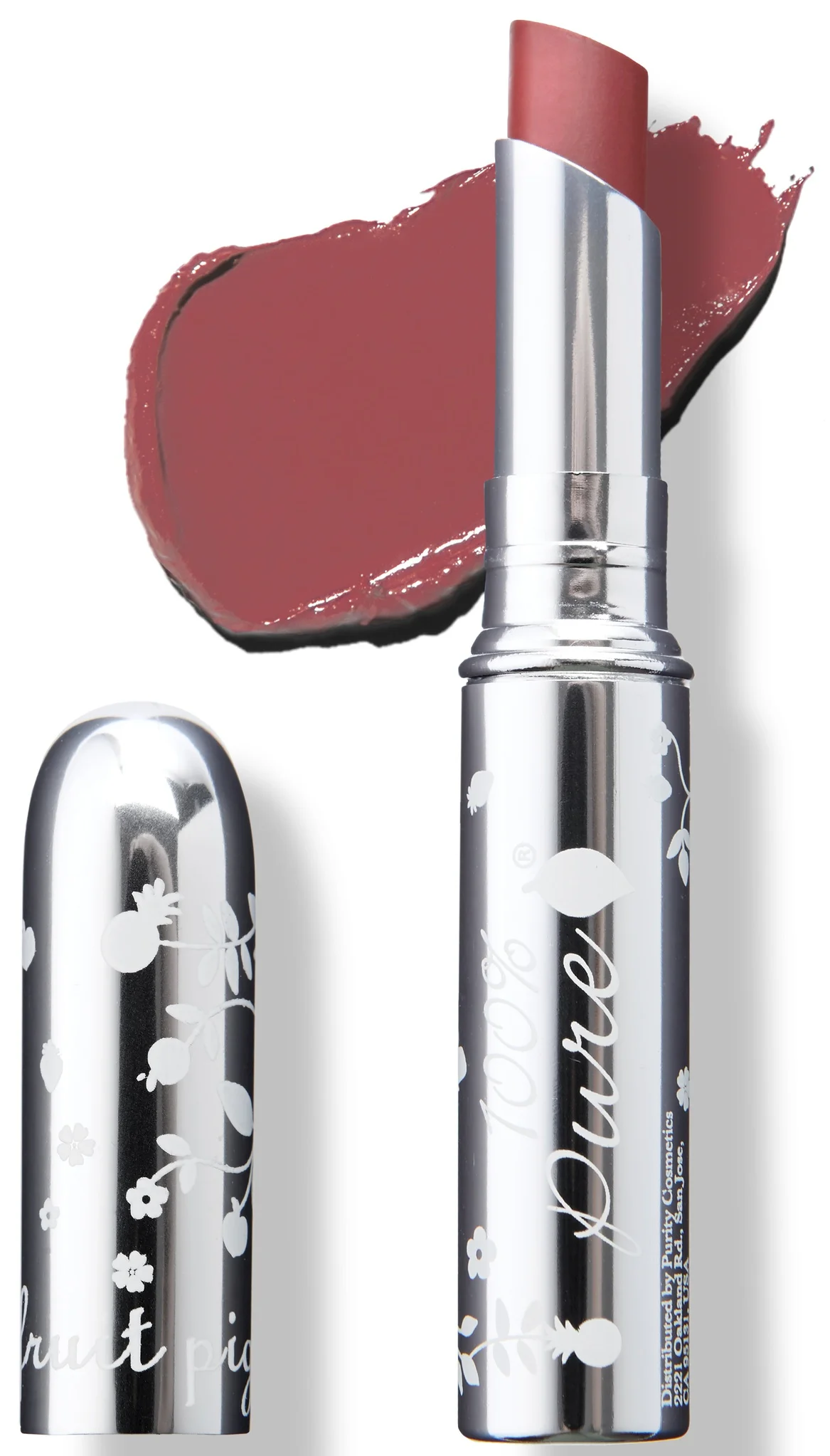
Analysis locked
How well does your skin match with 100% Pure Fruit Pigmented Lip Glaze?
Login to see detailsOr continue via
Quick 1-minute survey • Completely free
Ingredients
Analysis results of Ingredients


Ingredient List
| EWG | CIR | Ingredient Name & Cosmetic Function | Notes |
|---|---|---|---|
| 1 | A | (Skin Conditioning) | |
| 1 | A |  | |
| 1 | - | | |
| - | - | Prunus Domestica (Plum) Fruit | |


100% Pure Fruit Pigmented Lip Glaze - Ingredient Explanation
Persea Gratissima (Avocado) Butter
1. Definition Persea Gratissima (Avocado) Butter:
Persea Gratissima (Avocado) Butter is a natural butter derived from the fruit of the avocado tree. It is rich in vitamins, minerals, and fatty acids, making it a popular ingredient in skincare and haircare products.2. Use:
Avocado butter is known for its moisturizing and nourishing properties. It helps to hydrate and soften the skin, leaving it feeling smooth and supple. It is also believed to have anti-inflammatory and antioxidant benefits, making it a great choice for soothing irritated or dry skin. In haircare products, avocado butter can help to condition and strengthen the hair, leaving it shiny and healthy-looking.3. Usage Persea Gratissima (Avocado) Butter:
Avocado butter can be found in a variety of cosmetic products, including moisturizers, lotions, creams, hair masks, and lip balms. It can be used directly on the skin or hair, or incorporated into DIY beauty recipes. When using avocado butter, it is important to patch test first to check for any potential allergic reactions. It is generally safe for most skin types, but those with avocado allergies should avoid using products containing avocado butter.4. References:
- "Avocado Butter: Benefits, Uses, and Side Effects" by Dr. Anju Sood, NDTV Food
- "The Benefits of Avocado Butter for Skin and Hair" by Jessica Rubino, The Healthy
- "Avocado Butter in Skincare" by Dr. S. Manjula Jegasothy, Miami Skin Institute
Theobroma Cacao (Cocoa)
1. Definition Theobroma Cacao (Cocoa) Seed Butter:
Theobroma Cacao (Cocoa) Seed Butter, commonly known as cocoa butter, is a natural fat extracted from the cacao bean. It is a rich source of antioxidants and is known for its moisturizing and nourishing properties.2. Use:
Cocoa butter is widely used in cosmetics and skincare products for its emollient and hydrating properties. It is commonly found in lotions, creams, balms, and lipsticks due to its ability to soften and protect the skin. Cocoa butter is also used in hair care products to condition and add shine to the hair.3. Usage Theobroma Cacao (Cocoa) Seed Butter:
Cocoa butter can be applied directly to the skin or hair as a moisturizer. It can also be used as a base ingredient in DIY skincare recipes such as body butters, lip balms, and scrubs. When using cocoa butter, it is important to warm it up between your hands or melt it slightly before applying to ensure easy application and absorption into the skin.Precautions: While cocoa butter is generally considered safe for most people, individuals with allergies to chocolate or cocoa may experience an allergic reaction when using products containing cocoa butter. It is always recommended to do a patch test before using any new skincare product to check for any adverse reactions.
4. References:
- Paula Begoun. (2003). Don't Go to the Cosmetics Counter Without Me. Beginning Press.
- R. A. Campbell, A. J. Petersen, & C. S. Stewart. (2016). Cocoa Butter and Related Compounds. Springer.
- A. R. Patel & H. S. Chauhan. (2017). Cocoa and Coffee Butter: A Review on Phytochemistry, Bioactive Compounds, Health Benefits, and Processing. CRC Press.
Prunus Cerasus (Bitter Cherry) Fruit
1. Definition Prunus Cerasus (Bitter Cherry) Fruit:
Prunus Cerasus, commonly known as Bitter Cherry, is a species of cherry native to Europe and western Asia. The fruit of the Bitter Cherry tree is small, red, and tart in flavor.2. Use:
Bitter Cherry fruit extract is commonly used in cosmetics for its antioxidant properties. It helps protect the skin from environmental stressors and can also help to improve the overall appearance of the skin.3. Usage Prunus Cerasus (Bitter Cherry) Fruit:
Bitter Cherry fruit extract can be found in a variety of skincare products such as serums, creams, and masks. It is often included in formulations designed to brighten and rejuvenate the skin. When using products containing Bitter Cherry fruit extract, it is important to follow the instructions provided by the manufacturer and perform a patch test to check for any allergic reactions.4. References:
- Park, S. Y., Kim, D. S., & Kang, S. I. (2015). Antioxidant activities of Prunus avium and Prunus cerasus fruits. Journal of the Korean Society of Food Science and Nutrition, 44(3), 363-369.
- Kaur, N., Gupta, A. K., & Kaur, R. (2019). Polyphenolic content and antioxidant activity of Prunus cerasus L. fruit. Journal of Pharmacognosy and Phytochemistry, 8(2), 3323-3326.
- Sidor, A., & Gramza-Michałowska, A. (2015). Advanced research on the antioxidant and health benefit of cherry fruits. Critical Reviews in Food Science and Nutrition, 55(7), 1044-1053.
Prunus Domestica (Plum) Fruit
Ingredient data is being updated. Please check back later.
Review

Didn't find
the information you need?










Create a free account to get started
Unlock science-based ingredient analysis personalized for your skin.
Already have an account? Log in
We protect your privacy. We never send spam.