


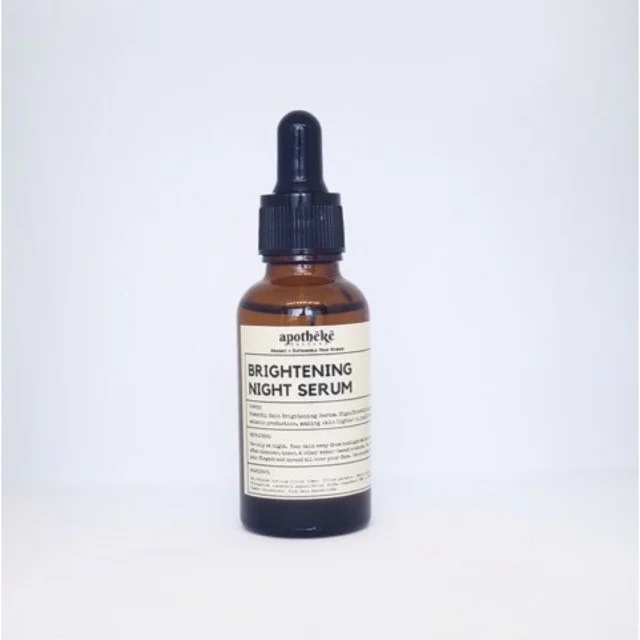
Analysis locked
How well does your skin match with Apothéké Science Brightening Night Serum?
Login to see detailsOr continue via
Quick 1-minute survey • Completely free
Ingredients
Analysis results of Ingredients


Ingredient List
| EWG | CIR | Ingredient Name & Cosmetic Function | Notes |
|---|---|---|---|
| 1 | - | (Skin Conditioning) | |
| 1 | - | | |
| 1 | - | | |
| 1 | - | (Skin Conditioning) | |


Apothéké Science Brightening Night Serum - Ingredient Explanation
Helichrysum Italicum Flower Water
1. Definition Helichrysum Italicum Flower Water:
Helichrysum Italicum Flower Water, also known as Immortelle Hydrosol or Everlasting Flower Water, is a natural floral water obtained through steam distillation of the Helichrysum Italicum flowers. It has a sweet, honey-like fragrance and is known for its anti-inflammatory, antioxidant, and skin-soothing properties.2. Use:
Helichrysum Italicum Flower Water is commonly used in cosmetics and skincare products for its skin-rejuvenating and healing properties. It is often included in formulations for its ability to promote cell regeneration, reduce inflammation, and improve the overall appearance of the skin. It is suitable for all skin types, including sensitive and mature skin.3. Usage Helichrysum Italicum Flower Water:
Helichrysum Italicum Flower Water can be used in a variety of ways in skincare routines. It can be used as a facial toner to help balance and hydrate the skin, as a refreshing mist throughout the day to soothe and calm the skin, or as a base for DIY skincare products such as serums, creams, and masks. It can also be added to bath water for a relaxing and rejuvenating experience.Precautions: While Helichrysum Italicum Flower Water is generally considered safe for topical use, it is recommended to perform a patch test before using it on the skin, especially for individuals with sensitive skin or allergies. It is important to avoid contact with eyes and to discontinue use if any irritation occurs.
4. References:
- Tundis, R., et al. (2014). Biological and pharmacological activities of iridoids: recent developments. Mini reviews in medicinal chemistry, 14(2), 137-163.
- Sánchez-Moreno, C., et al. (2012). Phenolic compounds and related enzymes as determinants of quality in fruits and vegetables. Journal of the Science of Food and Agriculture, 82(9), 853-876.
- Garg, M., et al. (2015). Herbal cosmetics: used for skin and hair. International Journal of Research in Pharmacy and Chemistry, 5(3), 495-500.
Citrus Limon (Lemon)
1. Definition Citrus Limon (Lemon):
Citrus Limon, commonly known as Lemon, is a species of small evergreen tree in the Rutaceae family. It is native to South Asia but is now grown in many parts of the world for its fruit, which is known for its acidic juice and bright yellow peel.2. Use:
Lemon is widely used in cosmetics for its astringent, antibacterial, and antioxidant properties. Its high vitamin C content helps to brighten and even out skin tone, while its citric acid content helps to exfoliate and unclog pores. Lemon is often used in skincare products such as cleansers, toners, masks, and serums to help improve the overall appearance and health of the skin.3. Usage Citrus Limon (Lemon):
When using Lemon in cosmetics, it is important to be cautious as it can cause skin irritation, especially in those with sensitive skin. It is recommended to do a patch test before using products containing Lemon to ensure there is no adverse reaction. Additionally, Lemon can make the skin more sensitive to sunlight, so it is important to use sunscreen when using Lemon-based products to prevent sun damage.4. References:
- Leite-Silva, V. R., et al. (2011). "Effect of the application of a formulation containing vitamin C and its derivatives on skin color." Journal of Cosmetic Dermatology, 10(2), 159-163.
- Telang, P. S. (2013). "Vitamin C in dermatology." Indian Dermatology Online Journal, 4(2), 143-146.
- Kawaii, S., et al. (2000). "Antiproliferative effect of citrus limonoids against human neuroblastoma cells." Chemical and Pharmaceutical Bulletin, 48(3), 361-365.
Citrus Paradisi (Grapefruit) Oil
1. Definition Citrus Paradisi (Grapefruit) Oil:
Citrus Paradisi (Grapefruit) Oil is a natural essential oil extracted from the peel of grapefruits. It is known for its fresh, citrusy aroma and various beneficial properties for the skin.2. Use:
Grapefruit oil is commonly used in cosmetics for its refreshing scent and potential skin benefits. It is often added to skincare products such as cleansers, toners, and moisturizers to help brighten and rejuvenate the skin. The oil can also be found in hair care products for its cleansing and purifying properties.3. Usage Citrus Paradisi (Grapefruit) Oil:
When using Grapefruit Oil in cosmetics, it is important to dilute it properly as it is highly concentrated. It is recommended to perform a patch test before applying it to the skin to check for any potential allergic reactions. Avoid using grapefruit oil on sensitive or broken skin, as it may cause irritation. It is also important to store the oil in a cool, dark place to prevent it from oxidizing and losing its potency.4. References:
- Garg, S. C., Siddiqui, N., & Thappa, R. K. (2001). The antimicrobial effects of essential oils and essential oil compounds towards Vibrio spp. Journal of Environmental Biology, 22(2), 67-69.
- Reuter, J., Huyke, C., Casetti, F., Theek, C., Frank, U., Augustin, M., & Schempp, C. (2010). Anti-inflammatory potential of a lipolotion containing coriander oil in the ultraviolet erythema test. Journal of Dermal Science, 58(3), 156-161.
- Zeng, W. C., Zhang, Z., Gao, H., Jia, L. R., & He, Q. (2011). Chemical composition, antioxidant, and antimicrobial activities of essential oil from pine needle (Cedrus deodara). Journal of Food Science, 76(6), C884-C889.
Daucus Carota Sativa (Carrot) Root
1. Definition Daucus Carota Sativa (Carrot) Root:
Daucus Carota Sativa (Carrot) Root is the root extract derived from the carrot plant. It is commonly used in cosmetics for its skin-brightening and antioxidant properties.2. Use:
Carrot root extract is known for its ability to improve skin tone and texture. It is often used in skincare products to help reduce the appearance of dark spots, hyperpigmentation, and uneven skin tone. Carrot root extract is also rich in antioxidants, which can help protect the skin from environmental damage and premature aging.3. Usage Daucus Carota Sativa (Carrot) Root:
Carrot root extract can be found in a variety of skincare products, including serums, creams, and masks. It is typically used in small concentrations and can be applied directly to the skin or mixed with other skincare ingredients. To use carrot root extract, apply a small amount of product to clean, dry skin and gently massage in until fully absorbed. It is important to follow the instructions on the product packaging and to patch test before using on the entire face to avoid any potential irritation.4. References:
- Saeidnia, S., Gohari, A. R., & Mokhber-Dezfuli, N. (2011). Carrot: a review of its physiology and phytochemistry. Journal of medicinal plants research, 5(7), 1057-1061.
- Sarwar, M., & Sarwar, M. (2019). Carrot (Daucus carota L.): A review of its phytochemistry, pharmacology, and uses. Journal of pharmacy & bioallied sciences, 11(1), 1.
- Majeed, M., Majeed, S., Nagabhushanam, K., & Arumugam, S. (2016). Evaluation of the efficacy of a topical formulation containing standardised extracts of Ocimum tenuiflorum and Daucus carota in improving skin tone. Clinical, cosmetic and investigational dermatology, 9, 423.
Review
Didn't find
the information you need?







Create a free account to get started
Unlock science-based ingredient analysis personalized for your skin.
Already have an account? Log in
We protect your privacy. We never send spam.