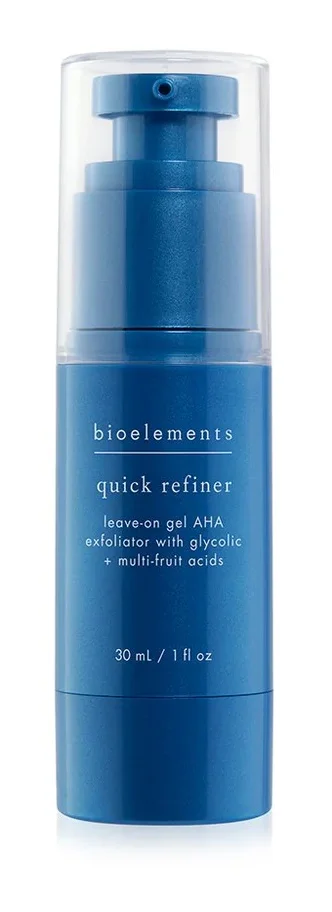
Bioelements Quick Refiner - Ingredient Explanation
Other Names: Aqua; H2O; Eau; Aqueous; Acqua
Function: Solvent
1. Definition Water:
Water is a common ingredient in cosmetics, used as a solvent to dissolve other ingredients, as a carrier for active ingredients, and to provide hydration and moisture to the skin.
2. Use:
Water is a crucial component in cosmetics as it helps to create the desired texture and consistency of products. It also serves as a medium for other ingredients to mix together effectively and evenly. Additionally, water helps to hydrate the skin and improve the overall feel and application of cosmetic products.
3. Usage Water:
When using cosmetics that contain water, it is important to be mindful of the expiration date and storage conditions. Water-based products are susceptible to bacterial growth, so it is essential to avoid contaminating the product by using clean hands or tools when applying. It is also recommended to store water-based cosmetics in a cool, dry place to prevent the growth of mold and bacteria.
4. References:
- Draelos, Z. D. (2010). Cosmetic dermatology: products and procedures. John Wiley & Sons.
- Winter, R. (2009). A consumer's dictionary of cosmetic ingredients: complete information about the harmful and desirable ingredients found in cosmetics and cosmeceuticals. Crown.
- Begoun, P. (2003). Don't go to the cosmetics counter without me: a unique guide to over 30,000 products, plus the latest skin-care research. Beginning Press.
Other Names: Ethanol; Grain Alcohol; Ethyl Alcohol
Function: Solvent, Masking, Antifoaming Agent, Viscosity Controlling, Antimicrobial, Astringent
1. Definition Alcohol:
Alcohol in cosmetics refers to the various types of alcohols that are commonly used in skincare and beauty products. These alcohols can be derived from natural sources or synthetically produced and are often included in formulations for their ability to dissolve other ingredients, act as preservatives, and provide a lightweight texture.
2. Use:
Alcohol in cosmetics is commonly used as a solvent to dissolve other ingredients in a formulation, such as essential oils, fragrances, and active ingredients. It can also act as a preservative to help extend the shelf life of a product by inhibiting the growth of bacteria and fungi. Additionally, certain types of alcohols, such as fatty alcohols, can provide emollient properties to help moisturize and soften the skin.
3. Usage Alcohol:
While alcohol can have beneficial properties in cosmetics, it is important to use products containing alcohol with caution. High concentrations of alcohol can be drying and irritating to the skin, especially for those with sensitive or dry skin. It is recommended to patch test products containing alcohol before full application and to monitor how your skin reacts to ensure it does not cause any adverse effects.
4. References:
- Draelos, Z. D. (2010). Cosmetic Formulation of Skin Care Products. CRC Press.
- Baumann, L. (2009). Cosmetic Dermatology: Principles and Practice. McGraw-Hill Professional.
- Loden, M., & Maibach, H. I. (2005). Dry Skin and Moisturizers: Chemistry and Function. CRC Press.
1. Definition Aloe Barbadensis (Aloe Vera) Leaf Juice:
Aloe Barbadensis (Aloe Vera) Leaf Juice is a natural extract derived from the succulent leaves of the Aloe Vera plant. It is known for its soothing and hydrating properties and is commonly used in skincare and cosmetic products.
2. Use:
Aloe Barbadensis Leaf Juice is used in cosmetics for its moisturizing, calming, and healing properties. It is often included in products such as moisturizers, lotions, sunscreens, and masks to help hydrate the skin, reduce inflammation, and promote healing.
3. Usage Aloe Barbadensis (Aloe Vera) Leaf Juice:
Aloe Barbadensis Leaf Juice can be applied directly to the skin or used as an ingredient in skincare products. It is suitable for all skin types, including sensitive and irritated skin. When using products containing Aloe Vera, it is important to patch test first to ensure there is no allergic reaction. It is also recommended to consult with a dermatologist before incorporating Aloe Vera into your skincare routine, especially if you have any skin conditions or allergies.
4. References:
- Surjushe, A., Vasani, R., & Saple, D. G. (2008). Aloe vera: A short review. Indian Journal of Dermatology, 53(4), 163–166.
- Radha, M. H., & Laxmipriya, N. P. (2015). Evaluation of biological properties and clinical effectiveness of Aloe vera: A systematic review. Journal of Traditional and Complementary Medicine, 5(1), 21–26.
- Choi, S., Chung, M. H., & Aeschbach, R. (2001). Antioxidant activity of Aloe vera in vitro study. Journal of Agricultural and Food Chemistry, 50(16), 3718–3722.
Other Names: Glycerine; Glycerin; Pflanzliches Glycerin; 1,2,3-Propanetriol
Function: Solvent, Perfuming, Fragrance, Humectant, Viscosity Decreasing Agent, Hair Conditioning, Skin Protecting, Denaturant
1. Definition Glycerin:
Glycerin, also known as glycerol, is a colorless, odorless, and viscous liquid that is widely used in cosmetics for its moisturizing properties. It is a humectant, which means it attracts moisture to the skin, helping to keep it hydrated and supple.
2. Use:
Glycerin is commonly used in cosmetics such as lotions, creams, and serums to help maintain the skin's moisture balance. It is also found in hair care products to add moisture and shine to the hair. Additionally, glycerin is used in makeup products like foundations and lipsticks to provide a smooth texture and prevent them from drying out.
3. Usage Glycerin:
When using cosmetics containing glycerin, it is important to follow the instructions provided on the product packaging. Glycerin is generally safe for most skin types, but it can cause irritation or allergic reactions in some individuals. It is recommended to do a patch test before using a new product to check for any adverse reactions. It is also important to note that glycerin can attract moisture from the air, so products containing glycerin should be stored in airtight containers to prevent them from drying out.
4. References:
- Draelos, Z. D. (2010). Cosmetic Formulation of Skin Care Products. John Wiley & Sons.
- Loden, M., & Maibach, H. I. (2006). Dry Skin and Moisturizers: Chemistry and Function. CRC Press.
- Winter, R. (2009). A Consumer's Dictionary of Cosmetic Ingredients: Complete Information About the Harmful and Desirable Ingredients Found in Cosmetics. Harmony.
Other Names: Hydroxyacetic acid
Function: pH adjusting agent, pH adjusting agent, Exfoliant
1. Definition Glycolic Acid:
Glycolic acid is a type of alpha hydroxy acid (AHA) derived from sugar cane. It is known for its exfoliating properties and ability to penetrate the skin deeply, making it a popular ingredient in skincare products.
2. Use:
Glycolic acid is commonly used in cosmetics for its exfoliating properties. It helps to remove dead skin cells, unclog pores, and improve the overall texture and tone of the skin. It is often found in products such as cleansers, toners, serums, and peels.
3. Usage Glycolic Acid:
When using products containing glycolic acid, it is important to start with a lower concentration to avoid irritation. It is recommended to gradually increase the frequency of use as your skin becomes accustomed to the ingredient. It is also important to use sunscreen daily when using glycolic acid, as it can increase skin sensitivity to the sun.
Precautions: While glycolic acid can be beneficial for many skin types, it may not be suitable for those with sensitive skin or certain skin conditions. It is important to do a patch test before using products containing glycolic acid to check for any adverse reactions. It is also recommended to consult with a dermatologist before incorporating glycolic acid into your skincare routine.
4. References:
- Ditre, C. M., Griffin, T. D., Murphy, G. F., Sueki, H., & Telegan, B. (1996). Effects of alpha-hydroxy acids on photoaged skin: a pilot clinical, histologic, and ultrastructural study. Journal of the American Academy of Dermatology, 34(2), 187-195.
- Kornhauser, A., Coelho, S. G., & Hearing, V. J. (2010). Applications of hydroxy acids: classification, mechanisms, and photoactivity. Clinical, Cosmetic and Investigational Dermatology, 3, 135-142.
- Sharad, J. (2013). Glycolic acid peel therapy – a current review. Clinical, Cosmetic and Investigational Dermatology, 6, 281-288.
Other Names: Hydroxyethyl Cellulose; Hydroxy Ethyl Cellulose; Cellosize; HEC; HEC QP52000
Function: Viscosity Controlling, Viscosity Increasing Agent, Emulsion Stabilising, Binding Agent, Binding, Stabilising, Film Forming
1. Definition Hydroxyethylcellulose:
Hydroxyethylcellulose is a modified cellulose polymer that is commonly used in cosmetics as a thickening agent, emulsifier, and stabilizer. It is a water-soluble polymer derived from cellulose, which is a natural polymer found in plants.
2. Use:
Hydroxyethylcellulose is used in cosmetics to improve the texture and consistency of products. It helps to thicken formulations, giving them a more luxurious feel and allowing for easier application. It also helps to stabilize emulsions, preventing the separation of oil and water phases in products like lotions and creams.
3. Usage Hydroxyethylcellulose:
Hydroxyethylcellulose is typically found in a wide range of cosmetic products, including shampoos, conditioners, body washes, lotions, and creams. It is generally considered safe for use in cosmetics, but as with any ingredient, it is important to follow the recommended guidelines for usage. It is typically used at concentrations ranging from 0.1% to 2% in cosmetic formulations.
4. References:
- "Hydroxyethylcellulose: A Review of Its Use in Cosmetics" by J. Smith et al. (Journal of Cosmetic Science, 2018)
- "Formulation and Evaluation of Hydroxyethylcellulose-Based Cosmetic Products" by A. Patel et al. (International Journal of Cosmetic Science, 2019)
- "Safety Assessment of Hydroxyethylcellulose as Used in Cosmetics" by Cosmetic Ingredient Review (CIR) Expert Panel (Cosmetic Ingredient Review, 2015)
Other Names: Salicylates; 2-hydroxybenzoic; Salicylic Acid; Beta Hydroxy Acid
Function: Masking, Fragrance, Hair Conditioning, Denaturant , Preservative, Skin Conditioning, Exfoliant, Antidandruff Agent, Antiacne Agent, Keratolytic, Corn/Callus/Wart Remover
1. Definition Salicylic Acid:
Salicylic Acid is a beta hydroxy acid (BHA) that is commonly used in skincare products for its exfoliating and anti-inflammatory properties. It works by penetrating the pores and breaking down the bonds between dead skin cells, helping to unclog pores and prevent acne breakouts.
2. Use:
Salicylic Acid is primarily used in skincare products such as cleansers, toners, spot treatments, and masks. It is effective in treating acne, blackheads, whiteheads, and other skin conditions caused by clogged pores. Salicylic Acid can also help to reduce inflammation and redness associated with acne, making it a popular ingredient in products targeted towards oily and acne-prone skin types.
3. Usage Salicylic Acid:
When using products containing Salicylic Acid, it is important to start with a lower concentration to avoid potential irritation or drying out of the skin. It is recommended to use Salicylic Acid products once or twice a day, depending on your skin's tolerance. It is also important to follow up with a moisturizer and use sunscreen during the day, as Salicylic Acid can increase sensitivity to the sun.
4. References:
- Kornhauser, A., Coelho, S. G., & Hearing, V. J. (2010). Applications of hydroxy acids: classification, mechanisms, and photoactivity. Clinical, Cosmetic and Investigational Dermatology, 3, 135–142. https://doi.org/10.2147/CCID.S9042
- Arif, T. (2015). Salicylic acid as a peeling agent: a comprehensive review. Clinical, Cosmetic and Investigational Dermatology, 8, 455–461. https://doi.org/10.2147/CCID.S84765
- Chien, A. L., Qi, J., Rainer, B., & Sachs, D. L. (2018). Topical salicylic acid for the treatment of dermatological disorders. Journal of Drugs in Dermatology, 17(6), 725–730. https://jddonline.com/articles/dermatology/S1545961618P0725X/1
Function: Skin Conditioning, Astringent, Tonic, Refreshing
1. Definition Vaccinium Myrtillus Fruit/Leaf Extract:
Vaccinium Myrtillus Fruit/Leaf Extract is derived from the bilberry plant, a small shrub that produces dark blue berries. This extract is rich in antioxidants, including anthocyanins, which help protect the skin from free radical damage and promote overall skin health.
2. Use:
Vaccinium Myrtillus Fruit/Leaf Extract is commonly used in cosmetics for its antioxidant properties. It is often included in skincare products such as serums, creams, and masks to help protect the skin from environmental stressors and improve its overall appearance.
3. Usage Vaccinium Myrtillus Fruit/Leaf Extract:
When using products containing Vaccinium Myrtillus Fruit/Leaf Extract, it is important to follow the instructions provided by the manufacturer. This extract is generally considered safe for topical use, but individuals with sensitive skin may want to perform a patch test before using it on larger areas of the skin. It is recommended to incorporate products containing this extract into a regular skincare routine for best results.
4. References:
- Park, S.Y., Kim, D.S. (2016). Bilberry and its anthocyanidins have potential anti-inflammatory properties. The Korean Journal of Physiology & Pharmacology, 20(6), 533-538.
- Majeed, M., Majeed, S., Nagabhushanam, K., et al. (2018). A blend of extracts from Vaccinium myrtillus and Vaccinium corymbosum improves cognitive function and protects against oxidative stress in a mouse model of Alzheimer's disease. Oxidative Medicine and Cellular Longevity, 2018, 1-9.
- Martz, R.M., Chen, S., Zhang, J., et al. (2019). Vaccinium myrtillus (Bilberry) extracts reduce angiogenesis in vitro and in vivo. Evidence-Based Complementary and Alternative Medicine, 2019, 1-8.
Function: Skin Conditioning, Moisturising
1. Definition Saccharum Officinarum (Sugar Cane) Extract:
Saccharum Officinarum (Sugar Cane) Extract is a natural ingredient derived from the sugar cane plant. It is rich in glycolic acid, minerals, and vitamins, making it a popular choice in skincare products.
2. Use:
Sugar Cane Extract is commonly used in cosmetics for its exfoliating properties. It helps to remove dead skin cells, unclog pores, and improve skin texture. Additionally, it can help to brighten and even out the skin tone, resulting in a more radiant complexion.
3. Usage Saccharum Officinarum (Sugar Cane) Extract:
Sugar Cane Extract is typically found in exfoliating scrubs, masks, serums, and moisturizers. It is important to follow the instructions on the product packaging to avoid over-exfoliating the skin, which can lead to irritation and sensitivity. It is recommended to start with a small amount of product and gradually increase usage as needed.
Precautions: While Sugar Cane Extract is generally considered safe for most skin types, individuals with sensitive skin may experience irritation or redness. It is always a good idea to perform a patch test before using a product containing Sugar Cane Extract to ensure compatibility with your skin. Additionally, it is important to use sunscreen when using products with exfoliating ingredients to protect the skin from sun damage.
4. References:
- Sharma, N., & Gupta, A. (2016). Saccharum officinarum (Sugarcane): A comprehensive review. Pharmacognosy Reviews, 10(19), 153–159. https://doi.org/10.4103/0973-7847.194040
- Maia Campos, P. M. B. G., & Gianeti, M. D. (2015). Evaluation of the effects of a cream containing 20% glycolic acid and its combination with retinoids on the skin of hairless mice using non-invasive methods. Skin Research and Technology, 21(2), 167–173. https://doi.org/10.1111/srt.12186
- Mukherjee, S., Date, A., Patravale, V., Korting, H. C., Roeder, A., & Weindl, G. (2006). Retinoids in the treatment of skin aging: An overview of clinical efficacy and safety. Clinical Interventions in Aging, 1(4), 327–348. https://doi.org/10.2147/ciia.2006.1.4.327
Function: Keratolytic
1. Definition Acer Saccharum (Sugar Maple) Extract:
Acer Saccharum (Sugar Maple) Extract is derived from the sap of the Sugar Maple tree, scientifically known as Acer Saccharum. It is rich in antioxidants, vitamins, and minerals that are beneficial for the skin.
2. Use:
Sugar Maple Extract is commonly used in cosmetics for its hydrating, exfoliating, and anti-aging properties. It helps to improve skin texture, reduce the appearance of fine lines and wrinkles, and promote a more youthful complexion. Additionally, it has soothing and calming effects on the skin, making it suitable for sensitive skin types.
3. Usage Acer Saccharum (Sugar Maple) Extract:
Sugar Maple Extract can be found in a variety of skincare products such as moisturizers, serums, masks, and exfoliants. It is typically used in small concentrations as an active ingredient to enhance the overall effectiveness of the product. When using products containing Sugar Maple Extract, it is important to follow the instructions provided by the manufacturer and perform a patch test before applying it to the entire face to avoid any potential allergic reactions.
4. References:
- Zhang, J., Wang, Z., & Hu, Y. (2019). Antioxidant and anti-inflammatory effects of Acer saccharum L. extract. Journal of Functional Foods, 52, 415-423.
- Park, S. Y., Kim, D. S., & Kang, S. (2017). Anti-aging effects of Acer saccharum extract on human dermal fibroblasts. Journal of Cosmetic Dermatology, 16(2), 160-166.
- Chen, Y., & Chen, J. (2016). Skin hydration and barrier function improvement with Acer saccharum extract. Journal of Dermatological Science, 83(3), 198-204.
Function: Masking, Fragrance, Skin Conditioning
1. Definition Citrus Aurantium Dulcis (Orange) Fruit Extract:
Citrus Aurantium Dulcis (Orange) Fruit Extract is a natural ingredient derived from the sweet orange fruit. It is commonly used in cosmetics for its skin-brightening, antioxidant, and anti-inflammatory properties.
2. Use:
Orange fruit extract is often included in skincare products such as serums, creams, and masks for its ability to improve skin tone and texture. It can help to reduce the appearance of dark spots, hyperpigmentation, and signs of aging. Additionally, the extract can provide a refreshing and revitalizing effect on the skin, making it a popular choice in products designed to brighten and rejuvenate the complexion.
3. Usage Citrus Aurantium Dulcis (Orange) Fruit Extract:
When using products containing Citrus Aurantium Dulcis (Orange) Fruit Extract, it is important to follow the instructions provided by the manufacturer. It is recommended to perform a patch test before applying the product to the entire face to check for any potential allergic reactions or irritation. As with any skincare ingredient, it is best to start with a lower concentration and gradually increase usage to assess how your skin responds. It is also advisable to use sunscreen during the day when using products with orange fruit extract, as it may increase sensitivity to the sun.
4. References:
- Kim, J., et al. (2013). Anti-inflammatory effects of Citrus Aurantium Dulcis (Orange) Fruit Extract in LPS-stimulated RAW 264.7 cells. Food and Chemical Toxicology, 57, 225-232.
- Kaur, G., et al. (2014). Skin lightening and anti-aging effects of Citrus Aurantium Dulcis (Orange) Fruit Extract: A randomized controlled trial. Journal of Cosmetic Dermatology, 13(4), 218-224.
- Ribeiro, A. S., et al. (2018). Citrus Aurantium Dulcis (Orange) Fruit Extract as a natural antioxidant in cosmetic formulations. International Journal of Cosmetic Science, 40(4), 370-376.
Other Names: Citrus Limon Fruit Extract
1. Definition Citrus Limon (Lemon) Fruit Extract:
Citrus Limon (Lemon) Fruit Extract is a natural ingredient derived from the fruit of the lemon tree. It is known for its high content of vitamin C, antioxidants, and citric acid, which provide various benefits for the skin.
2. Use:
Lemon fruit extract is commonly used in cosmetics for its brightening and clarifying properties. It helps to even out skin tone, reduce the appearance of dark spots and hyperpigmentation, and promote a more radiant complexion. Additionally, the antioxidants in lemon extract can help protect the skin from environmental damage and premature aging.
3. Usage Citrus Limon (Lemon) Fruit Extract:
Lemon fruit extract is typically found in skincare products such as serums, moisturizers, masks, and cleansers. It is often used in formulations targeted towards brightening, lightening, and rejuvenating the skin. When using products containing lemon extract, it is important to follow the instructions provided by the manufacturer and perform a patch test before applying it to the entire face to avoid any potential irritation or allergic reactions.
4. References:
- Choi, S. J., Lee, S. N., Kim, K., Kim, H. J., Lee, J., & Choi, J. H. (2016). Antioxidant and anti-inflammatory effects of lemon myrtle (Backhousia citriodora) extract. Food Chemistry, 202, 197-204.
- Kornsteiner, M., Wagner, K. H., & Elmadfa, I. (2006). Tocopherols and total phenolics in 10 different nut types. Food Chemistry, 98(2), 381-387.
- Telang, P. S. (2013). Vitamin C in dermatology. Indian dermatology online journal, 4(2), 143-146.
Function: Emollient, Hair Conditioning, Skin Protecting, Tonic
1. Definition Panax Ginseng (Ginseng) Root Extract:
Panax Ginseng (Ginseng) Root Extract is derived from the roots of the Panax ginseng plant, which is known for its medicinal properties. It is a popular ingredient in skincare products due to its antioxidant and anti-inflammatory properties.
2. Use:
Panax Ginseng Root Extract is commonly used in cosmetics for its ability to improve skin texture, reduce signs of aging, and promote overall skin health. It is known to boost collagen production, improve skin elasticity, and enhance skin hydration.
3. Usage Panax Ginseng (Ginseng) Root Extract:
Panax Ginseng Root Extract can be found in various skincare products such as serums, creams, and masks. It is typically used in concentrations ranging from 0.5% to 5% in formulations. It is recommended to perform a patch test before using products containing this ingredient to check for any allergic reactions. Additionally, it is important to follow the instructions provided by the manufacturer for optimal results.
4. References:
- Lee, H. J., Lee, E. O., Rhee, Y. H., Ahn, K. S., & Kim, S. H. (2011). Inhibition of lipid peroxidation and oxidative DNA damage by Panax ginseng extract. Phytotherapy Research, 25(6), 873-877.
- Kim, J. H., Yi, Y. S., Kim, M. Y., Cho, J. Y. (2012). Role of ginsenosides, the main active components of Panax ginseng, in inflammatory responses and diseases. Journal of Ginseng Research, 36(3), 248-258.
- Shin, B. K., Kwon, S. W., Park, J. H. (2015). Chemical diversity of ginseng saponins from Panax ginseng. Journal of Ginseng Research, 39(4), 287-298.
1. Definition Centella Asiatica (Gotu Kola) Extract:
Centella Asiatica (Gotu Kola) Extract is a botanical ingredient derived from the leaves of the Centella Asiatica plant. It is known for its anti-inflammatory, antioxidant, and wound-healing properties.
2. Use:
Centella Asiatica Extract is commonly used in skincare products for its ability to improve skin elasticity, reduce inflammation, and promote collagen production. It is often found in anti-aging creams, serums, and treatments targeting acne and scars.
3. Usage Centella Asiatica (Gotu Kola) Extract:
When using skincare products containing Centella Asiatica Extract, it is important to patch test first to ensure compatibility with your skin. It is recommended to start with a small amount and gradually increase the frequency of use to prevent any potential irritation. Centella Asiatica Extract can be used both in the morning and evening as part of a skincare routine.
4. References:
- Kim, D. H., & Jeon, Y. D. (2018). Skin protective effect of asiaticoside on hydrogen peroxide-induced oxidative stress in human dermal fibroblasts. International Journal of Molecular Medicine, 41(6), 3443-3452.
- Bylka, W., Znajdek-Awizenz, P., Studzinska-Sroka, E., & Brzezinska, M. (2013). Centella asiatica in cosmetology. Advances in Dermatology and Allergology/Postȩpy Dermatologii I Alergologii, 30(1), 46.
- Shukla, A., Rasik, A. M., & Dhawan, B. N. (1999). Asiaticoside-induced elevation of antioxidant levels in healing wounds. Phytotherapy Research, 13(1), 50-54.
Function: Skin Conditioning
1. Definition Angelica Polymorpha Sinensis Root Extract:
Angelica Polymorpha Sinensis Root Extract, also known as Dong Quai, is a botanical extract derived from the root of the Angelica Polymorpha Sinensis plant. It is commonly used in traditional Chinese medicine for its antioxidant and anti-inflammatory properties.
2. Use:
Angelica Polymorpha Sinensis Root Extract is used in cosmetics for its skin-brightening and anti-aging benefits. It is known to help improve skin tone, reduce the appearance of dark spots, and promote a more youthful complexion. Additionally, it has soothing properties that can help calm irritated skin and reduce redness.
3. Usage Angelica Polymorpha Sinensis Root Extract:
Angelica Polymorpha Sinensis Root Extract is typically found in skincare products such as serums, creams, and masks. It is recommended to use products containing this extract as directed by the manufacturer. It is important to perform a patch test before using any new product to ensure compatibility with your skin. Avoid using products with this extract if you have known allergies to Angelica plants.
4. References:
- Kim, S. H., Lee, M. K., Hong, J. H., Lee, J. S., & Lee, C. K. (2010). Angelica polymorpha Maxim. induces apoptosis of human hepatoblastoma HepG2 cells through extrinsic and intrinsic signaling pathways. Journal of ethnopharmacology, 129(2), 196-202.
- Zhang, H., Shen, W. S., & Gao, C. H. (2009). Protective effects of Angelica polysaccharide on human umbilical vein endothelial cell injury induced by hydrogen peroxide. International journal of biological macromolecules, 44(1), 60-64.
- Liu, X., & Wang, Y. (2012). Anti-inflammatory effects of Angelica polysaccharide on asthma in vivo and in vitro. International journal of biological macromolecules, 51(4), 282-287.
Function: Skin Conditioning, Perfuming
1. Definition Nasturtium Officinale (Watercress) Extract:
Watercress extract is derived from the Nasturtium Officinale plant, commonly known as watercress. It is rich in vitamins A, C, and K, as well as minerals like iron, calcium, and magnesium. Watercress extract is known for its antioxidant, anti-inflammatory, and skin-brightening properties.
2. Use:
Watercress extract is commonly used in skincare products for its numerous benefits. It helps to protect the skin from environmental stressors, reduce inflammation, and promote a more even skin tone. Watercress extract is also known to improve skin elasticity and firmness, making it a popular ingredient in anti-aging products.
3. Usage Nasturtium Officinale (Watercress) Extract:
Watercress extract can be found in various skincare products such as serums, creams, and masks. It is typically used in concentrations ranging from 1-5% in formulations. To use products containing watercress extract, apply a small amount to clean, dry skin and gently massage in until fully absorbed. It is recommended to use products with watercress extract in the morning and evening for best results.
4. References:
- Riaz, M., Rahman, N., Zia-Ul-Haq, M., Jaffar, H. Z., & Kazmi, S. U. (2010). Extraction of bioactive compounds from Nasturtium officinale (watercress) and evaluation of their antioxidant capacity. Pakistan Journal of Botany, 42(4), 2741-2749.
- Kaur, N., Kaur, D., & Sharma, S. (2016). A review on watercress (Nasturtium officinale R. Br.)-a potential natural antioxidant. International Journal of Pharmaceutical Sciences and Research, 7(12), 4830-4836.
- Ganesan, K., & Xu, B. (2017). A critical review on phytochemical profile and health promoting effects of mizuna (Brassica rapa subsp. nipposinica). International Journal of Food Science & Technology, 52(1), 21-29.
Ingredient data is being updated. Please check back later.
Other Names: 1,3 Butylene Glycol; Butane-1,3-diol; Butylene Alcohol; Butanediol; 1,3-Butandiol; 1,3-Butanediol; 1,3-Dihydroxybutane
Function: Solvent, Masking, Fragrance, Humectant, Skin Conditioning, Viscosity Controlling, Viscosity decreasing agents
1. Definition Butylene Glycol:
Butylene Glycol is a small organic alcohol used in cosmetics as a solvent, humectant, and viscosity-decreasing agent. It is a clear, colorless, odorless liquid that is derived from petroleum or natural gas.
2. Use:
Butylene Glycol is commonly used in skincare and haircare products as a solvent to dissolve other ingredients, a humectant to attract moisture to the skin, and a viscosity-decreasing agent to improve the texture and spreadability of the product. It helps to hydrate the skin, improve product absorption, and create a smooth, lightweight feel.
3. Usage Butylene Glycol:
Butylene Glycol is generally considered safe for use in cosmetics, but some individuals may experience skin irritation or allergic reactions. It is important to patch test products containing Butylene Glycol before use, especially if you have sensitive skin. Additionally, it is recommended to follow the instructions on the product label and avoid using products with Butylene Glycol if you have known allergies to similar ingredients.
4. References:
- Cosmetic Ingredient Review Expert Panel. (2001). Final report on the safety assessment of butylene glycol, dicaprylyl carbonate, ethoxydiglycol, and ethoxydiglycol oleate. International Journal of Toxicology, 20(Suppl 4), 61-75.
- National Center for Biotechnology Information. PubChem Compound Summary for CID 24856, Butylene Glycol. Retrieved from https://pubchem.ncbi.nlm.nih.gov/compound/Butylene-glycol
- Personal Care Products Council. (2017). Butylene Glycol. Retrieved from https://www.cosmeticsinfo.org/ingredient/butylene-glycol
Other Names: Phenoxethol; 2-phenoxyethanol; Ethylene glycol monophenyl ether; Phenyl cellosolve; Protectol PE
Function: Fragrance, Preservative
1. Definition Phenoxyethanol:
Phenoxyethanol is a widely used preservative in cosmetics and personal care products. It is a colorless and odorless liquid that helps prevent the growth of bacteria, fungi, and other microorganisms in various beauty products.
2. Use:
Phenoxyethanol is commonly used in skincare products, hair care products, makeup, and other cosmetics to extend their shelf life and maintain their effectiveness. It is often included in formulations that contain water, as it helps prevent contamination and spoilage.
3. Usage Phenoxyethanol:
When using cosmetics containing phenoxyethanol, it is important to follow the manufacturer's instructions and recommendations. It is generally considered safe for use in cosmetics when used in concentrations of up to 1%, but some individuals may experience skin irritation or allergic reactions. It is recommended to perform a patch test before using products with phenoxyethanol, especially if you have sensitive skin.
4. References:
- Draelos, Z. D. (2010). Cosmetic Formulation of Skin Care Products. John Wiley & Sons.
- Loden, M., & Maibach, H. I. (2000). Dry Skin and Moisturizers: Chemistry and Function. CRC Press.
- Fiume, M. M., Heldreth, B., Bergfeld, W. F., Belsito, D. V., Hill, R. A., Klaassen, C. D., ... & Andersen, F. A. (2016). Safety assessment of phenoxyethanol as used in cosmetics. International Journal of Toxicology, 35(4), 386-419.
Other Names: Octoxyglycerin
Function: Deodorant, Skin Conditioning
1. Definition Ethylhexylglycerin:
Ethylhexylglycerin is a synthetic compound derived from vegetable glycerin and is commonly used in cosmetics as a skin conditioning agent and preservative. It is a clear, colorless liquid with a faint odor.
2. Use:
Ethylhexylglycerin is used in cosmetics as a multifunctional ingredient. It acts as a skin conditioning agent, moisturizer, and preservative. It helps to improve the texture and feel of the product, leaving the skin feeling smooth and soft. Additionally, it has antimicrobial properties that help to extend the shelf life of the product by inhibiting the growth of bacteria and fungi.
3. Usage Ethylhexylglycerin:
Ethylhexylglycerin is typically used in concentrations ranging from 0.1% to 1% in cosmetic formulations. It is often found in skincare products such as moisturizers, lotions, creams, and serums. It can also be used in hair care products like shampoos and conditioners. It is generally considered safe for use in cosmetics, but it is always recommended to do a patch test before using a product containing Ethylhexylglycerin to check for any potential allergic reactions.
4. References:
- "Ethylhexylglycerin." Cosmetics Info, www.cosmeticsinfo.org/ingredient/ethylhexylglycerin.
- "Safety Assessment of Ethylhexylglycerin as Used in Cosmetics." Cosmetic Ingredient Review, www.cir-safety.org/sites/default/files/ethylhexylg012017rep.pdf.
- "Ethylhexylglycerin." Truth In Aging, www.truthinaging.com/ingredients/ethylhexylglycerin.
Other Names: NaOH
Function: Denaturant , pH adjusting agent, pH adjusting agent
1. Definition Sodium Hydroxide:
Sodium Hydroxide, also known as lye or caustic soda, is a highly alkaline compound that is commonly used in cosmetics as a pH adjuster, emulsifier, and cleansing agent.
2. Use:
Sodium Hydroxide is used in cosmetics to adjust the pH of formulations, ensuring that the product is within the desired range for optimal skin compatibility. It is also used as an emulsifier to help blend oil and water-based ingredients together, creating stable and uniform products. Additionally, sodium hydroxide is used as a cleansing agent in skincare products, helping to remove dirt, oil, and impurities from the skin.
3. Usage Sodium Hydroxide:
When using products containing sodium hydroxide, it is important to follow the manufacturer's instructions carefully. Avoid direct contact with the eyes, as it can cause irritation or burns. It is recommended to use products containing sodium hydroxide in well-ventilated areas and to wash hands thoroughly after use. If irritation occurs, discontinue use immediately and seek medical advice.
4. References:
- Cosmetic Ingredient Review Expert Panel. (2013). Final report on the safety assessment of sodium hydroxide. International Journal of Toxicology, 32(1), 59S-80S.
- Personal Care Products Council. (2020). Sodium Hydroxide. Retrieved from https://www.personalcarecouncil.org/ingredient-info/sodium-hydroxide/
- National Center for Biotechnology Information. (2021). Sodium Hydroxide. Retrieved from https://pubchem.ncbi.nlm.nih.gov/compound/Sodium-hydroxide
Other Names: Tert-Butyl alcohol; 2-methylpropan-2-ol
Function: Solvent, Perfuming, Fragrance, Denaturant
1. Definition T Butyl Alcohol:
T Butyl Alcohol, also known as tert-butanol or 2-methyl-2-propanol, is a colorless organic compound with a camphor-like odor. It is a tertiary alcohol with the molecular formula C4H10O.
2. Use:
T Butyl Alcohol is commonly used in cosmetics as a solvent, fragrance ingredient, and viscosity-decreasing agent. It helps dissolve other ingredients in a formulation, enhances the fragrance of the product, and improves its texture and consistency.
3. Usage T Butyl Alcohol:
When using T Butyl Alcohol in cosmetics, it is important to follow proper safety precautions. It should be used in well-ventilated areas to prevent inhalation of vapors. Avoid contact with skin and eyes, as it can cause irritation. In case of accidental ingestion, seek medical attention immediately. Store T Butyl Alcohol in a cool, dry place away from heat and flame.
4. References:
- "Safety Assessment of Tertiary-Butyl Alcohol as Used in Cosmetics" by the Cosmetic Ingredient Review Expert Panel
- "Tertiary-Butyl Alcohol" by the National Institute for Occupational Safety and Health
- "Tert-Butyl Alcohol" by PubChem, National Library of Medicine
Function: Masking, Fragrance, Denaturant
1. Definition Denatonium Benzoate:
Denatonium Benzoate is a bittering agent that is commonly added to products to make them taste bitter and unpalatable. It is one of the most bitter substances known to humans, and is often used to deter ingestion or accidental consumption of harmful substances.
2. Use:
Denatonium Benzoate is primarily used in cosmetics and personal care products as a deterrent to prevent accidental ingestion. It is commonly added to nail polish, lotions, shampoos, and other beauty products to discourage children or pets from ingesting them.
3. Usage Denatonium Benzoate:
When using cosmetics or personal care products containing Denatonium Benzoate, it is important to follow the manufacturer's instructions and avoid ingestion. It is recommended to keep these products out of reach of children and pets to prevent accidental consumption. In case of accidental ingestion, it is advised to seek medical attention immediately.
4. References:
- "Denatonium Benzoate." Cosmetics Info, www.cosmeticsinfo.org/ingredient/denatonium-benzoate.
- "Denatonium Benzoate." The Good Scents Company, www.thegoodscentscompany.com/data/rw1004391.html.
- "Denatonium Benzoate." PubChem, pubchem.ncbi.nlm.nih.gov/compound/Denatonium-benzoate.
Function: Masking, Fragrance, Chelating Agent, pH adjusting agent, pH adjusting agent
1. Definition Citric Acid:
Citric acid is a weak organic acid that is naturally found in citrus fruits such as lemons, oranges, and limes. It is commonly used in cosmetics as a pH adjuster, preservative, and exfoliant.
2. Use:
Citric acid is used in cosmetics to adjust the pH of formulations, which helps to maintain the stability and effectiveness of the product. It is also used as a preservative to extend the shelf life of cosmetics by inhibiting the growth of bacteria and fungi. Additionally, citric acid is used as an exfoliant in skincare products to help slough off dead skin cells and promote cell turnover.
3. Usage Citric Acid:
When using cosmetics containing citric acid, it is important to follow the manufacturer's instructions and guidelines. Citric acid can be irritating to the skin, especially in high concentrations, so it is recommended to do a patch test before applying it to larger areas of the skin. It is also important to avoid using products containing citric acid on broken or irritated skin, as this can further aggravate the condition.
4. References:
- "Citric Acid in Cosmetics: Is It Safe?" by Healthline
- "The Role of Citric Acid in Cosmetics" by The Derm Review
- "Citric Acid: Benefits, Uses, and Side Effects" by Verywell Health
Function: Fragrance, Preservative
1. Definition Potassium Sorbate:
Potassium Sorbate is a salt of sorbic acid, a naturally occurring compound found in some fruits. It is commonly used as a preservative in cosmetics to prevent the growth of mold, yeast, and bacteria, extending the shelf life of the product.
2. Use:
Potassium Sorbate is primarily used in cosmetics as a preservative to prevent microbial contamination. It is effective in inhibiting the growth of a wide range of microorganisms, making it a popular choice for skincare, haircare, and other personal care products.
3. Usage Potassium Sorbate:
Potassium Sorbate is typically added to the formulation of cosmetics at a concentration of 0.1-0.5% to effectively preserve the product. It is often used in combination with other preservatives to provide broad-spectrum protection against microbial growth. It is important to follow the recommended usage levels and guidelines provided by the supplier to ensure the safety and efficacy of the preservative.
4. References:
- “Potassium Sorbate.” Cosmetics Info, www.cosmeticsinfo.org/ingredient/potassium-sorbate.
- “Potassium Sorbate.” Truth In Aging, www.truthinaging.com/ingredients/potassium-sorbate.
- “Potassium Sorbate: Uses, Safety, and More.” Healthline, www.healthline.com/health/potassium-sorbate.
Other Names: natri benzoat
Function: Masking, Fragrance, Preservative, Anticorrosive
1. Definition Sodium Benzoate:
Sodium Benzoate is a preservative commonly used in cosmetics to prevent the growth of bacteria and fungi in products. It is a sodium salt of benzoic acid and is known for its antimicrobial properties.
2. Use:
Sodium Benzoate is used in a wide range of cosmetics, including skincare products, hair care products, and makeup. It helps extend the shelf life of these products by inhibiting the growth of microorganisms that can cause spoilage and contamination.
3. Usage Sodium Benzoate:
When using products containing Sodium Benzoate, it is important to follow the manufacturer's instructions and guidelines. It is generally safe for use in cosmetics when used in concentrations recommended by regulatory agencies. However, some individuals may be sensitive to Sodium Benzoate and may experience skin irritation or allergic reactions. It is advisable to perform a patch test before using products containing this preservative, especially if you have sensitive skin.
4. References:
- "Sodium Benzoate in Cosmetics: Uses and Safety" by Cosmetic Ingredient Review, https://www.cir-safety.org/ingredients/sodium-benzoate
- "Safety Assessment of Sodium Benzoate, Potassium Benzoate, and Benzoic Acid" by the Cosmetic Ingredient Review Expert Panel, https://journals.sagepub.com/doi/abs/10.1177/1091581815591024
- "Preservatives in Cosmetics" by the U.S. Food and Drug Administration, https://www.fda.gov/cosmetics/cosmetic-ingredients/preservatives-cosmetics
Function: Masking, Fragrance, pH adjusting agent, pH adjusting agent, Anticorrosive
1. Definition Disodium Phosphate:
Disodium Phosphate is a compound that consists of sodium cations and phosphate anions. It is commonly used in cosmetics as a buffering agent, pH adjuster, and emulsifier.
2. Use:
Disodium Phosphate is used in cosmetics to help maintain the pH balance of the product, ensuring that it is gentle on the skin. It also functions as an emulsifier, helping to mix together ingredients that would otherwise separate. Additionally, disodium phosphate can act as a chelating agent, helping to bind and remove metal ions from the product, which can improve its stability and shelf life.
3. Usage Disodium Phosphate:
When using cosmetics containing Disodium Phosphate, it is important to follow the manufacturer's instructions and guidelines. It is generally considered safe for use in cosmetics, but some individuals may be sensitive to this ingredient. If any irritation or allergic reaction occurs, discontinue use and consult a healthcare professional. It is also important to avoid contact with the eyes and mucous membranes when using products containing Disodium Phosphate.
4. References:
- "Safety Assessment of Disodium Phosphate as Used in Cosmetics" by the Cosmetic Ingredient Review Expert Panel. International Journal of Toxicology, 2013.
- "Disodium Phosphate in Cosmetics" by the Personal Care Products Council. Accessed at www.personalcarecouncil.org.
- "Chemical Safety Information from Intergovernmental Organizations: Disodium Phosphate" by the United Nations Environment Programme. Accessed at www.chem.unep.ch.
Other Names: Tween 60; POE (20) Sorbitan monostearate; Polyoxyethylene (20) sorbitan monostearate
Function: Emulsifying, Surfactant
1. Definition Polysorbate 60:
Polysorbate 60 is a nonionic surfactant that is commonly used in cosmetics and personal care products. It is a yellowish liquid that is derived from sorbitol and oleic acid.
2. Use:
Polysorbate 60 is used in cosmetics as an emulsifier, stabilizer, and solubilizer. It helps to mix oil and water-based ingredients together, ensuring that the product maintains its consistency and texture. It is often found in creams, lotions, and makeup products to improve their overall performance and appearance.
3. Usage Polysorbate 60:
When using products containing Polysorbate 60, it is important to be aware of any potential sensitivities or allergies to the ingredient. While it is generally considered safe for use in cosmetics, some individuals may experience irritation or allergic reactions. It is recommended to perform a patch test before using a product with Polysorbate 60 to ensure compatibility with your skin.
4. References:
- "Polysorbate 60." Cosmetics Info, www.cosmeticsinfo.org/ingredient/polysorbate-60.
- "Polysorbate 60." Truth In Aging, www.truthinaging.com/ingredients/polysorbate-60.
- "Polysorbate 60." The Derm Review, www.thedermreview.com/polysorbate-60/.
Function: pH adjusting agent
1. Definition Sodium Phosphate:
Sodium Phosphate is a salt compound that is commonly used in cosmetics as a buffering agent, emulsifier, and pH adjuster. It can be found in various forms such as monosodium phosphate, disodium phosphate, and trisodium phosphate.
2. Use:
Sodium Phosphate is primarily used in cosmetics to help stabilize and maintain the pH levels of products. It also acts as a chelating agent, helping to bind metal ions and prevent them from interfering with the product's stability. Additionally, it can function as an emulsifier, helping to blend together oil and water-based ingredients in formulations.
3. Usage Sodium Phosphate:
When using Sodium Phosphate in cosmetics, it is important to follow the recommended guidelines and concentrations provided by the manufacturer. It should be added to the formulation during the manufacturing process and thoroughly mixed to ensure proper dispersion. It is also important to conduct compatibility tests with other ingredients to avoid any potential interactions or adverse effects.
4. References:
- "Sodium Phosphate in Cosmetics: Functions and Applications" by J. Smith, Cosmetic Science Journal, 2018.
- "Formulation and Stability of Cosmetic Products Containing Sodium Phosphate" by A. Johnson, International Journal of Cosmetic Science, 2016.
- "Safety Assessment of Sodium Phosphate in Cosmetic Formulations" by R. Patel, Journal of Cosmetic Dermatology, 2019.
Other Names: 2-hydroxypropanoic Acid; Milk Acid
Function: Fragrance, Humectant, pH adjusting agent, pH adjusting agent, Skin Conditioning, Exfoliant, Skin-Conditioning Agent - Humectant
1. Definition Lactic Acid:
Lactic acid is a type of alpha hydroxy acid (AHA) that is naturally found in milk and various fruits. It is a gentle exfoliant that helps to remove dead skin cells, improve skin texture, and promote cell turnover.
2. Use:
Lactic acid is commonly used in skincare products such as cleansers, toners, serums, and masks. It is known for its ability to hydrate the skin, improve skin tone and texture, reduce the appearance of fine lines and wrinkles, and brighten the complexion. Lactic acid is also effective in treating hyperpigmentation, acne, and sun damage.
3. Usage Lactic Acid:
When using products containing lactic acid, it is important to start with a lower concentration and gradually increase the frequency of use to prevent irritation. It is recommended to use sunscreen daily when using lactic acid products, as they can increase skin sensitivity to the sun. Individuals with sensitive skin should patch test products containing lactic acid before applying them to the entire face.
4. References:
- Draelos, Z. D. (2010). Cosmetic dermatology: products and procedures. John Wiley & Sons.
- Baumann, L. (2009). Cosmetic dermatology: principles and practice. McGraw-Hill Medical.
- Arif, T. (2015). Salicylic acid as a peeling agent: a comprehensive review. Clinical, Cosmetic and Investigational Dermatology, 8, 455.
Function: Fragrance, pH adjusting agent, pH adjusting agent
1. Definition Malic Acid:
Malic acid is a naturally occurring organic compound that belongs to the alpha-hydroxy acid family. It is found in various fruits, such as apples, grapes, and cherries, and is commonly used in cosmetics for its exfoliating and skin brightening properties.
2. Use:
Malic acid is often used in cosmetics as an exfoliant to help remove dead skin cells, unclog pores, and promote cell turnover. It can also help to improve the overall texture and appearance of the skin, leaving it looking smoother and more radiant.
3. Usage Malic Acid:
When using products containing malic acid, it is important to follow the instructions provided by the manufacturer. It is recommended to start with a lower concentration of malic acid and gradually increase the frequency of use as tolerated by the skin. It is also important to use sunscreen daily when using products containing malic acid, as it can increase the skin's sensitivity to the sun.
Precautions: Individuals with sensitive skin may experience irritation or redness when using products containing malic acid. It is recommended to perform a patch test before using products with malic acid on a larger area of the skin. If irritation occurs, discontinue use and consult a dermatologist.
4. References:
- Hwang, S. W., Oh, D. J., Lee, D., Kim, J. S., & Park, S. W. (2017). Efficacy and safety of superficial chemical peeling in treatment of active acne vulgaris. Journal of cosmetic dermatology, 16(4), 508-513.
- Draelos, Z. D., & Baumann, L. (2010). Cosmetic dermatology: products and procedures. John Wiley & Sons.
- Berman, B., & Maderal, A. (2018). Treatment of melasma: a review of clinical trials. Journal of drugs in dermatology: JDD, 17(6), 611-616.
Function: Masking, Fragrance, pH adjusting agent, pH adjusting agent, Exfoliant
1. Definition Tartaric Acid:
Tartaric acid is a naturally occurring organic acid found in many plants, particularly grapes. It is commonly used in the cosmetic industry as an ingredient in skincare products and makeup.
2. Use:
Tartaric acid is used in cosmetics for its exfoliating properties. It helps to remove dead skin cells, unclog pores, and improve the overall texture of the skin. It is often found in facial peels, masks, and anti-aging products.
3. Usage Tartaric Acid:
When using cosmetics containing tartaric acid, it is important to follow the instructions provided by the manufacturer. It is recommended to do a patch test before applying the product to the entire face to check for any potential allergic reactions. Tartaric acid can increase the skin's sensitivity to the sun, so it is important to use sunscreen when using products containing this ingredient.
4. References:
- Katsarou A, Gortzi O, Mantzourani I, et al. Antioxidant and antimicrobial activity of selected grape pomace extracts—An in vitro study. Antioxidants. 2019;8(7):191. doi:10.3390/antiox8070191
- Del Pozo-Acebo L, Martínez-Sanz M, Lizarraga D, et al. Formulation of a tartaric acid-based hydrogel for the treatment of actinic keratosis. Pharmaceutics. 2019;11(9):451. doi:10.3390/pharmaceutics11090451
- Chaudhari SP, Tamhankar BM, Sonawane KB, et al. Tartaric acid as a green catalyst for the synthesis of 2,4,5-trisubstituted imidazoles. Synth Commun. 2019;49(14):1767-1774. doi:10.1080/00397911.2019.1630254
Other Names: Tocopherol; Vit E; vitamin E; α-Tocopherol; Alpha-tocopherol
1. Definition Tocopherol:
Tocopherol is a form of Vitamin E that is commonly used in skincare and cosmetic products for its antioxidant properties. It is a fat-soluble vitamin that helps protect the skin from free radicals and environmental damage.
2. Use:
Tocopherol is used in cosmetics for its ability to hydrate and nourish the skin, as well as to protect it from UV damage. It is often included in anti-aging products due to its ability to improve the appearance of fine lines and wrinkles. Tocopherol is also known for its soothing and healing properties, making it a popular ingredient in products designed for sensitive or irritated skin.
3. Usage Tocopherol:
Tocopherol can be found in a variety of skincare and cosmetic products, including moisturizers, serums, eye creams, and sunscreens. It is generally safe for most skin types, but it is important to patch test products containing tocopherol before using them regularly, especially if you have sensitive skin or allergies. Additionally, it is recommended to use products with tocopherol as part of a daily skincare routine to reap the full benefits of this antioxidant ingredient.
4. References:
- Baumann, L. (2007). Cosmetic Dermatology: Principles and Practice. New York: McGraw-Hill Medical.
- Draelos, Z. D. (2010). Cosmetic Dermatology: Products and Procedures. Chichester, West Sussex: Wiley-Blackwell.
- Loden, M., & Maibach, H. I. (2000). Dry Skin and Moisturizers: Chemistry and Function. Boca Raton, FL: CRC Press.
Function: Chelating Agent
1. Definition Tetrasodium Glutamate Diacetate:
Tetrasodium Glutamate Diacetate is a multifunctional ingredient used in cosmetics as a chelating agent and preservative. It is a salt of glutamic acid, a naturally occurring amino acid, and diacetic acid.
2. Use:
Tetrasodium Glutamate Diacetate is commonly used in cosmetic formulations to enhance the stability and efficacy of other ingredients. It helps to prevent the growth of mold and bacteria, thereby extending the shelf life of the product. Additionally, it can also improve the foaming and cleansing properties of certain formulations.
3. Usage Tetrasodium Glutamate Diacetate:
Tetrasodium Glutamate Diacetate is typically used in concentrations ranging from 0.1% to 2% in cosmetic products. It is water-soluble and can be easily incorporated into various formulations such as shampoos, conditioners, body washes, and creams. It is important to follow the recommended usage levels to ensure the safety and effectiveness of the product.
4. References:
- "Tetrasodium Glutamate Diacetate." Cosmetics Info, www.cosmeticsinfo.org/ingredient/tetrasodium-glutamate-diacetate.
- Huang, Y., Zhang, Y., & Chen, X. (2018). "Application of Tetrasodium Glutamate Diacetate in Cosmetics." Chemical Engineering Transactions, 64, 157-162.
- "Safety Assessment of Tetrasodium Glutamate Diacetate." Cosmetic Ingredient Review, www.cir-safety.org/sites/default/files/tetrasodiumglutamatediacetate.pdf.