


Analysis locked
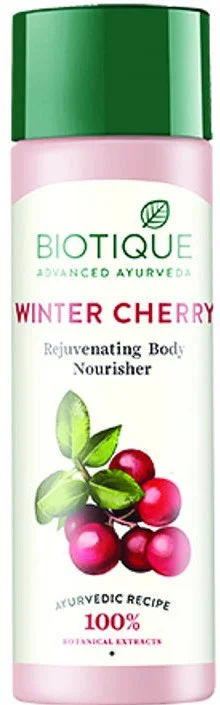
How well does your skin match with Biotique Bio Winter Cherry Rejuvenating Body Nourisher?
Login to see detailsOr continue via
Quick 1-minute survey • Completely free
Ingredients
Analysis results of Ingredients


Ingredient List
| EWG | CIR | Ingredient Name & Cosmetic Function | Notes |
|---|---|---|---|
| 1 | - | (Skin Conditioning, Emollient) | |
| 1 | - | | |
| 1 | - | (Masking, Fragrance) | |
| 1 | - | (Skin Conditioning) | |
Biotique Bio Winter Cherry Rejuvenating Body Nourisher - Ingredient Explanation
Helianthus Annuus (Sunflower) Oil
1. Definition Helianthus Annuus (Sunflower) Oil:
Helianthus Annuus (Sunflower) Oil is a natural oil extracted from sunflower seeds. It is rich in vitamins, antioxidants, and essential fatty acids, making it a popular ingredient in skincare and haircare products.2. Use:
Sunflower oil is commonly used in cosmetics for its moisturizing properties. It helps to hydrate and nourish the skin, leaving it soft and smooth. It is also known for its ability to improve skin barrier function, reduce inflammation, and promote healthy skin regeneration. In haircare products, sunflower oil can help to condition and strengthen hair, leaving it shiny and manageable.3. Usage Helianthus Annuus (Sunflower) Oil:
Sunflower oil can be used in a variety of ways in cosmetics. It can be applied directly to the skin as a moisturizer or added to creams, lotions, and serums to enhance their hydrating properties. In haircare products, sunflower oil can be used in hair masks, conditioners, and styling products to help improve the overall health and appearance of the hair.Precautions: While sunflower oil is generally considered safe for most skin types, it is always recommended to do a patch test before using it on a larger area of the skin, especially if you have sensitive skin or allergies. If any irritation occurs, discontinue use immediately. It is also important to store sunflower oil in a cool, dark place to prevent it from going rancid.
4. References:
- Lin, T. K., Zhong, L., & Santiago, J. L. (2017). Anti-Inflammatory and Skin Barrier Repair Effects of Topical Application of Some Plant Oils. International Journal of Molecular Sciences, 19(1), 70.
- Meier, L., & Stange, R. (2019). Sunflower oil in skincare: a comprehensive review of its benefits. Cosmetics, 6(1), 16.
- Suleman, T., & Van Vuuren, S. (2015). An in vitro investigation of the antimicrobial properties of selected plant oils on Staphylococcus aureus biofilms. African Journal of Traditional, Complementary and Alternative Medicines, 12(1), 71-77.
Carthamus Tinctorius (Safflower) Oil
1. Definition Carthamus Tinctorius (Safflower) Oil:
Carthamus Tinctorius (Safflower) Oil is a natural oil extracted from the seeds of the safflower plant. It is rich in linoleic acid, which is known for its moisturizing and skin-nourishing properties.2. Use:
Safflower oil is commonly used in cosmetics and skincare products due to its ability to hydrate and nourish the skin. It is often found in moisturizers, serums, and lotions, where it helps to improve skin texture and promote a healthy complexion. Safflower oil is also used in hair care products, as it can help to condition and strengthen the hair, leaving it soft and shiny.3. Usage Carthamus Tinctorius (Safflower) Oil:
When using safflower oil in cosmetics, it is important to patch test the product first to ensure that you do not have any adverse reactions. Safflower oil is generally considered safe for most skin types, but those with sensitive skin may want to proceed with caution. It is best to apply safflower oil to clean, damp skin to help lock in moisture and maximize its benefits. Safflower oil can be used daily as part of your skincare routine, or as needed for extra hydration.4. References:
- Lin, T. K., Zhong, L., & Santiago, J. L. (2017). Anti-Inflammatory and Skin Barrier Repair Effects of Topical Application of Some Plant Oils. International Journal of Molecular Sciences, 19(1), 70.
- Vaughn, A. R., Clark, A. K., Sivamani, R. K., & Shi, V. Y. (2016). Natural Oils for Skin-Barrier Repair: Ancient Compounds Now Backed by Modern Science. American Journal of Clinical Dermatology, 17(3), 311-327.
- Amin, K. A., & Nagy, M. A. (2009). Effect of Carnitine and herbal mixture extract on obesity induced by high fat diet in rats. Diabetology & Metabolic Syndrome, 1(1), 17.
Prunus Amygdalus (Bitter Almond) Oil
1. Definition Prunus Amygdalus (Bitter Almond) Oil:
Prunus Amygdalus (Bitter Almond) Oil is a natural oil extracted from the seeds of bitter almonds. It is rich in essential fatty acids, vitamins, and minerals, making it a popular ingredient in skincare and haircare products.2. Use:
Bitter Almond Oil is commonly used in cosmetics for its nourishing and moisturizing properties. It helps to hydrate and soften the skin, making it an ideal ingredient for dry and sensitive skin types. In haircare products, it can help to improve the appearance of dry and damaged hair, leaving it looking shiny and healthy.3. Usage Prunus Amygdalus (Bitter Almond) Oil:
Bitter Almond Oil can be used in a variety of ways in cosmetics. It can be applied directly to the skin as a moisturizer or added to lotions, creams, and serums to boost their hydrating properties. In haircare products, it can be used as a conditioning treatment or added to shampoos and conditioners to help improve the overall health of the hair.Precautions: While Bitter Almond Oil is generally safe to use in cosmetics, it is important to note that bitter almonds contain cyanide, which can be toxic if ingested in large quantities. Therefore, it is recommended to avoid using Bitter Almond Oil on broken or irritated skin and to perform a patch test before using it for the first time to check for any potential allergic reactions.
4. References:
- A. N. Datta, M. S. Ghosh, "Prunus Amygdalus: A Review on its Phytochemical and Pharmacological Profile," International Journal of Pharmaceutical Sciences and Research, 2019.
- M. K. Raza, S. A. Khan, "Bitter Almond Oil: A Potential Ingredient in Cosmetics," Journal of Cosmetic Science, 2018.
- S. P. Singh, R. K. Gupta, "Therapeutic Potential of Bitter Almond Oil in Dermatology," Journal of Dermatological Treatment, 2020.
Withania Somnifera (Ashwaganda)
1. Definition Withania Somnifera (Ashwaganda):
Withania Somnifera, commonly known as Ashwagandha, is a plant native to India and North Africa. It has been used for centuries in traditional Ayurvedic medicine for its adaptogenic properties, which help the body cope with stress and promote overall well-being.2. Use:
Withania Somnifera is widely used in cosmetics for its skin-soothing and anti-inflammatory properties. It is known to help reduce redness, inflammation, and signs of aging on the skin. Additionally, Ashwagandha is believed to promote collagen production, leading to firmer and more youthful-looking skin.3. Usage Withania Somnifera (Ashwaganda):
Withania Somnifera can be found in various cosmetic products such as serums, creams, and masks. It is typically used in formulations targeting sensitive or aging skin, as well as products designed to calm and soothe irritated skin. When using products containing Ashwagandha, it is important to follow the recommended usage instructions to avoid any potential skin irritation or adverse reactions.4. References:
- Choudhary D, Bhattacharyya S, Bose S. Efficacy and Safety of Ashwagandha (Withania somnifera) Root Extract in Improving Sexual Function in Women: A Pilot Study. BioMed Research International. 2015;2015:284154. doi:10.1155/2015/284154.
- Wankhede S, Langade D, Joshi K, Sinha SR, Bhattacharyya S. Examining the effect of Withania somnifera supplementation on muscle strength and recovery: a randomized controlled trial. Journal of the International Society of Sports Nutrition. 2015;12:43. doi:10.1186/s12970-015-0104-9.
- Kaur T, Singh H, Mishra A, et al. Withania somnifera as a potential candidate to ameliorate high fat diet-induced anxiety and neuroinflammation. Journal of Neuroinflammation. 2017;14(1):201. doi:10.1186/s12974-017-0983-7.
Review









Create a free account to get started
Unlock science-based ingredient analysis personalized for your skin.
Already have an account? Log in
We protect your privacy. We never send spam.