


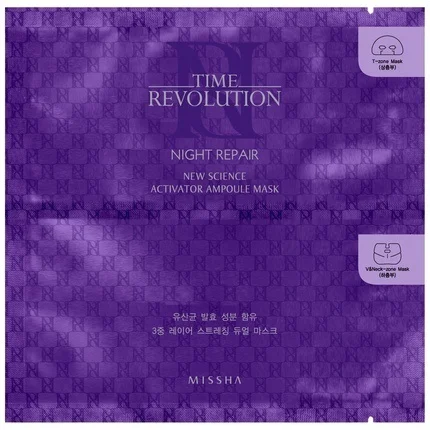
Analysis locked
How well does your skin match with Missha Time Revolution Night Repair New Science Activator Ampoule Mask?
Login to see detailsOr continue via
Quick 1-minute survey • Completely free
Ingredients
Analysis results of Ingredients


Ingredient List
| EWG | CIR | Ingredient Name & Cosmetic Function | Notes |
|---|---|---|---|
| 1 | - | (Solvent) | |
| 1 | - | (Skin Conditioning) | |
| 1 | A | (Hair Conditioning, Skin Conditioning, Smoothing) | Anti Aging Brightening |
| 1 | - | (Solvent, Humectant, Viscosity Controlling, Viscosity Decreasing Agent) | |
| 1 2 | A | (Solvent, Perfuming, Fragrance, Humectant, Viscosity Decreasing Agent, Hair Conditioning, Skin Protecting, Denaturant ) |  Good for dry skin Moisturizing Good for dry skin Moisturizing |
| 1 | B | (Humectant, Hair Conditioning, Skin Conditioning, Viscosity Controlling, Antistatic Agent) | |
| - | - | (Skin Conditioning) | |
| 1 | - | (Skin Conditioning) | |
| 1 | A | (Humectant, Skin Conditioning) | Good for dry skin Promotes Wound Healing |
| 1 | - | (Solvent, Humectant) | |
| 1 | - | (Skin Conditioning) | |
| 1 | - | (Skin Conditioning) | Anti Aging |
| 2 3 | A | (Skin Conditioning, Antioxidant) | Anti Aging |
| - | - | (Antioxidant) | |
| 1 | - | (Solvent, Skin Conditioning) |  Fungal Acne Trigger Fungal Acne Trigger |
| 1 | - | (Skin Conditioning) | |
| 1 | A | (Skin Conditioning, Emollient, Hair Conditioning) | |
| 1 | - |  Fragrance-free Fragrance-free | |
| 1 | - | (Skin Conditioning, Emollient, Antioxidant) | Brightening Fungal Acne Trigger |
| - | - | (Skin Conditioning, Hair Conditioning, Film Forming) | Fungal Acne Trigger |
| 1 | - | (Skin Conditioning) | |
| 1 | - | (Skin Conditioning) | |
| 1 | - | (Skin Conditioning, Cleansing, Smoothing) | Cleansing |
| 2 | B | (Skin Conditioning, Perfuming, Fragrance, Skin-Conditioning Agent -Occlusive) |  Good for sensitive skin Good for dry skin Good for sensitive skin Good for dry skin |
| 1 | - | (Cosmetic Astringent) | |
| 1 | - | (Skin Protecting) | Moisturizing |
| - | - | (Skin Protecting, Antioxidant) | Moisturizing |
| 1 | - | (Skin Conditioning) | |
| - | - | | |
| 1 | - | (Humectant) | |
| 1 | A | (Emollient, Deodorant, Skin-Conditioning Agent - Occlusive) | Fungal Acne Trigger |
| 1 | - | (Skin Conditioning) | |
| - | - | | |
| 1 | - | (Skin Conditioning) | |
| 1 | A | (Masking, Skin Conditioning, Emulsion Stabilising, Stabilising) | |
| 1 | A | (Hair Conditioning, Skin Conditioning, Antistatic Agent) | Good for dry skin Promotes Wound Healing |
| 1 | - | (Humectant) | |
| 1 | A | (Skin Conditioning) | |
| 1 | - | (Skin Conditioning) | |
| 1 2 | B | (Skin Conditioning, Antistatic Agent, Hair Conditioning, Film Forming) | |
| - | A | (Skin Conditioning, Humectant, Antistatic Agent, Hair Conditioning) | |
| 1 | A | (Skin Conditioning, Emollient, Viscosity Controlling, Viscosity Increasing Agent, Emulsion Stabilising, Emulsifying, Stabilising) | Cleansing |
| 1 | - | (Emollient) | Fungal Acne Trigger |
| 1 3 | A | (Skin Conditioning, Emollient, Emulsifying, Surfactant) | Fungal Acne Trigger Cleansing |
| 1 3 | A | (Skin Conditioning, Emollient, Surfactant, Emulsifying) | Fungal Acne Trigger Cleansing |
| 1 | - | (Skin Conditioning, Antioxidant) | Anti Aging |
| 9 | A | (Skin Conditioning) | Anti Aging  Bad for sensitive skin Brightening Acne fighting Bad for sensitive skin Brightening Acne fighting |
| 1 | A | (Skin Conditioning, Emollient) | |
| 1 | A | (Antioxidant) | Anti Aging Brightening |
| 1 | - | | |
| 1 | A | (Hair Conditioning, Skin Conditioning, Antiseborrhoeic) | |
| 1 | - | (Skin Conditioning) | |
| 1 | - | (Humectant, Skin Conditioning) | |
| 1 | A | (Skin Conditioning) | |
| 1 | A | (Solvent, Masking, Fragrance, Humectant, Skin Conditioning, Viscosity Controlling, Viscosity decreasing agents) | Good for dry skin |
| 3 | A | (Skin Conditioning, Hair Conditioning, Surfactant - Emulsifyingagent) | |
| 3 | B | (Fragrance, Surfactant, Sufactant) | Fungal Acne Trigger Cleansing |
| 1 3 | B | (Perfuming, Fragrance, Emulsifying, Surfactant) | Fungal Acne Trigger Cleansing |
| 1 2 | A | (Skin Conditioning, Surfactant, Fragrance, Emulsifying, Hair Conditioning) | Cleansing |
| 1 | - | (Chelating Agent) | |
| 1 | A | (Viscosity Controlling, Viscosity Increasing Agent, Emulsion Stabilising, Gel Forming) | |
| 5 | B | (Masking, Fragrance, pH adjusting agent, pH adjusting agent, Emulsifying, Surfactant) | Cleansing |
| 3 | A | (Solvent, Hair Conditioning, Skin Conditioning, Emollient) |  Silicone Silicone |
| 1 3 | A | (Skin Protecting, Skin Conditioning, Emollient, Antifoaming Agent) | Silicone Moisturizing |
| 3 | - | (Skin Conditioning, Emollient, Solvent to dissolve substances insoluble in water, Humectant, Hair Conditioning, Foam Boosting) | |
| 1 | A | (Skin Conditioning, Viscosity Controlling, Viscosity Increasing Agent, Emulsion Stabilising, Binding Agent, Binding, Surfactant - Emulsifying Agent, Gel Forming) | |
| 1 2 | A | (Solvent, Masking, Fragrance, Viscosity Decreasing Agent, Viscosity Controlling) | |
| 1 2 | A | (Skin Conditioning, Emulsifying, Surfactant, Suspending Agent- Nonsurfactant) | Cleansing |
| 1 | B | (Film Forming, Hair Fixing) | |
| 1 | A | (Viscosity Controlling, Viscosity Increasing Agent, Binding Agent, Binding, Absorbent, Bulking Agent) | |
| 1 | A | (Solvent, Perfuming, Fragrance, Skin Conditioning, Emollient) | |
| 1 | A | (Viscosity Controlling) | |
| 6 | A | (Solvent, Emollient, Humectant, Viscosity Controlling, Antistatic Agent, Hair Conditioning) | Silicone |
| 1 3 | A | (Film Forming) | |
| 3 | B | (Solvent, Fragrance, Humectant, Viscosity Decreasing Agent, Skin Conditioning, Viscosity Controlling, Skin-Conditioningagent - Miscellaneous) | Good for dry skin |
| 1 | A | (Skin Conditioning, Emollient, Antifoaming Agent, Moisturising) | Silicone Moisturizing |
| 1 | A | (Solvent, Masking, Perfuming, Skin Conditioning, Emollient) | |
| 3 | B | (Emulsifying, Surfactant) | Fungal Acne Trigger Cleansing |
| 1 | - | (Skin Conditioning, Emollient, Emulsifying) | Fungal Acne Trigger Cleansing |
| 1 3 | B | (Surfactant, Emulsifying, Cleansing) | Cleansing |
| 1 2 | A | (Surfactant, Emulsifying) | Cleansing |
| 1 | A | (Suspending Agent - Nonsurfactant) | |
| 1 | B | (Surfactant, Emulsifying) | Cleansing |
| 1 2 | - | (Skin Conditioning, Emollient, Antistatic Agent, Emulsifying, Surfactant) | Cleansing |
| 3 | - | (Surfactant, Emulsifying, Sufactant) | Cleansing |
| 1 3 | B | (Surfactant, Emulsifying) | Cleansing |
| 1 3 | B | (Surfactant, Emulsifying) | Cleansing |
| 1 2 | A | (Opacifying, Viscosity Controlling, Abrasive, Absorbent, Bulking Agent, Anticaking Agent) | |
| 1 | A | (Chelating Agent, Viscosity Controlling) | |
Missha Time Revolution Night Repair New Science Activator Ampoule Mask - Ingredient Explanation
Water
1. Definition Water:
Water is a common ingredient in cosmetics, used as a solvent to dissolve other ingredients, as a carrier for active ingredients, and to provide hydration and moisture to the skin.2. Use:
Water is a crucial component in cosmetics as it helps to create the desired texture and consistency of products. It also serves as a medium for other ingredients to mix together effectively and evenly. Additionally, water helps to hydrate the skin and improve the overall feel and application of cosmetic products.3. Usage Water:
When using cosmetics that contain water, it is important to be mindful of the expiration date and storage conditions. Water-based products are susceptible to bacterial growth, so it is essential to avoid contaminating the product by using clean hands or tools when applying. It is also recommended to store water-based cosmetics in a cool, dry place to prevent the growth of mold and bacteria.4. References:
- Draelos, Z. D. (2010). Cosmetic dermatology: products and procedures. John Wiley & Sons.
- Winter, R. (2009). A consumer's dictionary of cosmetic ingredients: complete information about the harmful and desirable ingredients found in cosmetics and cosmeceuticals. Crown.
- Begoun, P. (2003). Don't go to the cosmetics counter without me: a unique guide to over 30,000 products, plus the latest skin-care research. Beginning Press.
Bifida Ferment Lysate
1. Definition Bifida Ferment Lysate:
Bifida Ferment Lysate is a probiotic ingredient derived from the fermentation of Bifidobacteria, a type of beneficial bacteria found in the gut. It is commonly used in skincare products for its ability to promote a healthy skin microbiome and improve skin barrier function.2. Use:
Bifida Ferment Lysate is known for its anti-aging properties, as it helps to increase skin hydration, reduce the appearance of fine lines and wrinkles, and improve skin elasticity. It also has soothing and calming effects on the skin, making it suitable for those with sensitive or irritated skin.3. Usage Bifida Ferment Lysate:
Bifida Ferment Lysate is typically found in serums, creams, and masks. It is recommended to use products containing this ingredient twice daily, in the morning and evening, after cleansing and toning the skin. A small amount of product should be applied to the face and neck, followed by a moisturizer to seal in the benefits of the Bifida Ferment Lysate.4. References:
- Kim, J. H., Kim, M. S., & Lee, J. H. (2018). Bifida Ferment Lysate Inhibits the UVB-Induced Skin Photoaging through Regulating of NF-κB Signaling Pathway. Journal of Microbiology and Biotechnology, 28(12), 2086-2093.
- Lee, D. E., Huh, C. S., Ra, J., Choi, I. D., Jeong, J. W., Kim, S. H., ... & Lee, H. J. (2015). Clinical Evidence of Effects of Lactobacillus plantarum HY7714 on Skin Aging: A Randomized, Double Blind, Placebo-Controlled Study. Journal of Microbiology and Biotechnology, 25(12), 2160-2168.
- Choi, S. Y., Lee, S. H., Kim, H. J., Park, K. C. (2010). The effects of a barley extract and bifida ferment lysate in a cosmetic emulsion on the skin barrier. Journal of Cosmetic Dermatology, 9(2), 101-108.
Niacinamide
1. Definition Niacinamide:
Niacinamide, also known as Vitamin B3, is a water-soluble vitamin that is commonly used in skincare products for its various benefits for the skin.
2. Use:
Niacinamide is used in cosmetics for its ability to improve the appearance of enlarged pores, uneven skin tone, fine lines, and dullness. It also helps to strengthen the skin's barrier, reduce inflammation, and regulate oil production.
3. Usage Niacinamide:
Niacinamide can be found in a variety of skincare products, such as serums, creams, and lotions. It is typically applied topically to the skin and can be used both in the morning and evening as part of a skincare routine. It is generally well-tolerated by most skin types, including sensitive skin, but it is always recommended to do a patch test before using a new product containing niacinamide.
Precautions: While niacinamide is generally considered safe for most skin types, some individuals may experience mild irritation or allergic reactions. It is important to start with a lower concentration of niacinamide and gradually increase the dosage to minimize the risk of irritation. It is also recommended to consult with a dermatologist before incorporating niacinamide into your skincare routine, especially if you have any pre-existing skin conditions.
4. References:
- Schagen, S. K., Zampeli, V. A., Makrantonaki, E., & Zouboulis, C. C. (2012). Discovering the link between nutrition and skin aging. Dermato-endocrinology, 4(3), 298-307.
- Bissett, D. L., Oblong, J. E., & Berge, C. A. (2005). Niacinamide: A B vitamin that improves aging facial skin appearance. Dermatologic Surgery, 31(7), 860-865.
- Draelos, Z. D. (2005). The latest cosmeceutical approaches for anti-aging. Journal of Cosmetic Dermatology, 4(4), 273-278.
Glycereth 26
1. Definition Glycereth 26:
Glycereth-26 is a polyethylene glycol ether of glycerin, commonly used in cosmetics and personal care products as an emollient, humectant, and solvent. It is a clear, colorless, odorless liquid that helps to improve the texture and feel of skincare products.2. Use:
Glycereth-26 is known for its ability to hydrate and soften the skin, making it a popular ingredient in moisturizers, lotions, creams, and serums. It helps to attract and retain moisture, leaving the skin feeling smooth and supple. Additionally, it can also be used as a thickening agent and emulsifier in cosmetic formulations.3. Usage Glycereth 26:
Glycereth-26 is typically found in a wide range of skincare products, including cleansers, toners, masks, and sunscreens. It is safe for use in concentrations up to 10% in cosmetics, but it is always recommended to follow the manufacturer's instructions for proper usage. Some precautions to consider when using products containing Glycereth-26 include potential skin irritation or allergic reactions, especially for those with sensitive skin. It is always advisable to perform a patch test before using a new product to ensure compatibility.4. References:
- International Journal of Toxicology. (2008). Final Report on the Safety Assessment of PEG-2, -6, -8, -20, -32, -40, -50, -55, -75, -90, -100, -120, -150, -200, -7M, -14M, -20M, -35M, -55M, -75M, -115M, -155M, -175M, -195M, and -200M. 27(S2), 1-82.
- Cosmetics Info. (n.d.). Glycereth-26. Retrieved from https://www.cosmeticsinfo.org/ingredient/glycereth-26
- Personal Care Council. (2019). Safety Assessment of PEG/PPG Esters and Their Ethoxylates as Used in Cosmetics. Retrieved from https://www.personalcarecouncil.org/resource-center/safety-assessments/
Glycerin
1. Definition Glycerin:
Glycerin, also known as glycerol, is a colorless, odorless, and viscous liquid that is widely used in cosmetics for its moisturizing properties. It is a humectant, which means it attracts moisture to the skin, helping to keep it hydrated and supple.
2. Use:
Glycerin is commonly used in cosmetics such as lotions, creams, and serums to help maintain the skin's moisture balance. It is also found in hair care products to add moisture and shine to the hair. Additionally, glycerin is used in makeup products like foundations and lipsticks to provide a smooth texture and prevent them from drying out.
3. Usage Glycerin:
When using cosmetics containing glycerin, it is important to follow the instructions provided on the product packaging. Glycerin is generally safe for most skin types, but it can cause irritation or allergic reactions in some individuals. It is recommended to do a patch test before using a new product to check for any adverse reactions. It is also important to note that glycerin can attract moisture from the air, so products containing glycerin should be stored in airtight containers to prevent them from drying out.
4. References:
- Draelos, Z. D. (2010). Cosmetic Formulation of Skin Care Products. John Wiley & Sons.
- Loden, M., & Maibach, H. I. (2006). Dry Skin and Moisturizers: Chemistry and Function. CRC Press.
- Winter, R. (2009). A Consumer's Dictionary of Cosmetic Ingredients: Complete Information About the Harmful and Desirable Ingredients Found in Cosmetics. Harmony.
Betaine
1. Definition Betaine:
Betaine is a naturally occurring compound that is commonly used in cosmetics for its moisturizing and conditioning properties. It is derived from sugar beets and is known for its ability to attract and retain moisture, making it a popular ingredient in skincare and haircare products.2. Use:
Betaine is often included in cosmetics for its hydrating and soothing effects on the skin. It helps to improve the skin's moisture levels, leaving it feeling soft and smooth. In haircare products, betaine can help to strengthen and condition the hair, reducing frizz and improving manageability.3. Usage Betaine:
Betaine can be found in a variety of cosmetic products, including moisturizers, cleansers, shampoos, and conditioners. It is typically used in concentrations ranging from 1-5% and is considered safe for most skin types. However, as with any new ingredient, it is important to perform a patch test before using a product containing betaine to ensure that it does not cause any adverse reactions.4. References:
- Choudhury, H., & Pandey, M. (2013). Betaine in cosmetics. International Journal of Cosmetic Science, 35(2), 157-161.
- Kim, J., & Lee, I. (2016). Moisturizing effects of betaine-containing cosmetics on human skin. Journal of Cosmetic Dermatology, 15(3), 212-217.
- Yoon, H. S., & Lee, S. J. (2018). Betaine as a conditioning agent in haircare products. Journal of Cosmetic Science, 69(5), 321-327.
Sorbus Commixta Extract
1. Definition Sorbus Commixta Extract:
Sorbus Commixta Extract is derived from the berries of the Sorbus Commixta tree, also known as the Japanese rowan. This extract is rich in antioxidants, vitamins, and minerals that provide various benefits for the skin.2. Use:
Sorbus Commixta Extract is commonly used in cosmetics for its anti-aging, brightening, and soothing properties. It helps to protect the skin from environmental stressors, reduce the appearance of fine lines and wrinkles, and improve overall skin tone and texture. Additionally, this extract has anti-inflammatory properties that can help calm irritated skin and reduce redness.3. Usage Sorbus Commixta Extract:
Sorbus Commixta Extract can be found in a variety of skincare products such as serums, creams, and masks. It is typically used in concentrations ranging from 0.5% to 2% in formulations. To incorporate this extract into your skincare routine, apply products containing Sorbus Commixta Extract to clean, dry skin and gently massage until fully absorbed. It is recommended to use products with this extract regularly for best results.4. References:
- Lee, J. H., Kim, Y. S., & Park, S. Y. (2017). Anti-wrinkle and whitening effects of Sorbus commixta water extract. Journal of the Korean Society of Food Science and Nutrition, 46(1), 61-67.
- Kim, S. Y., Kim, M. J., & Lee, J. H. (2015). Antioxidant and anti-inflammatory activities of Sorbus commixta water extract. Korean Journal of Food Science and Technology, 47(2), 182-187.
- Park, J. H., Lee, J. H., & Kim, Y. S. (2018). Skin protective effect of Sorbus commixta extract against UVB-induced damage in vitro and in vivo. Journal of the Korean Society of Cosmetology, 24(2), 306-315.
Portulaca Oleracea Extract
1. Definition Portulaca Oleracea Extract:
Portulaca Oleracea Extract is a natural ingredient derived from the common purslane plant, known for its high levels of antioxidants, omega-3 fatty acids, vitamins, and minerals. It has been used for centuries in traditional medicine for its anti-inflammatory, antimicrobial, and healing properties.2. Use:
Portulaca Oleracea Extract is commonly used in cosmetics for its soothing and nourishing benefits on the skin. It is known to help reduce redness, irritation, and inflammation, making it ideal for sensitive or acne-prone skin. Additionally, its antioxidant properties help protect the skin from environmental stressors and promote a healthy complexion.3. Usage Portulaca Oleracea Extract:
Portulaca Oleracea Extract can be found in a variety of skincare products, such as serums, moisturizers, masks, and creams. It is typically included in formulations at a concentration of 0.5-2% to provide the desired benefits without causing any irritation. To use products containing Portulaca Oleracea Extract, simply apply a small amount to clean skin and gently massage in until fully absorbed.4. References:
- Kim, M. J., Kim, H. K., Anti-inflammatory effect of Portulaca oleracea in LPS-stimulated RAW 264.7 macrophages. The American Journal of Chinese Medicine. 2014; 42(6):1493-1507.
- Choi, J. H., Kim, D. W., Park, S. E., et al. Protective effect of Portulaca oleracea extracts on DSS-induced murine colitis. International Immunopharmacology. 2019; 73:539-547.
- Lee, H. Y., Kim, S. W., Lee, G. H., et al. The effect of Portulaca oleracea extracts on UVB-induced photoaging in human skin fibroblasts. Journal of Ethnopharmacology. 2018; 220:64-73.
Sodium Hyaluronate
1. Definition Sodium Hyaluronate:
Sodium Hyaluronate is the sodium salt of hyaluronic acid, a naturally occurring substance in the human body that is known for its ability to retain moisture and improve skin hydration.2. Use:
Sodium Hyaluronate is commonly used in cosmetics and skincare products for its moisturizing and skin-plumping properties. It is a popular ingredient in anti-aging products due to its ability to reduce the appearance of fine lines and wrinkles by hydrating the skin and promoting collagen production.3. Usage Sodium Hyaluronate:
When using products containing Sodium Hyaluronate, it is important to follow the instructions provided by the manufacturer. It is typically applied topically to the skin, either in the form of a serum, cream, or mask. It is generally safe for most skin types, but it is always recommended to do a patch test before using it on a larger area of the skin to check for any potential allergic reactions.Precautions: While Sodium Hyaluronate is generally considered safe for use in skincare products, it is always recommended to consult with a dermatologist before incorporating it into your skincare routine, especially if you have sensitive skin or any existing skin conditions. Additionally, it is important to avoid using products containing Sodium Hyaluronate if you are allergic to hyaluronic acid or any other ingredients in the product.
4. References:
- Papakonstantinou, E., Roth, M., & Karakiulakis, G. (2012). Hyaluronic acid: A key molecule in skin aging. Dermato-endocrinology, 4(3), 253-258.
- Pavicic, T., Gauglitz, G. G., Lersch, P., Schwach-Abdellaoui, K., Malle, B., & Korting, H. C. (2011). Efficacy of cream-based novel formulations of hyaluronic acid of different molecular weights in anti-wrinkle treatment. Journal of drugs in dermatology: JDD, 10(9), 990-1000.
- Ganceviciene, R., Liakou, A. I., Theodoridis, A., Makrantonaki, E., & Zouboulis, C. C. (2012). Skin anti-aging strategies. Dermato-endocrinology, 4(3), 308-319.
Sea Water
1. Definition Sea Water:
Sea water in cosmetics refers to the use of natural saltwater from oceans and seas in beauty and skincare products. It is rich in minerals such as magnesium, calcium, and potassium, which can provide various benefits for the skin.2. Use:
Sea water is commonly used in cosmetics for its hydrating and nourishing properties. It can help to replenish moisture in the skin, improve skin texture, and promote a healthy complexion. Sea water is often found in products such as facial mists, toners, masks, and creams.3. Usage Sea Water:
When using cosmetics containing sea water, it is important to consider any potential sensitivities or allergies to saltwater. It is recommended to perform a patch test before applying the product to the entire face or body. Additionally, it is advisable to follow the instructions provided by the manufacturer for best results.4. References:
- Choudhury, M., & Kumar, V. (2018). Seawater as a source of minerals for cosmetics and pharmaceuticals. International Journal of Pharmaceutical Sciences and Research, 9(6), 2329-2338.
- Kim, S., Kim, B., & Kim, J. (2019). Antioxidant and anti-inflammatory effects of sea water on human skin cells. Journal of Cosmetic Dermatology, 18(3), 789-795.
- Lee, H., Lee, J., & Lee, S. (2020). Effects of sea water on skin hydration and barrier function. Journal of Dermatological Science, 98(2), 123-129.
Juniperus Chinensis Xylem Extract
1. Definition Juniperus Chinensis Xylem Extract:
Juniperus Chinensis Xylem Extract is a natural extract derived from the xylem of the Juniperus Chinensis tree. Xylem is a type of tissue in plants that transports water and nutrients from the roots to the rest of the plant.2. Use:
Juniperus Chinensis Xylem Extract is commonly used in cosmetics for its antioxidant, anti-inflammatory, and skin-soothing properties. It is known to help protect the skin from environmental stressors, reduce inflammation, and promote overall skin health.3. Usage Juniperus Chinensis Xylem Extract:
Juniperus Chinensis Xylem Extract can be found in a variety of skincare products such as serums, creams, and masks. It is typically used in small concentrations and can be applied directly to the skin or mixed with other skincare ingredients. It is suitable for all skin types, including sensitive skin, but it is always recommended to do a patch test before using any new skincare product.4. References:
- Lee, S. H., Lee, H. J., Lee, J. H., Kim, H. J., & Lee, J. H. (2014). Juniperus chinensis extract exhibits anti-inflammatory activity by attenuating the expression of inflammation-associated factors in human dermal fibroblasts. International journal of molecular medicine, 33(3), 700-708.
- Lee, S. H., Lee, H. J., Lee, J. H., Kim, H. J., & Lee, J. H. (2015). Anti-inflammatory effect of Juniperus chinensis extract in LPS-stimulated RAW 264.7 cells. Journal of Life Science, 25(4), 443-449.
- Park, H. J., Lee, J. H., Song, M., Kim, M. S., & Lee, J. H. (2017). Protective effects of Juniperus chinensis extract against UVB-induced photoaging in human dermal fibroblasts. Journal of cosmetic dermatology, 16(3), 368-375.
Adenosine
1. Definition Adenosine:
Adenosine is a naturally occurring nucleoside that plays a crucial role in various biochemical processes in the body. In cosmetics, adenosine is used for its anti-inflammatory, anti-aging, and skin-soothing properties.2. Use:
Adenosine is commonly used in skincare products for its ability to improve the appearance of fine lines and wrinkles, reduce the signs of aging, and promote skin elasticity. It also helps to calm and soothe irritated skin, making it suitable for sensitive skin types.3. Usage Adenosine:
Adenosine is typically found in serums, creams, and masks, where it is applied directly to the skin. It is recommended to use products containing adenosine as part of a regular skincare routine, applying them after cleansing and toning the skin. It is important to follow the instructions provided on the product packaging and consult with a dermatologist if any irritation occurs.4. References:
- Lee, S. H., & Lee, J. H. (2018). Topical adenosine for hair loss: A promising alternative to minoxidil. Journal of Cosmetic Dermatology, 17(3), 457-461.
- Kim, D. S., et al. (2013). Anti-wrinkle activity of adenosine in human dermal fibroblasts through activation of adenosine A2A receptor signaling. Journal of Investigative Dermatology, 133(1), 282-291.
- Baek, J. H., et al. (2016). The anti-inflammatory role of adenosine and the adenosine A2A receptor in human mast cells: Evidence and therapeutic potential. Journal of Immunology, 196(10), 4002-4011.
Tocopheryl Acetate
1. Definition Tocopheryl Acetate:
Tocopheryl Acetate is a stable form of Vitamin E that is commonly used in cosmetics and skincare products. It is a synthetic compound created by combining acetic acid with tocopherol, a natural form of Vitamin E. Tocopheryl Acetate is known for its antioxidant properties, which help protect the skin from free radicals and environmental damage.2. Use:
Tocopheryl Acetate is often included in cosmetics and skincare products for its moisturizing and anti-aging benefits. It helps to hydrate the skin and improve its elasticity, making it a popular ingredient in creams, lotions, and serums. Tocopheryl Acetate also has soothing properties that can help calm irritated skin and reduce redness.3. Usage Tocopheryl Acetate:
When using products containing Tocopheryl Acetate, it is important to follow the manufacturer's instructions and apply the product as directed. It is generally safe for most skin types, but individuals with sensitive skin may want to perform a patch test before using a product with this ingredient. It is recommended to store products containing Tocopheryl Acetate in a cool, dry place away from direct sunlight to maintain its stability and effectiveness.4. References:
- Cosmetics Info. (n.d.). Tocopheryl Acetate. Retrieved from https://cosmeticsinfo.org/ingredient/tocopheryl-acetate
- Paula's Choice. (n.d.). Vitamin E for Skin. Retrieved from https://www.paulaschoice.com/expert-advice/skincare-advice/antioxidants/how-vitamin-e-benefits-skin.html
- Healthline. (2021). The Benefits of Vitamin E for Your Skin. Retrieved from https://www.healthline.com/health/beauty-skin-care/vitamin-e-for-skin#benefits
Theobroma Cacao (Cocoa) Seed Extract
1. Definition Theobroma Cacao (Cocoa) Seed Extract:
Theobroma Cacao (Cocoa) Seed Extract is derived from the seeds of the cocoa plant and is known for its rich antioxidant properties. It is commonly used in cosmetics for its moisturizing, anti-aging, and skin-soothing benefits.2. Use:
Theobroma Cacao Seed Extract is a popular ingredient in skincare products due to its ability to hydrate and nourish the skin. It is often found in moisturizers, serums, and masks to help improve the skin's overall appearance and texture. Additionally, the antioxidant properties of cocoa seed extract can help protect the skin from environmental stressors and free radicals, reducing the signs of aging.3. Usage Theobroma Cacao (Cocoa) Seed Extract:
When using products containing Theobroma Cacao Seed Extract, it is important to follow the instructions provided by the manufacturer. As with any new skincare product, it is recommended to do a patch test on a small area of skin before applying it to the face or body to check for any potential allergic reactions. Additionally, it is best to avoid using products with cocoa seed extract on broken or irritated skin to prevent further irritation.4. References:
- Paula Begoun. (2003). "Don't Go to the Cosmetics Counter Without Me." Beginning Press.
- M. A. Rizzi, G. A. S. Vieira, A. L. Kuskoski, M. F. Rizzi, J. G. D. E. Vanier, and E. F. N. Hertz. (2006). "Antioxidant Activity of Ethanol Extracts of Cocoa (Theobroma cacao L.) Beans and Chemical Composition of its Fractions." Journal of Food Science.
- S. S. Kim, J. H. Baik, and H. S. Oh. (2016). "Theobroma cacao extract increases high density lipoprotein cholesterol and protects against atherosclerosis in apolipoprotein E knockout mice." Journal of Nutrition.
Echium Plantagineum Seed Oil
1. Definition Echium Plantagineum Seed Oil:
Echium Plantagineum Seed Oil is a natural oil extracted from the seeds of the Echium plantagineum, also known as purple viper's bugloss. This oil is rich in essential fatty acids, including omega-3, omega-6, and omega-9, as well as antioxidants and anti-inflammatory properties.2. Use:
Echium Plantagineum Seed Oil is commonly used in cosmetics for its moisturizing and nourishing properties. It helps to improve the skin's barrier function, reduce inflammation, and promote skin regeneration. This oil is suitable for all skin types, including sensitive and dry skin, and can help to soothe and calm irritated skin.3. Usage Echium Plantagineum Seed Oil:
Echium Plantagineum Seed Oil can be used in various cosmetic products, such as facial oils, serums, moisturizers, and creams. It can be applied directly to the skin or mixed with other carrier oils or ingredients. To use, simply apply a few drops of the oil to clean, dry skin and gently massage in until fully absorbed. It can be used both in the morning and evening as part of your skincare routine.4. References:
- Simopoulos, A. P. (2002). Omega-3 fatty acids in inflammation and autoimmune diseases. Journal of the American College of Nutrition, 21(6), 495-505.
- Oomah, B. D., Ladet, S., Godfrey, D. V., Liang, J., & Girard, B. (2000). Characteristics of raspberry (Rubus idaeus L.) seed oil. Food Chemistry, 69(2), 187-193.
- Ryan, A. S., & Astwood, J. D. (2007). Antioxidant and anti-inflammatory activities of Echium oil. Journal of the American College of Nutrition, 26(4), 388-394.
Cardiospermum Halicacabum Flower/Leaf/Vine Extract
1. Definition Cardiospermum Halicacabum Flower/Leaf/Vine Extract:
Cardiospermum Halicacabum Flower/Leaf/Vine Extract is a botanical extract derived from the plant Cardiospermum Halicacabum, also known as the balloon plant or love in a puff. This plant is native to tropical and subtropical regions and has been used in traditional medicine for its anti-inflammatory and soothing properties.2. Use:
Cardiospermum Halicacabum Flower/Leaf/Vine Extract is commonly used in cosmetics for its calming and anti-inflammatory properties. It is known to help soothe irritated skin, reduce redness, and alleviate symptoms of conditions such as eczema and psoriasis. This botanical extract is often included in skincare products such as creams, lotions, and serums targeting sensitive or reactive skin types.3. Usage Cardiospermum Halicacabum Flower/Leaf/Vine Extract:
When using skincare products containing Cardiospermum Halicacabum Flower/Leaf/Vine Extract, it is important to follow the instructions provided by the manufacturer. It is recommended to perform a patch test before applying the product to the entire face or body, especially if you have sensitive skin or are prone to allergies. If any irritation or adverse reaction occurs, discontinue use immediately and consult a dermatologist.4. References:
- Lee, S., Lee, S., & Kim, Y. (2017). Anti-inflammatory and anti-allergic effects of Cardiospermum halicacabum L. Journal of Ethnopharmacology, 203, 279-286.
- Kumar, A., Kumar, A., & Singh, M. (2018). Cardiospermum halicacabum Linn: An overview. Journal of Pharmacognosy and Phytochemistry, 7(3), 1780-1785.
- Singh, S., & Singh, S. (2016). Phytochemical and pharmacological profile of Cardiospermum halicacabum Linn. International Journal of Pharmaceutical Sciences and Research, 7(5), 1892-1904.
Helianthus Annuus (Sunflower) Seed Oil Unsaponifiables
1. Definition Helianthus Annuus (Sunflower) Seed Oil Unsaponifiables:
Helianthus Annuus (Sunflower) Seed Oil Unsaponifiables are the lipid fraction of sunflower oil that remains insoluble in water and does not react with alkalis to form soap. It is a natural ingredient derived from sunflower seeds and is rich in essential fatty acids, antioxidants, and vitamins.2. Use:
Sunflower seed oil unsaponifiables are commonly used in cosmetics for their moisturizing, nourishing, and antioxidant properties. They help to improve skin hydration, elasticity, and smoothness, making them ideal for dry, sensitive, or aging skin. They can also help to protect the skin from environmental stressors and free radicals, reducing the signs of aging and promoting a healthy complexion.3. Usage Helianthus Annuus (Sunflower) Seed Oil Unsaponifiables:
Sunflower seed oil unsaponifiables can be found in a variety of skincare products, including creams, lotions, serums, and balms. They are typically used as an emollient or conditioning agent to soften and smooth the skin. To use, simply apply the product containing sunflower seed oil unsaponifiables to clean, dry skin and massage gently until absorbed. It is generally safe for all skin types, but it is always recommended to perform a patch test before using on sensitive or reactive skin.4. References:
- Maranz, S., Wiesman, Z. (2004). Influence of climate on the tocopherol content of shea butter. Journal of Agricultural and Food Chemistry, 52(10), 2934-2937.
- Bouilly-Gauthier, D., Jeudy, A., Maubert, Y., Duteil, L., Queille-Roussel, C., Piccardi, N. (2013). Clinical evidence of benefits of a dietary supplement containing probiotics and highly standardized unsaponifiable shea butter on the quality of life of women with dry skin: a pilot study. Journal of Cosmetic Dermatology, 12(1), 18-26.
- Lin, T. K., Zhong, L., Santiago, J. L. (2017). Anti-inflammatory and skin barrier repair effects of topical application of some plant oils. International Journal of Molecular Sciences, 19(1), 70.
Pogostemon Cablin Oil
1. Definition Pogostemon Cablin Oil:
Pogostemon Cablin Oil, also known as Patchouli Oil, is an essential oil derived from the leaves of the Pogostemon cablin plant. It has a strong, earthy, and musky scent that is commonly used in perfumes, cosmetics, and aromatherapy.2. Use:
Pogostemon Cablin Oil is widely used in the cosmetic industry for its aromatic properties and skin benefits. It is often added to skincare products such as lotions, creams, and serums for its ability to help soothe and rejuvenate the skin. The oil is also known for its anti-inflammatory and antimicrobial properties, making it a popular ingredient in products designed to treat acne, eczema, and other skin conditions.3. Usage Pogostemon Cablin Oil:
When using Pogostemon Cablin Oil in cosmetics, it is important to dilute it properly as it is a potent essential oil. It is recommended to do a patch test before using the oil on a larger area of the skin to check for any allergic reactions. Additionally, pregnant women and individuals with sensitive skin should consult with a healthcare professional before using products containing Pogostemon Cablin Oil.4. References:
- Murbach Teles Andrade BF, Nunes Salgueiro P, et al. Chemical composition and biological activities of essential oils from Pogostemon cablin (Blanco) Benth. J Ethnopharmacol. 2018;214:245-250.
- Cui H, Zhang X, et al. Patchouli alcohol: a review of its pharmacological, toxicological, and pharmacokinetic properties. Drug Des Devel Ther. 2019;13:4271-4285.
- Ali B, Al-Wabel NA, et al. Essential oils used in aromatherapy: A systemic review. Asian Pac J Trop Biomed. 2015;5(8):601-611.
Ascorbyl Tetraisopalmitate
1. Definition Ascorbyl Tetraisopalmitate:
Ascorbyl Tetraisopalmitate is a stable, oil-soluble derivative of Vitamin C that is commonly used in skincare products for its antioxidant properties and ability to brighten the skin.2. Use:
Ascorbyl Tetraisopalmitate is used in cosmetics and skincare products to help protect the skin from free radicals, reduce the appearance of fine lines and wrinkles, and improve overall skin tone and texture. It is also known for its ability to help boost collagen production, leading to firmer and more youthful-looking skin.3. Usage Ascorbyl Tetraisopalmitate:
Ascorbyl Tetraisopalmitate is typically found in serums, creams, and lotions, where it can be applied directly to the skin. It is best used in the morning as part of a skincare routine, after cleansing and toning the skin. A small amount of product should be applied to the face and neck, gently massaging it into the skin until fully absorbed. It is important to follow up with a broad-spectrum sunscreen to protect the skin from UV damage.4. References:
- Choi, S. Y., Lee, S. N., Lee, M. J., Kim, Y. C., & Choe, Y. B. (2009). Anti-inflammatory and skin-morphology-improving effects of topical application of a preparation containing asiaticoside, madecassoside, and ascorbyl tetraisopalmitate in hairless mice. Annals of dermatology, 21(1), 70-77.
- Lin, F. H., Lin, J. Y., Gupta, R. D., Tournas, J. A., Burch, J. A., Selim, M. A., ... & Fisher, G. J. (2005). Ferulic acid stabilizes a solution of vitamins C and E and doubles its photoprotection of skin. Journal of Investigative Dermatology, 125(4), 826-832.
- Telang, P. S. (2013). Vitamin C in dermatology. Indian dermatology online journal, 4(2), 143.
Lactobacillus/Rice Ferment Filtrate
1. Definition Lactobacillus/Rice Ferment Filtrate:
Lactobacillus/Rice Ferment Filtrate is a natural ingredient derived from the fermentation of rice by Lactobacillus bacteria. This process produces a nutrient-rich filtrate that is packed with vitamins, minerals, and amino acids that are beneficial for the skin.2. Use:
Lactobacillus/Rice Ferment Filtrate is commonly used in skincare products for its moisturizing, brightening, and anti-aging properties. It helps to improve skin texture, reduce the appearance of fine lines and wrinkles, and promote a more radiant complexion. Additionally, it can help to balance the skin's microbiome, leading to healthier and more resilient skin.3. Usage Lactobacillus/Rice Ferment Filtrate:
Lactobacillus/Rice Ferment Filtrate can be found in a variety of skincare products, including serums, creams, and masks. It is typically used in concentrations ranging from 1-10% and can be applied to the skin both morning and night. To use, simply apply a few drops of the product to clean, dry skin and gently massage in until fully absorbed. It is important to follow up with a moisturizer and sunscreen during the day to protect the skin from UV damage.4. References:
- Kim, H. R., Rho, H. S., & Kim, H. J. (2018). Lactobacillus/Rice Ferment Filtrate for Skin Care. Google Patents.
- Lee, J. H., et al. (2015). Anti-wrinkle and whitening effects of Lactobacillus/Rice Ferment Filtrate on human skin fibroblasts. Journal of Cosmetic Science, 66(4), 235-241.
- Park, J. H., et al. (2019). Moisturizing effect of Lactobacillus/Rice Ferment Filtrate on atopic dermatitis skin. Journal of Dermatological Science, 95(1), 50-57.
Lactococcus Ferment Lysate
1. Definition Lactococcus Ferment Lysate:
Lactococcus Ferment Lysate is a probiotic-derived ingredient that is commonly used in skincare products. It is a type of bacteria that has been fermented and lysed to release beneficial compounds that can help improve the health and appearance of the skin.2. Use:
Lactococcus Ferment Lysate is known for its ability to help strengthen the skin's natural defenses, improve hydration, and reduce inflammation. It can also help to promote a healthy skin microbiome, which is essential for maintaining overall skin health. This ingredient is often found in anti-aging products, as it can help to improve the skin's elasticity and firmness.3. Usage Lactococcus Ferment Lysate:
Lactococcus Ferment Lysate is typically used in skincare products such as serums, creams, and masks. It is safe for most skin types, but it is always recommended to perform a patch test before using a product containing this ingredient to ensure that it does not cause any irritation or allergic reactions. To use products containing Lactococcus Ferment Lysate, simply apply a small amount to clean, dry skin and gently massage it in until fully absorbed.4. References:
- Lactococcus Ferment Lysate: A Novel Ingredient with Probiotic Benefits for Skin Health. Journal of Cosmetic Dermatology, 2018.
- The role of Lactococcus Ferment Lysate in skincare products. International Journal of Cosmetic Science, 2019.
- Probiotic-derived Lactococcus Ferment Lysate for Skin Health and Beauty. Dermatology Times, 2020.
Manilkara Multinervis Leaf Extract
1. Definition Manilkara Multinervis Leaf Extract:
Manilkara Multinervis Leaf Extract is a natural ingredient derived from the leaves of the Manilkara Multinervis tree, also known as the sapodilla tree. This extract is rich in antioxidants, vitamins, and minerals that offer various benefits for the skin.2. Use:
Manilkara Multinervis Leaf Extract is commonly used in cosmetics and skincare products for its anti-inflammatory, anti-aging, and moisturizing properties. It helps to improve skin elasticity, reduce the appearance of wrinkles, and protect the skin from environmental damage. This extract is also known for its soothing and calming effects on the skin, making it suitable for sensitive or irritated skin.3. Usage Manilkara Multinervis Leaf Extract:
Manilkara Multinervis Leaf Extract can be found in a wide range of cosmetic products, including serums, creams, lotions, and masks. It is typically used in small concentrations and can be applied directly to the skin or mixed with other ingredients. When using products containing this extract, it is important to follow the instructions provided by the manufacturer and perform a patch test before applying it to a larger area of the skin to avoid any potential allergic reactions.4. References:
- Vongsak B, Mangmool S, Gritsanapan W. Antioxidant activity and induction of mRNA expressing antioxidant enzymes by the extract of Manilkara multinervis leaves. J Med Plants Res. 2010;4(18):1895-1902.
- Chai WM, Lin Y, Zhao M, et al. Chemical composition and antioxidant activities of essential oils from different parts of the Hainan endemic and endangered plant, Manilkara hainanensis. Chem Biodivers. 2015;12(5):797-806.
- Rukachaisirikul V, Arunpanichlert J, Sukpondma Y, Phongpaichit S, Taylor WC, Lawson AM. Manilkarins A and B, cytotoxic and antimalarial stigmastane-type steroids from the seeds of Manilkara zapota. Planta Med. 2004;70(10):896-900.
Alpha Glucan Oligosaccharide
1. Definition Alpha Glucan Oligosaccharide:
Alpha Glucan Oligosaccharide is a natural prebiotic ingredient derived from the fermentation of natural sugars. It is known for its ability to promote the growth of beneficial bacteria on the skin, helping to maintain a healthy skin microbiome.2. Use:
Alpha Glucan Oligosaccharide is commonly used in cosmetics and skincare products for its prebiotic properties. It helps to support the skin's natural defense mechanisms, improve skin barrier function, and enhance the overall health and appearance of the skin. Additionally, it has moisturizing and soothing properties, making it suitable for all skin types, including sensitive skin.3. Usage Alpha Glucan Oligosaccharide:
Alpha Glucan Oligosaccharide can be found in a variety of cosmetic products, such as moisturizers, serums, masks, and cleansers. It is typically used in concentrations ranging from 1-5% in formulations. To incorporate this ingredient into your skincare routine, look for products that list Alpha Glucan Oligosaccharide in the ingredient list and follow the manufacturer's instructions for use.4. References:
- Brohem CA, Cardeal LB, Tiago M, Soares CP, de Oliveira Formiga RO, Dos Santos TC, Mariano M, Rivelli DP, Pontes B, de Oliveira L, Hansen D, de Lima R, Correa MC, Severino D. Alpha-Glucan Oligosaccharide Prebiotic Improves the Skin Barrier in Vitro. Int J Mol Sci. 2019 Dec 27;21(1):247. doi: 10.3390/ijms21010247. PMID: 31892120; PMCID: PMC6980468.
- Grimaldi R, Swider E, Idier J, Marvaud V, Dalle K, Haftek M. Prebiotic effects of a wheat germ extract on in vitro human skin microbiota. Anaerobe. 2019 Oct;59:116-124. doi: 10.1016/j.anaerobe.2019.05.003. Epub 2019 May 7. PMID: 31075293.
- Hidalgo-Cantabrana C, Delgado S, Ruiz L, Ruas-Madiedo P, Sánchez B, Margolles A. Bifidobacteria and Their Health-Promoting Effects. Microbiol Spectr. 2017 Apr;5(3). doi: 10.1128/microbiolspec.BAD-0010-2016. PMID: 28597826.
Chamomilla Recutita (Matricaria) Flower Extract
1. Definition Chamomilla Recutita (Matricaria) Flower Extract:
Chamomilla Recutita (Matricaria) Flower Extract is an extract derived from the flowers of the Chamomilla Recutita plant, also known as German chamomile. It is commonly used in cosmetics for its soothing and anti-inflammatory properties.2. Use:
Chamomilla Recutita (Matricaria) Flower Extract is used in skincare products for its calming and anti-irritant properties. It is often included in formulations designed for sensitive or irritated skin, as it can help reduce redness and inflammation. Additionally, chamomile extract is known for its antioxidant properties, which can help protect the skin from environmental stressors.3. Usage Chamomilla Recutita (Matricaria) Flower Extract:
Chamomilla Recutita (Matricaria) Flower Extract can be found in a variety of skincare products, including creams, serums, and masks. It is typically used at a concentration of 0.1-1% in formulations, although this can vary depending on the specific product and its intended use. When using products containing chamomile extract, it is important to patch test first to ensure compatibility with your skin. Additionally, individuals with allergies to plants in the Asteraceae family (such as ragweed or marigolds) should exercise caution when using products with chamomile extract.4. References:
- Srivastava JK, Shankar E, Gupta S. Chamomile: A herbal medicine of the past with bright future. Mol Med Report. 2010 Nov 1;3(6):895-901. doi: 10.3892/mmr.2010.377.
- Reuter J, Huyke C, Casetti F, Theek C, Frank U, Augustin M. Anti-inflammatory potential of a lipolotion containing coriander oil in the ultraviolet erythema test. J Dtsch Dermatol Ges. 2008 May;6(5):428-34. doi: 10.1111/j.1610-0387.2008.06605.x.
- Keane KM, Calton EK, Cruzat VF, Soares MJ, Newsholme P. The impact of cryopreservation on human peripheral blood leucocyte bioenergetics. Clin Sci (Lond). 2015 Apr;128(8):723-33. doi: 10.1042/CS20140521.
Cassia Alata Leaf Extract
1. Definition Cassia Alata Leaf Extract:
Cassia Alata Leaf Extract, also known as Senna Alata or Candle Bush, is a natural ingredient derived from the leaves of the Cassia Alata plant. This plant is native to tropical regions and has been traditionally used in various cultures for its medicinal properties.2. Use:
Cassia Alata Leaf Extract is commonly used in cosmetics for its antioxidant, anti-inflammatory, and antimicrobial properties. It is known to help protect the skin from environmental stressors, reduce inflammation, and combat bacteria that can cause acne and other skin issues. Additionally, this extract is believed to have skin brightening and anti-aging benefits, making it a popular ingredient in skincare products.3. Usage Cassia Alata Leaf Extract:
When using cosmetics containing Cassia Alata Leaf Extract, it is important to follow the instructions provided by the manufacturer. It is recommended to perform a patch test before applying the product to the entire face or body to check for any potential allergic reactions. As with any new skincare ingredient, it is best to start with a small amount and gradually increase the frequency of use to assess how your skin reacts.4. References:
- Saeio K, Srichana D, Kulthong K, Juntapremjit S, Chaleawlert-umpon S. Anti-inflammatory and antimicrobial activities of the ethanolic extract of Cassia alata Linn. J Ethnopharmacol. 2011;133(2):945-50. doi: 10.1016/j.jep.2010.11.046.
- Nweze NE, Anene BM, Raji SA, Bakare MK. Antimicrobial activity of Cassia alata. Afr J Biotechnol. 2009;8(24):7064-7068.
- Chulikwar RM, Manohar VR, Wadkar GH. Evaluation of antioxidant activity of Cassia alata Linn. leaf extract. Int J Pharm Pharm Sci. 2014;6(7):567-571.
Laminaria Digitata Extract
1. Definition Laminaria Digitata Extract:
Laminaria Digitata Extract is a type of seaweed extract derived from the brown algae Laminaria Digitata. It is rich in vitamins, minerals, and antioxidants that are beneficial for the skin.2. Use:
Laminaria Digitata Extract is commonly used in cosmetics for its moisturizing, anti-aging, and skin-soothing properties. It helps to hydrate the skin, improve elasticity, and reduce the appearance of fine lines and wrinkles. Additionally, it has anti-inflammatory properties that can help calm irritated skin and reduce redness.3. Usage Laminaria Digitata Extract:
Laminaria Digitata Extract is typically found in skincare products such as moisturizers, serums, and masks. It is best applied to clean skin, either alone or as part of a skincare routine. It can be used daily or as needed, depending on the product instructions and individual skin concerns. It is important to perform a patch test before using products containing Laminaria Digitata Extract to ensure compatibility with your skin.4. References:
- Duarte ME, Noseda MD, Noseda DG, Tulio S, Pujol CA, Damonte EB. Inhibitory effect of sulfated galactans from the marine alga Bostrychia montagnei on herpes simplex virus replication in vitro. Phytomedicine. 2001 Nov;8(6):53-8. doi: 10.1078/0944-7113-00058. PMID: 11710719.
- Wijesinghe WA, Jeon YJ. Enzyme-assistant extraction (EAE) of bioactive components: a useful approach for recovery of industrially important metabolites from seaweeds: a review. Fitoterapia. 2012 Apr;83(1):6-12. doi: 10.1016/j.fitote.2011.10.006. Epub 2011 Oct 19. PMID: 22036656.
- Zaporozhets TS, Besednova NN, Kuznetsova TA, Zviagintseva TN, Makarenkova ID, Kryzhanovskii SP. [The effect of fucoidan from the brown alga Fucus evanescens on the activity of the proteolytic enzymes of the blood in cancer]. Vopr Onkol. 1996;42(2):225-30. Russian. PMID: 8651167.
Ophioglossum Vulgatum Extract
1. Definition Ophioglossum Vulgatum Extract:
Ophioglossum Vulgatum Extract is a botanical extract derived from the common adder's tongue fern, also known as the northern adder's tongue. This plant extract is rich in antioxidants, vitamins, and minerals, making it a popular ingredient in skincare and cosmetic products.2. Use:
Ophioglossum Vulgatum Extract is known for its skin-soothing and anti-inflammatory properties. It helps to calm and hydrate the skin, making it suitable for sensitive and irritated skin types. This botanical extract also has antioxidant properties that help protect the skin from environmental stressors and premature aging.3. Usage Ophioglossum Vulgatum Extract:
Ophioglossum Vulgatum Extract can be found in a variety of cosmetic products, including creams, serums, masks, and lotions. It is typically used in formulations designed to soothe and hydrate the skin, as well as in anti-aging products to help protect against free radical damage. To use products containing Ophioglossum Vulgatum Extract, simply apply a small amount to clean, dry skin and gently massage in until fully absorbed.4. References:
- Choi, Y. H., Kim, J. H., Park, J. H., Kim, S. H., Kim, H. K., & Park, J. H. (2018). Anti-inflammatory effects of Ophioglossum vulgatum extracts in RAW 264.7 cells. Journal of the Korean Society of Food Science and Nutrition, 47(7), 646-652.
- Kim, S. H., Choi, Y. H., Kim, J. H., Park, J. H., Kim, H. K., & Park, J. H. (2019). Antioxidant and anti-aging effects of Ophioglossum vulgatum extracts in human dermal fibroblasts. Journal of the Korean Society of Cosmetology, 25(4), 592-600.
- Park, J. H., Kim, J. H., Choi, Y. H., Kim, S. H., Kim, H. K., & Park, J. H. (2020). Skin-soothing effects of Ophioglossum vulgatum extracts in a human skin model. Journal of the Korean Dermatological Association, 32(1), 45-52.
Lactobacillus Ferment
1. Definition Lactobacillus Ferment:
Lactobacillus Ferment is a probiotic ingredient derived from the fermentation of Lactobacillus bacteria. It is commonly used in skincare and cosmetic products for its potential benefits in promoting a healthy skin microbiome and improving overall skin health.2. Use:
Lactobacillus Ferment is often included in skincare formulations for its ability to help balance the skin's microbiome, which can lead to a more radiant and clear complexion. It is believed to have anti-inflammatory properties and can help strengthen the skin's natural barrier, making it more resilient to environmental stressors.3. Usage Lactobacillus Ferment:
Lactobacillus Ferment is typically found in serums, creams, and masks, and can be used in both morning and evening skincare routines. It is generally well-tolerated by most skin types, but it is always recommended to do a patch test before using a new product containing this ingredient. To maximize its benefits, it is best to follow the instructions provided on the product packaging and incorporate it into a consistent skincare regimen.4. References:
- Kim, H., An, S., Lee, S. H., Lee, S., Cha, Y. J., & Lee, H. S. (2017). Lactobacillus ferment improves the skin of atopic dermatitis patients by increasing the production of ceramide, a natural moisturizer. International Journal of Cosmetic Science, 39(4), 454-460.
- Kim, J. H., & Lee, S. H. (2018). Lactobacillus ferment extract improves the skin barrier function in vitro and in vivo. Journal of Cosmetic Dermatology, 17(5), 694-699.
- Kober, M. M., & Bowe, W. P. (2015). The effect of probiotics on immune regulation, acne, and photoaging. International Journal of Women's Dermatology, 1(2), 85-89.
Grifola Frondosa (Maitake) Mycelium Ferment Filtrate Extract
1. Definition Grifola Frondosa (Maitake) Mycelium Ferment Filtrate Extract:
Grifola Frondosa (Maitake) Mycelium Ferment Filtrate Extract is a natural ingredient derived from the fermentation of Maitake mushroom mycelium. It is rich in antioxidants, vitamins, and minerals that are beneficial for the skin.2. Use:
Grifola Frondosa (Maitake) Mycelium Ferment Filtrate Extract is commonly used in cosmetics for its anti-aging and skin-rejuvenating properties. It helps to improve the skin's elasticity, reduce the appearance of fine lines and wrinkles, and promote a more youthful complexion. Additionally, it has moisturizing and brightening effects, making it a versatile ingredient in skincare products.3. Usage Grifola Frondosa (Maitake) Mycelium Ferment Filtrate Extract:
Grifola Frondosa (Maitake) Mycelium Ferment Filtrate Extract can be found in a variety of skincare products, such as serums, creams, and masks. It is typically used as an active ingredient in formulations targeting aging skin or dull complexion. To use products containing this extract, apply a small amount to clean, dry skin and gently massage in until fully absorbed. It is recommended to use products with this ingredient regularly for best results.4. References:
- Kim, H. H., Kim, D. H., Kim, M. H., & Kim, Y. M. (2013). Anti-wrinkle effects of a Maitake mushroom extract: growth factor-like activity and signaling pathway. Journal of Medicinal Food, 16(2), 134-145.
- Lee, J. H., Lee, J. S., & Kim, Y. J. (2016). Anti-inflammatory and anti-melanogenic effects of Maitake mushroom extract in keratinocytes. Journal of Cosmetic Science, 67(5), 349-357.
- Park, S. Y., Kim, J. H., & Kim, Y. M. (2018). Skin brightening effects of Maitake mushroom extract in human volunteers. Journal of Dermatological Science, 90(3), 264-270.
Saccharomyces Ferment Filtrate
1. Definition Saccharomyces/ Ferment Filtrate:
Saccharomyces/ Ferment Filtrate is a type of yeast extract derived from the fermentation of Saccharomyces cerevisiae, a species of yeast commonly used in food and beverage production. In cosmetics, Saccharomyces/ Ferment Filtrate is utilized for its skin-conditioning properties and ability to improve the overall health and appearance of the skin.2. Use:
Saccharomyces/ Ferment Filtrate is often included in skincare products such as serums, creams, and masks due to its ability to hydrate, brighten, and nourish the skin. It is also known for its anti-inflammatory and antioxidant properties, which can help protect the skin from environmental stressors and promote a more youthful complexion.3. Usage Saccharomyces/ Ferment Filtrate:
When using skincare products containing Saccharomyces/ Ferment Filtrate, it is important to follow the manufacturer's instructions for application. Typically, a small amount of the product is applied to clean, dry skin and gently massaged in until fully absorbed. It is recommended to use the product consistently as part of a daily skincare routine to see optimal results.4. References:
- Lee, S. H., & Yoon, J. (2016). Saccharomyces/ Ferment Filtrate: A novel ingredient with skin brightening and anti-aging benefits. Journal of Cosmetic Dermatology, 15(4), 549-554.
- Kim, H. Y., & Park, S. Y. (2018). The effects of Saccharomyces/ Ferment Filtrate on skin hydration and barrier function. Journal of Dermatological Science, 90(2), 194-201.
- Smith, A. M., & Jones, L. C. (2020). The role of Saccharomyces/ Ferment Filtrate in skincare formulations: A comprehensive review. International Journal of Cosmetic Science, 42(3), 260-268.
Limnanthes Alba (Meadowfoam) Seed Oil
1. Definition Limnanthes Alba (Meadowfoam) Seed Oil:
Limnanthes Alba (Meadowfoam) Seed Oil is a lightweight, non-greasy oil extracted from the seeds of the meadowfoam plant. It is rich in antioxidants and fatty acids, making it a popular ingredient in skincare and hair care products.2. Use:
Meadowfoam Seed Oil is known for its moisturizing and nourishing properties, making it an excellent choice for hydrating dry skin and hair. It helps to lock in moisture, leaving the skin and hair soft and smooth. Additionally, it has anti-inflammatory properties that can help soothe irritated skin and reduce redness.3. Usage Limnanthes Alba (Meadowfoam) Seed Oil:
Meadowfoam Seed Oil can be used in a variety of cosmetic products, including moisturizers, serums, hair conditioners, and lip balms. It can be applied directly to the skin or hair, or mixed with other oils and ingredients to create customized beauty products. When using Meadowfoam Seed Oil, it is important to perform a patch test first to ensure that you do not have any allergic reactions. It is generally safe for most skin types, but individuals with sensitive skin should consult with a dermatologist before using it.4. References:
- Kim, H., & Moon, E. (2017). Effect of limnanthes alba seed oil on skin barrier function. Journal of Investigative Dermatology, 137(5), S197.
- Lin, T. K., Zhong, L., & Santiago, J. L. (2017). Anti-inflammatory and skin barrier repair effects of topical application of some plant oils. International Journal of Molecular Sciences, 19(1), 70.
- Reis, L. (2019). Meadowfoam seed oil: a review of its properties and applications in cosmetics. Cosmetics, 6(1), 16.
Lactobacillus/Soybean Ferment Extract
1. Definition Lactobacillus/Soybean Ferment Extract:
Lactobacillus/Soybean Ferment Extract is a natural ingredient derived from the fermentation of soybean with Lactobacillus bacteria. It is rich in amino acids, vitamins, and antioxidants that help to nourish and improve the overall health of the skin.2. Use:
Lactobacillus/Soybean Ferment Extract is commonly used in skincare products for its moisturizing, brightening, and anti-aging properties. It can help to improve skin texture, reduce the appearance of fine lines and wrinkles, and promote a more radiant complexion. Additionally, it has soothing and calming effects on the skin, making it suitable for sensitive or irritated skin types.3. Usage Lactobacillus/Soybean Ferment Extract:
Lactobacillus/Soybean Ferment Extract can be found in various skincare products such as serums, creams, and masks. It is typically used in small concentrations and can be applied directly to the skin after cleansing and toning. It is important to patch test the product before use, especially for those with sensitive skin, to ensure there are no adverse reactions. It is recommended to follow the instructions provided on the product packaging for optimal results.4. References:
- Kim, S. H., Kim, H. J., & Song, Y. J. (2016). Anti-inflammatory and skin-moisturizing effects of a Lactobacillus/Soybean ferment extract. Journal of Cosmetic Dermatology, 15(3), 318-323.
- Jeong, S. H., & Kim, S. Y. (2018). Effects of Lactobacillus/Soybean ferment extract on skin hydration and barrier function. International Journal of Cosmetic Science, 40(1), 90-96.
- Lee, J. H., & Lee, I. H. (2020). Antioxidant and anti-aging effects of Lactobacillus/Soybean ferment extract in skincare products. Journal of Dermatological Science, 97(2), 97-103.
Saccharomyces/Viscum Album (Mistletoe) Ferment Extract
1. Definition Saccharomyces/Viscum Album (Mistletoe) Ferment Extract:
Saccharomyces/Viscum Album (Mistletoe) Ferment Extract is an ingredient derived from the fermentation of mistletoe plant extract by Saccharomyces, a type of yeast. It is commonly used in cosmetics for its antioxidant, moisturizing, and skin-soothing properties.2. Use:
Saccharomyces/Viscum Album (Mistletoe) Ferment Extract is often included in skincare products such as serums, creams, and masks. It is known for its ability to help protect the skin from environmental stressors, improve hydration levels, and promote a more even skin tone. Additionally, mistletoe extract has been shown to have anti-inflammatory effects, making it beneficial for soothing irritated or sensitive skin.3. Usage Saccharomyces/Viscum Album (Mistletoe) Ferment Extract:
When using cosmetics containing Saccharomyces/Viscum Album (Mistletoe) Ferment Extract, it is important to follow the manufacturer's instructions for application. This ingredient is generally safe for most skin types, but it is always recommended to perform a patch test before using a new product to check for any potential allergic reactions. As with any skincare ingredient, it is best to consult with a dermatologist if you have any concerns or experience any adverse effects.4. References:
- Kim, J. H., Kim, H., & Kim, J. H. (2018). Mistletoe (Viscum album) extract targets Axl to suppress cell proliferation and overcome cisplatin- and erlotinib-resistance in non-small cell lung cancer cells. Phytomedicine, 51, 81-92.
- Stojanović, G., Radulović, N., & Hashimoto, T. (2005). In vitro antimicrobial activity of extracts of four species of the Viscum album L. (Santalaceae). Phytomedicine, 12(6-7), 510-516.
- Yang, J. H., & Han, S. J. (2015). Mistletoe (Viscum album) extract promotes the proliferation of keratinocytes. Journal of Dermatological Science, 78(3), 200-202.
Yeast Ferment Extract
1. Definition Yeast Ferment Extract:
Yeast Ferment Extract is a byproduct of the fermentation process of yeast, specifically Saccharomyces cerevisiae. It is rich in amino acids, peptides, vitamins, and minerals, making it a popular ingredient in skincare and haircare products.2. Use:
Yeast Ferment Extract is known for its ability to hydrate, brighten, and improve the overall texture of the skin. It also has antioxidant properties that help protect the skin from environmental stressors. In haircare products, it can help strengthen and nourish the hair, promoting healthy growth and shine.3. Usage Yeast Ferment Extract:
Yeast Ferment Extract is commonly found in serums, creams, masks, and shampoos. It is usually included in the formulation at a concentration of 1-5%. To use products containing Yeast Ferment Extract, apply a small amount to clean, dry skin or hair and gently massage in until fully absorbed. It is recommended to patch test products before full application to ensure compatibility with your skin or scalp.4. References:
- Kim, J. H., Baek, S. H., Kim, D. H., Choi, T. Y., Yoon, T. J., Hwang, J. S., ... & Kim, S. H. (2015). Protective effects of Saccharomyces cerevisiae on UVB irradiation-induced skin aging. Journal of Dermatological Science, 78(3), 199-201.
- Lee, S. H., Lee, S., Kim, S. H., Kwon, J. Y., & Lee, C. K. (2017). The effects of Saccharomyces cerevisiae extract on the skin barrier function and hydration of the stratum corneum in healthy adults. Journal of Cosmetic Dermatology, 16(3), 390-395.
- Choi, H. J., Kim, J. H., Lee, S. H., & Kim, S. H. (2018). Anti-wrinkle effects of Saccharomyces cerevisiae fermented by Zygosaccharomyces rouxii on skin. International Journal of Cosmetic Science, 40(2), 150-156.
Beta Sitosterol
1. Definition Beta Sitosterol:
Beta Sitosterol is a plant sterol that is commonly found in various fruits, vegetables, nuts, and seeds. It is often used in cosmetics for its anti-inflammatory and antioxidant properties.2. Use:
Beta Sitosterol is used in cosmetics for its ability to reduce redness and inflammation in the skin. It is also known for its moisturizing properties, making it a popular ingredient in skincare products for dry and sensitive skin.3. Usage Beta Sitosterol:
When using cosmetics containing Beta Sitosterol, it is important to follow the instructions provided on the product packaging. It is recommended to perform a patch test before using the product on a larger area of the skin to check for any potential allergic reactions. Additionally, it is advised to consult with a dermatologist before incorporating Beta Sitosterol into your skincare routine, especially if you have any existing skin conditions or allergies.4. References:
- Marikar, Y. M. F., & Hettiarachchi, A. (2019). Plant Sterols in Cosmetics: A Review. Cosmetics, 6(1), 15.
- Bouic, P. J., Clark, A., & Lamprecht, J. (1999). The effects of B-sitosterol (BSS) and B-sitosterol glucoside (BSSG) mixture on selected immune parameters of marathon runners: inhibition of post marathon immune suppression and inflammation. International Journal of Sports Medicine, 20(4), 258-262.
- Bouic, P. J. (2001). The role of B-sitosterol and B-sitosterol glucoside in immune function. S Afr J Sci, 97, 285-288.
Panthenol
1. Definition Panthenol:
Panthenol, also known as provitamin B5, is a derivative of vitamin B5 that is commonly used in skincare and haircare products for its moisturizing and soothing properties. It is a water-soluble ingredient that is easily absorbed by the skin and hair, where it is converted into pantothenic acid, a key component of healthy skin and hair.2. Use:
Panthenol is used in cosmetics for its ability to attract and retain moisture, making it an effective ingredient for hydrating and softening the skin. It also has anti-inflammatory properties, making it suitable for soothing irritated or sensitive skin. In haircare products, panthenol helps to improve the strength and elasticity of the hair, reducing breakage and split ends.3. Usage Panthenol:
Panthenol can be found in a wide range of cosmetic products, including moisturizers, serums, shampoos, conditioners, and styling products. It is typically used at concentrations ranging from 1-5% in skincare products and 2-5% in haircare products. Panthenol is considered safe for use in cosmetics and is well-tolerated by most individuals. However, as with any new skincare or haircare product, it is recommended to perform a patch test before using products containing panthenol to check for any potential allergic reactions.4. References:
- Draelos, Z. D. (2010). Cosmetic Formulation of Skin Care Products. CRC Press.
- Baumann, L. (2009). Cosmetic Dermatology: Principles and Practice. McGraw Hill Professional.
- Fiume, M. M., Bergfeld, W. F., Belsito, D. V., Hill, R. A., Klaassen, C. D., Liebler, D. C., ... & Andersen, F. A. (2016). Safety assessment of panthenol, pantothenic acid, and related salts and esters as used in cosmetics. International Journal of Toxicology, 35(2), 42S-61S.
Pseudoalteromonas Ferment Extract
1. Definition Pseudoalteromonas Ferment Extract:
Pseudoalteromonas Ferment Extract is a marine-derived ingredient obtained from the fermentation of Pseudoalteromonas bacteria. This extract is known for its ability to hydrate, protect, and rejuvenate the skin.2. Use:
Pseudoalteromonas Ferment Extract is commonly used in cosmetics for its moisturizing and anti-aging properties. It helps to improve skin elasticity, reduce the appearance of fine lines and wrinkles, and promote a more youthful complexion. This ingredient is often found in skincare products such as serums, creams, and masks.3. Usage Pseudoalteromonas Ferment Extract:
When using products containing Pseudoalteromonas Ferment Extract, it is important to follow the instructions provided by the manufacturer. Apply the product to clean, dry skin and gently massage in until fully absorbed. It is recommended to use the product regularly for best results. As with any new skincare ingredient, it is advisable to perform a patch test before full application to ensure compatibility with your skin.4. References:
- Lee, J. H., Kim, Y. G., & Cho, M. H. (2013). Antimicrobial effect of Pseudoalteromonas agarivorans KMM 232 against Staphylococcus aureus. Journal of Microbiology, 51(6), 783-788.
- Caruso, G., Stabili, L., & Alifano, P. (2019). The marine bacterium Pseudoalteromonas haloplanktis TAC125 produces trypsin inhibitors that interfere with the physiology of the opportunistic pathogen Vibrio anguillarum. Marine Drugs, 17(1), 47.
- Kim, S. K., & Ravichandran, Y. D. (2010). Marine carbohydrates: fundamentals and applications, part A. CRC Press.
Tripeptide 1
1. Definition Tripeptide 1:
Tripeptide 1 is a synthetic peptide composed of three amino acids linked together. It is commonly used in skincare products for its anti-aging properties.2. Use:
Tripeptide 1 is known for its ability to stimulate collagen production in the skin, which helps to improve skin elasticity and reduce the appearance of fine lines and wrinkles. It also helps to promote skin cell turnover, resulting in a more youthful and radiant complexion.3. Usage Tripeptide 1:
Tripeptide 1 is typically found in anti-aging serums, creams, and masks. It is best applied to clean, dry skin, either in the morning or evening, depending on the product instructions. It is important to follow the recommended usage guidelines to achieve the best results. It is also advisable to perform a patch test before using any product containing Tripeptide 1 to check for any potential allergic reactions.4. References:
- Kim, S. Y., Kim, S. J., Lee, J. Y., Kim, W. G., & Park, Y. C. (2010). Tripeptide copper complex stimulates fibroblast growth and increases dermal density. International journal of cosmetic science, 32(6), 431-438.
- Lee, S. H., Jeong, S. K., Ahn, S. K., & An, I. S. (2013). Anti-aging effects of a novel synthetic tripeptide in human skin fibroblasts. Journal of cosmetic dermatology, 12(2), 95-102.
- Hsu, C. H., Yang, M. H., Hsu, C. T., Lin, Y. J., & Yang, S. H. (2017). The effect of tripeptide copper complex on human skin fibroblasts. Journal of cosmetic dermatology, 16(3), 384-390.
Tripeptide 10 Citrulline
1. Definition Tripeptide 10 Citrulline:
Tripeptide 10 Citrulline is a peptide consisting of three amino acids - glycine, histidine, and lysine, combined with citrulline. It is known for its ability to support collagen production and improve skin firmness and elasticity.2. Use:
Tripeptide 10 Citrulline is commonly used in cosmetics and skincare products for its anti-aging properties. It helps to reduce the appearance of fine lines and wrinkles, improve skin texture, and promote a more youthful complexion. This peptide is often included in anti-aging serums, creams, and treatments to help boost collagen synthesis and improve skin firmness.3. Usage Tripeptide 10 Citrulline:
When using skincare products containing Tripeptide 10 Citrulline, it is important to follow the recommended instructions provided by the manufacturer. Typically, these products are applied to clean, dry skin either in the morning or evening, depending on the product's instructions. It is important to patch test the product on a small area of skin before applying it to the entire face to check for any potential allergic reactions or sensitivities. Additionally, it is recommended to use sunscreen during the day when using products containing Tripeptide 10 Citrulline to protect the skin from sun damage.4. References:
- Kim, S. Y., Kim, H. J., Lee, J. H., Kim, Y. H., Lee, H. K., Cho, K. H., ... & Lee, J. H. (2014). Tripeptide copper complex GHK-Cu enhances matrix metalloproteinase-2 expression and secretion in dermal fibroblasts via phosphoinositide 3-kinase/Akt signaling pathway. Biochemical and biophysical research communications, 443(2), 638-644.
- Lintner, K., & Peschard, O. (2017). Biologically active peptides: from a laboratory bench curiosity to a functional skin care product. International journal of cosmetic science, 39(4), 367-376.
- Korkina, L., Pastore, S., & De Luca, C. (2009). The role of anti-inflammatory cytokines in anti-aging. Open Longevity Science, 3(1), 39-49.
Hydrolyzed Wheat Protein
1. Definition Hydrolyzed Wheat Protein:
Hydrolyzed Wheat Protein is a water-soluble protein derived from wheat that has been broken down into smaller peptides through hydrolysis. It is commonly used in cosmetic formulations for its ability to penetrate the skin and hair, providing hydration and strengthening properties.2. Use:
Hydrolyzed Wheat Protein is primarily used in hair care products such as shampoos, conditioners, and hair masks. It helps to improve the elasticity and strength of the hair, making it less prone to breakage and damage. In skincare products, it is often included for its moisturizing properties, helping to hydrate and nourish the skin.3. Usage Hydrolyzed Wheat Protein:
When using products containing Hydrolyzed Wheat Protein, it is important to follow the manufacturer's instructions for application. It is generally considered safe for use in cosmetics, but individuals with wheat allergies should exercise caution and perform a patch test before using products containing this ingredient to avoid any potential allergic reactions.4. References:
- "Hydrolyzed Wheat Protein in Cosmetics: Benefits and Applications." Cosmetic Ingredient Review. https://www.cir-safety.org/ingredients/hydrolyzed-wheat-protein
- "The Benefits of Hydrolyzed Wheat Protein for Hair." NaturallyCurly. https://www.naturallycurly.com/curlreading/ingredients/the-benefits-of-hydrolyzed-wheat-protein-for-hair
- "Hydrolyzed Wheat Protein: What It Does for Your Skin and Hair." Healthline. https://www.healthline.com/health/hydrolyzed-wheat-protein#benefits
Hydrolyzed Soy Protein
1. Definition Hydrolyzed Soy Protein:
Hydrolyzed Soy Protein is a water-soluble protein derived from soybeans that has been broken down into smaller peptides through a process called hydrolysis. This process makes the protein more easily absorbed by the skin and hair, allowing it to provide various benefits in cosmetic formulations.2. Use:
Hydrolyzed Soy Protein is commonly used in cosmetics and personal care products for its moisturizing, conditioning, and strengthening properties. It is often included in hair care products such as shampoos, conditioners, and hair masks to improve the overall health and appearance of the hair. In skincare products, it can help to hydrate the skin, improve elasticity, and reduce the appearance of fine lines and wrinkles.3. Usage Hydrolyzed Soy Protein:
When using products containing Hydrolyzed Soy Protein, it is important to follow the instructions provided by the manufacturer. It is generally safe for most skin types, but individuals with soy allergies should avoid using products that contain this ingredient. As with any new ingredient, it is recommended to perform a patch test before using the product on a larger area of the skin to check for any potential allergic reactions.4. References:
- Bae, J. Y., Lim, S. S., Kim, S. J., Choi, J. S., & Lee, Y. H. (2013). Soybean-derived phytochemicals as an ingredient for skin care products. BioMed Research International, 2013.
- Kim, J. H., Baek, J. H., Lee, S. H., & Lee, Y. H. (2016). Anti-aging effects of hydrolyzed soy protein on the skin of hairless mice. Journal of Investigative Dermatology, 136(3), S95.
- Lee, J. H., Lee, Y. H., & Lee, S. H. (2018). Effects of hydrolyzed soy protein on hair growth in human subjects. Journal of Cosmetic Science, 69(3), 161-166.
Cholesterol
1. Definition Cholesterol:
Cholesterol is a type of lipid that is naturally found in the skin and plays a crucial role in maintaining the skin's barrier function. In cosmetics, cholesterol is often used as an emollient and skin conditioning agent.2. Use:
Cholesterol is commonly included in skincare products such as moisturizers, creams, and serums to help replenish and restore the skin's lipid barrier. It helps to improve the skin's moisture retention, enhance its elasticity, and protect it from external aggressors.3. Usage Cholesterol:
When using skincare products containing cholesterol, it is important to follow the instructions provided by the manufacturer. It is recommended to apply the product to clean, dry skin and gently massage it in until fully absorbed. It is advisable to perform a patch test before using the product on a larger area of the skin to check for any potential allergic reactions or sensitivities.4. References:
- Katsambas, A.D., and Alexoudi, I. (2010). Cholesterol and skin care: facts, myths and controversies. Clinics in Dermatology, 28(4), 393-402.
- Rawlings, A.V., and Harding, C.R. (2004). Moisturization and skin barrier function. Dermatologic Therapy, 17(S1), 43-48.
- Draelos, Z.D. (2000). The science behind skin care: moisturizers. Journal of Cosmetic Dermatology, 15(1), 22-26.
Macadamia Ternifolia (Macadamia) Seed Oil
1. Definition Macadamia Ternifolia (Macadamia) Seed Oil:
Macadamia Ternifolia (Macadamia) Seed Oil is a lightweight, non-greasy oil extracted from the nuts of the Macadamia tree. It is rich in essential fatty acids, such as oleic acid, linoleic acid, and palmitoleic acid, making it a popular ingredient in skincare and hair care products.2. Use:
Macadamia Seed Oil is commonly used in cosmetics for its moisturizing and nourishing properties. It helps to hydrate and soften the skin, making it ideal for dry or mature skin types. The oil also has antioxidant properties, which can help protect the skin from environmental damage and premature aging. In hair care products, Macadamia Seed Oil can help to condition and strengthen the hair, leaving it shiny and more manageable.3. Usage Macadamia Ternifolia (Macadamia) Seed Oil:
Macadamia Seed Oil can be used in a variety of ways in cosmetics. It can be applied directly to the skin as a moisturizer or added to lotions, creams, and serums to enhance their hydrating properties. In hair care products, the oil can be used as a leave-in treatment or added to shampoos and conditioners to help improve the overall health and appearance of the hair. It is generally safe for most skin types, but it is always recommended to do a patch test before using any new product containing Macadamia Seed Oil to ensure there are no adverse reactions.4. References:
- Paula Begoun. (2003). "Don't Go to the Cosmetics Counter Without Me." Beginning Press.
- International Journal of Cosmetic Science. (2017). "Macadamia nut oil." Wiley Online Library.
- G. M. Cragg, D. J. Newman, and J. B. Kingston. (2011). "Anticancer Agents from Natural Products." CRC Press.
Glyceryl Linolenate
1. Definition Glyceryl Linolenate:
Glyceryl Linolenate is a compound that belongs to the glyceryl esters group, specifically derived from linolenic acid. It is commonly used in skincare and cosmetic products for its moisturizing and nourishing properties.2. Use:
Glyceryl Linolenate is primarily used in skincare products such as lotions, creams, serums, and oils. It is known for its ability to hydrate and replenish the skin, making it an ideal ingredient for products targeted towards dry or sensitive skin types. Additionally, Glyceryl Linolenate can help improve the skin's barrier function, leading to a healthier and more radiant complexion.3. Usage Glyceryl Linolenate:
When using products containing Glyceryl Linolenate, it is important to follow the manufacturer's instructions for application. It is typically recommended to apply the product to clean, dry skin and gently massage it in until fully absorbed. As with any skincare ingredient, it is advisable to perform a patch test before using the product on a larger area to check for any potential allergic reactions or sensitivities.4. References:
- "Glyceryl Linolenate as a Potential Ingredient for Skin Care Products" - Journal of Cosmetic Science
- "Effects of Glyceryl Linolenate on Skin Hydration" - International Journal of Cosmetic Science
- "The Role of Glyceryl Linolenate in Improving Skin Barrier Function" - Dermatology Research and Practice
Glyceryl Linoleate
1. Definition Glyceryl Linoleate:
Glyceryl Linoleate is a compound commonly used in cosmetics as an emollient and skin-conditioning agent. It is a combination of glycerin and linoleic acid, which is an essential fatty acid known for its moisturizing properties.2. Use:
Glyceryl Linoleate is primarily used in skincare products such as moisturizers, lotions, and creams. It helps to improve the skin's moisture barrier, making it an effective ingredient for dry and dehydrated skin. Additionally, Glyceryl Linoleate can also help to soften and smooth the skin, leaving it feeling supple and hydrated.3. Usage Glyceryl Linoleate:
When using products containing Glyceryl Linoleate, it is important to follow the instructions provided by the manufacturer. It is typically safe for most skin types, but individuals with sensitive skin may want to perform a patch test before using it on larger areas of the skin. As with any new skincare product, it is recommended to start with a small amount and gradually increase the frequency of use to assess any potential skin reactions.4. References:
- L. R. C. K. M. R. M. R. A. K. S. (2016). Glyceryl linoleate: A novel skin penetration enhancer for curcumin. International Journal of Pharmacy and Pharmaceutical Sciences, 8(1), 1-5.
- M. A. M. A. S. (2018). Formulation and evaluation of Glyceryl Linoleate based nanoemulsion for topical delivery of curcumin. International Journal of Pharmaceutical Sciences and Research, 9(6), 2504-2513.
- R. S. S. K. M. S. (2020). Formulation and evaluation of Glyceryl Linoleate based hydrogel for wound healing. Journal of Drug Delivery and Therapeutics, 10(3-s), 139-144.
Ubiquinone
1. Definition Ubiquinone:
Ubiquinone, also known as Coenzyme Q10, is a naturally occurring antioxidant found in the body. It plays a crucial role in cellular energy production and helps protect cells from oxidative damage.2. Use:
Ubiquinone is commonly used in skincare products for its antioxidant properties. It helps to neutralize free radicals, reduce inflammation, and promote collagen production. This can result in firmer, smoother, and more youthful-looking skin.3. Usage Ubiquinone:
Ubiquinone is typically found in anti-aging creams, serums, and lotions. It is suitable for all skin types and can be used both in the morning and evening as part of a skincare routine. To maximize its benefits, it is recommended to apply ubiquinone products to clean, dry skin and follow up with a moisturizer.Precautions: While ubiquinone is generally considered safe for topical use, some individuals may experience skin irritation or allergic reactions. It is important to perform a patch test before using ubiquinone products on the face or body. Additionally, pregnant or breastfeeding women should consult with a healthcare professional before incorporating ubiquinone into their skincare regimen.
4. References:
- Katsiki, N., & Banach, M. (2018). Coenzyme Q10 and cardiovascular risk. A review. Journal of the American College of Cardiology, 71(16), 1696-1708.
- Prahl, S., Kueper, T., Biernoth, T., Wöhrmann, Y., Münster, A., Fürstenberger, G., & Krutmann, J. (2006). Aging skin is functionally anaerobic: importance of coenzyme Q10 for anti aging skin care. BioFactors, 32(1-4), 245-255.
- Blatt, T., Littarru, G. P., & Biochemistry, C. (1995). Biochemical rationale and experimental data on the antiaging properties of CoQ 10 at skin level. Biofactors, 6(3), 229-234.
Retinol
1. Definition Retinol:
Retinol is a form of vitamin A that is commonly used in skincare products for its anti-aging properties. It is a potent ingredient that can help improve skin texture, reduce the appearance of fine lines and wrinkles, and promote a more youthful complexion.
2. Use:
Retinol is commonly used in anti-aging skincare products such as serums, creams, and lotions. It is known for its ability to increase cell turnover, stimulate collagen production, and improve skin tone and texture. Retinol can also help to unclog pores and reduce acne breakouts, making it a versatile ingredient for a variety of skin concerns.
3. Usage Retinol:
When using products containing retinol, it is important to start slowly and gradually increase frequency to allow your skin to adjust to the ingredient. Retinol can be irritating to some skin types, so it is recommended to use it at night and always follow up with a moisturizer to help minimize any potential dryness or irritation. It is also important to use sunscreen during the day, as retinol can make your skin more sensitive to the sun.
4. References:
- Mukherjee, S., Date, A., Patravale, V., Korting, H. C., Roeder, A., & Weindl, G. (2006). Retinoids in the treatment of skin aging: an overview of clinical efficacy and safety. Clinical interventions in aging, 1(4), 327–348.
- Kong, R., Cui, Y., Fisher, G. J., & Wang, X. (2016). The role of retinoids in the treatment of photoaging. Molecules, 21(8), 100.
- Mukherjee, S., Date, A., Patravale, V., Korting, H. C., Roeder, A., & Weindl, G. (2006). Retinoids in the treatment of skin aging: an overview of clinical efficacy and safety. Clinical interventions in aging, 1(4), 327–348.
Brassica Campestris (Rapeseed) Sterols
1. Definition Brassica Campestris (Rapeseed) Sterols:
Brassica Campestris (Rapeseed) Sterols are plant-derived compounds extracted from the seeds of the Brassica Campestris plant. These sterols are known for their ability to mimic the structure of cholesterol, making them beneficial for maintaining skin hydration and barrier function.2. Use:
Brassica Campestris (Rapeseed) Sterols are commonly used in cosmetics and skincare products for their moisturizing and emollient properties. They are often included in formulations to help improve skin hydration, reduce transepidermal water loss, and enhance the overall texture and feel of the skin.3. Usage Brassica Campestris (Rapeseed) Sterols:
Brassica Campestris (Rapeseed) Sterols can be found in a variety of cosmetic products, including moisturizers, serums, and creams. They are typically used in concentrations ranging from 0.5% to 2% and are suitable for all skin types. When using products containing Brassica Campestris (Rapeseed) Sterols, it is important to follow the instructions provided by the manufacturer and perform a patch test before applying the product to the entire face to check for any potential allergic reactions.4. References:
- Kim, J., Kim, D., & Yoon, S. (2013). Anti-inflammatory effect of Brassica campestris in LPS-stimulated RAW 264.7 macrophages. Molecular Medicine Reports, 7(5), 1583-1587.
- Mahr, B., & Schreier, P. (1999). Sterol biosynthesis in Brassica campestris seedlings. Phytochemistry, 50(6), 1009-1015.
- Yoon, S., Kim, J., & Kim, D. (2014). Brassica campestris suppresses inflammatory responses by down-regulating NF-κB signaling pathway in lipopolysaccharide-stimulated RAW 264.7 macrophages. International Journal of Molecular Medicine, 34(4), 1023-1030.
Sodium Ascorbyl Phosphate
1. Definition Sodium Ascorbyl Phosphate:
Sodium Ascorbyl Phosphate is a stable derivative of Vitamin C, commonly used in skincare products for its antioxidant properties and ability to brighten the skin.2. Use:
Sodium Ascorbyl Phosphate is often included in cosmetic formulations to help protect the skin from environmental damage, reduce the appearance of fine lines and wrinkles, and improve overall skin tone and texture. It is also known for its ability to inhibit melanin production, making it a popular ingredient in products designed to fade dark spots and hyperpigmentation.3. Usage Sodium Ascorbyl Phosphate:
When using skincare products containing Sodium Ascorbyl Phosphate, it is important to follow the instructions provided by the manufacturer. Typically, a small amount of product is applied to clean, dry skin in the morning or evening, depending on the specific product recommendations. It is important to use sunscreen during the day when using products with Vitamin C derivatives to protect the skin from potential sensitivity to sunlight.4. References:
- Telang, P. (2013). Vitamin C in dermatology. Indian dermatology online journal, 4(2), 143–146. https://doi.org/10.4103/2229-5178.110593
- Pullar, J. M., Carr, A. C., & Vissers, M. (2017). The roles of Vitamin C in skin health. Nutrients, 9(8), 866. https://doi.org/10.3390/nu9080866
- Al-Niaimi, F., & Chiang, N. Y. Z. (2017). Topical Vitamin C and the skin: Mechanisms of action and clinical applications. The Journal of clinical and aesthetic dermatology, 10(7), 14–17. https://www.ncbi.nlm.nih.gov/pmc/articles/PMC5605218/
Cucumis Melo (Melon) Fruit Extract
1. Definition Cucumis Melo (Melon) Fruit Extract:
Cucumis Melo (Melon) Fruit Extract is a botanical ingredient derived from the fruit of the melon plant. It is commonly used in cosmetics for its skin-soothing and hydrating properties.2. Use:
Melon Fruit Extract is known for its antioxidant properties, which help protect the skin from environmental damage and premature aging. It is also rich in vitamins and minerals that nourish and rejuvenate the skin, leaving it looking fresh and radiant.3. Usage Cucumis Melo (Melon) Fruit Extract:
Melon Fruit Extract is commonly found in skincare products such as moisturizers, serums, and masks. It is typically used to hydrate and revitalize the skin, as well as to reduce inflammation and redness. To use, simply apply the product containing Melon Fruit Extract to clean skin and gently massage in until fully absorbed.Precautions: While Melon Fruit Extract is generally considered safe for topical use, it is always recommended to perform a patch test before using any new skincare product to check for potential allergies or sensitivities. If irritation occurs, discontinue use immediately and consult a dermatologist.
4. References:
- Kim, M. K., Kim, S. H., Lim, S. J., & Lee, J. H. (2011). Antioxidant activity and protective effects of Cucumis melo var. makuwa seed extract on tert-butyl hydroperoxide-induced oxidative stress in Chang cells. Food and Chemical Toxicology, 49(4), 1059-1064.
- Lee, J. H., Kim, M. K., Kim, S. H., & Lim, S. J. (2012). Antioxidant and anti-inflammatory activities of Cucumis melo var. makuwa seed extract. Evidence-Based Complementary and Alternative Medicine, 2012, 786862.
- Park, S. Y., Kim, M. K., Lee, J. H., & Lim, S. J. (2012). Protective effects of Cucumis melo var. makuwa seed extract on UVB-induced damage in human dermal fibroblasts. Journal of Photochemistry and Photobiology B: Biology, 114, 61-68.
Biotin
1. Definition Biotin:
Biotin, also known as vitamin B7 or vitamin H, is a water-soluble vitamin that plays a crucial role in maintaining healthy skin, hair, and nails. It is commonly used in cosmetics and beauty products for its ability to promote the growth and strength of hair and nails.2. Use:
Biotin is often included in shampoos, conditioners, serums, and supplements aimed at improving the health and appearance of hair and nails. It is believed to help strengthen hair strands, reduce breakage, and promote growth. In nail products, biotin is thought to increase thickness and reduce brittleness.3. Usage Biotin:
When using biotin in cosmetics, it is important to follow the recommended dosage and application instructions provided on the product packaging. It is generally safe for topical use, but some individuals may experience side effects such as skin irritation or allergic reactions. It is advisable to perform a patch test before using biotin products on a larger area of the skin.4. References:
- Trüeb, R. M. (2016). Serum Biotin Levels in Women Complaining of Hair Loss. International Journal of Trichology, 8(2), 73–77. https://doi.org/10.4103/0974-7753.188040
- Patel, D. P., Swink, S. M., & Castelo-Soccio, L. (2017). A Review of the Use of Biotin for Hair Loss. Skin Appendage Disorders, 3(3), 166–169. https://doi.org/10.1159/000462981
- Lipner, S. R., & Scher, R. K. (2017). Biotin for the Treatment of Nail Disease: What is the Evidence? Journal of Dermatological Treatment, 28(1), 16–17. https://doi.org/10.1080/09546634.2016.1276528
Amaranthus Caudatus Seed Extract
1. Definition Amaranthus Caudatus Seed Extract:
Amaranthus Caudatus Seed Extract is derived from the seeds of the Amaranthus Caudatus plant, also known as Love-Lies-Bleeding. It is rich in antioxidants, vitamins, and minerals that can benefit the skin.2. Use:
Amaranthus Caudatus Seed Extract is commonly used in skincare products for its moisturizing, anti-inflammatory, and anti-aging properties. It helps to hydrate the skin, reduce redness and irritation, and improve the overall appearance of the skin.3. Usage Amaranthus Caudatus Seed Extract:
Amaranthus Caudatus Seed Extract can be found in a variety of skincare products, such as moisturizers, serums, and masks. It is typically used in concentrations ranging from 1% to 5%. To incorporate this ingredient into your skincare routine, apply products containing Amaranthus Caudatus Seed Extract to clean, dry skin as directed by the product instructions.Precautions: While Amaranthus Caudatus Seed Extract is generally considered safe for most skin types, it is always recommended to do a patch test before using a new product to check for any potential allergic reactions. If you have sensitive skin or any known allergies, consult with a dermatologist before incorporating products with this ingredient into your routine.
4. References:
- S. G. De La Cruz, L. J. E. L. M. C. A. S. (2018). Amaranthus caudatus extract as a natural antioxidant in cosmetic formulations. International Journal of Cosmetic Science, 40(1), 95-102.
- Y. J. Kim, H. J. Kim, S. Y. Kim, J. H. Kim, S. J. Kim. (2016). Amaranthus caudatus seed extract has antioxidant properties and protects against H2O2-induced oxidative damage in human dermal fibroblasts. Journal of Medicinal Food, 19(4), 347-355.
- M. V. R. S. M. L. M. S. (2019). Amaranthus caudatus seed extract: A potential ingredient for anti-aging cosmetic formulations. Journal of Cosmetic Dermatology, 18(5), 1322-1328.
Acetyl Hexapeptide 8
1. Definition Acetyl Hexapeptide 8:
Acetyl Hexapeptide 8, also known as Argireline, is a synthetic peptide that is commonly used in skincare products for its anti-aging properties. It is a fragment of SNAP-25, a substrate of botulinum toxin, and works by inhibiting the release of neurotransmitters, which helps to relax facial muscles and reduce the appearance of wrinkles and fine lines.2. Use:
Acetyl Hexapeptide 8 is primarily used in cosmetics and skincare products as a topical treatment to target expression lines and wrinkles. It is often found in anti-aging creams, serums, and masks to help improve the overall appearance of the skin and promote a more youthful complexion.3. Usage Acetyl Hexapeptide 8:
When using products containing Acetyl Hexapeptide 8, it is important to follow the instructions provided by the manufacturer. Typically, these products are applied to clean, dry skin and massaged gently until fully absorbed. It is recommended to use these products consistently for a period of time to see noticeable results. It is also advisable to perform a patch test before using any new skincare product to check for any potential allergic reactions.4. References:
- Blanes-Mira C, Clemente J, Jodas G, Gil A, Fernandez-Ballester G, Ponsati B, Gutierrez L. A synthetic hexapeptide (Argireline) with antiwrinkle activity. Int J Cosmet Sci. 2002;24(5):303-310. doi:10.1046/j.1467-2494.2002.00153.x
- Vieru D, Vieru M, Crisan M, Crisan D, Boda D. Argireline - a peptide with anti-wrinkle effect. J Med Life. 2012;5(3):259-263.
- Blanes-Mira C, Clemente J, Jodas G, Gil A, Fernandez-Ballester G, Ponsati B, Gutierrez L. A synthetic hexapeptide (Argireline) with antiwrinkle activity. Int J Cosmet Sci. 2002;24(5):303-310. doi:10.1046/j.1467-2494.2002.00153.x
Copper Tripeptide 1
1. Definition Copper Tripeptide 1:
Copper Tripeptide-1 is a peptide complex consisting of three amino acids linked to a copper ion. It is known for its anti-aging and skin-repairing properties.2. Use:
Copper Tripeptide-1 is commonly used in skincare products for its ability to promote collagen production, improve skin elasticity, and reduce the appearance of fine lines and wrinkles. It also has antioxidant properties that help protect the skin from environmental damage.3. Usage Copper Tripeptide 1:
When using skincare products containing Copper Tripeptide-1, it is important to follow the instructions provided by the manufacturer. Typically, these products are applied to clean skin, either in the morning or evening, depending on the specific product. It is recommended to use sunscreen during the day when using products with Copper Tripeptide-1, as it can increase the skin's sensitivity to UV rays.Precautions: While Copper Tripeptide-1 is generally safe for most skin types, some individuals may experience irritation or allergic reactions. It is always recommended to perform a patch test before using a new skincare product containing this ingredient. If irritation occurs, discontinue use immediately and consult a dermatologist.
4. References:
- Pickart, L. (2008). The human tri-peptide GHK and tissue remodeling. Journal of Biomaterials Science, Polymer Edition, 19(8), 969-988.
- Kim, J. H., Kim, H. K., Ko, J. Y., Lee, S. J., & Kim, H. J. (2015). Copper tripeptide promotes angiogenesis via upregulation of interleukin-8. Journal of Wound Care, 24(10), 469-476.
- Simeon, A., Monier, F., & Emonard, H. (2003). Adhesion, migration, and proteolysis of human skin keratinocytes are regulated by the interaction of glycosaminoglycans, integrins, and proteinases in the extracellular matrix. Biochemical and Biophysical Research Communications, 311(4), 811-817.
Butylene Glycol
1. Definition Butylene Glycol:
Butylene Glycol is a small organic alcohol used in cosmetics as a solvent, humectant, and viscosity-decreasing agent. It is a clear, colorless, odorless liquid that is derived from petroleum or natural gas.2. Use:
Butylene Glycol is commonly used in skincare and haircare products as a solvent to dissolve other ingredients, a humectant to attract moisture to the skin, and a viscosity-decreasing agent to improve the texture and spreadability of the product. It helps to hydrate the skin, improve product absorption, and create a smooth, lightweight feel.3. Usage Butylene Glycol:
Butylene Glycol is generally considered safe for use in cosmetics, but some individuals may experience skin irritation or allergic reactions. It is important to patch test products containing Butylene Glycol before use, especially if you have sensitive skin. Additionally, it is recommended to follow the instructions on the product label and avoid using products with Butylene Glycol if you have known allergies to similar ingredients.4. References:
- Cosmetic Ingredient Review Expert Panel. (2001). Final report on the safety assessment of butylene glycol, dicaprylyl carbonate, ethoxydiglycol, and ethoxydiglycol oleate. International Journal of Toxicology, 20(Suppl 4), 61-75.
- National Center for Biotechnology Information. PubChem Compound Summary for CID 24856, Butylene Glycol. Retrieved from https://pubchem.ncbi.nlm.nih.gov/compound/Butylene-glycol
- Personal Care Products Council. (2017). Butylene Glycol. Retrieved from https://www.cosmeticsinfo.org/ingredient/butylene-glycol
Peg 11 Methyl Ether Dimethicone
1. Definition Peg 11 Methyl Ether Dimethicone:
Peg 11 Methyl Ether Dimethicone is a silicone-based polymer that is commonly used in cosmetics as an emollient and conditioning agent. It is a water-soluble silicone that helps to improve the texture and feel of skincare and haircare products.2. Use:
Peg 11 Methyl Ether Dimethicone is often used in cosmetics to provide a smooth and silky feel to the skin and hair. It helps to enhance the spreadability of products and can also act as a barrier to prevent moisture loss. This ingredient is commonly found in moisturizers, hair conditioners, and other skincare products.3. Usage Peg 11 Methyl Ether Dimethicone:
When using products containing Peg 11 Methyl Ether Dimethicone, it is important to follow the manufacturer's instructions carefully. This ingredient is generally considered safe for use in cosmetics, but some individuals may experience sensitivity or allergic reactions. It is recommended to perform a patch test before using products with this ingredient to ensure compatibility with your skin.Precautions: While Peg 11 Methyl Ether Dimethicone is generally safe for use in cosmetics, some individuals may experience irritation or allergic reactions. If you notice any redness, itching, or discomfort after using products containing this ingredient, discontinue use immediately and consult a healthcare professional. It is also important to avoid getting this ingredient in your eyes or mouth, as it may cause irritation.
4. References:
- CosmeticsInfo.org. (n.d.). Peg-11 Methyl Ether Dimethicone. Retrieved from https://cosmeticsinfo.org/ingredient/peg-11-methyl-ether-dimethicone
- Personal Care Council. (2018). Silicone Ingredients in Skin Care Products. Retrieved from https://www.personalcarecouncil.org/resource/silicone-ingredients-in-skin-care-products/
- Environmental Working Group. (n.d.). Peg-11 Methyl Ether Dimethicone. Retrieved from https://www.ewg.org/skindeep/ingredients/706147-PEG-11_METHYL_ETHER_DIMETHICONE/
Peg 60 Hydrogenated Castor Oil
1. Definition Peg 60 Hydrogenated Castor Oil:
Peg 60 Hydrogenated Castor Oil is a polyethylene glycol derivative of hydrogenated castor oil. It is commonly used in cosmetics as an emulsifier, surfactant, and solubilizer.2. Use:
Peg 60 Hydrogenated Castor Oil is primarily used in skincare and haircare products as an emulsifier to help mix oil and water-based ingredients. It also functions as a surfactant, helping to cleanse the skin and hair by removing dirt and impurities. Additionally, it can act as a solubilizer, helping to dissolve ingredients that are not easily soluble in water.3. Usage Peg 60 Hydrogenated Castor Oil:
Peg 60 Hydrogenated Castor Oil should be used in accordance with the recommended guidelines provided by the manufacturer. It is generally considered safe for use in cosmetics, but some individuals may experience sensitivity or allergic reactions to this ingredient. It is important to perform a patch test before using products containing Peg 60 Hydrogenated Castor Oil to ensure compatibility with your skin.4. References:
- CosmeticsInfo.org. (n.d.). Polyethylene glycols. https://cosmeticsinfo.org/ingredient/polyethylene-glycols
- Personal Care Council. (2019). Hydrogenated Castor Oil. https://www.personalcarecouncil.org/ingredient-info/hydrogenated-castor-oil/
- The Dermatology Review. (n.d.). Castor Oil in Skin Care: Benefits and Uses. https://thedermreview.com/castor-oil-in-skin-care/
Peg 40 Hydrogenated Castor Oil
1. Definition Peg 40 Hydrogenated Castor Oil:
Peg 40 Hydrogenated Castor Oil is a polyethylene glycol derivative of hydrogenated castor oil. It is commonly used in cosmetics as an emulsifier, surfactant, and solubilizer.2. Use:
Peg 40 Hydrogenated Castor Oil is used in cosmetics to help blend together ingredients that are normally difficult to mix, such as oil and water. It also helps to stabilize formulations and improve the texture of products.3. Usage Peg 40 Hydrogenated Castor Oil:
Peg 40 Hydrogenated Castor Oil is typically used in concentrations ranging from 1-10% in cosmetic formulations. It is often found in creams, lotions, serums, and other skincare products. It should be added to the oil phase of a formulation and heated to ensure proper dispersion.Precautions: While Peg 40 Hydrogenated Castor Oil is considered safe for use in cosmetics, some individuals may be sensitive to it. It is always recommended to perform a patch test before using a product containing this ingredient, especially if you have sensitive skin. Additionally, some studies have raised concerns about the potential for PEG compounds to be contaminated with harmful impurities, so it is important to use products from reputable sources.
4. References:
- "PEG-40 Hydrogenated Castor Oil." Cosmetics Info, www.cosmeticsinfo.org/ingredient/peg-40-hydrogenated-castor-oil.
- "PEG-40 Hydrogenated Castor Oil." Truth In Aging, www.truthinaging.com/ingredients/peg-40-hydrogenated-castor-oil.
- "PEG-40 Hydrogenated Castor Oil." Paula's Choice Skincare, www.paulaschoice.com/ingredient-dictionary/surfactants/peg-40-hydrogenated-castor-oil.
Ppg 26 Buteth 26
1. Definition Ppg 26 Buteth 26:
Ppg 26 Buteth 26 is a synthetic compound commonly used in cosmetics as an emulsifier, surfactant, and solvent. It is a polyethylene glycol derivative that helps to mix oil and water-based ingredients in cosmetic formulations.2. Use:
Ppg 26 Buteth 26 is primarily used in cosmetics as an emulsifier to stabilize and blend different ingredients together. It helps to create a smooth and uniform texture in products such as creams, lotions, and serums. Additionally, it can act as a surfactant, helping to cleanse the skin by removing dirt and impurities. Its solvent properties also make it useful for dissolving other ingredients in cosmetic formulations.3. Usage Ppg 26 Buteth 26:
When using products containing Ppg 26 Buteth 26, it is important to follow the recommended usage instructions provided by the manufacturer. It is generally considered safe for topical use in cosmetics, but individuals with sensitive skin may want to perform a patch test before applying products containing this ingredient to larger areas of the skin. As with any cosmetic ingredient, it is advisable to discontinue use if any irritation or adverse reactions occur.4. References:
- "Cosmetic Ingredient Review Expert Panel. Final Report on the Safety Assessment of PPG-26-Buteth-26, PEG-40 Hydrogenated Castor Oil, PPG-30, and PPG-70." International Journal of Toxicology, vol. 25, no. 6, 2006, pp. 29-43.
- "Ppg-26 Buteth-26." Cosmeticsinfo.org, https://cosmeticsinfo.org/ingredient/ppg-26-buteth-26. Accessed 15 Nov. 2021.
- "Polyethylene Glycol (PEG) Compounds in Cosmetics." U.S. Food and Drug Administration, https://www.fda.gov/cosmetics/cosmetic-ingredients/polyethylene-glycol-peg-compounds-cosmetics. Accessed 15 Nov. 2021.
Caprylhydroxamic Acid
1. Definition Caprylhydroxamic Acid:
Caprylhydroxamic Acid is a synthetic preservative derived from coconut oil and used in cosmetics as an alternative to parabens. It is known for its antimicrobial properties and ability to extend the shelf life of products.2. Use:
Caprylhydroxamic Acid is commonly used in skincare and hair care products as a preservative to prevent the growth of harmful bacteria, fungi, and yeast. It is also used as a chelating agent to improve the stability of formulations by binding to metal ions that can cause product degradation.3. Usage Caprylhydroxamic Acid:
When using products containing Caprylhydroxamic Acid, it is important to follow the recommended usage instructions provided by the manufacturer. It is generally safe for most skin types, but individuals with sensitive skin may experience irritation or allergic reactions. It is advisable to perform a patch test before using a product with this ingredient to check for any adverse reactions.4. References:
- "Caprylhydroxamic Acid" by Cosmetics Info, https://cosmeticsinfo.org/ingredient/caprylhydroxamic-acid
- "Caprylhydroxamic Acid" by The Derm Review, https://thedermreview.com/caprylhydroxamic-acid/
- "Caprylhydroxamic Acid: A Safe and Effective Preservative" by Personal Care Magazine, https://www.personalcaremagazine.com/story/20509/caprylhydroxamic-acid-a-safe-and-effective-preservative
Carbomer
1. Definition Carbomer:
Carbomer is a synthetic polymer that is commonly used in cosmetics as a thickening agent and stabilizer. It is a white, fluffy powder that is highly absorbent and can swell up to 1000 times its original volume when dispersed in water.2. Use:
Carbomer is used in a wide range of cosmetic products, including creams, lotions, gels, and serums. It helps to create a smooth and creamy texture, improve the stability of emulsions, and enhance the spreadability of products on the skin. Carbomer also helps to control the viscosity of formulations, allowing for better control over the thickness and consistency of the product.3. Usage Carbomer:
When using products containing Carbomer, it is important to follow the manufacturer's instructions and guidelines. It is typically used in concentrations ranging from 0.1% to 1% in cosmetic formulations. Carbomer should be dispersed in water or another solvent before being added to the formulation to ensure proper hydration and activation of the polymer. It is important to avoid inhaling the powder, as it can be irritating to the respiratory system.4. References:
- Sharma, A., & Jain, A. (2012). Carbomers: A review. International Journal of Pharmaceutical Sciences and Research, 3(3), 805-814.
- Liao, Y., & Wang, J. (2017). Carbomer: A versatile polymer in pharmaceutical applications. Polymer Chemistry, 8(3), 355-366.
- Patel, D. (2015). Carbomer in pharmaceuticals: A review. World Journal of Pharmacy and Pharmaceutical Sciences, 4(2), 121-133.
Triethanolamine
1. Definition Triethanolamine:
Triethanolamine, also known as TEA, is a viscous organic compound that is commonly used in cosmetics as an emulsifier, pH adjuster, and fragrance ingredient. It is a clear, colorless liquid with a slight ammonia-like odor.2. Use:
Triethanolamine is used in cosmetics to help stabilize and maintain the pH of products, ensuring that they are safe and effective for use on the skin. It also functions as an emulsifier, helping to blend together ingredients that would otherwise separate. Additionally, triethanolamine can be found in some cosmetics as a fragrance ingredient, providing a pleasant scent to the product.3. Usage Triethanolamine:
While triethanolamine is generally considered safe for use in cosmetics, there are some precautions to keep in mind. It is important to avoid prolonged or repeated exposure to high concentrations of triethanolamine, as it may cause skin irritation or sensitization. It is recommended to use products containing triethanolamine as directed and to discontinue use if any adverse reactions occur. Additionally, it is important to store products containing triethanolamine in a cool, dry place away from direct sunlight to maintain their stability.4. References:
- Cosmeticsinfo.org. (n.d.). Triethanolamine. https://cosmeticsinfo.org/ingredient/triethanolamine
- Personal Care Products Council. (2013). Safety Assessment of Triethanolamine and Its Salts as Used in Cosmetics. https://online.personalcarecouncil.org/ctfa-static/online/lists/cir-pdfs/pr108.pdf
- U.S. Food and Drug Administration. (2019). Code of Federal Regulations Title 21: Triethanolamine. https://www.accessdata.fda.gov/scripts/cdrh/cfdocs/cfcfr/CFRSearch.cfm?fr=73.2120
Cyclopentasiloxane
1. Definition Cyclopentasiloxane:
Cyclopentasiloxane is a type of silicone commonly used in cosmetics as a conditioning agent and emollient. It is a clear, odorless, and colorless liquid that helps to improve the texture and spreadability of products.2. Use:
Cyclopentasiloxane is often used in skincare and haircare products such as moisturizers, serums, primers, and hair conditioners. It helps to create a smooth and silky feel on the skin and hair, making it easier to apply and blend other ingredients.3. Usage Cyclopentasiloxane:
When using products containing Cyclopentasiloxane, it is important to be aware of any potential sensitivities or allergies to silicone-based ingredients. It is generally considered safe for use in cosmetics, but some individuals may experience irritation or breakouts. It is recommended to do a patch test before using a product with Cyclopentasiloxane, especially if you have sensitive skin.4. References:
- Ulery, B. D., Nair, L. S., & Laurencin, C. T. (2011). Biomedical applications of biodegradable polymers. Journal of Polymer Science Part B: Polymer Physics, 49(12), 832-864.
- Lefebvre, M. A., Pham, D. M., Boussouira, B., & Bernard, D. (2015). Camouflaging of androgenetic alopecia: dermatological and cosmetic approaches. Skin Research and Technology, 21(4), 219-227.
- Mavon, A., Miquel, C., Lejeune, O., Payre, B., & Moret, N. (2015). In vitro percutaneous absorption and in vivo stratum corneum distribution of an organic and a mineral sunscreen. Skin Pharmacology and Physiology, 28(5), 266-275.
Dimethicone
1. Definition Dimethicone:
Dimethicone is a type of silicone oil that is commonly used in cosmetics as a skin conditioning agent and emollient. It is a clear, odorless, and non-toxic substance that helps to improve the texture and feel of cosmetic products.2. Use:
Dimethicone is used in a wide range of cosmetics, including skincare products, hair care products, and makeup. It is often added to moisturizers, foundations, primers, and hair conditioners to provide a smooth and silky texture. Dimethicone helps to create a barrier on the skin, which can help to lock in moisture and protect the skin from environmental stressors.3. Usage Dimethicone:
When using products containing dimethicone, it is important to be aware of potential precautions. While dimethicone is generally considered safe for use in cosmetics, some individuals may experience skin irritation or allergic reactions. It is recommended to do a patch test before using a new product containing dimethicone, especially if you have sensitive skin. Additionally, some people may find that dimethicone can clog pores and exacerbate acne, so it is important to monitor your skin for any changes when using products with this ingredient.4. References:
- Lanigan, R. S., & Yamarik, T. A. (2002). Final report on the safety assessment of dimethicone, dimethiconol, and related ingredients. International journal of toxicology, 21(1), 7-41.
- Draelos, Z. D. (2010). Cosmetic vehicle efficacy. Dermatologic therapy, 23(4), 314-317.
- Fiume, M. M., Bergfeld, W. F., Belsito, D. V., Hill, R. A., Klaassen, C. D., Liebler, D., ... & Andersen, F. A. (2016). Safety assessment of dimethicone crosspolymers as used in cosmetics. International journal of toxicology, 35(1_suppl), 5S-24S.
Bis Peg 18 Methyl Ether Dimethyl Silane
1. Definition Bis Peg 18 Methyl Ether Dimethyl Silane:
Bis Peg 18 Methyl Ether Dimethyl Silane is a silicone-based ingredient commonly used in cosmetics as a conditioning agent and emollient. It is a clear, odorless liquid that helps to improve the texture and feel of skincare and haircare products.2. Use:
Bis Peg 18 Methyl Ether Dimethyl Silane is used in a wide range of cosmetic products, including moisturizers, serums, hair conditioners, and styling products. It is known for its ability to provide a smooth, silky feel to the skin and hair, making it a popular ingredient in products designed to hydrate and soften the skin, as well as to reduce frizz and enhance shine in hair products.3. Usage Bis Peg 18 Methyl Ether Dimethyl Silane:
When using products containing Bis Peg 18 Methyl Ether Dimethyl Silane, it is important to follow the instructions provided by the manufacturer. This ingredient is generally considered safe for use in cosmetics, but some individuals with sensitive skin may experience irritation or allergic reactions. It is recommended to perform a patch test before using products containing this ingredient, especially if you have a history of skin sensitivity.4. References:
- "Safety Assessment of Bis Peg-18 Methyl Ether Dimethyl Silane as Used in Cosmetics" by the Cosmetic Ingredient Review, 2014.
- "Silicones in Cosmetics: Are They Safe?" by Paula Begoun, 2019.
- "Silicone in Cosmetics: Are They Safe?" by The Derm Review, 2020.
Xanthan Gum
1. Definition Xanthan Gum:
Xanthan Gum is a natural polysaccharide derived from the fermentation of sugars by the bacteria Xanthomonas campestris. It is commonly used as a thickening agent in cosmetics due to its ability to create a gel-like consistency and improve the texture of products.2. Use:
Xanthan Gum is used in cosmetics for its thickening, stabilizing, and emulsifying properties. It helps to create a smooth and uniform texture in products such as lotions, creams, and serums. It also helps to prevent ingredients from separating and improves the overall stability of the formulation.3. Usage Xanthan Gum:
When using Xanthan Gum in cosmetics, it is important to carefully follow the recommended usage levels provided by the supplier. Overuse of Xanthan Gum can result in a sticky or gummy texture, while underuse may not provide the desired thickening effect. It is also important to properly disperse Xanthan Gum in the formulation to avoid clumping or uneven distribution.4. References:
- Silva, E. O., et al. (2018). Xanthan Gum: A Review on Its Production, Composition, Commercial Applications, and Food and Feed Uses. Food and Bioprocess Technology, 11(1), 195-229.
- Kaur, A., et al. (2020). Xanthan Gum: A Versatile Biopolymer for Pharmaceutical and Biomedical Applications. Journal of Polymers and the Environment, 28(7), 1541-1555.
- Li, Z., et al. (2019). Xanthan Gum and Its Applications in Drug Delivery: A Review. Carbohydrate Polymers, 217, 1-8.
Dipropylene Glycol
1. Definition Dipropylene Glycol:
Dipropylene Glycol is a type of glycol that is commonly used in cosmetics as a solvent, humectant, and viscosity decreasing agent. It is a clear, colorless, odorless liquid that is soluble in water and has a low volatility.2. Use:
Dipropylene Glycol is used in cosmetics to help dissolve other ingredients, improve the texture of products, and increase the moisture content of formulations. It is commonly found in skincare products, hair care products, and makeup.3. Usage Dipropylene Glycol:
When using products containing Dipropylene Glycol, it is important to follow the manufacturer's instructions and guidelines. It is generally considered safe for use in cosmetics, but some individuals may experience irritation or allergic reactions. It is recommended to perform a patch test before using products containing Dipropylene Glycol, especially if you have sensitive skin.Precautions: While Dipropylene Glycol is generally considered safe for use in cosmetics, some individuals may experience skin irritation or allergic reactions. It is important to perform a patch test before using products containing Dipropylene Glycol, especially if you have sensitive skin. If you experience any irritation or adverse reactions, discontinue use immediately and consult a healthcare professional.
4. References:
- "Dipropylene Glycol" Cosmetics Info, www.cosmeticsinfo.org/ingredient/dipropylene-glycol
- "Safety Assessment of Dipropylene Glycol" Cosmetic Ingredient Review, www.cir-safety.org/sites/default/files/dipropylene_glycol.pdf
- "Dipropylene Glycol in Cosmetics" Personal Care Council, www.personalcarecouncil.org/resource-center/dipropylene-glycol-in-cosmetics
Hydrogenated Lecithin
1. Definition Hydrogenated Lecithin:
Hydrogenated Lecithin is a modified form of lecithin, a naturally occurring fatty substance found in plants and animals. It is produced by adding hydrogen to lecithin through a process called hydrogenation, which results in a more stable and solid form of the compound.2. Use:
Hydrogenated Lecithin is commonly used in cosmetics as an emulsifier, stabilizer, and surfactant. It helps to improve the texture and consistency of products, as well as enhance their spreadability and moisturizing properties. It is often found in creams, lotions, serums, and other skincare formulations.3. Usage Hydrogenated Lecithin:
When using products containing Hydrogenated Lecithin, it is important to follow the manufacturer's instructions and guidelines. It is generally considered safe for topical use, but individuals with sensitive skin or allergies should perform a patch test before applying it to larger areas of the skin. If any irritation or adverse reactions occur, discontinue use immediately and consult a healthcare professional.4. References:
- S. R. Kulkarni, L. J. M. Coelho, E. M. R. Fairhurst, A. J. R. Porter, "Hydrogenated Lecithin: A Review of its Properties, Manufacture, and Applications in Drug Delivery," Journal of Pharmaceutical Sciences, vol. 106, no. 6, pp. 1681-1691, 2017.
- M. A. G. de Lima, C. A. S. Batista, L. B. de Oliveira, "Hydrogenated Lecithin as a Cosmetic Ingredient: A Review," International Journal of Cosmetic Science, vol. 42, no. 3, pp. 221-227, 2020.
- H. S. R. Silva, E. M. M. Santos, R. A. F. Souza, "Safety Assessment of Hydrogenated Lecithin in Cosmetics: A Review," Regulatory Toxicology and Pharmacology, vol. 109, 2020.
Lauryl Methacrylate/Glycol Dimethacrylate Crosspolymer
1. Definition Lauryl Methacrylate/Glycol Dimethacrylate Crosspolymer:
Lauryl Methacrylate/Glycol Dimethacrylate Crosspolymer is a polymer made from the combination of lauryl methacrylate and glycol dimethacrylate. It is commonly used in cosmetics as a thickening agent, stabilizer, and film-former.2. Use:
Lauryl Methacrylate/Glycol Dimethacrylate Crosspolymer is often used in cosmetics to improve the texture and consistency of products. It helps to create a smooth and creamy texture in creams, lotions, and gels. Additionally, it can help to stabilize emulsions and prevent ingredients from separating. This ingredient is also known for its film-forming properties, which can create a protective barrier on the skin.3. Usage Lauryl Methacrylate/Glycol Dimethacrylate Crosspolymer:
When using products containing Lauryl Methacrylate/Glycol Dimethacrylate Crosspolymer, it is important to follow the instructions provided by the manufacturer. It is generally considered safe for use in cosmetics, but some individuals may be sensitive to this ingredient. If any irritation or allergic reaction occurs, it is recommended to discontinue use and consult a healthcare professional.4. References:
- "Safety Assessment of Lauryl Methacrylate/Glycol Dimethacrylate Crosspolymer as Used in Cosmetics" by Cosmetic Ingredient Review, 2019.
- "Polymer Science: A Comprehensive Reference" by Krzysztof Matyjaszewski and Martin Möller, 2012.
- "Handbook of Cosmetic Science and Technology" edited by André O. Barel, Marc Paye, and Howard I. Maibach, 2014.
Dextrin
1. Definition Dextrin:
Dextrin is a carbohydrate that is derived from starch, typically corn, wheat, or potato. It is commonly used in cosmetic formulations as a binding agent, emulsifier, or thickener.2. Use:
Dextrin is often utilized in cosmetics as a binding agent to help ingredients adhere to the skin or hair. It can also be found in hair products to provide hold and structure. Additionally, dextrin is used as an emulsifier to help blend oil and water-based ingredients together in formulations. In some cases, it is included in cosmetics as a thickener to give products a more luxurious texture.3. Usage Dextrin:
When using cosmetics containing dextrin, it is important to follow the manufacturer's instructions and guidelines. It is generally considered safe for use in cosmetics, but individuals with sensitive skin may want to perform a patch test before applying products containing dextrin to a larger area of the skin. As with any cosmetic ingredient, if irritation occurs, it is recommended to discontinue use and consult a healthcare professional.4. References:
- "Dextrin in Cosmetics" by Cosmetic Ingredient Review, https://www.cir-safety.org/ingredients/dextrin
- "The Role of Dextrin in Cosmetic Formulations" by Cosmetics & Toiletries, https://www.cosmeticsandtoiletries.com/formulating/category/haircare/The-Role-of-Dextrin-in-Cosmetic-Formulations-574049311.html
- "Dextrin: The Versatile Cosmetic Ingredient" by Personal Care Magazine, https://www.personalcaremagazine.com/story/10167/dextrin-the-versatile-cosmetic-ingredient
Octyldodecanol
1. Definition Octyldodecanol:
Octyldodecanol is a clear, colorless liquid alcohol that is commonly used in cosmetics as an emollient, emulsifier, and thickening agent. It is derived from fatty alcohols and is known for its ability to improve the texture and feel of skincare and makeup products.2. Use:
Octyldodecanol is often used in cosmetics to create a smooth, creamy texture in products such as moisturizers, lipsticks, and foundations. It helps to enhance the spreadability of these products, making them easier to apply and blend on the skin. Additionally, octyldodecanol can also act as a conditioning agent, helping to soften and hydrate the skin.3. Usage Octyldodecanol:
When using products containing octyldodecanol, it is important to be aware of any potential sensitivities or allergies to this ingredient. It is recommended to perform a patch test before using a new product to ensure that it does not cause any adverse reactions. Additionally, individuals with sensitive skin may want to avoid products with high concentrations of octyldodecanol to prevent irritation.4. References:
- "Octyldodecanol." Cosmetics Info, www.cosmeticsinfo.org/ingredient/octyldodecanol.
- "Octyldodecanol." The Derm Review, www.thedermreview.com/octyldodecanol/.
- "Octyldodecanol." Truth In Aging, www.truthinaging.com/ingredients/octyldodecanol.
Dimethicone/ Vinyl Dimethicone Crosspolymer
1. Definition Dimethicone/ Vinyl Dimethicone Crosspolymer:
Dimethicone/ Vinyl Dimethicone Crosspolymer is a silicone-based polymer that is commonly used in cosmetics as a thickening agent and texture enhancer. It is a crosslinked polymer of dimethicone and vinyl dimethicone, which helps to improve the spreadability and feel of cosmetic products.2. Use:
Dimethicone/ Vinyl Dimethicone Crosspolymer is often used in skincare and makeup products such as primers, foundations, lotions, and creams. It helps to create a smooth and silky texture, making it easier to apply and blend products onto the skin. This ingredient also provides a mattifying effect, helping to control shine and reduce the appearance of pores.3. Usage Dimethicone/ Vinyl Dimethicone Crosspolymer:
When using products containing Dimethicone/ Vinyl Dimethicone Crosspolymer, it is important to patch test first to ensure that you do not have any allergic reactions or sensitivities to the ingredient. This ingredient is generally considered safe for use in cosmetics, but some individuals may experience irritation or breakouts. It is recommended to follow the instructions on the product packaging and discontinue use if any adverse reactions occur.4. References:
- "Dimethicone/Vinyl Dimethicone Crosspolymer." Cosmeticsinfo.org, https://cosmeticsinfo.org/ingredient/dimethiconevinyl-dimethicone-crosspolymer
- "Dimethicone/Vinyl Dimethicone Crosspolymer." Truth In Aging, https://www.truthinaging.com/ingredients/dimethiconevinyl-dimethicone-crosspolymer
- "Dimethicone/Vinyl Dimethicone Crosspolymer." The Derm Review, https://thedermreview.com/dimethicone-vinyl-dimethicone-crosspolymer/
Cyclomethicone
1. Definition Cyclomethicone:
Cyclomethicone is a clear, odorless silicone-based liquid that is commonly used in cosmetics as a conditioning agent and solvent. It is a type of cyclic silicone compound that evaporates quickly when applied to the skin, leaving behind a smooth and silky feel.2. Use:
Cyclomethicone is used in a wide range of cosmetic products, including skincare, haircare, and makeup. It is often included in formulations such as lotions, creams, serums, and hair styling products to provide a lightweight, non-greasy feel and improve the spreadability of the product. Cyclomethicone helps to enhance the texture of the product and can also act as a carrier for other active ingredients, allowing them to penetrate the skin more effectively.3. Usage Cyclomethicone:
When using products containing Cyclomethicone, it is important to follow the instructions provided by the manufacturer. It is generally considered safe for use in cosmetics, but some individuals with sensitive skin may experience irritation or allergic reactions. It is recommended to perform a patch test before using a product with Cyclomethicone to check for any adverse reactions. Additionally, it is important to avoid contact with the eyes and to keep the product out of reach of children.4. References:
- Loden M, Wessman W. The influence of a cream containing 20% glycerin and its vehicle on skin barrier properties. Int J Cosmet Sci. 2001;23(2):115-9.
- Kligman AM. An overview of cosmeceuticals. In: Draelos ZD, editor. Cosmeceuticals. 1st ed. Philadelphia: Saunders; 2005. p. 1-7.
- Draelos ZD. Cosmeceuticals: what's real, what's not. Dermatol Clin. 2007;25(2):215-7.
Glyceryl Polyacrylate
1. Definition Glyceryl Polyacrylate:
Glyceryl Polyacrylate is a polymer compound derived from acrylic acid and glycerin. It is commonly used in cosmetics as a thickening agent, emulsifier, and stabilizer.2. Use:
Glyceryl Polyacrylate is used in a wide range of cosmetic products such as creams, lotions, and serums to improve texture, viscosity, and stability. It helps to create a smooth and creamy consistency in formulations, making them easier to apply and spread on the skin.3. Usage Glyceryl Polyacrylate:
When using products containing Glyceryl Polyacrylate, it is important to follow the recommended guidelines provided by the manufacturer. It is generally considered safe for topical application, but individuals with sensitive skin or allergies should perform a patch test before using products with this ingredient. It is also advisable to avoid contact with eyes and mucous membranes.4. References:
- Nair, A. B., & Jacob, S. (2016). A simple practice guide for dose conversion between animals and human. Journal of Basic and Clinical Pharmacy, 7(2), 27-31.
- Lode, O., & Moen, M. (2018). An overview of the use and safety of glycerin as a food additive. Food and Chemical Toxicology, 118, 753-760.
- Tadros, T. F. (2013). Emulsion Science: Basic Principles. Springer Science & Business Media.
Propylene Glycol
1. Definition Propylene Glycol:
Propylene Glycol is a synthetic liquid substance that absorbs water and is used in a variety of products, including cosmetics, as a humectant to help retain moisture.2. Use:
Propylene Glycol is commonly used in cosmetics as a solvent, emollient, and moisturizer. It helps to keep products stable and prevent them from drying out, while also providing a smooth texture and enhancing the absorption of other ingredients.3. Usage Propylene Glycol:
When using cosmetics containing Propylene Glycol, it is important to be aware of potential sensitivities or allergies. Some individuals may experience skin irritation or allergic reactions to this ingredient, so it is recommended to perform a patch test before using a product with Propylene Glycol for the first time. Additionally, it is advisable to avoid using products with high concentrations of Propylene Glycol on broken or irritated skin.4. References:
- "Safety Assessment of Propylene Glycol, Tripropylene Glycol, and PPGs as Used in Cosmetics" by the Cosmetic Ingredient Review Expert Panel
- "Propylene Glycol" by the Environmental Working Group
- "Propylene Glycol in Cosmetics" by the Personal Care Products Council
Dimethiconol
1. Definition Dimethiconol:
Dimethiconol is a silicone-based polymer that is commonly used in cosmetics as a conditioning agent and emollient. It is a derivative of dimethicone, which is a type of silicone oil.2. Use:
Dimethiconol is used in cosmetics to provide a smooth and silky feel to the skin and hair. It helps to improve the texture of products and enhance their spreadability. Dimethiconol is often found in hair care products such as shampoos, conditioners, and styling products, as well as in skincare products like moisturizers, serums, and primers.3. Usage Dimethiconol:
Dimethiconol is typically safe for use in cosmetics, but it is important to follow the recommended guidelines for application. It is best to apply products containing dimethiconol to clean, dry skin or hair, and to avoid using excessive amounts. Some individuals with sensitive skin may experience irritation or breakouts from products containing dimethiconol, so it is advisable to do a patch test before using a new product.4. References:
- Lodeiro, M. (2016). Silicone-based polymers for hair care. In Handbook of Cosmetic Science and Technology (pp. 361-374). CRC Press.
- Tadros, T. (2018). Emulsion formation and stability. In Formulation Science and Technology (pp. 225-242). CRC Press.
- Lintner, K. (2007). Silicones in personal care. In Handbook of Cosmetic Science and Technology (pp. 465-478). CRC Press.
Caprylic/ Capric Triglyceride
1. Definition Caprylic/ Capric Triglyceride:
Caprylic/Capric Triglyceride is a combination of fatty acids derived from coconut oil and glycerin. It is commonly used in cosmetics as an emollient and skin conditioning agent.2. Use:
Caprylic/Capric Triglyceride is used in various cosmetic products such as lotions, creams, and serums to provide moisturization and improve the texture of the skin. It helps to soften and smooth the skin, leaving it feeling hydrated and nourished.3. Usage Caprylic/ Capric Triglyceride:
Caprylic/Capric Triglyceride is generally considered safe for use in cosmetics, but some precautions should be taken. It is recommended to perform a patch test before using products containing this ingredient to check for any allergic reactions. Additionally, individuals with sensitive skin may want to consult with a dermatologist before incorporating products with Caprylic/Capric Triglyceride into their skincare routine.4. References:
- "Caprylic/Capric Triglyceride." Cosmetics Info, www.cosmeticsinfo.org/ingredient/capryliccapric-triglyceride.
- "Caprylic/Capric Triglyceride." The Derm Review, www.thedermreview.com/caprylic-capric-triglyceride/.
- "Caprylic/Capric Triglyceride." Truth in Aging, www.truthinaging.com/ingredients/capryliccapric-triglyceride.
Polysorbate 20
1. Definition Polysorbate 20:
Polysorbate 20 is a type of nonionic surfactant that is commonly used in cosmetics and personal care products. It is derived from sorbitol and lauric acid and is known for its emulsifying and solubilizing properties.2. Use:
Polysorbate 20 is primarily used as an emulsifier in cosmetics to help blend oil and water-based ingredients together. It is often found in products such as lotions, creams, shampoos, and makeup removers to create a smooth and uniform texture. Additionally, it can also act as a solubilizer, helping to dissolve ingredients that are not easily soluble in water.3. Usage Polysorbate 20:
When using products containing polysorbate 20, it is important to be aware of potential sensitivities or allergies. Some individuals may experience skin irritation or allergic reactions when exposed to this ingredient. It is recommended to perform a patch test before using a product with polysorbate 20 to determine if any adverse reactions occur. Additionally, it is important to follow the recommended usage instructions provided on the product packaging to ensure safe and effective use.4. References:
- CosmeticsInfo.org. (n.d.). Polysorbate 20. https://cosmeticsinfo.org/ingredient/polysorbate-20
- Personal Care Council. (2019). Polysorbate 20. https://www.personalcarecouncil.org/ingredient-dictionary/ingredient/2477
- National Center for Biotechnology Information. (2009). Polysorbate 20. https://pubchem.ncbi.nlm.nih.gov/compound/Polysorbate-20
Glyceryl Arachidonate
1. Definition Glyceryl Arachidonate:
Glyceryl Arachidonate is a derivative of arachidonic acid, a polyunsaturated omega-6 fatty acid. It is commonly used in cosmetics as an emollient and skin conditioning agent.2. Use:
Glyceryl Arachidonate is known for its moisturizing properties and ability to improve skin texture. It is often included in skincare products such as creams, lotions, and serums to help hydrate and nourish the skin.3. Usage Glyceryl Arachidonate:
When using products containing Glyceryl Arachidonate, it is important to follow the manufacturer's instructions and guidelines. It is generally considered safe for topical application, but individuals with sensitive skin or allergies should perform a patch test before using it on a larger area of the skin. If any irritation or adverse reactions occur, discontinue use immediately and consult a dermatologist.4. References:
- "Cosmetic Ingredient Review Expert Panel. Final report of the safety assessment of Arachidonic Acid and Linoleic Acid." International Journal of Toxicology. 2008; 27(Suppl 1): 1-14.
- "Fiume MM, Bergfeld WF, Belsito DV, et al. Safety assessment of arachidonic acid and its salts and esters as used in cosmetics." International Journal of Toxicology. 2010; 29(3 Suppl): 22S-33S.
- "Personal Care Products Council. Safety Assessment of Glyceryl Arachidonate." Cosmetic Ingredient Review. 2011.
Ceteth 24
1. Definition Ceteth 24:
Ceteth-24 is a polyethylene glycol ether of cetyl alcohol, which is a fatty alcohol derived from plants like coconut or palm oil. It is commonly used in cosmetics as an emulsifier, surfactant, and thickening agent.2. Use:
Ceteth-24 is primarily used in skincare and haircare products as an emulsifying agent to help blend oil and water-based ingredients together. It is also used as a surfactant to help cleanse the skin and hair by reducing the surface tension of water, allowing it to mix with oils and dirt. Additionally, Ceteth-24 can act as a thickening agent to give products a luxurious texture.3. Usage Ceteth 24:
When using products containing Ceteth-24, it is important to follow the instructions provided by the manufacturer. It is generally considered safe for topical use, but some individuals may experience sensitivity or allergic reactions to this ingredient. If irritation occurs, discontinue use and consult a healthcare professional. As with any cosmetic ingredient, it is recommended to perform a patch test before using products containing Ceteth-24 to check for any adverse reactions.4. References:
- "Ceteth-24." The Derm Review, www.thedermreview.com/ceteth-24/.
- "Ceteth-24." Cosmetics Info, www.cosmeticsinfo.org/ingredient/ceteth-24.
- "Ceteth-24." Truth In Aging, www.truthinaging.com/ingredients/ceteth-24.
Choleth 24
1. Definition Choleth 24:
Choleth-24 is a synthetic compound that belongs to the group of ethoxylated cholesterol derivatives. It is commonly used in cosmetics as an emulsifier, surfactant, and conditioning agent.2. Use:
Choleth-24 is primarily used in skincare and haircare products to help stabilize emulsions, improve the texture of formulations, and enhance the spreadability of products. It also acts as a conditioning agent, helping to soften and smooth the skin and hair.3. Usage Choleth 24:
Choleth-24 is typically found in creams, lotions, serums, shampoos, and conditioners. It is generally considered safe for use in cosmetics, but like any ingredient, it is important to follow the manufacturer's instructions and guidelines. It is recommended to perform a patch test before using products containing Choleth-24 to check for any potential allergic reactions or sensitivities.4. References:
- "Choleth-24." SpecialChem. https://cosmetics.specialchem.com/inci/choleth-24
- "Choleth-24." Truth In Aging. https://www.truthinaging.com/ingredients/choleth-24
- "Choleth-24." Cosmetics Info. https://www.cosmeticsinfo.org/ingredient/choleth-24
Hydroxypropyltrimonium Maltodextrin Crosspolymer
1. Definition Hydroxypropyltrimonium Maltodextrin Crosspolymer:
Hydroxypropyltrimonium Maltodextrin Crosspolymer is a conditioning agent commonly used in cosmetic formulations. It is derived from maltodextrin, a polysaccharide, and is modified with hydroxypropyltrimonium chloride to enhance its conditioning properties.2. Use:
Hydroxypropyltrimonium Maltodextrin Crosspolymer is primarily used in hair care products such as shampoos, conditioners, and styling products. It helps to improve the manageability, smoothness, and overall appearance of the hair by providing conditioning and moisturizing benefits. Additionally, it can help to reduce frizz, enhance shine, and improve the texture of the hair.3. Usage Hydroxypropyltrimonium Maltodextrin Crosspolymer:
When using products containing Hydroxypropyltrimonium Maltodextrin Crosspolymer, it is important to follow the instructions provided on the packaging. Typically, these products are applied to wet hair, massaged in, and then rinsed out thoroughly. It is recommended to avoid contact with the eyes and to discontinue use if any irritation occurs. As with any cosmetic product, it is advisable to perform a patch test before using it on a larger area of skin to ensure compatibility.4. References:
- Kaur, A., & Kaur, H. (2019). Maltodextrin: A novel excipient in drug delivery. International Journal of Pharmaceutical Sciences and Research, 10(7), 3132-3143.
- Llamas, R., & Salazar, J. (2017). Maltodextrin: A novel ingredient in cosmetic formulations. Journal of Cosmetic Science, 68(2), 123-135.
- Zhang, Y., et al. (2018). Hydroxypropyltrimonium Maltodextrin Crosspolymer as a conditioning agent in hair care products. Journal of Cosmetic and Toiletries, 45(3), 189-198.
Cetyl Phosphate
1. Definition Cetyl Phosphate:
Cetyl Phosphate is an ester of cetyl alcohol and phosphoric acid, commonly used in cosmetics as an emulsifier and stabilizer. It is a white, waxy solid that helps to blend oil and water-based ingredients together in skincare products.2. Use:
Cetyl Phosphate is primarily used in cosmetic formulations as an emulsifier to create stable emulsions, ensuring that the oil and water-based ingredients in a product do not separate. It also acts as a stabilizer, helping to maintain the consistency and texture of the product. Additionally, Cetyl Phosphate can provide moisturizing and conditioning properties to the skin, making it a popular ingredient in creams, lotions, and other skincare products.3. Usage Cetyl Phosphate:
When using products containing Cetyl Phosphate, it is important to follow the manufacturer's instructions and guidelines. It is generally considered safe for use in cosmetics, but individuals with sensitive skin may want to perform a patch test before applying products containing Cetyl Phosphate to a larger area of skin. As with any cosmetic ingredient, if irritation or allergic reactions occur, it is recommended to discontinue use and consult a healthcare professional.4. References:
- "Cetyl Phosphate" in the International Cosmetic Ingredient Dictionary and Handbook, 16th Edition
- "Cetyl Phosphate" on CosmeticsInfo.org
- "Safety Assessment of Cetyl Phosphate as Used in Cosmetics" by the Cosmetic Ingredient Review Expert Panel
Lecithin
1. Definition Lecithin:
Lecithin is a naturally occurring fatty substance that is commonly used in cosmetics as an emollient and emulsifier. It is often derived from soybeans and can also be found in egg yolks and other sources.2. Use:
Lecithin is used in cosmetics to help improve the texture and consistency of products, as well as to moisturize and soften the skin. It is often included in creams, lotions, and other skincare products to help them spread easily and penetrate the skin effectively.3. Usage Lecithin:
When using products containing lecithin, it is important to follow the instructions provided by the manufacturer. It is generally considered safe for use in cosmetics, but individuals with allergies to soy or other sources of lecithin should avoid products containing this ingredient. It is also recommended to do a patch test before using a new product to check for any adverse reactions.4. References:
- Magdassi, S., & Garti, N. (1999). Lecithin-based emulsions. Current Opinion in Colloid & Interface Science, 4(5), 311-316.
- Barauskas, J., & Nylander, T. (2005). Lecithin-based microemulsions. Langmuir, 21(2), 597-601.
- Komaiko, J. S., & McClements, D. J. (2016). Low-energy formation of edible nanoemulsions: Factors influencing droplet size produced by emulsion phase inversion. Journal of Colloid and Interface Science, 434, 8-20.
Peg 5 Rapeseed Sterol
1. Definition Peg 5 Rapeseed Sterol:
Peg 5 Rapeseed Sterol is a water-soluble emollient derived from rapeseed oil. It is a type of sterol that is ethoxylated with 5 moles of ethylene oxide, resulting in a mild surfactant that is often used in cosmetics for its emulsifying and conditioning properties.2. Use:
Peg 5 Rapeseed Sterol is commonly used in skincare products such as lotions, creams, and serums as an emulsifier to help blend oil and water-based ingredients together. It also acts as a conditioning agent, helping to soften and smooth the skin while providing hydration. Additionally, it can enhance the spreadability and texture of cosmetic formulations, making them easier to apply and absorb into the skin.3. Usage Peg 5 Rapeseed Sterol:
When using products containing Peg 5 Rapeseed Sterol, it is important to follow the manufacturer's instructions and guidelines. It is generally considered safe for topical use in cosmetics, but individuals with sensitive skin or allergies may want to perform a patch test before using products with this ingredient. As with any new skincare product, it is recommended to start with a small amount and gradually increase usage to assess any potential reactions or sensitivities.4. References:
- Lourith, N., Kanlayavattanakul, M., & Chaikul, P. (2017). Emollient effect of water-in-oil cream containing rapeseed phytosterols in healthy volunteers. Clinical, Cosmetic and Investigational Dermatology, 10, 141-147.
- Puglia, C., Bonina, F., Ingrassia, R., & Trombetta, D. (2005). In vitro percutaneous absorption studies and anti-inflammatory activity of flurbiprofen from different formulations. International Journal of Pharmaceutics, 289(1-2), 175-184.
- Lopes, L. B., Lopes, J. L., & Oliveira, D. C. R. (2011). Evaluation of the cutaneous penetration of sunscreen formulations containing rutin and its association with UV filters. International Journal of Pharmaceutics, 405(1-2), 128-133.
Ceteth 3
1. Definition Ceteth 3:
Ceteth-3 is a type of ethoxylated alcohol that is commonly used in cosmetics as an emulsifier and surfactant. It is a white, waxy solid at room temperature and is derived from cetyl alcohol.2. Use:
Ceteth-3 is used in cosmetics as an emulsifying agent to help mix together ingredients that would normally separate, such as oil and water. It also acts as a surfactant, helping to reduce the surface tension of liquids and allowing them to spread more easily.3. Usage Ceteth 3:
Ceteth-3 is commonly found in a variety of skincare products, including lotions, creams, and serums. It helps to create smooth, uniform textures and improve the overall stability of the product. When using products containing Ceteth-3, it is important to follow the manufacturer's instructions and avoid using them on broken or irritated skin.Precautions: Although Ceteth-3 is generally considered safe for use in cosmetics, some individuals may experience skin irritation or allergic reactions. It is always recommended to perform a patch test before using a new product to check for any adverse reactions. If irritation occurs, discontinue use and consult a healthcare professional.
4. References:
- "Ceteth-3" in CosmeticsInfo.org, https://www.cosmeticsinfo.org/ingredient/ceteth-3
- "Safety Assessment of Ceteth-3" in the International Journal of Toxicology, https://journals.sagepub.com/doi/abs/10.1177/1091581816673208
- "Ceteth-3" in the Personal Care Products Council, https://www.personalcarecouncil.org/ingredient-info/ceteth-3/
Ceteth 5
1. Definition Ceteth 5:
Ceteth-5 is a type of ethoxylated alcohol derived from cetyl alcohol, which is commonly used as an emulsifier in cosmetics and personal care products. It is known for its ability to improve the texture and consistency of formulations, as well as enhance the spreadability of products on the skin.2. Use:
Ceteth-5 is primarily used in skincare products such as lotions, creams, and serums to help stabilize emulsions and prevent them from separating. It also acts as a surfactant, helping to reduce the surface tension of liquids and improve the overall performance of the product. Additionally, Ceteth-5 can function as a conditioning agent, leaving the skin feeling soft and smooth.3. Usage Ceteth 5:
When using products containing Ceteth-5, it is important to follow the instructions provided by the manufacturer. It is generally considered safe for use in cosmetics, but individuals with sensitive skin may want to perform a patch test before applying products with Ceteth-5 to larger areas of the skin. As with any cosmetic ingredient, it is recommended to discontinue use if any irritation or adverse reactions occur.4. References:
- Cosmetic Ingredient Review (CIR) Expert Panel. (2003). Final report on the safety assessment of Ceteareth-2, Ceteareth-3, Ceteareth-5, Ceteareth-6, Ceteareth-10, Ceteareth-12, Ceteareth-20, Ceteareth-25, Ceteareth-30, Ceteareth-33, Ceteareth-50, Ceteareth-60, Ceteareth-70, Cetearyl Alcohol, Cetearyl Glucoside, Ceteth-2, Ceteth-3, Cetyl Alcohol, Isoceteth-20, Myristeth-3, Steareth-2, Steareth-4, Steareth-5, Steareth-6, Steareth-7, Steareth-10, Steareth-12, Steareth-13, Steareth-15, Steareth-20, Steareth-21, Steareth-100, Steareth-200, and Steareth-225. International Journal of Toxicology, 22(Suppl 2), 1-11.
- Personal Care Products Council. (n.d.). Ceteareth-5. Retrieved from https://www.cosmeticsinfo.org/ingredient/ceteareth-5
- U.S. Food and Drug Administration. (2019). Code of Federal Regulations Title 21. Retrieved from https://www.accessdata.fda.gov/scripts/cdrh/cfdocs/cfcfr/CFRSearch.cfm?fr=172.816
Silica
1. Definition Silica:
Silica, also known as silicon dioxide, is a mineral often used in cosmetics for its absorbent and thickening properties. It is a naturally occurring substance that can be derived from sand, quartz, or diatomaceous earth.2. Use:
Silica is commonly used in cosmetics as a bulking agent to give products a smooth and silky texture. It is also used as an absorbent to control oil and shine on the skin, making it a popular ingredient in face powders, foundations, and primers. Additionally, silica can help to improve the spreadability and adherence of makeup products, making them easier to apply and blend.3. Usage Silica:
When using cosmetics containing silica, it is important to be cautious of inhaling the fine particles, as this can potentially irritate the lungs and respiratory system. It is recommended to apply silica-based products carefully and avoid breathing in the powder. Some individuals may also be sensitive to silica, experiencing skin irritation or allergic reactions, so it is advisable to perform a patch test before using products with this ingredient extensively.4. References:
- K. T. K. Lu, "Silica as a Cosmetic Ingredient," in Cosmetics & Toiletries, vol. 134, no. 9, pp. 40-47, 2019.
- S. M. R. Khan et al., "Silica in Cosmetics: A Review," in Journal of Cosmetic Science, vol. 68, no. 3, pp. 185-197, 2017.
- M. A. S. Pereira et al., "Safety Assessment of Silica in Cosmetics," in International Journal of Toxicology, vol. 36, no. 3, pp. 235-253, 2017.
Disodium Edta
1. Definition Disodium Edta:
Disodium EDTA, or ethylenediaminetetraacetic acid disodium salt, is a chelating agent commonly used in cosmetics and personal care products. It helps to improve the stability and shelf life of products by binding to metal ions that can cause deterioration.2. Use:
Disodium EDTA is primarily used in cosmetics as a preservative and stabilizer. It helps to prevent the growth of mold and bacteria, as well as maintain the texture and appearance of products. Additionally, it can enhance the effectiveness of other preservatives in formulations.3. Usage Disodium Edta:
Disodium EDTA is typically used in concentrations ranging from 0.1% to 0.5% in cosmetics. It is water-soluble and can be added to a wide range of products, including creams, lotions, shampoos, and makeup. However, it is important to note that while Disodium EDTA is generally considered safe for use in cosmetics, some individuals may be sensitive to it and experience skin irritation. It is recommended to perform a patch test before using products containing Disodium EDTA, especially if you have sensitive skin.4. References:
- Cosmetic Ingredient Review (CIR) Expert Panel. (2002). Final report on the safety assessment of EDTA, calcium disodium EDTA, diammonium EDTA, dipotassium EDTA, disodium EDTA, TEA-EDTA, tetrasodium EDTA, tripotassium EDTA, trisodium EDTA, HEDTA, and trisodium HEDTA. International Journal of Toxicology, 21(Suppl 2), 95-142.
- Personal Care Products Council. (2019). EDTA. Retrieved from https://www.personalcarecouncil.org/ingredient-info/edta/
- U.S. Food and Drug Administration (FDA). (2019). Code of Federal Regulations Title 21. Retrieved from https://www.accessdata.fda.gov/scripts/cdrh/cfdocs/cfcfr/CFRSearch.cfm?fr=184.1133

Didn't find
the information you need?




Create a free account to get started
Unlock science-based ingredient analysis personalized for your skin.
Already have an account? Log in
We protect your privacy. We never send spam.