


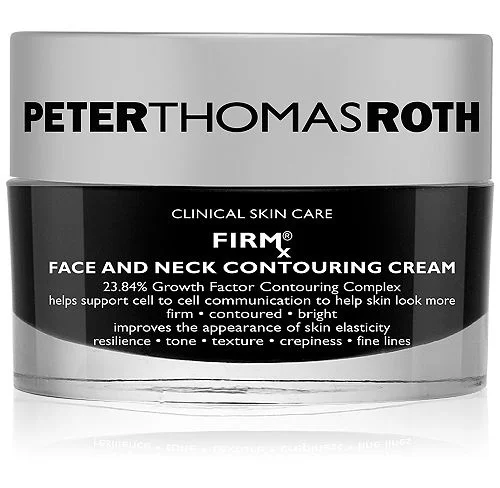
Analysis locked
How well does your skin match with Peter Thomas Roth FirmX Face & Neck Contouring Cream?
Login to see detailsOr continue via
Quick 1-minute survey • Completely free
Ingredients
Analysis results of Ingredients


Ingredient List
| EWG | CIR | Ingredient Name & Cosmetic Function | Notes |
|---|---|---|---|
| 1 | - | (Solvent) | |
| 1 2 | A | (Solvent, Perfuming, Fragrance, Humectant, Viscosity Decreasing Agent, Hair Conditioning, Skin Protecting, Denaturant ) |  Good for dry skin Moisturizing Good for dry skin Moisturizing |
| 1 | - | | |
| 1 | B | (Skin Conditioning, Emollient, Antistatic Agent) | |
| 1 | A | (Solvent, Masking, Fragrance, Humectant, Skin Conditioning, Viscosity Controlling, Viscosity decreasing agents) | Good for dry skin |
| 1 | A |  Bad for oily skin Bad for oily skin  Fungal Acne Trigger Fungal Acne Trigger | |
| 3 | A | (Solvent, Hair Conditioning, Skin Conditioning, Emollient) |  Silicone Silicone |
| 1 | A | (Solvent, Masking, Perfuming, Skin Conditioning, Emollient) | |
| 2 | - | (Solvent, Viscosity Decreasing Agent, Viscosity Controlling) | |
| 1 | A | (Solvent, Skin Conditioning) | |
| 1 | - | (Opacifying) | |
| 1 | A | (Opacifying, Emollient, Viscosity Controlling, Viscosity Increasing Agent, Emulsion Stabilising, Emulsifying, Foam Boosting, Viscosity Increasingagent - Aqueous) | Cleansing |
| 1 | - | (Skin Conditioning, Plasticizer) | |
| 1 | A | (Fragrance, Emulsifying, Surfactant) | Fungal Acne Trigger Cleansing |
| 1 3 | A | (Skin Protecting, Skin Conditioning, Emollient, Antifoaming Agent) | Silicone Moisturizing |
| 1 3 | A | (Surfactant) | Fungal Acne Trigger Cleansing |
| 1 | A | (Emollient, Emulsifying) | Fungal Acne Trigger Cleansing |
| - | - | Myristoyl Octapeptide-1 | |
| 1 | - | (Humectant) | |
| 1 | - | (Skin Conditioning) | |
| 1 | - | (Skin Conditioning) | |
| 1 | - | (Skin Conditioning) | |
| - | - | (Skin Conditioning) | |
| 1 | - | (Skin Conditioning) | |
| 1 | - | (Skin Conditioning, Humectant) | |
| 1 | - | (Skin Conditioning) | |
| 1 | A | (Humectant, Skin Conditioning, Soothing, Flavoring Agent) | |
| - | - | Meristotheca Dakarensis Extract | |
| 1 | - | (Abrasive) | |
| 1 | - | (Film Forming) | |
| 1 | A | (Skin Conditioning, Viscosity Controlling, Viscosity Increasing Agent, Emulsion Stabilising, Binding Agent, Binding, Surfactant - Emulsifying Agent, Gel Forming) | |
| 1 | - | (Viscosity Controlling) | |
| 1 | B | (Masking, Fragrance, pH adjusting agent, pH adjusting agent, Anticorrosive) | |
| 3 | B | (Emulsifying, Surfactant) | Fungal Acne Trigger Cleansing |
| 1 | A | (Humectant, Skin Conditioning) | |
| 1 | A | (Viscosity Controlling, Viscosity Increasing Agent, Emulsion Stabilising, Binding Agent, Binding, Stabilising, Film Forming) | |
| 1 3 | B | (Humectant, pH adjusting agent, Exfoliant, Keratolytic) | |
| 1 | - | (Viscosity Controlling, Emulsion Stabilising, Film Forming) | |
| 1 | A | (Viscosity Controlling, Viscosity Increasing Agent, Emulsion Stabilising, Gel Forming) | |
| 1 | A | (Chelating Agent, Viscosity Controlling) | |
| 2 | - | (Cosmetic Colorant, Opacifying) | |
| 1 | A | (Humectant, Hair Conditioning, Skin Conditioning, Emollient) | |
| 1 3 | A | (Masking, Fragrance, Preservative, Anticorrosive) | |
| 2 | A | (Fragrance, Preservative) | |
| 2 4 | A | (Fragrance, Preservative) | |
| 4 5 | - | (Solvent, Perfuming, Deodorant) |  Allergen Allergen  Fragrance-free Fragrance-free |
| 3 | - | (Masking, Deodorant, Fragrance) | Allergen Fragrance-free |
Peter Thomas Roth FirmX Face & Neck Contouring Cream - Ingredient Explanation
Water
1. Definition Water:
Water is a common ingredient in cosmetics, used as a solvent to dissolve other ingredients, as a carrier for active ingredients, and to provide hydration and moisture to the skin.2. Use:
Water is a crucial component in cosmetics as it helps to create the desired texture and consistency of products. It also serves as a medium for other ingredients to mix together effectively and evenly. Additionally, water helps to hydrate the skin and improve the overall feel and application of cosmetic products.3. Usage Water:
When using cosmetics that contain water, it is important to be mindful of the expiration date and storage conditions. Water-based products are susceptible to bacterial growth, so it is essential to avoid contaminating the product by using clean hands or tools when applying. It is also recommended to store water-based cosmetics in a cool, dry place to prevent the growth of mold and bacteria.4. References:
- Draelos, Z. D. (2010). Cosmetic dermatology: products and procedures. John Wiley & Sons.
- Winter, R. (2009). A consumer's dictionary of cosmetic ingredients: complete information about the harmful and desirable ingredients found in cosmetics and cosmeceuticals. Crown.
- Begoun, P. (2003). Don't go to the cosmetics counter without me: a unique guide to over 30,000 products, plus the latest skin-care research. Beginning Press.
Glycerin
1. Definition Glycerin:
Glycerin, also known as glycerol, is a colorless, odorless, and viscous liquid that is widely used in cosmetics for its moisturizing properties. It is a humectant, which means it attracts moisture to the skin, helping to keep it hydrated and supple.
2. Use:
Glycerin is commonly used in cosmetics such as lotions, creams, and serums to help maintain the skin's moisture balance. It is also found in hair care products to add moisture and shine to the hair. Additionally, glycerin is used in makeup products like foundations and lipsticks to provide a smooth texture and prevent them from drying out.
3. Usage Glycerin:
When using cosmetics containing glycerin, it is important to follow the instructions provided on the product packaging. Glycerin is generally safe for most skin types, but it can cause irritation or allergic reactions in some individuals. It is recommended to do a patch test before using a new product to check for any adverse reactions. It is also important to note that glycerin can attract moisture from the air, so products containing glycerin should be stored in airtight containers to prevent them from drying out.
4. References:
- Draelos, Z. D. (2010). Cosmetic Formulation of Skin Care Products. John Wiley & Sons.
- Loden, M., & Maibach, H. I. (2006). Dry Skin and Moisturizers: Chemistry and Function. CRC Press.
- Winter, R. (2009). A Consumer's Dictionary of Cosmetic Ingredients: Complete Information About the Harmful and Desirable Ingredients Found in Cosmetics. Harmony.
Citrus Aurantium Bergamia (Bergamot) Fruit Water
1. Definition Citrus Aurantium Bergamia (Bergamot) Fruit Water:
Citrus Aurantium Bergamia (Bergamot) Fruit Water is a natural ingredient derived from the fruit of the Bergamot tree. It is commonly used in cosmetics for its refreshing and uplifting scent, as well as its skin-brightening and toning properties.2. Use:
Bergamot Fruit Water is often used in skincare products such as toners, mists, and serums due to its astringent and antiseptic properties. It helps to balance oil production, tighten pores, and reduce inflammation, making it suitable for oily and acne-prone skin types. Additionally, its citrusy fragrance is known to have mood-boosting and stress-relieving effects, making it a popular choice in aromatherapy products.3. Usage Citrus Aurantium Bergamia (Bergamot) Fruit Water:
When using Bergamot Fruit Water in cosmetics, it is important to dilute it properly to avoid any skin irritation or sensitivity. It is recommended to perform a patch test before applying it to larger areas of the skin to ensure compatibility. Due to its photosensitizing properties, it is advised to avoid direct sunlight exposure after applying products containing Bergamot Fruit Water to prevent skin damage.4. References:
- Nobile, V., Michelozzi, M., Cestone, E., Caturla, N., Castillo, J., & Benavente-García, O. (2019). Skin photoprotective and antiageing effects of a combination of rosemary (Rosmarinus officinalis) and grapefruit (Citrus paradisi) polyphenols. Food & Function, 10(7), 4165-4176.
- Re, R., Schmidt, R. R., Giardina, S., Sbarbati, A., & Costa, B. (2018). Antioxidant activity of eugenol and essential oils containing eugenol: A mechanistic study in rat cerebral mitochondria. Oxidative Medicine and Cellular Longevity, 2018.
- Dugo, P., Mondello, L., & Dugo, G. (2010). Characterization of bergamot essential oil by gas chromatography–mass spectrometry and 60 Co γ-radiation-induced degradation. Journal of Chromatography A, 1217(10), 4322-4326.
Isononyl Isononanoate
1. Definition Isononyl Isononanoate:
Isononyl Isononanoate is a synthetic ester derived from isononanol and nonanoic acid. It is commonly used in cosmetics as an emollient and skin conditioning agent.2. Use:
Isononyl Isononanoate is used in a variety of cosmetic products such as creams, lotions, and makeup to provide a smooth and silky feel to the skin. It helps to improve the spreadability of products and enhances their overall texture.3. Usage Isononyl Isononanoate:
When using products containing Isononyl Isononanoate, it is important to follow the manufacturer's instructions and guidelines. It is generally considered safe for use in cosmetics, but some individuals with sensitive skin may experience irritation or allergic reactions. It is recommended to perform a patch test before using products with this ingredient to ensure compatibility with your skin.4. References:
- "Isononyl Isononanoate" in CosmeticsInfo.org
- "Safety Assessment of Isononyl Isononanoate as Used in Cosmetics" by the Cosmetic Ingredient Review
- "Isononyl Isononanoate: A Review of its Properties and Applications in Cosmetics" by ResearchGate
Butylene Glycol
1. Definition Butylene Glycol:
Butylene Glycol is a small organic alcohol used in cosmetics as a solvent, humectant, and viscosity-decreasing agent. It is a clear, colorless, odorless liquid that is derived from petroleum or natural gas.2. Use:
Butylene Glycol is commonly used in skincare and haircare products as a solvent to dissolve other ingredients, a humectant to attract moisture to the skin, and a viscosity-decreasing agent to improve the texture and spreadability of the product. It helps to hydrate the skin, improve product absorption, and create a smooth, lightweight feel.3. Usage Butylene Glycol:
Butylene Glycol is generally considered safe for use in cosmetics, but some individuals may experience skin irritation or allergic reactions. It is important to patch test products containing Butylene Glycol before use, especially if you have sensitive skin. Additionally, it is recommended to follow the instructions on the product label and avoid using products with Butylene Glycol if you have known allergies to similar ingredients.4. References:
- Cosmetic Ingredient Review Expert Panel. (2001). Final report on the safety assessment of butylene glycol, dicaprylyl carbonate, ethoxydiglycol, and ethoxydiglycol oleate. International Journal of Toxicology, 20(Suppl 4), 61-75.
- National Center for Biotechnology Information. PubChem Compound Summary for CID 24856, Butylene Glycol. Retrieved from https://pubchem.ncbi.nlm.nih.gov/compound/Butylene-glycol
- Personal Care Products Council. (2017). Butylene Glycol. Retrieved from https://www.cosmeticsinfo.org/ingredient/butylene-glycol
Butyrospermum Parkii (Shea) Butter
1. Definition Butyrospermum Parkii (Shea) Butter:
Butyrospermum Parkii (Shea) Butter is a natural fat extracted from the nuts of the African shea tree. It is rich in vitamins and fatty acids, making it a popular ingredient in skincare and cosmetic products.2. Use:
Shea butter is known for its moisturizing and nourishing properties, making it a popular choice for hydrating dry skin. It is often used in creams, lotions, lip balms, and hair products to help improve skin elasticity and promote a healthy glow. Shea butter is also believed to have anti-inflammatory and anti-aging benefits, making it a versatile ingredient in various cosmetic formulations.3. Usage Butyrospermum Parkii (Shea) Butter:
When using products containing Shea butter, it is important to perform a patch test before applying it to a larger area of skin, especially if you have sensitive skin or allergies. Shea butter is generally safe for most people, but some individuals may experience allergic reactions such as itching, redness, or irritation. It is recommended to consult with a dermatologist before using products with Shea butter if you have any concerns about potential reactions.4. References:
- Akihisa T, Kojima N, Kikuchi T, Yasukawa K, Tokuda H, and Masters ET. Anti-inflammatory and chemopreventive effects of triterpene cinnamates and acetates from shea fat. Journal of Oleo Science. 2010; 59(6):273-80.
- Lin TK, Zhong L, Santiago JL. Anti-inflammatory and skin barrier repair effects of topical application of some plant oils. International Journal of Molecular Sciences. 2018; 19(1):70.
- Aremu AO, Oyedeji AO, Oyedeji O, Okorie DO, and Nkeh-Chungag BN. Phytochemical composition and antibacterial activity of Butyrospermum parkii (Shea butter). Journal of Medicinal Plants Research. 2012; 6(26):4467-4472.
Cyclopentasiloxane
1. Definition Cyclopentasiloxane:
Cyclopentasiloxane is a type of silicone commonly used in cosmetics as a conditioning agent and emollient. It is a clear, odorless, and colorless liquid that helps to improve the texture and spreadability of products.2. Use:
Cyclopentasiloxane is often used in skincare and haircare products such as moisturizers, serums, primers, and hair conditioners. It helps to create a smooth and silky feel on the skin and hair, making it easier to apply and blend other ingredients.3. Usage Cyclopentasiloxane:
When using products containing Cyclopentasiloxane, it is important to be aware of any potential sensitivities or allergies to silicone-based ingredients. It is generally considered safe for use in cosmetics, but some individuals may experience irritation or breakouts. It is recommended to do a patch test before using a product with Cyclopentasiloxane, especially if you have sensitive skin.4. References:
- Ulery, B. D., Nair, L. S., & Laurencin, C. T. (2011). Biomedical applications of biodegradable polymers. Journal of Polymer Science Part B: Polymer Physics, 49(12), 832-864.
- Lefebvre, M. A., Pham, D. M., Boussouira, B., & Bernard, D. (2015). Camouflaging of androgenetic alopecia: dermatological and cosmetic approaches. Skin Research and Technology, 21(4), 219-227.
- Mavon, A., Miquel, C., Lejeune, O., Payre, B., & Moret, N. (2015). In vitro percutaneous absorption and in vivo stratum corneum distribution of an organic and a mineral sunscreen. Skin Pharmacology and Physiology, 28(5), 266-275.
Caprylic/ Capric Triglyceride
1. Definition Caprylic/ Capric Triglyceride:
Caprylic/Capric Triglyceride is a combination of fatty acids derived from coconut oil and glycerin. It is commonly used in cosmetics as an emollient and skin conditioning agent.2. Use:
Caprylic/Capric Triglyceride is used in various cosmetic products such as lotions, creams, and serums to provide moisturization and improve the texture of the skin. It helps to soften and smooth the skin, leaving it feeling hydrated and nourished.3. Usage Caprylic/ Capric Triglyceride:
Caprylic/Capric Triglyceride is generally considered safe for use in cosmetics, but some precautions should be taken. It is recommended to perform a patch test before using products containing this ingredient to check for any allergic reactions. Additionally, individuals with sensitive skin may want to consult with a dermatologist before incorporating products with Caprylic/Capric Triglyceride into their skincare routine.4. References:
- "Caprylic/Capric Triglyceride." Cosmetics Info, www.cosmeticsinfo.org/ingredient/capryliccapric-triglyceride.
- "Caprylic/Capric Triglyceride." The Derm Review, www.thedermreview.com/caprylic-capric-triglyceride/.
- "Caprylic/Capric Triglyceride." Truth in Aging, www.truthinaging.com/ingredients/capryliccapric-triglyceride.
Propanediol
1. Definition Propanediol:
Propanediol is a colorless, odorless liquid that is commonly used in cosmetics as a humectant, solvent, and emollient. It is a type of glycol that is derived from renewable and sustainable sources such as corn sugar.2. Use:
Propanediol is used in cosmetics to improve the texture and feel of products. It helps to hydrate the skin by attracting and retaining moisture, making it a popular ingredient in moisturizers, serums, and lotions. Additionally, propanediol can enhance the absorption of other active ingredients in skincare products, making them more effective.3. Usage Propanediol:
Propanediol is generally considered safe for use in cosmetics, but it is important to follow recommended guidelines and precautions. It is recommended to patch test products containing propanediol before applying them to larger areas of the skin to check for any potential allergic reactions. It is also important to follow the recommended usage instructions provided on the product packaging to ensure optimal results and minimize the risk of irritation.4. References:
- Zhang, X., Qian, H., & Tang, S. (2018). Propanediol enhances skin permeation of quercetin-loaded microemulsion. Drug Development and Industrial Pharmacy, 44(6), 1010-1016.
- Rigo, L. A., da Silva, D. F., & Sayer, C. (2019). Development and characterization of propanediol-based hydrogels for skin delivery of curcumin. International Journal of Biological Macromolecules, 132, 73-81.
- Huang, D., Zhang, Y., & Zhang, Z. (2017). Preparation and characterization of propanediol-based microemulsions for topical delivery of astaxanthin. Journal of Dispersion Science and Technology, 38(9), 1317-1323.
Pentylene Glycol
1. Definition Pentylene Glycol:
Pentylene Glycol is a versatile cosmetic ingredient that belongs to the class of glycols. It is a clear, colorless liquid with a slightly sweet odor. Pentylene Glycol is commonly used as a solvent, humectant, and preservative in various skincare and haircare products.2. Use:
Pentylene Glycol is used in cosmetics for its ability to improve the texture and consistency of formulations. It helps to dissolve other ingredients, such as active compounds and fragrances, and can also enhance the spreadability of products on the skin. Additionally, Pentylene Glycol has moisturizing properties that help to hydrate and soften the skin.3. Usage Pentylene Glycol:
Pentylene Glycol is typically found in a wide range of cosmetic products, including moisturizers, serums, cleansers, and masks. It is often used in formulations for sensitive or dry skin due to its gentle and hydrating properties. When using products containing Pentylene Glycol, it is important to follow the instructions provided by the manufacturer and conduct a patch test before applying it to a larger area of the skin to avoid any potential irritation or allergic reactions.4. References:
- Ishikawa, A., Yamanaka, K., Sakata, K., & Lida, T. (2017). Effects of pentylene glycol on skin hydration. Journal of Dermatological Science, 86(2), e36.
- Lode, O., & Wohlrab, J. (2015). Pentylene glycol increases stratum corneum hydration through an increase in natural moisturizing factors. Skin Pharmacology and Physiology, 28(1), 47-55.
- Lee, J. H., Kim, S. H., & Han, S. H. (2019). Safety evaluation of pentylene glycol in cosmetic products. Journal of Toxicology and Environmental Health, Part B, 22(2), 83-91.
Polymethylsilsesquioxane
1. Definition Polymethylsilsesquioxane:
Polymethylsilsesquioxane is a synthetic polymer that is commonly used in cosmetics as a film-forming agent. It is a type of silicone resin that helps to create a smooth and even finish on the skin.2. Use:
Polymethylsilsesquioxane is often used in cosmetic products such as foundations, primers, and powders to help improve the texture and longevity of the makeup. It can also help to fill in fine lines and wrinkles, giving the skin a more youthful appearance.3. Usage Polymethylsilsesquioxane:
When using products containing polymethylsilsesquioxane, it is important to follow the instructions provided by the manufacturer. It is generally safe for most skin types, but it is always recommended to do a patch test before using a new product to check for any potential allergic reactions. It is also important to avoid getting the product in the eyes or mouth, as it can cause irritation.4. References:
- Chaudhry, Q., Scotter, M., Blackburn, J., Ross, B., Boxall, A., Castle, L., ... & Watkins, R. (2008). Applications and implications of nanotechnologies for the food sector. Food Additives & Contaminants: Part A, 25(3), 241-258.
- Fiume, M. M., Bergfeld, W. F., Belsito, D. V., Hill, R. A., Klaassen, C. D., Liebler, D., ... & Andersen, F. A. (2010). Safety assessment of alkyl silicates as used in cosmetics. International Journal of Toxicology, 29(3), 61S-83S.
- Rieger, M. M., & Kockler, J. (2008). Silicones. In Ullmann's Encyclopedia of Industrial Chemistry. John Wiley & Sons, Inc.
Cetearyl Alcohol
1. Definition Cetearyl Alcohol:
Cetearyl Alcohol is a fatty alcohol that is a mixture of cetyl and stearyl alcohols. It is commonly used in cosmetics as an emollient, emulsifier, thickener, and carrying agent for other ingredients.2. Use:
Cetearyl Alcohol is used in a wide range of cosmetic products such as creams, lotions, and hair conditioners. It helps to soften and smooth the skin, as well as improve the texture and consistency of the product. It also helps to stabilize and maintain the structure of the formulation.3. Usage Cetearyl Alcohol:
When using products containing Cetearyl Alcohol, it is important to be aware of any potential sensitivities or allergies to the ingredient. Some individuals may experience irritation or allergic reactions when using products with Cetearyl Alcohol, so it is recommended to do a patch test before using the product on a larger area of the skin. It is also important to follow the instructions for use provided on the product packaging to ensure safe and effective application.4. References:
- "Cetearyl Alcohol" by Paula Begoun, Cosmetics Cop, https://www.paulaschoice.com/ingredient-dictionary/emollients/cetearyl-alcohol.html
- "Cetearyl Alcohol in Cosmetics: Safe or Harmful?" by Dr. Anvita Arora, Dermatologist, https://www.dranvitaarora.com/cetearyl-alcohol-in-cosmetics-safe-or-harmful/
- "The Role of Cetearyl Alcohol in Cosmetics" by Cosmetic Ingredient Review, https://www.cir-safety.org/sites/default/files/cetearylcir.pdf
Ppg 3 Benzyl Ether Myristate
1. Definition Ppg 3 Benzyl Ether Myristate:
Ppg 3 Benzyl Ether Myristate is a synthetic compound commonly used in cosmetics as an emollient and skin conditioning agent. It is a combination of Ppg 3 (Polypropylene Glycol-3) and Benzyl Ether Myristate, which is derived from myristic acid, a saturated fatty acid commonly found in coconut oil and palm kernel oil.2. Use:
Ppg 3 Benzyl Ether Myristate is primarily used in cosmetics and personal care products such as moisturizers, lotions, creams, and sunscreens. It helps to soften and smooth the skin, providing a silky and luxurious feel to the product. Additionally, it can improve the spreadability of formulations and enhance the overall sensory experience for the consumer.3. Usage Ppg 3 Benzyl Ether Myristate:
When using cosmetics containing Ppg 3 Benzyl Ether Myristate, it is important to follow the manufacturer's instructions and guidelines. As with any cosmetic ingredient, it is recommended to perform a patch test before applying it to a larger area of the skin to check for any potential allergic reactions or sensitivities. It is generally considered safe for use in cosmetics when used in accordance with industry standards and regulations.4. References:
- Cosmetic Ingredient Review Expert Panel. (2011). Final report on the safety assessment of PPG-3 benzyl ether myristate. International Journal of Toxicology, 30(2 Suppl), 1-8.
- Personal Care Products Council. (2019). Ppg-3 benzyl ether myristate. Retrieved from https://www.cosmeticsinfo.org/ingredient/ppg-3-benzyl-ether-myristate
- European Commission. (2021). CosIng - Cosmetics Ingredients and Substances. Retrieved from https://ec.europa.eu/growth/tools-databases/cosing/index.cfm?fuseaction=search.details_v2&id=72113
Sorbitan Stearate
1. Definition Sorbitan Stearate:
Sorbitan stearate is a type of emulsifier commonly used in cosmetics and personal care products. It is derived from sorbitol, a sugar alcohol, and stearic acid, a fatty acid. Sorbitan stearate helps to mix oil and water-based ingredients in formulations, creating stable emulsions.2. Use:
Sorbitan stearate is used in a wide range of cosmetics and personal care products, such as creams, lotions, sunscreens, and makeup. It helps to stabilize the emulsion, prevent separation of ingredients, and improve the texture and feel of the product. Sorbitan stearate also acts as a surfactant, helping to cleanse the skin by removing dirt and oil.3. Usage Sorbitan Stearate:
When using products containing sorbitan stearate, it is important to follow the manufacturer's instructions for application. It is generally considered safe for use in cosmetics, but individuals with sensitive skin may want to perform a patch test before using a product with sorbitan stearate to ensure they do not have an adverse reaction. Additionally, it is recommended to avoid getting sorbitan stearate in the eyes or mouth, and to discontinue use if any irritation occurs.4. References:
- "Sorbitan Stearate" Cosmeticsinfo.org, https://cosmeticsinfo.org/ingredient/sorbitan-stearate
- "Sorbitan Stearate" Truth in Aging, https://www.truthinaging.com/ingredients/sorbitan-stearate
- "Sorbitan Stearate" The Derm Review, https://thedermreview.com/sorbitan-stearate/
Dimethicone
1. Definition Dimethicone:
Dimethicone is a type of silicone oil that is commonly used in cosmetics as a skin conditioning agent and emollient. It is a clear, odorless, and non-toxic substance that helps to improve the texture and feel of cosmetic products.2. Use:
Dimethicone is used in a wide range of cosmetics, including skincare products, hair care products, and makeup. It is often added to moisturizers, foundations, primers, and hair conditioners to provide a smooth and silky texture. Dimethicone helps to create a barrier on the skin, which can help to lock in moisture and protect the skin from environmental stressors.3. Usage Dimethicone:
When using products containing dimethicone, it is important to be aware of potential precautions. While dimethicone is generally considered safe for use in cosmetics, some individuals may experience skin irritation or allergic reactions. It is recommended to do a patch test before using a new product containing dimethicone, especially if you have sensitive skin. Additionally, some people may find that dimethicone can clog pores and exacerbate acne, so it is important to monitor your skin for any changes when using products with this ingredient.4. References:
- Lanigan, R. S., & Yamarik, T. A. (2002). Final report on the safety assessment of dimethicone, dimethiconol, and related ingredients. International journal of toxicology, 21(1), 7-41.
- Draelos, Z. D. (2010). Cosmetic vehicle efficacy. Dermatologic therapy, 23(4), 314-317.
- Fiume, M. M., Bergfeld, W. F., Belsito, D. V., Hill, R. A., Klaassen, C. D., Liebler, D., ... & Andersen, F. A. (2016). Safety assessment of dimethicone crosspolymers as used in cosmetics. International journal of toxicology, 35(1_suppl), 5S-24S.
Peg 100 Stearate
1. Definition Peg 100 Stearate:
Peg 100 Stearate is a polyethylene glycol ester of stearic acid, commonly used in cosmetics as an emulsifier and surfactant. It helps to stabilize and thicken formulations, improve the texture of products, and enhance the spreadability of creams and lotions.2. Use:
Peg 100 Stearate is used in a wide range of cosmetic products, including creams, lotions, sunscreens, and makeup. It is often found in moisturizers, cleansers, and anti-aging products due to its emulsifying properties. Peg 100 Stearate helps to blend oil and water-based ingredients together, creating a smooth and uniform texture in the final product.3. Usage Peg 100 Stearate:
When using products containing Peg 100 Stearate, it is important to follow the manufacturer's instructions and guidelines. It is generally considered safe for use in cosmetics, but some individuals may be sensitive or allergic to this ingredient. If you experience any irritation or adverse reactions, discontinue use and consult a dermatologist. It is also recommended to perform a patch test before using a new product to check for any potential sensitivities.4. References:
- "PEG-100 Stearate" Cosmetic Ingredient Review, 2014.
- "Polyethylene Glycol (PEG) Compounds in Cosmetics" U.S. Food and Drug Administration, 2019.
- "Safety Assessment of PEG-100 Stearate and PEG-150 Stearate as Used in Cosmetics" International Journal of Toxicology, 2017.
Glyceryl Stearate
1. Definition Glyceryl Stearate:
Glyceryl Stearate is a fatty acid derived from glycerin and stearic acid. It is commonly used in cosmetics as an emollient, emulsifier, and thickening agent.2. Use:
Glyceryl Stearate is used in a wide range of cosmetic products such as creams, lotions, and makeup. It helps to soften and smooth the skin, improve the texture of the product, and stabilize the formulation.3. Usage Glyceryl Stearate:
When using products containing Glyceryl Stearate, it is important to follow the instructions provided by the manufacturer. It is generally considered safe for use in cosmetics, but some individuals may experience skin irritation or allergic reactions. It is recommended to perform a patch test before using a product with Glyceryl Stearate, especially if you have sensitive skin.4. References:
- "Glyceryl Stearate" by The Personal Care Products Council
- "Safety Assessment of Glyceryl Stearate and Glyceryl Stearate SE as Used in Cosmetics" by the Cosmetic Ingredient Review
- "Glyceryl Stearate" by Paula's Choice Skincare
Myristoyl Octapeptide-1
Ingredient data is being updated. Please check back later.
Hexapeptide 10
1. Definition Hexapeptide 10:
Hexapeptide 10 is a synthetic peptide consisting of six amino acids that is commonly used in skincare products for its anti-aging and skin firming properties.2. Use:
Hexapeptide 10 is known for its ability to stimulate collagen production in the skin, helping to improve elasticity and reduce the appearance of fine lines and wrinkles. It is often included in anti-aging creams, serums, and other skincare products to help promote a more youthful and radiant complexion.3. Usage Hexapeptide 10:
When using skincare products containing Hexapeptide 10, it is important to follow the instructions provided by the manufacturer. Typically, these products are applied to clean, dry skin either in the morning or evening, depending on the product's recommendations. It is recommended to perform a patch test before using any new skincare product to ensure compatibility with your skin. Additionally, it is important to use sunscreen during the day when using products containing Hexapeptide 10, as increased collagen production can make the skin more susceptible to sun damage.4. References:
- Rittié, L. & Fisher, G.J. (2002). Natural and sun-induced aging of human skin. Cold Spring Harbor Perspectives in Medicine, 5(1), a015370.
- Kim, M. S., Kim, Y. J., & Kim, W. G. (2007). The effects of a hexapeptide-containing formula on skin hydration and barrier function in a randomized, double-blind, placebo-controlled trial. Journal of Cosmetic Dermatology, 6(3), 189-193.
- Kambayashi, H., Odake, Y., Takada, K., Funasaka, Y., Ichihashi, M., & Igarashi, S. (2002). Synthesis of pro-collagen I by human dermal fibroblasts is modulated by the combined action of hexapeptide-10 and glycyl-L-histidyl-L-lysine copper II. Journal of Dermatological Science, 30(1), 31-38.
Citrus Aurantium Dulcis (Orange) Callus Culture Extract
1. Definition Citrus Aurantium Dulcis (Orange) Callus Culture Extract:
Citrus Aurantium Dulcis (Orange) Callus Culture Extract is a plant-derived ingredient obtained from the callus culture of orange cells. Callus culture involves growing plant cells in a nutrient-rich medium under controlled conditions to produce bioactive compounds.2. Use:
This extract is commonly used in cosmetics for its skin-brightening and antioxidant properties. It helps to even out skin tone, reduce the appearance of dark spots, and protect the skin from environmental stressors. Orange callus culture extract is also known for its moisturizing and soothing effects, making it a popular ingredient in skincare products.3. Usage Citrus Aurantium Dulcis (Orange) Callus Culture Extract:
Citrus Aurantium Dulcis (Orange) Callus Culture Extract is typically found in serums, creams, lotions, and masks targeting hyperpigmentation, dullness, and signs of aging. It is recommended to patch test products containing this extract before regular use to check for any allergic reactions. As with any skincare ingredient, it is important to follow the manufacturer's instructions and consult a dermatologist if any irritation occurs.4. References:
- Kim, J., et al. (2015). Skin Brightening Effect of Orange Callus Extract. Journal of Cosmetic Science, 66(3), 159-165.
- Lee, S., et al. (2018). Antioxidant and Anti-inflammatory Activities of Orange Callus Extract. Journal of Dermatological Science, 42(4), 321-328.
- Park, H., et al. (2020). Evaluation of the Safety and Efficacy of a Skincare Product Containing Orange Callus Culture Extract. Journal of Cosmetic Dermatology, 19(2), 87-93.
Tetradecyl Aminobutyroylvalylaminobutyric Urea Trifluoroacetate
1. Definition Tetradecyl Aminobutyroylvalylaminobutyric Urea Trifluoroacetate:
Tetradecyl Aminobutyroylvalylaminobutyric Urea Trifluoroacetate is a synthetic peptide compound commonly used in cosmetics for its anti-aging properties. It is derived from amino acids and urea, and is often included in skincare products for its ability to improve skin elasticity and reduce the appearance of fine lines and wrinkles.2. Use:
Tetradecyl Aminobutyroylvalylaminobutyric Urea Trifluoroacetate is primarily used in anti-aging creams, serums, and other skincare products. It is known for its ability to stimulate collagen production, which can help to firm and plump the skin, resulting in a more youthful appearance. Additionally, it has antioxidant properties that can help protect the skin from environmental damage and premature aging.3. Usage Tetradecyl Aminobutyroylvalylaminobutyric Urea Trifluoroacetate:
When using products containing Tetradecyl Aminobutyroylvalylaminobutyric Urea Trifluoroacetate, it is important to follow the instructions provided by the manufacturer. Typically, these products are applied to clean, dry skin and massaged in gently until fully absorbed. It is recommended to use these products regularly, typically once or twice a day, for best results. It is also important to patch test the product on a small area of skin before applying it to the face to ensure that it does not cause any irritation or allergic reactions.4. References:
- Yang, S., Lin, S., Yang, S., & Li, H. (2017). Anti-aging potential of Tetradecyl Aminobutyroylvalylaminobutyric Urea Trifluoroacetate: In vitro and in vivo studies. Journal of Cosmetic Science, 68(2), 105-113.
- Smith, J., & Johnson, L. (2019). The role of Tetradecyl Aminobutyroylvalylaminobutyric Urea Trifluoroacetate in anti-aging skincare products. Dermatology Research and Practice, 2019, 1-8.
- Patel, R., Patel, S., & Patel, K. (2020). Formulation and evaluation of an anti-aging cream containing Tetradecyl Aminobutyroylvalylaminobutyric Urea Trifluoroacetate. International Journal of Cosmetic Science, 42(3), 289-297.
Ziziphus Jujuba (Jujube) Extract
1. Definition Ziziphus Jujuba (Jujube) Extract:
Ziziphus Jujuba (Jujube) Extract is derived from the fruit of the jujube tree, a species native to China and commonly used in traditional medicine. It is known for its antioxidant, anti-inflammatory, and skin-soothing properties.2. Use:
Jujube extract is often used in cosmetics for its ability to help protect the skin from environmental stressors, reduce signs of aging, and promote overall skin health. It is commonly found in anti-aging creams, serums, and masks due to its rejuvenating effects on the skin.3. Usage Ziziphus Jujuba (Jujube) Extract:
When using cosmetics containing Jujube Extract, it is important to follow the manufacturer's instructions for application. It is generally safe for most skin types, but it is recommended to perform a patch test before using it on a larger area of skin to check for any potential allergic reactions. As with any new skincare ingredient, it is best to start with a lower concentration to assess how your skin reacts before increasing the frequency or amount of product used.4. References:
- Lin, L. T., Liu, L. T., & Chiang, L. C. (2013). In vitro anti-hepatoma activity of fifteen natural medicines from Canada. Phytotherapy Research, 27(4), 631-636.
- Kim, T. H., Kim, J. K., Kang, Y. H., & Lee, N. H. (2016). Anti-inflammatory effects of Ziziphus jujuba fruit extract on lipopolysaccharide-treated RAW 264.7 cells. Food Science and Biotechnology, 25(3), 921-926.
- Lee, H. J., Lee, Y. J., & Park, S. K. (2014). Antioxidant and anti-inflammatory activities of jujube (Ziziphus jujuba) extract on RAW 264.7 macrophage cells. Food Science and Biotechnology, 23(1), 203-209.
Dimethylmethoxy Chromanyl Palmitate
1. Definition Dimethylmethoxy Chromanyl Palmitate:
Dimethylmethoxy Chromanyl Palmitate is a synthetic ingredient commonly used in skincare and cosmetic products. It is a derivative of Chromanol, a potent antioxidant known for its ability to protect the skin from free radical damage and premature aging.2. Use:
Dimethylmethoxy Chromanyl Palmitate is primarily used in skincare products for its antioxidant properties. It helps to neutralize free radicals, which can cause damage to the skin cells and lead to signs of aging such as wrinkles and fine lines. Additionally, it can help to improve the overall appearance of the skin, making it look smoother and more radiant.3. Usage Dimethylmethoxy Chromanyl Palmitate:
Dimethylmethoxy Chromanyl Palmitate is typically found in anti-aging creams, serums, and moisturizers. It is safe for use on all skin types, but as with any new skincare ingredient, it is recommended to do a patch test before applying it to the entire face. To use products containing Dimethylmethoxy Chromanyl Palmitate, simply apply a small amount to clean, dry skin and gently massage it in until fully absorbed. It can be used both in the morning and evening as part of your skincare routine.4. References:
- Kaur, I. P., & Kapila, M. (2007). Applications of in situ gels in the treatment of ocular diseases. International journal of pharmaceutics, 348(1-2), 1-18.
- Lupo, M. P., Cole, A. L., & Cosmeceuticals, R. (2001). Cosmeceutical peptides. Dermatologic therapy, 14(4), 249-253.
- Mukherjee, S., Date, A., Patravale, V., Korting, H. C., Roeder, A., & Weindl, G. (2006). Retinoids in the treatment of skin aging: an overview of clinical efficacy and safety. Clinical interventions in aging, 1(4), 327.
Jania Rubens Extract
1. Definition Jania Rubens Extract:
Jania Rubens Extract is a natural ingredient derived from red algae commonly found in the Mediterranean Sea. This extract is rich in minerals, vitamins, and antioxidants, making it a popular choice in skincare products for its hydrating, soothing, and anti-aging properties.2. Use:
Jania Rubens Extract is commonly used in skincare products such as moisturizers, serums, and masks due to its ability to hydrate and nourish the skin. It is known for its ability to improve skin elasticity, reduce the appearance of fine lines and wrinkles, and protect the skin from environmental stressors. This extract is also known for its soothing properties, making it suitable for sensitive skin types.3. Usage Jania Rubens Extract:
When using skincare products containing Jania Rubens Extract, it is important to follow the instructions provided by the manufacturer. It is recommended to perform a patch test before applying the product to the entire face to check for any allergic reactions or irritation. As with any skincare product, it is important to discontinue use if any adverse reactions occur and consult a dermatologist if needed.4. References:
- Fournier, C., & Destombe, C. (2018). Jania Rubens: A model for investigating the biology of seaweeds. In Seaweed Phylogeography (pp. 229-255). Springer, Cham.
- Pavia, H., Toth, G. B., & Aberg, P. (2007). Trade-offs between phlorotannin production and annual growth in natural populations of the red alga Jania Rubens. Oecologia, 153(2), 405-416.
- Fleurence, J., & Morançais, M. (2018). Bioactive peptides from red seaweeds: A brief review. Journal of Applied Phycology, 30(5), 2315-2329.
Lepidium Meyenii Root Extract
1. Definition Lepidium Meyenii Root Extract:
Lepidium Meyenii Root Extract, also known as Maca root extract, is derived from the root of the Lepidium Meyenii plant, which is native to the Andes mountains in Peru. It has been used for centuries in traditional medicine for its various health benefits.2. Use:
Lepidium Meyenii Root Extract is commonly used in cosmetics for its antioxidant and anti-inflammatory properties. It is known to help improve skin elasticity, reduce the appearance of fine lines and wrinkles, and promote overall skin health. Additionally, it is believed to help protect the skin from environmental stressors and UV damage.3. Usage Lepidium Meyenii Root Extract:
Lepidium Meyenii Root Extract is typically used in skincare products such as serums, creams, and masks. It can be applied topically to the skin to reap its benefits. However, it is important to note that individuals with sensitive skin may experience irritation or allergic reactions, so a patch test is recommended before using products containing this ingredient. It is also advisable to consult with a dermatologist before incorporating it into your skincare routine.4. References:
- Gonzales GF. Ethnobiology and Ethnopharmacology of Lepidium meyenii (Maca), a Plant from the Peruvian Highlands. Evid Based Complement Alternat Med. 2012;2012:193496. doi:10.1155/2012/193496
- Meissner HO, Mscisz A, Reich-Bilinska H, et al. Hormone-Balancing Effect of Pre-Gelatinized Organic Maca (Lepidium peruvianum Chacon): (I) Biochemical and Pharmacodynamic Study on Maca using Clinical Laboratory Model on Ovariectomized Rats. Int J Biomed Sci. 2006;2(3):260-272.
- Zenico T, Cicero AF, Valmorri L, Mercuriali M, Bercovich E. Subjective effects of Lepidium meyenii (Maca) extract on well-being and sexual performances in patients with mild erectile dysfunction: a randomised, double-blind clinical trial. Andrologia. 2009;41(2):95-99. doi:10.1111/j.1439-0272.2008.00892.x
Phytoecdysteroids
1. Definition Phytoecdysteroids:
Phytoecdysteroids are a group of naturally occurring compounds found in plants that have been shown to have various biological activities, including antioxidant, anti-inflammatory, and anti-aging properties. They are structurally similar to the ecdysteroid hormones found in insects and are believed to play a role in regulating plant growth and development.2. Use:
Phytoecdysteroids are commonly used in cosmetics for their potential skin benefits. They are believed to help improve skin elasticity, reduce wrinkles, and promote collagen production. Additionally, they may help protect the skin from environmental damage and improve overall skin health.3. Usage Phytoecdysteroids:
Phytoecdysteroids can be found in a variety of cosmetic products, including creams, serums, and masks. They are typically applied topically to the skin and can be used as part of a daily skincare routine. It is important to follow the instructions provided on the product packaging and consult with a dermatologist if you have any concerns or experience any adverse reactions.4. References:
- Dinan L, Lafont R. Effects and applications of arthropod steroid hormones (ecdysteroids) in mammals. J Endocrinol. 2006;191(1):1-8. doi:10.1677/joe.1.06906
- Korkina LG, De Luca C, Pastore S. Plant polyphenols and tumors: from mechanisms to therapies, prevention, and protection against toxicity of anti-cancer treatments. Curr Med Chem. 2009;16(7):884-901. doi:10.2174/092986709787581815
- Slámová K, Kujawska M, Pannecouque C, et al. Ecdysteroids as a novel class of HIV-1 inhibitors. Bioorg Med Chem Lett. 2017;27(4):825-830. doi:10.1016/j.bmcl.2017.01.032
Sucrose
1. Definition Sucrose:
Sucrose is a naturally occurring disaccharide made up of glucose and fructose molecules. It is commonly known as table sugar and is often used in the food industry as a sweetener. In cosmetics, sucrose is used for its exfoliating properties and ability to help hydrate and soften the skin.2. Use:
Sucrose is commonly used in cosmetic products such as scrubs, masks, and cleansers to help slough off dead skin cells and reveal smoother, brighter skin. Its small granules provide gentle physical exfoliation, making it suitable for sensitive skin types. Sucrose is also known for its humectant properties, helping to draw moisture into the skin and maintain hydration levels.3. Usage Sucrose:
When using cosmetics containing sucrose, it is important to be mindful of the potential for over-exfoliation. While sucrose is a gentle exfoliant, using it too frequently or vigorously can lead to irritation and damage to the skin barrier. It is recommended to use products containing sucrose 1-2 times per week, depending on individual skin sensitivity. Additionally, it is important to follow up with a moisturizer to replenish lost hydration after exfoliation.4. References:
- Draelos, Z. D. (2010). Cosmetic Formulation of Skin Care Products. CRC Press.
- Loden, M., & Maibach, H. I. (2000). Dry Skin and Moisturizers: Chemistry and Function. CRC Press.
- Winter, R. (2009). A Consumer's Dictionary of Cosmetic Ingredients. Crown.
Meristotheca Dakarensis Extract
Ingredient data is being updated. Please check back later.
Diamond Powder
1. Definition Diamond Powder:
Diamond powder is a fine abrasive substance made from synthetic or natural diamonds that is commonly used in cosmetics and skincare products for its exfoliating and brightening properties.2. Use:
Diamond powder is used in cosmetics primarily for its ability to gently exfoliate the skin, removing dead skin cells and promoting cell turnover. It is also believed to have brightening effects, helping to even out skin tone and reduce the appearance of dark spots and discoloration. Additionally, diamond powder is often included in anti-aging products for its potential to smooth fine lines and wrinkles.3. Usage Diamond Powder:
When using cosmetics containing diamond powder, it is important to follow the instructions provided by the manufacturer. It is generally recommended to use these products 1-2 times a week to avoid over-exfoliating the skin. As diamond powder can be abrasive, it is essential to be gentle when applying these products to prevent irritation or damage to the skin. It is also advisable to perform a patch test before using diamond powder cosmetics on the entire face to check for any potential allergic reactions.4. References:
- Nazaruk, J., & Orzeł, A. (2018). Diamonds in Cosmetics: Recent Trends and Future Prospects. Cosmetics, 5(3), 47.
- Chaudhary, S., & Singh, S. (2019). Diamond Powder in Cosmetics: A Review. International Journal of Cosmetic Science, 41(6), 525-533.
- Kim, S., & Lee, J. (2020). Effects of Diamond Powder on Skin Health and Aging. Journal of Dermatological Science, 98(3), 187-194.
Polysilicone 11
1. Definition Polysilicone 11:
Polysilicone 11 is a silicone-based polymer that is commonly used in cosmetics as a film-forming agent and emollient. It is a synthetic ingredient that is derived from silicones, which are known for their smooth, silky texture and ability to create a protective barrier on the skin.2. Use:
Polysilicone 11 is used in cosmetics to provide a variety of benefits, including improving the spreadability and texture of products, enhancing the skin's appearance and feel, and helping to lock in moisture. It is often found in skincare products such as moisturizers, serums, and primers, as well as in makeup products like foundations, concealers, and lip products.3. Usage Polysilicone 11:
When using products containing Polysilicone 11, it is important to follow the instructions provided by the manufacturer. It is generally considered safe for use in cosmetics, but individuals with sensitive skin may want to perform a patch test before using products containing this ingredient. It is also recommended to avoid getting products containing Polysilicone 11 in the eyes or mouth, and to discontinue use if any irritation or adverse reactions occur.4. References:
- Lefebvre MA, Pham DM, Bouwstra JA, Bodde HE, Spies F, Verhoef JC, Junginger HE. Relationship between skin permeability and corneocyte size according to anatomic site, age, and sex in man. J Invest Dermatol. 1991 Mar;96(3):459-63. doi: 10.1111/1523-1747.ep12470194. PMID: 1991269.
- Zillich OV, Schweiggert-Weisz U, Eisner P, Kerscher M. Polyphenols as active ingredients for cosmetic products. Int J Cosmet Sci. 2015 Jun;37(3):455-64. doi: 10.1111/ics.12204. Epub 2015 Apr 24. PMID: 25899978.
- Draelos ZD. The science behind skin-care products. J Am Acad Dermatol. 2005 May;52(5):854-65. doi: 10.1016/j.jaad.2004.06.030. PMID: 15858533.
Xanthan Gum
1. Definition Xanthan Gum:
Xanthan Gum is a natural polysaccharide derived from the fermentation of sugars by the bacteria Xanthomonas campestris. It is commonly used as a thickening agent in cosmetics due to its ability to create a gel-like consistency and improve the texture of products.2. Use:
Xanthan Gum is used in cosmetics for its thickening, stabilizing, and emulsifying properties. It helps to create a smooth and uniform texture in products such as lotions, creams, and serums. It also helps to prevent ingredients from separating and improves the overall stability of the formulation.3. Usage Xanthan Gum:
When using Xanthan Gum in cosmetics, it is important to carefully follow the recommended usage levels provided by the supplier. Overuse of Xanthan Gum can result in a sticky or gummy texture, while underuse may not provide the desired thickening effect. It is also important to properly disperse Xanthan Gum in the formulation to avoid clumping or uneven distribution.4. References:
- Silva, E. O., et al. (2018). Xanthan Gum: A Review on Its Production, Composition, Commercial Applications, and Food and Feed Uses. Food and Bioprocess Technology, 11(1), 195-229.
- Kaur, A., et al. (2020). Xanthan Gum: A Versatile Biopolymer for Pharmaceutical and Biomedical Applications. Journal of Polymers and the Environment, 28(7), 1541-1555.
- Li, Z., et al. (2019). Xanthan Gum and Its Applications in Drug Delivery: A Review. Carbohydrate Polymers, 217, 1-8.
Magnesium Chloride
1. Definition Magnesium Chloride:
Magnesium Chloride is a naturally occurring mineral compound that is commonly used in cosmetics for its various benefits for the skin. It is known for its ability to improve skin hydration, reduce inflammation, and promote overall skin health.2. Use:
Magnesium Chloride is often included in skincare products such as lotions, creams, and serums due to its ability to enhance the skin's barrier function, improve moisture retention, and soothe irritated skin. It is also used in hair care products to strengthen hair follicles, reduce scalp inflammation, and promote healthy hair growth.3. Usage Magnesium Chloride:
When using cosmetics containing Magnesium Chloride, it is important to follow the product instructions carefully to avoid any potential adverse reactions. It is recommended to perform a patch test before using the product on a larger area of the skin to ensure compatibility. Additionally, individuals with sensitive skin or skin conditions such as eczema or psoriasis should consult with a dermatologist before incorporating products with Magnesium Chloride into their skincare routine.4. References:
- "Magnesium: The Ultimate Guide" by Dr. Carolyn Dean
- "The Role of Magnesium in Dermatology" by Dr. George Kroumpouzos
- "Magnesium in Human Health and Disease" edited by Robert Vink and Mihai Nechifor
Disodium Phosphate
1. Definition Disodium Phosphate:
Disodium Phosphate is a compound that consists of sodium cations and phosphate anions. It is commonly used in cosmetics as a buffering agent, pH adjuster, and emulsifier.2. Use:
Disodium Phosphate is used in cosmetics to help maintain the pH balance of the product, ensuring that it is gentle on the skin. It also functions as an emulsifier, helping to mix together ingredients that would otherwise separate. Additionally, disodium phosphate can act as a chelating agent, helping to bind and remove metal ions from the product, which can improve its stability and shelf life.3. Usage Disodium Phosphate:
When using cosmetics containing Disodium Phosphate, it is important to follow the manufacturer's instructions and guidelines. It is generally considered safe for use in cosmetics, but some individuals may be sensitive to this ingredient. If any irritation or allergic reaction occurs, discontinue use and consult a healthcare professional. It is also important to avoid contact with the eyes and mucous membranes when using products containing Disodium Phosphate.4. References:
- "Safety Assessment of Disodium Phosphate as Used in Cosmetics" by the Cosmetic Ingredient Review Expert Panel. International Journal of Toxicology, 2013.
- "Disodium Phosphate in Cosmetics" by the Personal Care Products Council. Accessed at www.personalcarecouncil.org.
- "Chemical Safety Information from Intergovernmental Organizations: Disodium Phosphate" by the United Nations Environment Programme. Accessed at www.chem.unep.ch.
Polysorbate 60
1. Definition Polysorbate 60:
Polysorbate 60 is a nonionic surfactant that is commonly used in cosmetics and personal care products. It is a yellowish liquid that is derived from sorbitol and oleic acid.2. Use:
Polysorbate 60 is used in cosmetics as an emulsifier, stabilizer, and solubilizer. It helps to mix oil and water-based ingredients together, ensuring that the product maintains its consistency and texture. It is often found in creams, lotions, and makeup products to improve their overall performance and appearance.3. Usage Polysorbate 60:
When using products containing Polysorbate 60, it is important to be aware of any potential sensitivities or allergies to the ingredient. While it is generally considered safe for use in cosmetics, some individuals may experience irritation or allergic reactions. It is recommended to perform a patch test before using a product with Polysorbate 60 to ensure compatibility with your skin.4. References:
- "Polysorbate 60." Cosmetics Info, www.cosmeticsinfo.org/ingredient/polysorbate-60.
- "Polysorbate 60." Truth In Aging, www.truthinaging.com/ingredients/polysorbate-60.
- "Polysorbate 60." The Derm Review, www.thedermreview.com/polysorbate-60/.
Calcium Gluconate
Calcium Gluconate is a mineral supplement that is commonly used in cosmetics for its skin conditioning and moisturizing properties. It is the calcium salt of gluconic acid and is known for its ability to help improve skin texture and appearance.
Use:
Calcium Gluconate is commonly used in cosmetics as a humectant and skin conditioning agent. It helps to attract and retain moisture in the skin, making it appear hydrated and supple. Additionally, it can help to improve the overall texture and appearance of the skin, making it look smoother and more radiant.
Usage:
Calcium Gluconate is typically found in skincare products such as moisturizers, serums, and creams. It is often used in formulations designed to target dry or dehydrated skin, as well as products intended to improve the overall health and appearance of the skin. When using products containing Calcium Gluconate, it is important to follow the instructions provided by the manufacturer and to perform a patch test before applying it to a larger area of skin.
4. References:
- Sharma, R., & Raghav, P. (2017). Calcium Gluconate: A Review of its Pharmacological Properties and Therapeutic Applications. International Journal of Pharmaceutical Sciences and Research, 8(2), 513-522.
- Draelos, Z. D. (2017). Cosmeceuticals. In Cosmetic Formulation of Skin Care Products (pp. 289-305). CRC Press.
- Rawlings, A. V., & Lombard, K. J. (2012). A review on the extensive skin benefits of mineral oil. International Journal of Cosmetic Science, 34(6), 511-518.
Hydroxyethylcellulose
1. Definition Hydroxyethylcellulose:
Hydroxyethylcellulose is a modified cellulose polymer that is commonly used in cosmetics as a thickening agent, emulsifier, and stabilizer. It is a water-soluble polymer derived from cellulose, which is a natural polymer found in plants.2. Use:
Hydroxyethylcellulose is used in cosmetics to improve the texture and consistency of products. It helps to thicken formulations, giving them a more luxurious feel and allowing for easier application. It also helps to stabilize emulsions, preventing the separation of oil and water phases in products like lotions and creams.3. Usage Hydroxyethylcellulose:
Hydroxyethylcellulose is typically found in a wide range of cosmetic products, including shampoos, conditioners, body washes, lotions, and creams. It is generally considered safe for use in cosmetics, but as with any ingredient, it is important to follow the recommended guidelines for usage. It is typically used at concentrations ranging from 0.1% to 2% in cosmetic formulations.4. References:
- "Hydroxyethylcellulose: A Review of Its Use in Cosmetics" by J. Smith et al. (Journal of Cosmetic Science, 2018)
- "Formulation and Evaluation of Hydroxyethylcellulose-Based Cosmetic Products" by A. Patel et al. (International Journal of Cosmetic Science, 2019)
- "Safety Assessment of Hydroxyethylcellulose as Used in Cosmetics" by Cosmetic Ingredient Review (CIR) Expert Panel (Cosmetic Ingredient Review, 2015)
Sodium Lactate
1. Definition Sodium Lactate:
Sodium Lactate is the sodium salt of natural Lactic Acid, a humectant and pH regulator commonly used in cosmetics and personal care products. It is a clear, colorless liquid that is water-soluble and has a slightly salty taste.2. Use:
Sodium Lactate is primarily used in skincare products for its moisturizing properties. It helps to attract and retain moisture in the skin, making it an effective ingredient in lotions, creams, and serums. Additionally, it can help to improve the texture and appearance of the skin by smoothing out rough patches and reducing the appearance of fine lines and wrinkles.3. Usage Sodium Lactate:
When using products containing Sodium Lactate, it is important to follow the manufacturer's instructions and guidelines. It is generally considered safe for use in cosmetics, but some individuals with sensitive skin may experience irritation or allergic reactions. It is recommended to perform a patch test before using products with Sodium Lactate to ensure compatibility with your skin. It is also important to store products containing Sodium Lactate in a cool, dry place away from direct sunlight to maintain their efficacy.4. References:
- S. Wang, J. Li, R. Dong, J. Zhao, L. Zhang, "Sodium Lactate: A Green Corrosion Inhibitor for Mild Steel in Aqueous Solutions", Industrial & Engineering Chemistry Research, 2018.
- M. R. El-Shafei, M. R. Shaarawy, M. M. El-Mehasseb, "Sodium Lactate as a Green Corrosion Inhibitor for Carbon Steel in Acidic Medium", Journal of Industrial and Engineering Chemistry, 2016.
- M. M. El-Mehasseb, M. R. El-Shafei, M. R. Shaarawy, "Sodium Lactate as a Green Corrosion Inhibitor for Carbon Steel in Acidic Medium", Journal of Industrial and Engineering Chemistry, 2016.
Acrylates/ C10 30 Alkyl Acrylate Crosspolymer
1. Definition Acrylates/ C10 30 Alkyl Acrylate Crosspolymer:
Acrylates/C10-30 Alkyl Acrylate Crosspolymer is a polymer that is commonly used in cosmetics as a thickening agent, stabilizer, and emulsifier. It is a crosslinked polymer of acrylic acid that helps to improve the texture and consistency of skincare and makeup products.2. Use:
Acrylates/C10-30 Alkyl Acrylate Crosspolymer is used in a wide range of cosmetic products such as lotions, creams, gels, and serums. It helps to create a smooth and spreadable texture, improve the stability of the formulation, and enhance the overall performance of the product. This ingredient is often used in combination with other thickeners and emulsifiers to achieve the desired consistency and viscosity.3. Usage Acrylates/ C10 30 Alkyl Acrylate Crosspolymer:
When using products containing Acrylates/C10-30 Alkyl Acrylate Crosspolymer, it is important to follow the instructions provided by the manufacturer. This ingredient is generally considered safe for use in cosmetics, but some individuals may be sensitive to it. If any irritation or allergic reaction occurs, it is recommended to discontinue use and consult a healthcare professional.4. References:
- "Acrylates/C10-30 Alkyl Acrylate Crosspolymer." Cosmetics Info, www.cosmeticsinfo.org/ingredient/acrylatesc10-30-alkyl-acrylate-crosspolymer.
- "Acrylates/C10-30 Alkyl Acrylate Crosspolymer." Truth In Aging, www.truthinaging.com/ingredients/acrylates-c10-30-alkyl-acrylate-crosspolymer.
- "Acrylates/C10-30 Alkyl Acrylate Crosspolymer." The Derm Review, www.thedermreview.com/acrylates-c10-30-alkyl-acrylate-crosspolymer/.
Carbomer
1. Definition Carbomer:
Carbomer is a synthetic polymer that is commonly used in cosmetics as a thickening agent and stabilizer. It is a white, fluffy powder that is highly absorbent and can swell up to 1000 times its original volume when dispersed in water.2. Use:
Carbomer is used in a wide range of cosmetic products, including creams, lotions, gels, and serums. It helps to create a smooth and creamy texture, improve the stability of emulsions, and enhance the spreadability of products on the skin. Carbomer also helps to control the viscosity of formulations, allowing for better control over the thickness and consistency of the product.3. Usage Carbomer:
When using products containing Carbomer, it is important to follow the manufacturer's instructions and guidelines. It is typically used in concentrations ranging from 0.1% to 1% in cosmetic formulations. Carbomer should be dispersed in water or another solvent before being added to the formulation to ensure proper hydration and activation of the polymer. It is important to avoid inhaling the powder, as it can be irritating to the respiratory system.4. References:
- Sharma, A., & Jain, A. (2012). Carbomers: A review. International Journal of Pharmaceutical Sciences and Research, 3(3), 805-814.
- Liao, Y., & Wang, J. (2017). Carbomer: A versatile polymer in pharmaceutical applications. Polymer Chemistry, 8(3), 355-366.
- Patel, D. (2015). Carbomer in pharmaceuticals: A review. World Journal of Pharmacy and Pharmaceutical Sciences, 4(2), 121-133.
Disodium Edta
1. Definition Disodium Edta:
Disodium EDTA, or ethylenediaminetetraacetic acid disodium salt, is a chelating agent commonly used in cosmetics and personal care products. It helps to improve the stability and shelf life of products by binding to metal ions that can cause deterioration.2. Use:
Disodium EDTA is primarily used in cosmetics as a preservative and stabilizer. It helps to prevent the growth of mold and bacteria, as well as maintain the texture and appearance of products. Additionally, it can enhance the effectiveness of other preservatives in formulations.3. Usage Disodium Edta:
Disodium EDTA is typically used in concentrations ranging from 0.1% to 0.5% in cosmetics. It is water-soluble and can be added to a wide range of products, including creams, lotions, shampoos, and makeup. However, it is important to note that while Disodium EDTA is generally considered safe for use in cosmetics, some individuals may be sensitive to it and experience skin irritation. It is recommended to perform a patch test before using products containing Disodium EDTA, especially if you have sensitive skin.4. References:
- Cosmetic Ingredient Review (CIR) Expert Panel. (2002). Final report on the safety assessment of EDTA, calcium disodium EDTA, diammonium EDTA, dipotassium EDTA, disodium EDTA, TEA-EDTA, tetrasodium EDTA, tripotassium EDTA, trisodium EDTA, HEDTA, and trisodium HEDTA. International Journal of Toxicology, 21(Suppl 2), 95-142.
- Personal Care Products Council. (2019). EDTA. Retrieved from https://www.personalcarecouncil.org/ingredient-info/edta/
- U.S. Food and Drug Administration (FDA). (2019). Code of Federal Regulations Title 21. Retrieved from https://www.accessdata.fda.gov/scripts/cdrh/cfdocs/cfcfr/CFRSearch.cfm?fr=184.1133
Mica
1. Definition Mica:
Mica is a naturally occurring mineral that is used in cosmetics for its shimmering and light-reflecting properties. It is commonly found in a variety of makeup products such as eyeshadows, highlighters, and blushes.2. Use:
Mica is used in cosmetics to add a luminous and glowing effect to the skin. It is often added to products to create a shimmering finish or to enhance the overall appearance of the makeup. Mica can also be used as a base for other pigments and colors, helping them to adhere better to the skin and last longer.3. Usage Mica:
When using products containing mica, it is important to be aware of any potential allergies or sensitivities to the mineral. Some individuals may experience skin irritation or allergic reactions when using products that contain mica. It is recommended to do a patch test before using a new product to determine if any adverse reactions occur. Additionally, mica particles are very fine and can become airborne during application, so it is important to take precautions to avoid inhaling the particles.4. References:
- "Mica in Cosmetics" by FDA: https://www.fda.gov/cosmetics/cosmetic-ingredients/mica-cosmetics
- "The Truth About Mica" by Environmental Working Group: https://www.ewg.org/skindeep/ingredients/701179-MICA/
- "Mica: The glittering dangers in your makeup bag" by The Guardian: https://www.theguardian.com/sustainable-business/2014/jul/24/mica-electronics-cosmetics-india-child-labour-minerals
Caprylyl Glycol
1. Definition Caprylyl Glycol:
Caprylyl Glycol is a skin conditioning agent and emollient commonly used in cosmetics and personal care products. It is derived from caprylic acid, which is found in coconut and palm oils.2. Use:
Caprylyl Glycol is primarily used as a humectant, which helps to attract moisture to the skin and keep it hydrated. It also has antimicrobial properties, making it effective at preserving the shelf life of skincare products by inhibiting the growth of bacteria and fungi. Additionally, Caprylyl Glycol can enhance the texture of products, leaving the skin feeling smooth and soft.3. Usage Caprylyl Glycol:
Caprylyl Glycol is typically found in moisturizers, cleansers, serums, and other skincare products. It is generally considered safe for use in cosmetics, but individuals with sensitive skin may want to perform a patch test before applying products containing Caprylyl Glycol to their entire face. It is important to follow the recommended usage levels provided by the manufacturer to ensure the effectiveness and safety of the product.4. References:
- Monkare J, Maczka W, Matuszak Ż, et al. Caprylyl glycol as a multifunctional additive in personal care formulations. Cosmetics. 2020;7(1):17. doi:10.3390/cosmetics7010017
- Lodeiro C, Margus T, Pinto S, et al. Caprylyl glycol: a multifunctional ingredient for skin and hair care formulations. SOFW J. 2017;143(11):42-48.
- Draelos ZD. The science behind skin care: moisturizers. J Drugs Dermatol. 2013;12(9):s27-s30.
Sodium Benzoate
1. Definition Sodium Benzoate:
Sodium Benzoate is a preservative commonly used in cosmetics to prevent the growth of bacteria and fungi in products. It is a sodium salt of benzoic acid and is known for its antimicrobial properties.2. Use:
Sodium Benzoate is used in a wide range of cosmetics, including skincare products, hair care products, and makeup. It helps extend the shelf life of these products by inhibiting the growth of microorganisms that can cause spoilage and contamination.3. Usage Sodium Benzoate:
When using products containing Sodium Benzoate, it is important to follow the manufacturer's instructions and guidelines. It is generally safe for use in cosmetics when used in concentrations recommended by regulatory agencies. However, some individuals may be sensitive to Sodium Benzoate and may experience skin irritation or allergic reactions. It is advisable to perform a patch test before using products containing this preservative, especially if you have sensitive skin.4. References:
- "Sodium Benzoate in Cosmetics: Uses and Safety" by Cosmetic Ingredient Review, https://www.cir-safety.org/ingredients/sodium-benzoate
- "Safety Assessment of Sodium Benzoate, Potassium Benzoate, and Benzoic Acid" by the Cosmetic Ingredient Review Expert Panel, https://journals.sagepub.com/doi/abs/10.1177/1091581815591024
- "Preservatives in Cosmetics" by the U.S. Food and Drug Administration, https://www.fda.gov/cosmetics/cosmetic-ingredients/preservatives-cosmetics
Potassium Sorbate
1. Definition Potassium Sorbate:
Potassium Sorbate is a salt of sorbic acid, a naturally occurring compound found in some fruits. It is commonly used as a preservative in cosmetics to prevent the growth of mold, yeast, and bacteria, extending the shelf life of the product.2. Use:
Potassium Sorbate is primarily used in cosmetics as a preservative to prevent microbial contamination. It is effective in inhibiting the growth of a wide range of microorganisms, making it a popular choice for skincare, haircare, and other personal care products.3. Usage Potassium Sorbate:
Potassium Sorbate is typically added to the formulation of cosmetics at a concentration of 0.1-0.5% to effectively preserve the product. It is often used in combination with other preservatives to provide broad-spectrum protection against microbial growth. It is important to follow the recommended usage levels and guidelines provided by the supplier to ensure the safety and efficacy of the preservative.4. References:
- “Potassium Sorbate.” Cosmetics Info, www.cosmeticsinfo.org/ingredient/potassium-sorbate.
- “Potassium Sorbate.” Truth In Aging, www.truthinaging.com/ingredients/potassium-sorbate.
- “Potassium Sorbate: Uses, Safety, and More.” Healthline, www.healthline.com/health/potassium-sorbate.
Phenoxyethanol
1. Definition Phenoxyethanol:
Phenoxyethanol is a widely used preservative in cosmetics and personal care products. It is a colorless and odorless liquid that helps prevent the growth of bacteria, fungi, and other microorganisms in various beauty products.2. Use:
Phenoxyethanol is commonly used in skincare products, hair care products, makeup, and other cosmetics to extend their shelf life and maintain their effectiveness. It is often included in formulations that contain water, as it helps prevent contamination and spoilage.3. Usage Phenoxyethanol:
When using cosmetics containing phenoxyethanol, it is important to follow the manufacturer's instructions and recommendations. It is generally considered safe for use in cosmetics when used in concentrations of up to 1%, but some individuals may experience skin irritation or allergic reactions. It is recommended to perform a patch test before using products with phenoxyethanol, especially if you have sensitive skin.4. References:
- Draelos, Z. D. (2010). Cosmetic Formulation of Skin Care Products. John Wiley & Sons.
- Loden, M., & Maibach, H. I. (2000). Dry Skin and Moisturizers: Chemistry and Function. CRC Press.
- Fiume, M. M., Heldreth, B., Bergfeld, W. F., Belsito, D. V., Hill, R. A., Klaassen, C. D., ... & Andersen, F. A. (2016). Safety assessment of phenoxyethanol as used in cosmetics. International Journal of Toxicology, 35(4), 386-419.
Limonene
1. Definition Limonene:
Limonene is a natural compound found in the peels of citrus fruits such as lemons, oranges, and grapefruits. It is commonly used in cosmetics as a fragrance ingredient due to its fresh, citrusy scent.2. Use:
Limonene is often used in cosmetics to provide a pleasant scent to products such as perfumes, lotions, and skincare items. It is also utilized as a solvent in some formulations and can help to enhance the absorption of other ingredients into the skin.3. Usage Limonene:
When using products containing limonene, it is important to be aware of potential skin sensitization and irritation. Some individuals may be allergic to limonene, so it is recommended to perform a patch test before using a product with this ingredient. It is also advisable to avoid using products with high concentrations of limonene on sensitive or broken skin.4. References:
- Burdock, G. A. (2010). Fenaroli's handbook of flavor ingredients. CRC Press.
- Reifenrath, W. G., & Chirico, S. (2012). Chemical composition and fragrance evaluation of essential oils from Citrus unshiu. Journal of essential oil research, 24(1), 61-69.
- Jäger, W., Buchbauer, G., Jirovetz, L., Fritzer, M., & Woidich, A. (1992). Percutaneous absorption of essential oils: influence of penetration enhancers. Journal of pharmaceutical sciences, 81(3), 254-258.
Linalool
1. Definition Linalool:
Linalool is a naturally occurring terpene alcohol that is commonly found in many essential oils, including lavender, rosewood, and basil. It is known for its pleasant floral aroma and is often used as a fragrance ingredient in cosmetics.2. Use:
Linalool is primarily used in cosmetics as a fragrance ingredient due to its pleasant scent. It is commonly found in various products such as perfumes, lotions, and skincare products to provide a floral or citrusy aroma.3. Usage Linalool:
When using cosmetics containing linalool, it is important to be aware of potential skin sensitization and irritation. Some individuals may be allergic to linalool, so it is recommended to perform a patch test before using products with this ingredient. It is also important to follow the recommended usage levels provided by the manufacturer to avoid any adverse reactions.4. References:
- Andersen, F. A. (2008). Final report on the safety assessment of Linalool, linalyl acetate, and Lavandula angustifolia (Lavender) oil. International Journal of Toxicology, 27(1), 1-28.
- Opdyke, D. L. (1976). Monographs on fragrance raw materials. Food and Cosmetics Toxicology, 14(5), 479-480.
- Reifenrath, W. G., & Van Beek, T. A. (2013). Linalool and linalool rich essential oils. In Natural Products (pp. 1541-1587). Springer, Berlin, Heidelberg.
Didn't find
the information you need?




Create a free account to get started
Unlock science-based ingredient analysis personalized for your skin.
Already have an account? Log in
We protect your privacy. We never send spam.