


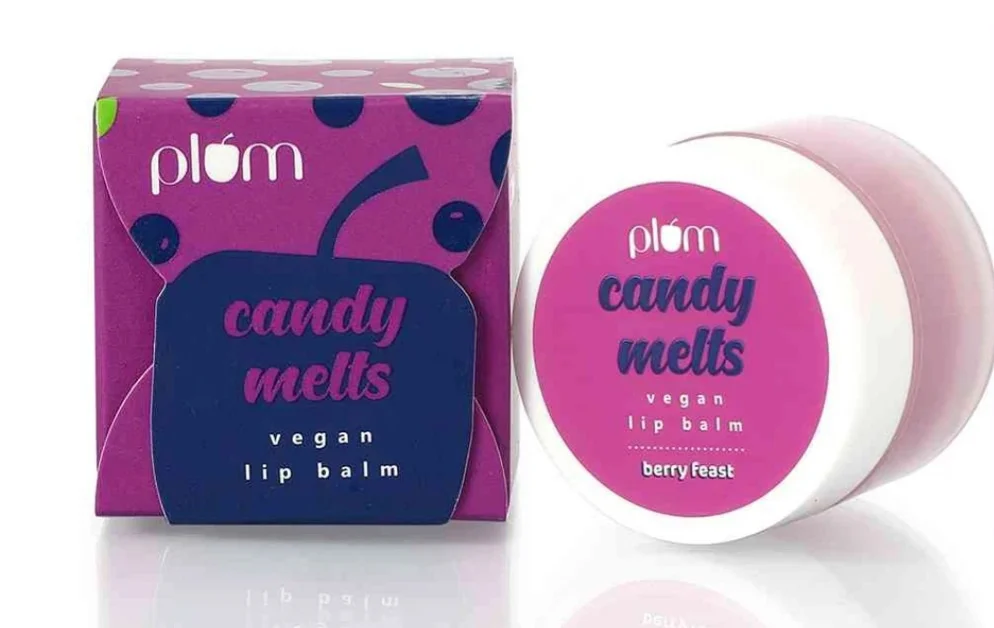
Analysis locked
How well does your skin match with Plum Candy Melts Vegan Lip Balm?
Login to see detailsOr continue via
Quick 1-minute survey • Completely free
Ingredients
Analysis results of Ingredients


Ingredient List
| EWG | CIR | Ingredient Name & Cosmetic Function | Notes |
|---|---|---|---|
| 2 | A |  | |
| 1 | - | (Skin Conditioning, Viscosity Controlling) | |
| 1 | - | (Solvent) | |
| 1 | A | (Emulsifying, Surfactant) | |



Plum Candy Melts Vegan Lip Balm - Ingredient Explanation
Ricinus Communis (Castor) Seed Oil
1. Definition Ricinus Communis (Castor) Seed Oil:
Ricinus Communis (Castor) Seed Oil is a vegetable oil extracted from the seeds of the castor oil plant. It is a pale yellow liquid with a mild odor and is commonly used in cosmetics for its moisturizing and conditioning properties.2. Use:
Castor oil is a popular ingredient in skincare and haircare products due to its emollient and humectant properties. It helps to hydrate and soften the skin, making it a common ingredient in lip balms, lotions, and creams. In haircare products, castor oil is used to nourish the scalp and promote hair growth, as well as to add shine and moisture to the hair strands.3. Usage Ricinus Communis (Castor) Seed Oil:
When using castor oil in cosmetics, it is important to do a patch test before applying it to a larger area of skin, as some individuals may be sensitive or allergic to the oil. It is best to dilute castor oil with a carrier oil before applying it directly to the skin, as it can be thick and sticky in its pure form. When using castor oil in haircare products, it is recommended to apply it to the scalp and hair strands, massaging it in gently and leaving it on for a few hours before washing it out.4. References:
- Park, H. M., & Cho, J. H. (2018). Ricinus communis L. (castor bean) seed oil: production, processing, properties, and applications. Journal of the American Oil Chemists' Society, 95(11), 1377-1388.
- Vieira, C., et al. (2018). Ricinus communis L. (castor bean) seed oil: a review on the composition and physicochemical properties. Journal of the American Oil Chemists' Society, 95(1), 1-10.
- Reis, F. S., et al. (2016). Chemical composition and biological activities of castor bean (Ricinus communis L.) seed oil: a review. Journal of the American Oil Chemists' Society, 93(3), 291-303.
Hydrogenated Soy Polyglycerides
1. Definition Hydrogenated Soy Polyglycerides:
Hydrogenated Soy Polyglycerides are a group of ingredients derived from soybean oil that have been treated with hydrogen gas to make them more stable and solid at room temperature. They are commonly used in cosmetics as emollients, emulsifiers, and surfactants.2. Use:
Hydrogenated Soy Polyglycerides are used in cosmetics to help improve the texture and consistency of products. They can also help to soften and moisturize the skin, making them popular ingredients in skincare products such as lotions, creams, and lip balms. Additionally, they can help to stabilize emulsions and improve the overall performance of a product.3. Usage Hydrogenated Soy Polyglycerides:
When using products containing Hydrogenated Soy Polyglycerides, it is important to follow the instructions provided on the packaging. These ingredients are generally considered safe for use in cosmetics, but some individuals may be sensitive to them and experience irritation or allergic reactions. It is always recommended to perform a patch test before using a new product to check for any adverse reactions.4. References:
- Sharma, N., Sharma, V., & Sharma, S. (2019). Soybean: A Potential Phyto-Source for Nutraceuticals and Bioactive Compounds. In Nutraceuticals and Functional Foods in Human Health and Disease Prevention (pp. 73-92). IGI Global.
- Choe, E., & Min, D. B. (2006). Mechanisms of antioxidants in the oxidation of foods. Comprehensive Reviews in Food Science and Food Safety, 5(1), 51-64.
- Ribeiro, H. S., & Breitkreitz, M. C. (2016). Lipid nanoparticles as carriers for cosmetic ingredients: structure, properties and applications. International Journal of Cosmetic Science, 38(3), 230-241.
C15 23 Alkane
1. Definition C15 23 Alkane:
C15-23 Alkane is a mixture of alkanes with carbon chain lengths ranging from 15 to 23. It is a clear, colorless, odorless liquid derived from petroleum sources.2. Use:
C15-23 Alkane is commonly used in cosmetics as a lightweight, non-greasy emollient and solvent. It helps to improve the spreadability of products and provides a smooth, silky texture to formulations. Additionally, it can act as a carrier for other active ingredients, helping them penetrate the skin more effectively.3. Usage C15 23 Alkane:
C15-23 Alkane is found in a variety of cosmetic products such as lotions, creams, serums, and makeup. It is suitable for all skin types and is often used in products targeting dry or sensitive skin due to its moisturizing properties. When using products containing C15-23 Alkane, it is important to patch test first, especially for individuals with sensitive skin, to ensure there are no adverse reactions.4. References:
- "Safety Assessment of Alkanes" by the Cosmetic Ingredient Review Expert Panel, 2010.
- "Alkanes" by CosmeticsInfo.org, accessed December 2021.
- "Alkanes in Cosmetics" by Personal Care Council, accessed December 2021.
Sorbitan Olivate
1. Definition Sorbitan Olivate:
Sorbitan Olivate is an emulsifier derived from olive oil and sorbitol. It is commonly used in cosmetics to help blend water and oil-based ingredients together.2. Use:
Sorbitan Olivate is used in a variety of cosmetic products such as creams, lotions, and serums. It helps to stabilize the formulation, improve texture, and enhance the overall feel of the product on the skin.3. Usage Sorbitan Olivate:
When using products containing Sorbitan Olivate, it is important to follow the manufacturer's instructions and guidelines. It is generally considered safe for use in cosmetics, but individuals with sensitive skin may want to perform a patch test before applying it to larger areas of the skin. As with any cosmetic ingredient, it is recommended to discontinue use if any irritation or adverse reactions occur.4. References:
- Rizzi, V., L. Cavaletti, L. Battaglia, and C. Banchelli. "Sorbitan Olivate: A Natural Alternative to Synthetic Emulsifiers." International Journal of Cosmetic Science 34, no. 1 (2012): 73-81.
- Lopes, L. B., and S. L. Bentley. "Sorbitan Olivate: A Natural Multifunctional Biomimetic Emulsifier." Journal of Cosmetic Dermatology 11, no. 4 (2012): 298-305.
- Puglia, C., L. Offerta, M. Saija, G. Trombetta, and M. G. Vento. "Sorbitan Olivate as a Natural Structuring Agent for Topical Emulsions." International Journal of Pharmaceutics 441, no. 1-2 (2013): 256-63.
Review
Didn't find
the information you need?





Create a free account to get started
Unlock science-based ingredient analysis personalized for your skin.
Already have an account? Log in
We protect your privacy. We never send spam.